In 2025, wastewater treatment plant costs in Jubail range from $500M for large-scale industrial projects like the Marafiq-led facility to $1.2M–$10M for compact municipal or mid-sized industrial plants. Key cost drivers include treatment technology (MBR systems cost 30–50% more than conventional activated sludge but reduce footprint by 60%), MARAFIQ compliance requirements, and Jubail’s high salinity conditions. This guide provides engineering specs, local compliance checklists, and an ROI calculator to help developers and engineers budget accurately.
Why Jubail’s Wastewater Treatment Costs Are Unique: Engineering Challenges and Local Factors
Jubail’s high salinity, with Total Dissolved Solids (TDS) often reaching 45,000 mg/L in coastal industrial zones, requires the use of high-grade corrosion-resistant materials such as Duplex 2205 or Super Duplex stainless steel for all wetted parts. According to Saudi Aramco engineering guidelines, the necessity for these materials adds approximately 15–25% to the total capital cost of a treatment facility compared to standard 304/316 stainless steel builds. This salinity also impacts the osmotic pressure in membrane-based systems, requiring more robust pre-treatment and higher-pressure pumping systems to maintain flux rates.
The industrial nature of Jubail Industrial City means wastewater often contains high concentrations of hydrocarbons, heavy metals, and complex organic compounds from petrochemical processing. Treating these contaminants requires advanced technologies such as Dissolved Air Flotation (DAF) or Membrane Bioreactors (MBR), which increase capital costs by 20–40% over standard municipal secondary treatment. For projects operating in industrial wastewater treatment in high-salinity environments, the integration of chemical precipitation and advanced oxidation is often mandatory to meet local discharge standards.
MARAFIQ’s strict discharge limits, including a Chemical Oxygen Demand (COD) of less than 100 mg/L and Total Suspended Solids (TSS) under 30 mg/L, necessitate tertiary treatment stages. Implementing these stages, such as UV disinfection or advanced filtration, typically adds between $500,000 and $2,000,000 to the project budget depending on the flow rate. Jubail’s extreme summer temperatures, which frequently hit 50°C, require insulated storage tanks and specialized HVAC systems for control rooms and chemical storage to prevent reagent degradation, increasing civil works costs by 10–15%.
Water scarcity in the Eastern Province is a primary driver for the adoption of water reuse technologies. Saudi Vision 2030 initiatives prioritize the circular water economy, pushing developers toward MBR systems that produce high-quality effluent suitable for cooling towers or irrigation. While the initial investment is higher, the ability to offset the cost of desalinated water—which remains expensive in the region—makes these high-spec plants more economically viable over a 20-year lifecycle.
Wastewater Treatment Plant Cost Breakdown: From $500M Megaprojects to $1.2M Compact Systems
Large-scale industrial wastewater projects in Jubail, such as the Marafiq-led facility serving the SATORP Amiral complex, establish a capital expenditure benchmark of approximately $5,000 to $10,000 per m³ of daily treatment capacity. For these megaprojects, the budget is heavily weighted toward specialized equipment, including high-capacity DAF units, automated chemical dosing skids, and complex SCADA systems for plant-wide integration. In these scenarios, equipment typically accounts for 60% of the budget, while civil works (including massive concrete aeration basins and underground piping) represent 25%.
Mid-sized industrial plants, ranging from $10M to $50M, are common for individual petrochemical or manufacturing facilities. These plants often process between 5,000 and 20,000 m³/day and utilize a combination of physical-chemical treatment followed by biological processes. For these projects, labor costs in Jubail are a significant factor, typically running 20–30% higher than in Riyadh due to the specialized nature of the industrial workforce and the requirement for RCJY-certified contractors. Material import duties for specialized membrane or sensor technology also contribute 5–10% to the final budget.
Municipal or residential community plants in Jubail usually fall in the $1.2M to $10M range. These systems often utilize compact MBR systems for Jubail’s water reuse projects to minimize footprint in high-value real estate areas. Because these plants are often pre-engineered or containerized, the ratio of civil works to equipment is more balanced, often 40% each, with the remaining 20% dedicated to labor and permitting. The following table provides a granular breakdown of costs based on project scale (HydropureWater field data, 2025).
| Project Scale | Flow Rate (m³/day) | Total Budget (USD) | Cost per m³ (CAPEX) | Primary Cost Driver |
|---|---|---|---|---|
| Large-Scale Industrial | 50,000–100,000 | $100M–$500M+ | $0.50–$1.20/m³ | Advanced SCADA & DAF Units |
| Mid-Sized Industrial | 5,000–20,000 | $10M–$50M | $0.80–$1.80/m³ | Labor & Specialized Civil Works |
| Compact Municipal | 500–5,000 | $1.2M–$10M | $1.20–$2.50/m³ | Membrane Technology (MBR) |
Beyond capital expenditure, operational expenditure (OPEX) in Jubail must account for high energy costs for aeration and the price of specialty chemicals required to treat industrial-grade influent. For a mid-sized plant, OPEX typically ranges from $0.40 to $0.90 per m³ treated, depending on the complexity of the contaminants and the degree of automation employed.
Treatment Technology Comparison: MBR vs. DAF vs. Conventional Systems for Jubail’s Conditions
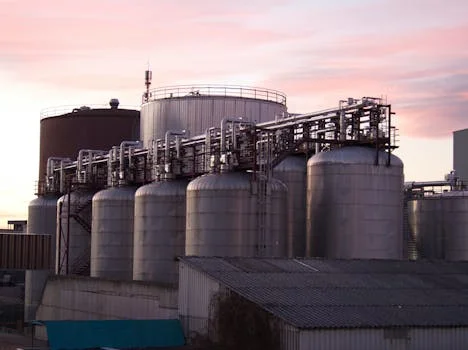
Membrane Bioreactor (MBR) systems in Jubail demand a capital investment of $2,500–$4,000 per m³/day of capacity, offering a 60% footprint reduction compared to conventional clarifiers. The high-quality effluent, characterized by TSS levels below 10 mg/L, is ideal for water reuse in industrial cooling or landscaping. However, engineers must account for the impact of high salinity on membrane lifespan; in Jubail’s conditions, PVDF membranes typically last 5–7 years, compared to 8–10 years in freshwater environments. This leads to higher long-term replacement costs, often ranging from $50,000 to $200,000 annually for mid-sized facilities.
For petrochemical applications, DAF systems for petrochemical wastewater in Jubail are often the preferred primary treatment method. DAF systems cost between $1,200 and $2,500 per m³/day of capacity and are highly effective at removing fats, oils, and greases (FOG) as well as suspended solids, with removal rates reaching 92–97% according to 2024 benchmarks. The main drawback is the ongoing cost of chemical coagulants and polymers, which can add $0.10–$0.30/m³ to the operational budget. For more details on technical configurations, see the DAF system specifications for industrial applications.
Conventional activated sludge (CAS) remains the lowest CAPEX option at $800–$1,500 per m³/day, but it is rarely used for new industrial projects in Jubail due to its large footprint and inability to meet secondary or tertiary reuse standards without significant additional filtration. The table below compares these technologies based on Jubail-specific engineering parameters.
| Technology | CAPEX ($/m³/day) | OPEX ($/m³) | Footprint (m²/m³/day) | TSS/COD Removal | Best Use Case |
|---|---|---|---|---|---|
| MBR | $2,500–$4,000 | $0.80–$1.20 | 0.2–0.4 | 99% / 95% | Water Reuse / Limited Space |
| DAF | $1,200–$2,500 | $0.50–$0.80 | 0.5–0.8 | 95% / 70% | Petrochemical / High Oil |
| Conventional | $800–$1,500 | $0.20–$0.50 | 1.0–1.5 | 85% / 80% | Large-scale Municipal |
Energy consumption is another critical differentiator. MBR systems are energy-intensive, requiring 0.8–1.2 kWh/m³ for membrane scouring and aeration, whereas CAS systems operate at approximately 0.3–0.6 kWh/m³. In Jubail, where industrial electricity tariffs apply, this energy differential can significantly impact the 10-year Total Cost of Ownership (TCO).
MARAFIQ and SATORP Compliance: Engineering Specs and Permitting Costs for Jubail Projects
MARAFIQ discharge regulations mandate that industrial effluent must maintain a Chemical Oxygen Demand (COD) below 100 mg/L and Total Suspended Solids (TSS) below 30 mg/L. Failure to meet these standards results in significant financial penalties, with fines ranging from SAR 50,000 to SAR 200,000 per violation. For facilities located near the SATORP Amiral complex, Zero Liquid Discharge (ZLD) requirements may be enforced for specific waste streams, potentially adding $3M to $10M to the project cost for evaporation and crystallization equipment.
The permitting process in Jubail is rigorous, typically spanning 6 to 12 months. It requires a comprehensive Environmental Impact Assessment (EIA), MARAFIQ technical approval, and final sign-off from the Royal Commission for Jubail and Yanbu (RCJY). EIA costs generally range from SAR 200,000 to SAR 500,000, while MARAFIQ administrative and technical review fees add another SAR 50,000 to SAR 100,000. For healthcare facilities, specialized MARAFIQ compliance for healthcare wastewater in Saudi Arabia must also account for pathogenic disinfection and pharmaceutical residue removal.
To ensure compliance, tertiary disinfection is mandatory. Many modern plants are moving toward chlorine dioxide disinfection for MARAFIQ compliance, as it is more effective than traditional chlorine in high-salinity and high-temperature environments and does not produce harmful brominated byproducts. Below is a compliance checklist for industrial projects in Jubail:
- COD/BOD Limits: Ensure tertiary filtration is sized for peak organic loads.
- TSS Monitoring: Install continuous turbidity meters at the final discharge point.
- Heavy Metal Removal: Check for Cr < 0.1 mg/L and Pb < 0.05 mg/L compliance.
- pH Neutralization: Automated acid/base dosing skids are required for all industrial streams.
- Salinity Management: Account for seasonal spikes in TDS to protect biological cultures.
- EIA Approval: Secure RCJY-certified environmental consultants for the assessment.
- ZLD Feasibility: Evaluate if thermal evaporation is required for high-toxicity streams.
- Emergency Storage: Provide at least 24 hours of buffer tank capacity for process upsets.
- Flow Metering: Use electromagnetic flow meters calibrated to MARAFIQ standards.
- Odor Control: Activated carbon or bio-scrubbers are required for plants near residential zones.
ROI Calculator: How to Estimate Payback for Wastewater Treatment Plants in Jubail
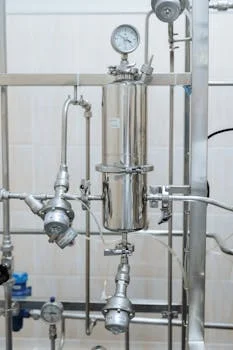
Industrial facilities in Jubail can achieve a payback period of 3 to 7 years by transitioning from desalinated water consumption to treated sewage effluent (TSE) for non-potable applications. With the cost of desalinated water in the Eastern Province ranging from SAR 5 to SAR 15 per m³, a facility treating 1,000 m³/day can save up to SAR 5.4 million annually. These savings directly offset the higher CAPEX of advanced treatment systems like MBR.
Under Saudi Vision 2030, the government offers incentives including up to a 30% capital cost rebate for projects that demonstrate significant water reuse and reduction in groundwater extraction. When these incentives are factored in, the internal rate of return (IRR) for a modern WWTP in Jubail often exceeds 15%. To calculate a rough estimate of your project’s payback, use the following framework:
| Factor | Calculation Basis | Example (1,000 m³/day MBR) |
|---|---|---|
| Initial CAPEX | Flow Rate x Tech Cost | $2,500,000 |
| Annual OPEX | Flow Rate x $1.00/m³ | $365,000 |
| Annual Water Savings | Flow Rate x SAR 10/m³ | $970,000 (approx. SAR 3.6M) |
| Government Rebate | 30% of CAPEX | $750,000 (One-time) |
| Net Payback Period | (CAPEX - Rebate) / Net Savings | 2.9 Years |
Payback periods for municipal projects are generally longer, typically 5 to 10 years, as the "savings" are often realized through lower utility fees or environmental compliance rather than direct water cost offsets. However, for industrial developers, the ROI is accelerated by avoiding non-compliance fines and the ability to expand production capacity without requiring additional water allocations from the local utility.
Frequently Asked Questions
What is the average cost per m³ for a wastewater treatment plant in Jubail?The average capital cost ranges from $1,200 to $4,000 per m³ of daily capacity, depending on the technology used. MBR systems are at the higher end ($2,500+), while conventional systems are lower ($800–$1,500).
How does Jubail’s salinity affect treatment plant design and costs?High salinity (up to 45,000 mg/L TDS) requires the use of Duplex stainless steel and specialized membranes, adding 15–25% to capital costs. It also increases the frequency of membrane cleaning and replacement in OPEX budgets.
What are the MARAFIQ discharge limits for industrial wastewater in Jubail?Key limits include COD < 100 mg/L, BOD < 25 mg/L, and TSS < 30 mg/L. There are also strict limits on heavy metals and hydrocarbon content, requiring advanced tertiary treatment.
What is the payback period for a water reuse system in Jubail?For industrial plants, the payback period is typically 3 to 7 years. This is driven by high desalinated water costs and government incentives of up to 30% for water reuse projects under Saudi Vision 2030.
What are the most cost-effective treatment technologies for petrochemical wastewater in Jubail?A combination of Dissolved Air Flotation (DAF) for primary oil/solids removal followed by a Membrane Bioreactor (MBR) for organic removal is considered the most cost-effective lifecycle solution for meeting MARAFIQ standards.