Wastewater Treatment Plant Cost in Cape Town 2025: Engineering Breakdown, Local Data & ROI Calculator
In 2025, wastewater treatment plant costs in Cape Town range from R1.2 million for a compact 10 m³/day MBR system to R5.2 billion for the city’s Potsdam municipal upgrade. Industrial plants (50–500 m³/day) average R8–25 million, with CAPEX split 60% equipment, 30% civil works, and 10% compliance (EIA, DWS permits). Local factors like water scarcity and NEMA regulations add 15–20% to costs compared to inland cities. Use this guide’s ROI calculator to compare technologies (e.g., DAF vs. MBR) and avoid Cape Town’s R6.3 million 'money-down-the-drain' pitfalls.
Why Cape Town’s Wastewater Treatment Costs Are 20% Higher Than Johannesburg’s
Coastal wastewater treatment in the Western Cape faces unique environmental and regulatory pressures that inflate project budgets by an average of 18.5% compared to Gauteng-based equivalents. The primary driver is the aggressive marine environment. Coastal plants require corrosion-resistant materials, such as duplex stainless steel for DAF systems for FOG-heavy industrial wastewater in Cape Town, which adds 12–18% to equipment costs according to Potsdam municipal upgrade specifications (City of Cape Town, 2024). Standard carbon steel or lower-grade stainless components often fail within 36 months in Cape Town’s salt-laden air.
Cape Town’s permanent state of water awareness has codified water reuse into the 2024 City of Cape Town bylaws. Unlike inland regions where discharge to watercourses is standard, local industrial permits increasingly mandate tertiary treatment for internal reuse. Integrating Reverse Osmosis (RO) or advanced disinfection, such as an on-site ClO&sub2; generator for Cape Town’s tertiary treatment needs, increases CAPEX by 25–30% but is often the only path to permit approval.
The regulatory landscape under the National Environmental Management Act (NEMA) is also more stringent in the Western Cape. An Environmental Impact Assessment (EIA) for a coastal plant typically costs between R200,000 and R500,000 and adds 6–12 months to project timelines. This delay carries an inherent cost of capital that inland projects often bypass. Additionally, civil works are approximately 15% more expensive due to local sand scarcity and the specialized foundation requirements for building on Cape Town’s sandy or high-water-table coastal soils.
| Cost Driver | Cape Town Impact | National Baseline (Gauteng) | Local Premium (%) |
|---|---|---|---|
| Material Specs | Duplex SS / Marine Coating | 304 Stainless Steel | 12–18% |
| Treatment Depth | Tertiary (Reuse Ready) | Secondary (Discharge) | 25–30% |
| Civil Works | Sand Foundation/Scarcity | Standard Soil/Aggregates | 15% |
| Compliance/EIA | NEMA Coastal Sensitivity | Standard Water Use License | R200k–R500k |
Cape Town Wastewater Treatment Plant Costs by Capacity: 2025 Benchmark Data
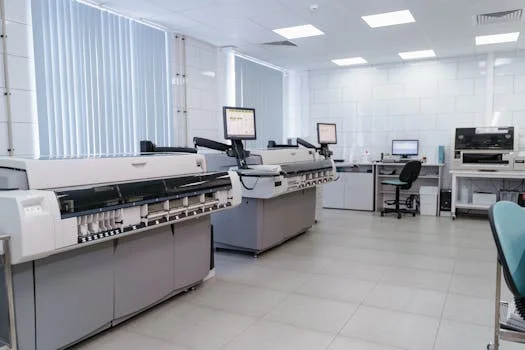
Budgeting for a wastewater treatment plant in Cape Town requires a granular understanding of how economies of scale interact with local labor rates. For a 10 m³/day compact MBR system for Cape Town’s salinity challenges, CAPEX sits between R1.2 and R1.8 million. These systems are typically skid-mounted or containerized to reduce the 15% premium on local civil works. OPEX for these smaller units remains relatively high per cubic meter (R8–12/m³) due to the fixed costs of monitoring and chemical dosing (HydropureWater pricing, 2025).
Scaling to a 50 m³/day system, which often utilizes Dissolved Air Flotation (DAF) combined with activated sludge, costs range from R4.5 to R6 million. At this scale, the Cape Town premium is most visible in the civil engineering phase, where bunded areas and specialized drainage for coastal protection are required. For industrial facilities reaching 500 m³/day, budgets escalate to R25–35 million. These projects typically follow a 60/30/10 split: 60% for specialized equipment, 30% for civil works, and 10% for compliance and permitting fees.
Operating expenses (OPEX) in Cape Town are influenced by high electricity tariffs and sludge disposal costs. Utilizing advanced sludge dewatering solutions for Cape Town’s wastewater plants can reduce disposal volumes by 60%, significantly lowering the R2–4/m³ OPEX seen in larger 500 m³/day plants. Without efficient dewatering, sludge transport to Vissershok or other regional landfills can consume up to 25% of the total operating budget.
| Capacity (m³/day) | Cape Town CAPEX (ZAR) | Cape Town OPEX (R/m³) | National Avg CAPEX | Local Premium (%) |
|---|---|---|---|---|
| 10 m³ | R1.2M – R1.8M | R8 – R12 | R1.1M | 15% |
| 50 m³ | R4.5M – R6.0M | R5 – R8 | R3.9M | 18% |
| 200 m³ | R12M – R18M | R3 – R6 | R10.5M | 20% |
| 500 m³ | R25M – R35M | R2 – R4 | R21.0M | 19% |
Technology Showdown: MBR vs. DAF vs. Conventional Activated Sludge for Cape Town
Selecting the correct technology is a balance between initial CAPEX and long-term compliance ease. Membrane Bioreactor (MBR) technology is increasingly the standard for Cape Town commercial developments and decentralized municipal nodes. HydropureWater MBR systems utilize 0.1 μm filtration, ensuring 99.9% pathogen removal. This is critical for meeting the City of Cape Town’s reuse standards. While MBR carries a 30% higher CAPEX than conventional systems, its tolerance for fluctuating salinity levels in coastal groundwater makes it technically superior for the Atlantic Seaboard and False Bay regions.
For industrial applications, particularly in food processing or manufacturing, Dissolved Air Flotation (DAF) is the primary pre-treatment stage. DAF systems excel at Fat, Oil, and Grease (FOG) removal, achieving 92–97% Total Suspended Solids (TSS) reduction. This is vital for avoiding the heavy "over-strength" discharge penalties levied by the City of Cape Town. However, DAF requires precise pH adjustment and chemical flocculation, which increases OPEX compared to biological systems. Many Cape Town plants now employ a hybrid approach: DAF for primary solids removal followed by MBR for biological polishing.
Conventional Activated Sludge (CAS) remains the lowest CAPEX option but is becoming less viable for new Cape Town projects. CAS requires a significantly larger footprint—often 60% larger than an MBR system—which is a major disadvantage given Cape Town’s high industrial land costs. CAS often fails to meet the stringent turbidity and microbial limits required for water reuse without additional, costly tertiary filtration stages. Engineers should refer to containerized wastewater treatment for Cape Town’s remote sites to see how MBR technology is being packaged to solve footprint and compliance issues simultaneously.
| Feature | MBR (Membrane Bioreactor) | DAF (Dissolved Air Flotation) | Conventional Activated Sludge |
|---|---|---|---|
| Primary Use Case | High-purity reuse/Salinity | FOG & TSS removal (Food/Ind) | Large-scale municipal |
| Footprint | Very Small (Compact) | Moderate | Large |
| CAPEX | High (1.3x base) | Moderate | Low (Base) |
| OPEX | Moderate (Membrane cleaning) | High (Chemicals) | Low (Energy intensive) |
| Compliance Ease | High (Exceeds standards) | High (For pre-treatment) | Low (Requires tertiary) |
Cape Town Compliance Checklist: Permits, EIAs, and DWS Standards
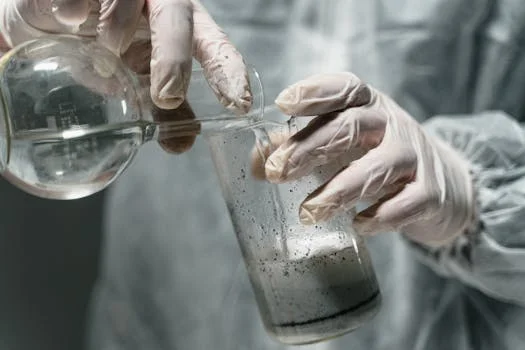
Regulatory failure is the single largest hidden cost in Western Cape water projects. The Daily Maverick recently highlighted a R6.3 million "money-down-the-drain" scenario where a local treatment plant failed to meet operational standards due to poor planning. To avoid this, procurement managers must budget for three distinct regulatory hurdles. First is the Department of Water and Sanitation (DWS) permit, required for any plant treating more than 10 m³/day. This process costs R50,000–R150,000 in specialist consulting fees and takes 3–6 months for approval.
Second, the NEMA Environmental Impact Assessment (EIA) is mandatory for plants with a daily throughput exceeding 2,000 m³, or smaller plants located within 100 meters of the high-water mark of the sea or a watercourse. In Cape Town, these EIAs are scrutinized heavily by local environmental groups and the City’s own environmental management department. Budgeting R200,000–R500,000 for this process is essential. Failing to account for the 6–12 month EIA timeline can lead to massive holding costs for industrial developments.
Finally, the City of Cape Town Water and Sanitation Bylaw (2006, amended 2024) dictates specific discharge limits and connection fees. These fees vary by industrial zone but typically range from R20,000 to R100,000. Understanding these industrial wastewater treatment standards in South Africa is critical for passing the final municipal inspection. Failure to comply can result in fines of R100,000 per month or the immediate suspension of water services to the site.
- DWS General Authorization: R50k–R150k (3–6 months)
- NEMA EIA (Basic Assessment): R200k–R500k (6–12 months)
- City of Cape Town Discharge Permit: R20k–R100k (1–2 months)
- Coastal Discharge Permit (if applicable): R150k+ (12 months+)
ROI Calculator: How to Justify Your Wastewater Treatment Plant Budget in Cape Town
Justifying an R8–15 million investment in a wastewater treatment plant requires a comprehensive Return on Investment (ROI) analysis that looks beyond simple CAPEX. In Cape Town, the primary driver for ROI is the avoidance of municipal water costs and discharge penalties. With municipal water tariffs for industrial users reaching R60–R80 per kiloliter in higher tiers, treating and reusing wastewater for cooling towers, irrigation, or process wash-down offers a payback period often under 36 months.
Step 1 is to calculate avoided penalties. If your facility currently exceeds City of Cape Town discharge limits for COD (Chemical Oxygen Demand) or TSS, you are likely paying "over-strength" levies. For a medium-sized food processor, these can exceed R100,000 per month. Step 2 involves water reuse savings. Utilizing an MBR system to produce high-quality permeate allows you to replace municipal potable water (R20/m³ for reuse-grade vs R12/m³ for municipal water in some industrial zones, though the gap is widening). Step 3 factors in operational savings, such as using high-efficiency aeration and advanced sludge dewatering to lower energy and disposal costs.
Finally, leverage Cape Town-specific incentives. The City’s 2025 Green Economy Strategy provides for potential rebates or expedited permitting for plants that incorporate renewable energy (e.g., solar-powered aeration) or achieve "Net Zero Water" status. These incentives can improve the internal rate of return (IRR) by 10–15%. HydropureWater provides a detailed ROI template for Cape Town clients to input their specific meter readings and tariff structures.
| ROI Factor | Annual Savings (100 m³/day Plant) | Calculation Basis |
|---|---|---|
| Avoided Over-strength Levies | R840,000 – R1,200,000 | R70k–R100k/month penalty avoidance |
| Water Reuse Credit | R650,000 – R900,000 | 30,000 m³ reused @ R25/m³ saving |
| Sludge Disposal Reduction | R180,000 – R300,000 | 60% volume reduction via dewatering |
| Total Annual Benefit | R1,670,000 – R2,400,000 | Est. Payback: 3.5 – 5 Years |
Frequently Asked Questions
How much does a 100 m³/day wastewater treatment plant cost in Cape Town?
A 100 m³/day plant in Cape Town typically costs between R8 million and R12 million. This includes the Cape Town premium for corrosion-resistant materials and civil works. The split is generally 60% for equipment (MBR or DAF systems), 30% for civil engineering/foundations, and 10% for NEMA/DWS compliance and permitting.
What are the biggest cost drivers for wastewater treatment in Cape Town?
The top three drivers are: 1) Coastal corrosion requiring duplex stainless steel or specialized coatings; 2) Water scarcity mandates requiring advanced tertiary treatment (RO/UV) for reuse; and 3) The NEMA EIA process, which adds significant consulting fees and time-based holding costs.
Can I reuse treated wastewater in Cape Town?
Yes, but it must meet the City of Cape Town’s "Treated Effluent" standards, which are more stringent than national discharge standards. Tertiary treatment (filtration and disinfection) is mandatory. You will need a Water Use License (WULA) or General Authorization from the DWS to legally reuse water on-site.
What happens if my plant fails compliance in Cape Town?
Failure to meet discharge standards results in "over-strength" levies, which can exceed R100,000 per month. Repeated violations can lead to criminal prosecution under NEMA, the revocation of your water connection, and forced facility shutdown. A recent case study saw a dysfunctional plant cost a developer R6.3 million in wasted CAPEX and fines.
Are there financing options for wastewater treatment plants in Cape Town?
Yes. GreenCape and the City of Cape Town provide guidance on green finance. Options include government grants for water-saving technology, commercial bank "green loans" with preferential rates, and equipment leasing options (OPEX-based models) offered by technology providers like HydropureWater.