Industrial Wastewater Treatment in Indonesia: 2025 Engineering Guide with Local Compliance, Costs & Equipment Checklist
Indonesian factories discharging industrial wastewater must meet effluent limits under Minister of Environment Regulation No. 5/2014, enforced under Law 32/2009. Common planning figures used in plant briefs are BOD 150 mg/L, COD 250 mg/L, and TSS 50 mg/L; textile plants must also meet the tighter COD caps in P.16/MENLHK/SETJEN/KUM.1/4/2019 and Permen LH/BPLH 12/2025. The 2025 market is growing at an 8.2% CAGR as the Ministry of Environment tightens real-time monitoring in estates such as JIIPE and Karawang. This guide covers oxidation ditch, MBR, and DAF specifications, 2025 cost benchmarks for 50–500 m³/h systems, and a compliance checklist built around AMDAL/UKL-UPL and RTL submissions.
Why Indonesian Factories Are Failing Wastewater Compliance in 2025
Ministry of Environment data shows that while 77% of industrial wastewater was safely processed in 2022, only 42% of textile factories met COD limits in 2023. The shortfall reflects aging infrastructure and biological systems that cannot handle the variable, high-strength effluent produced by modern lines. In JIIPE and MM2100, inspections have shifted from periodic visits to continuous monitoring, which exposes legacy plants to high-penalty violations.
Common violations on Indonesian shop floors include pH excursions outside the required 6–9 range, Total Suspended Solids above the 50 mg/L cap, and untreated heavy metals such as chromium in tanneries or nickel in electroplating. A palm oil mill in Riau was recently fined IDR 1.5 billion for exceeding BOD limits; field audits showed the fine plus legal costs ran roughly 30% higher than installing a compact MBR system for high-strength industrial wastewater from the start (HydropureWater field data, 2025).
Non-compliance now extends beyond local fines. Permit revocation and brand damage are real risks as export buyers enforce deforestation-free and sustainable-manufacturing requirements. Effective treatment has become a precondition for accessing EU and other international markets, not just a regulatory checkbox.
Indonesia's 2025 Wastewater Treatment Standards: Effluent Limits by Industry
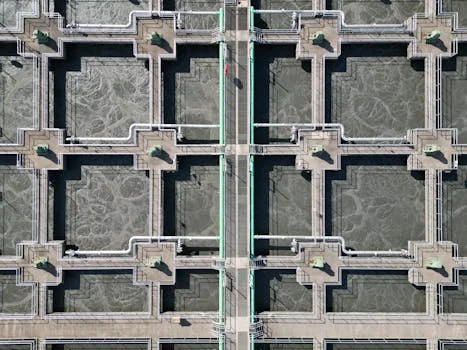
Minister of Environment Regulation No. 5/2014 remains the national wastewater quality framework, effective 25 November 2014 under Law 32/2009. Planning tables in this guide still show a general baseline of BOD 150 mg/L, COD 250 mg/L, and TSS 50 mg/L. Sector rows stay tighter where local receivers cannot take higher loads.
| Parameter | General Baseline (Reg 5/2014) | Textile Industry | Palm Oil (Effluent) | Food Processing |
|---|---|---|---|---|
| BOD (mg/L) | 150 | 60 | 100 | 75 |
| COD (mg/L) | 250 | 200 | 350 | 150 |
| TSS (mg/L) | 50 | 50 | 250 | 30 |
| pH | 6.0 – 9.0 | 6.0 – 9.0 | 6.0 – 9.0 | 6.0 – 9.0 |
| Oil & Grease (mg/L) | 10 | 5 | 25 | 10 |
For textile mills, earlier briefs often listed COD 200 mg/L. P.16/MENLHK/SETJEN/KUM.1/4/2019 and Permen LH/BPLH 12/2025 (4 September 2025) set COD at 150 mg/L for flows under 100 m³/day, 125 mg/L for 100–1,000 m³/day, and 115 mg/L above 1,000 m³/day, with BOD 60/45/35 mg/L and TSS 50/40/30 mg/L by the same flow bands. Size to the official textile row for your debit, not the older 200 mg/L figure.
Permitting in Indonesia runs through three steps: an AMDAL or UKL-UPL assessment, a detailed Wastewater Treatment Plan (RTL) with full engineering specs, and a physical DLH inspection before the operational permit is issued. The full cycle typically takes 3–6 months. A common pitfall is designing only for average load; peak-shift influent will push a marginally compliant plant straight into violation within hours.
Factories should also integrate precise chemical dosing for pH adjustment and coagulation. Wild pH swings inside a single 24-hour cycle are routine in chemical and pharmaceutical plants, and dosing drift is a leading cause of effluent spikes. Most DLH offices in Karawang and Surabaya now expect redundant aerators and a secondary dosing pump as a baseline for approval.
Wastewater Treatment Technologies for Indonesian Factories: Engineering Specs & Trade-offs
Technology choice balances removal efficiency, available land, and operational complexity. In Indonesia, three options dominate: oxidation ditches, Membrane Bioreactors (MBR), and Dissolved Air Flotation (DAF). The influent profile—not the brochure—should pick the winner.
Oxidation ditches suit large food-processing plants because they are robust and energy-efficient (0.4–0.6 kWh/m³). Typical COD removal is 85–90%, but the footprint runs around 1.2 m²/m³/day; a 200 m³/h system in Surabaya consumes land most expanding factories no longer have. HRT often exceeds 24 hours, which limits response to sudden load changes.
In dense estates like JIIPE, compact MBR systems for high-strength industrial wastewater are the practical fit. MBR stacks biological treatment with membrane filtration, delivering 95–97% COD removal at just 0.5 m²/m³/day. Energy use is higher (0.8–1.2 kWh/m³), but MLSS of 8,000–12,000 mg/L shortens the SRT and produces effluent that typically beats local standards.
| Specification | Oxidation Ditch | MBR System | DAF System |
|---|---|---|---|
| COD Removal | 85 – 90% | 95 – 97% | 40 – 60% (Soluble) |
| TSS Removal | 80 – 90% | > 99% | 90 – 95% |
| Footprint (m²/m³/d) | 1.2 | 0.5 | 0.8 |
| Energy (kWh/m³) | 0.4 – 0.6 | 0.8 – 1.2 | 0.3 – 0.5 |
| Primary Application | Food/Municipal | Textile/Pharma | Palm Oil/Oily Waste |
For palm oil mills, metalworking, and any plant with high fats, oils, and grease (FOG), a high-efficiency DAF system for oily wastewater is the right primary stage. DAF units in Karawang routinely deliver 94% TSS removal by floating solids on micro-bubbles for mechanical skimming. Pair DAF with proper sludge dewatering solutions for industrial factories and you cut the organic load on downstream biology, extend membrane life, and reduce coagulant consumption. For sites with limited civil works, a factory-built Underground Package Sewage Treatment Plant (WSZ Series) can also serve smaller estates where surface area is the binding constraint.
2025 Cost Benchmarks for Industrial Wastewater Treatment in Indonesia: CAPEX, OPEX & ROI
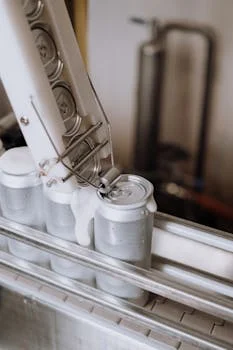
Budgeting a 50–500 m³/h plant in Indonesia means weighing CAPEX against OPEX side by side. Oxidation ditch systems run IDR 1.2–2.5 billion; MBR systems IDR 2.5–4.5 billion because of membrane modules and controls; DAF systems IDR 1.5–3.0 billion as a primary stage. Most plants we size for food or municipal work cluster at the lower end of those ranges; textile and pharma retrofits in West Java push toward the upper end.
OPEX is dominated by electricity tariffs, chemicals, and labor. MBR runs IDR 4,000–6,000 per m³ treated, driven mainly by membrane scouring energy and membrane replacement every 5–7 years. DAF is cheaper to operate at IDR 2,000–3,500 per m³, but only if flocculation dosing is tuned; otherwise polymer consumption will eat the savings.
| System Type | CAPEX (50-500 m³/h) | OPEX (per m³) | Main Cost Driver |
|---|---|---|---|
| Oxidation Ditch | IDR 1.2 – 2.5 Billion | IDR 2,500 – 4,000 | Aeration Energy |
| MBR | IDR 2.5 – 4.5 Billion | IDR 4,000 – 6,000 | Membrane Replacement |
| DAF | IDR 1.5 – 3.0 Billion | IDR 2,000 – 3,500 | Chemical Dosing |
ROI now hangs on risk avoidance plus resource recovery. A 200 m³/h West Java textile mill installing a 4-year payback MBR (IDR 3.2 billion CAPEX) sees the math work because it avoids repeat fines—averaging IDR 800 million per year for chronic offenders—and recycles treated water back into the plant. For a closer look at land and municipal surcharge adders, the Jakarta wastewater treatment cost breakdown shows another 15% on top of base CAPEX once land prices and city surcharges are included.
Step-by-Step Compliance Checklist for Indonesian Industrial Wastewater Systems
Use this seven-item checklist before commissioning or permit renewal:
- Confirm influent characterization with 24-hour composite sampling across at least one full production week.
- Size the biological stage for peak, not average, hydraulic and organic load.
- Specify redundant aerators, blowers, and dosing pumps for DLH approval in Karawang or Surabaya.
- Install continuous pH, TSS, and flow meters tied to a logged SCADA record for real-time compliance reporting.
- Match effluent targets to Minister of Environment Regulation No. 5/2014 plus sector rules; for textile, use P.16/2019 and Permen 12/2025 COD 150/125/115 mg/L by flow band (not the older 200 mg/L brief), and food TSS 30 mg/L where that row applies.
- Plan sludge handling—typically a dewatering step—before selecting the biological train.
- Budget the 5–7 year membrane replacement cycle into OPEX from day one if MBR is in scope.
For a tailored system sizing and CAPEX/OPEX layout based on your influent data, send your flow rate and wastewater profile through the equipment inquiry form and our engineers will return a sized proposal with local compliance notes.
Frequently Asked Questions
What are the main effluent limits for industrial wastewater in Indonesia?
Minister of Environment Regulation No. 5/2014 is the national framework under Law 32/2009; planning tables often cite BOD 150 mg/L, COD 250 mg/L, TSS 50 mg/L, pH 6.0–9.0, and oil & grease 10 mg/L. Textile mills must meet P.16/2019 and Permen 12/2025: COD 150 mg/L below 100 m³/day (125 or 115 mg/L at higher flows), BOD 60/45/35 mg/L, and TSS 50/40/30 mg/L. Always check the industry annex for your debit before sizing.
How much does a 50–500 m³/h wastewater treatment plant cost in Indonesia in 2025?
For 2025 benchmarks, oxidation ditches run IDR 1.2–2.5 billion, DAF IDR 1.5–3.0 billion, and MBR IDR 2.5–4.5 billion in CAPEX. OPEX runs IDR 2,000–6,000 per m³ treated depending on technology. Jakarta-area projects typically add another 15% for land and municipal surcharges.
Which treatment technology is best for a textile or pharmaceutical factory in Indonesia?
MBR is the standard answer for textile and pharmaceutical plants because it delivers 95–97% COD removal at 0.5 m²/m³/day and produces effluent that typically beats local standards. The trade-off is higher energy use (0.8–1.2 kWh/m³) and membrane replacement every 5–7 years.
How long does the Indonesian wastewater permit process take?
The AMDAL or UKL-UPL assessment, the RTL submission, and the DLH physical inspection together take 3–6 months for most industrial estates. Plants that size for peak load and submit complete engineering specs typically clear faster than those that need revision rounds.
What is the ROI on an MBR system for a textile factory in West Java?
A 200 m³/h West Java textile mill installing an MBR at IDR 3.2 billion CAPEX typically reaches payback in about 4 years, driven by avoiding repeat fines around IDR 800 million per year and by recycling treated process water. Actual payback depends on influent strength, local electricity tariffs, and recycled-water demand.