Sludge Dewatering Equipment in Panama 2025: Engineering Specs, Costs & Local Supplier Decision Framework
Sludge dewatering equipment in Panama must comply with DGNTI-COPANIT 35-2000’s TSS limit of ≤35 mg/L while handling peak flows up to 2.00 m³/s (e.g., Juan Diaz WWTP). High-solids centrifuges (1300 HP) and filter presses dominate local projects, with centrifuges achieving 22–25% cake solids at 95% capture efficiency. Costs range from $120,000–$450,000 for municipal systems, with OPEX driven by polymer dosage (0.3–0.8% of dry solids) and energy use (0.8–1.5 kWh/m³). Local suppliers like Panama Process Systems offer turnkey solutions with 12-month warranties.
Why Sludge Dewatering Matters for Panama’s Wastewater Treatment Plants
Panama’s DGNTI-COPANIT 35-2000 regulation mandates a strict Total Suspended Solids (TSS) limit of ≤35 mg/L for effluent discharged into receiving bodies, a standard that necessitates reducing sludge volume by 80–90% before final disposal. For large-scale operations like the Juan Diaz WWTP, which manages an average daily flow of 1.00 m³/s and peak hour flows of 2.00 m³/s, efficient dewatering is the only viable path to maintaining compliance while managing the massive volume of waste generated. Without high-efficiency dewatering, the solids carryover would immediately exceed regulatory thresholds, leading to significant environmental penalties and operational bottlenecks.
Disposal costs in Panama have risen steadily, with 2025 estimates placing landfill fees for sludge at $80–$120 per ton. This financial pressure makes dewatering a critical component of a plant's Operating Expenditure (OPEX) strategy. For instance, high-solids centrifuges can reduce the total volume of sludge for haulage by up to 30% compared to traditional belt presses, directly translating to six-figure annual savings for municipal and industrial operators. A food processing plant in Colón recently demonstrated this by switching from aged belt presses to modern centrifuges in a 2024 project, resulting in a documented reduction of $250,000 per year in landfill fees due to the higher dry solids content in the cake.
Beyond regulatory and financial metrics, Panama’s tropical climate presents unique engineering challenges. High ambient humidity (often exceeding 80%) and significant salinity in coastal areas like Panamá Oeste and Colón accelerate the corrosion of mechanical components. Engineers must prioritize equipment constructed with 316L stainless steel or specialized anti-corrosion coatings to ensure a service life exceeding 15 years. Understanding how tropical climates impact sludge dewatering equipment selection is essential for procurement officers who must balance initial Capital Expenditure (CAPEX) with long-term durability in saline environments.
Sludge Dewatering Technologies: How They Work and Which Fits Your Project
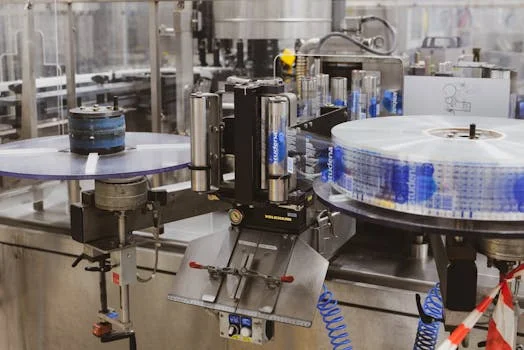
Selecting the right technology depends on the specific rheology of the sludge and the required cake dryness. In Panama’s current market, three primary technologies are deployed: decanter centrifuges, plate-and-frame filter presses, and screw presses.
Decanter Centrifuges: These systems utilize high-speed centrifugal force (typically 3,000–4,000 RPM) to separate solids from liquid based on density differences. They are the preferred choice for high-volume municipal plants like Juan Diaz, which utilizes 1300 HP units to achieve 22–25% cake solids. These units require precise PLC-controlled polymer dosing systems for Panama’s sludge dewatering projects to ensure capture efficiencies remain above 95%. While energy-intensive (0.8–1.5 kWh/m³), their compact footprint and continuous operation make them ideal for urban WWTPs with limited space.
Filter Presses: Plate-and-frame systems operate by pumping sludge into chambers lined with filter cloth and applying high pressure to force liquid out. HydropureWater’s filter presses for Panama’s industrial and municipal projects are widely used in the textile and pharmaceutical sectors of Panamá Oeste. These systems achieve the highest cake solids (25–35%), which minimizes disposal weight, though they require more manual labor for plate cleaning or sophisticated automated washing systems. They are highly effective for batch processing where maximum dryness is the priority.
Screw Presses: These represent a lower-energy alternative (0.2–0.5 kWh/m³) that uses a slow-moving internal screw to compress sludge against a cylindrical screen. While they offer lower throughput (typically ≤10 m³/h), they are increasingly popular for smaller municipal plants such as the Arraiján WWTP. They operate with minimal noise and vibration, though they generally produce lower cake solids (18–22%) compared to centrifuges or filter presses.
| Technology | Typical Cake Solids (%) | Energy Use (kWh/m³) | Best Use Case in Panama | Maintenance Level |
|---|---|---|---|---|
| Decanter Centrifuge | 22% – 25% | 0.8 – 1.5 | Large Municipal (e.g., Juan Diaz) | Medium (High-speed parts) |
| Filter Press | 25% – 35% | 0.3 – 0.6 | Industrial (Textiles, Food) | High (Cloth cleaning) |
| Screw Press | 18% – 22% | 0.2 – 0.5 | Small Municipal (Arraiján) | Low (Slow rotation) |
Technical Specifications: What to Look for in Panama’s Market
Engineering specifications for Panama-bound equipment must align with global sludge press specifications for 2025 while accounting for local operational costs. The most critical metric is the solids capture rate. Juan Diaz WWTP operational data from 2023 indicates that a capture rate of 96% is necessary to prevent excessive TSS recirculating back to the headworks, which can destabilize biological processes. Centrifuges typically offer the highest capture rates (95–98%), followed by filter presses (90–95%).
Polymer dosage is the primary driver of chemical OPEX. In Panama, high-quality polymers cost between $3 and $5 per kg. Centrifuges generally require 0.3–0.8% of dry solids in polymer dosage, whereas screw presses may require up to 1.0% to maintain flocculant stability under lower pressure. For a plant processing 50 tons of dry solids daily, a 0.2% difference in polymer efficiency can impact the bottom line by over $35,000 annually. Therefore, specifying an Automatic Chemical Dosing System is vital for precise control and cost mitigation.
Energy consumption must be evaluated against Panama’s industrial electricity rates, which range from $0.12 to $0.18 per kWh. While a filter press uses significantly less energy than a centrifuge, the footprint of a 500 m² filter press (requiring 150–200 m² of floor space) may be prohibitive for coastal plants where land costs are high. In contrast, a centrifuge with equivalent capacity might occupy only 15–20 m².
| Parameter | Centrifuge Benchmark | Filter Press Benchmark | Screw Press Benchmark |
|---|---|---|---|
| Solids Capture Rate | 95% – 98% | 90% – 95% | 85% – 90% |
| Polymer Dosage | 3 – 8 kg/ton DS | 2 – 5 kg/ton DS | 5 – 10 kg/ton DS |
| Materials of Construction | Duplex SS / 316L | Cast Iron / PP Plates | 304 / 316 Stainless |
| Footprint (m²) | 10 – 25 | 50 – 200 | 15 – 40 |
Cost Breakdown: CAPEX, OPEX, and ROI for Panama’s Projects
Budgeting for sludge dewatering in Panama requires a lifecycle cost analysis rather than a simple purchase price comparison. CAPEX for decanter centrifuges is the highest, ranging from $180,000 to $450,000 depending on capacity and automation level. Filter presses are more moderately priced at $120,000 to $300,000, while screw presses for smaller applications can be acquired for $80,000 to $200,000. Installation costs typically add another 15–20% to the base CAPEX, covering piping, electrical integration, and structural pads.
OPEX is dominated by chemicals and energy. For a 50 m³/h municipal installation, a centrifuge may incur $45,000 per year in electricity and polymer costs, while a filter press might cost $30,000. However, the centrifuge’s ability to produce a drier cake (reducing disposal weight) often offsets its higher energy use. Using a disposal rate of $100/ton, a centrifuge producing 25% solids vs. a screw press producing 20% solids saves approximately $20 per wet ton disposed. For a plant generating 5,000 wet tons annually, this is a $100,000 annual saving.
The Return on Investment (ROI) for these systems is remarkably fast in the Panamanian market. A $300,000 centrifuge system can achieve a payback period of 3.2 years when compared to the costs of hauling untreated or poorly dewatered sludge. Panama’s Ministry of Environment (MiAmbiente) and other governmental bodies occasionally offer grants covering up to 50% of CAPEX for projects that demonstrate strict compliance with DGNTI-COPANIT 35-2000. The next major grant application window is projected for Q2 2025.
| Cost Component | Centrifuge (Large) | Filter Press (Mid) | Screw Press (Small) |
|---|---|---|---|
| Estimated CAPEX | $180k – $450k | $120k – $300k | $80k – $200k |
| Annual Maintenance | $15,000 – $25,000 | $8,000 – $12,000 | $3,000 – $7,000 |
| Disposal Savings (vs. 15% cake) | High ($80k+/yr) | Very High ($100k+/yr) | Moderate ($30k/yr) |
| Payback Period (Years) | 3.2 – 3.8 | 3.5 – 4.2 | 4.0 – 5.0 |
Compliance with DGNTI-COPANIT 35-2000: What Your Equipment Must Achieve
Compliance in Panama is not limited to the dewatering stage; it is an integrated process. While centrifuges and filter presses are excellent at removing solids to meet the TSS limit of ≤35 mg/L, they do not inherently reduce Biological Oxygen Demand (BOD) or pathogens to the required levels (≤35 mg/L and 1,000 NMP/100ml respectively). Therefore, dewatering equipment must be part of a system that includes biological treatment (like MBR or A/O) and disinfection.
For pathogen control, filter presses are particularly effective, often achieving a 99% reduction in coliforms due to the physical barrier of the filter media and the high pressure applied. However, centrifuges, which operate in a closed loop, typically require post-treatment disinfection. Many Panama projects integrate on-site ClO&sub2; generators for post-dewatering pathogen control in Panama. This ensures that the final cake or the centrate (liquid discharge) does not violate the microbial limits set by COPANIT standards.
A compliance checklist for Panama WWTP managers should include:
- Solids Capture Verification: Ensure the equipment maintains ≥95% capture to prevent TSS spikes in the return flow.
- Cake Dryness Certification: Verify the equipment can consistently hit ≥22% solids to qualify for standard landfill disposal.
- Ancillary Integration: Confirm that polymer dosing and disinfection systems are synchronized with the dewatering cycle.
- Material Certification: Ensure all wetted parts are 316L stainless steel to withstand the humidity and salinity of Panama’s coastal regions.
Supplier Selection Checklist: How to Choose a Sludge Dewatering Partner in Panama
Choosing a supplier in Panama requires looking beyond the equipment's technical data sheet. Local support is the most critical factor in preventing downtime. Procurement officers should prioritize suppliers with a demonstrated local presence, such as Panama Process Systems or Sustainable Water Panama, who maintain local inventories of critical wear parts.
"In the humid environment of Panama, a 24-hour response time for technical emergencies is not a luxury; it is a requirement for regulatory compliance." — Panama WWTP Engineering Report, 2024.
When evaluating a partner, use the following framework:
- Local Service Infrastructure: Does the supplier have a service center in Panama City or Colón? Can they guarantee a technician on-site within 24 hours?
- Regulatory Track Record: Can the supplier provide case studies of successful DGNTI-COPANIT 35-2000 compliance in Panama? Ask for TSS and BOD effluent data from their previous installations.
- Warranty Terms: Demand a minimum 12-month warranty on all mechanical parts and a 5-year availability guarantee for proprietary components like centrifuge bowls or filter plates.
- Operator Training: Ensure the contract includes 2–5 days of on-site training for local operators, covering both routine maintenance and emergency troubleshooting.
- Lifecycle Cost Transparency: Request a quote that itemizes CAPEX, estimated 5-year OPEX, and installation costs to avoid hidden "commissioning fees."
Frequently Asked Questions
What is the best sludge dewatering equipment for a small municipal plant in Panama?
For plants with flows under 50 m³/h, such as those in Arraiján or rural areas of Coclé, screw presses or small-scale plate-and-frame filter presses are most cost-effective. They offer lower energy consumption and simpler maintenance than centrifuges, which are better suited for larger urban centers.
How much does sludge dewatering equipment cost in Panama?
CAPEX typically ranges from $80,000 for a basic screw press to $450,000 for a high-capacity, automated decanter centrifuge. Total installation and commissioning usually add 20% to these figures. OPEX generally fluctuates between $0.50 and $1.20 per cubic meter of sludge processed.
Does Panama’s climate affect sludge dewatering equipment?
Yes. The high humidity and coastal salinity cause rapid oxidation of standard carbon steel. It is essential to specify 316L stainless steel for all wetted parts and high-grade epoxy coatings for structural frames to prevent premature equipment failure.
What are the maintenance requirements for centrifuges in Panama?
Standard maintenance includes weekly cleaning of the bowl and scroll, monthly calibration of the polymer dosing pumps, and quarterly inspection of high-speed bearings. Local service contracts for these tasks typically cost between $5,000 and $15,000 per year.
Can sludge dewatering equipment be financed in Panama?
Yes. Local commercial banks offer 5–7 year equipment loans with interest rates typically between 8% and 12%. Additionally, the Ministry of Environment provides grants for projects that significantly improve effluent quality in accordance with national standards.