Hospital Wastewater Treatment in Nottingham: 2025 Engineering Guide with UK Compliance & Cost Data
Nottingham’s hospital wastewater treatment requires compliance with UK EPA standards (e.g., Urban Waste Water Treatment Directive 91/271/EEC) and NHS Trust-specific effluent limits (BOD ≤ 20 mg/L, COD ≤ 125 mg/L, fecal coliforms ≤ 100 CFU/100mL). With Nottingham University Hospitals NHS Trust managing 2.5 million m³/year of medical effluent across Queen’s Medical Centre and City Hospital, systems must handle variable loads (pH 6.5–8.5, TSS ≤ 35 mg/L) while addressing antibiotic-resistant bacteria risks. Capital costs for on-site treatment range £800–£1,500/m³/day capacity, with operational costs of £0.30–£0.60/m³.
Why Nottingham’s Hospital Wastewater Treatment Needs Urgent Upgrades
Inadequate wastewater infrastructure directly impacts patient care and operational continuity, as evidenced by the abandonment of a pain clinic at Nottingham’s Queen’s Medical Centre (QMC). This former clinic, which once served hundreds of patients annually, became unusable due to persistent infrastructure failures, including old pipes leaking and pump failures that led to flooding (BBC News, February 2025). Such incidents underscore a broader issue of decaying wastewater management systems within Nottingham University Hospitals NHS Trust facilities.
The government's decision to delay the full rebuild and improvement of QMC and City Hospital until 2037 at the earliest (BBC News, February 2025) means interim, robust wastewater treatment solutions are critical. Relying on outdated or failing systems risks not only operational disruptions but also significant environmental contamination. Studies, such as the detection of vancomycin-resistant Enterococcus faecium (VRE) in sewage treatment plants 3.3–9.6 km downstream from acute NHS Hospital Trusts (Detection of vancomycin-resistant Enterococcus faecium hospital...), highlight the critical need for effective on-site treatment to mitigate the spread of antibiotic-resistant bacteria into the wider environment.
Medical effluent significantly differs from typical municipal wastewater due to higher concentrations of chemical oxygen demand (COD), pharmaceutical residues (including antibiotics and cytostatics), and a diverse range of pathogens. These complex characteristics necessitate specialized treatment beyond what conventional municipal systems can achieve. While facilities management companies like Mitie have secured waste contracts with Nottingham University Hospitals NHS Trust (Mitie, July 2024), these agreements primarily focus on solid medical waste management and do not typically encompass the dedicated on-site treatment of liquid medical effluent, leaving a critical gap in comprehensive waste management strategies.
UK and Nottingham-Specific Wastewater Treatment Standards for Hospitals

Hospital wastewater discharge in the UK is governed by a stringent framework of national and European regulations to protect public health and the environment. The primary legislative instruments include the Urban Waste Water Treatment Directive 91/271/EEC, transposed into UK law, and the Water Industry Act 1991, which empowers the Environment Agency to regulate discharges to controlled waters. For hospital effluent, specific limits are typically applied, often mirroring those for sensitive areas or requiring advanced treatment due to the hazardous nature of medical discharges. These generally include Biochemical Oxygen Demand (BOD) ≤ 20 mg/L, Chemical Oxygen Demand (COD) ≤ 125 mg/L, Total Suspended Solids (TSS) ≤ 35 mg/L, and stringent limits for fecal coliforms (≤ 100 CFU/100mL).
NHS Trust internal guidelines, while varying, generally align with or exceed these national standards to ensure best practice and minimize environmental impact. Nottingham’s local discharge requirements are specifically managed by Severn Trent Water, which issues trade effluent consents for discharges into the public sewer system. These consents often include additional parameters or tighter limits to protect local infrastructure and downstream receiving waters, particularly the River Trent and its associated protection zones.
The Environment Agency plays a crucial role in monitoring hospital effluent discharges, conducting regular inspections and taking enforcement actions against non-compliant facilities. The BBC's recent reports on "crumbling" infrastructure within Nottingham's hospitals highlight a significant gap between the existing physical state of facilities and the rigorous regulatory requirements. Upgrades are not merely about operational efficiency but are essential for legal compliance and avoiding penalties.
Table: Key Effluent Quality Standards for UK Hospital Wastewater Discharge
| Parameter | UK EPA Standard (Typical Hospital Effluent) | NHS Trust Internal Target (Best Practice) |
|---|---|---|
| BOD₅ (Biological Oxygen Demand) | ≤ 20 mg/L | ≤ 10 mg/L |
| COD (Chemical Oxygen Demand) | ≤ 125 mg/L | ≤ 75 mg/L |
| TSS (Total Suspended Solids) | ≤ 35 mg/L | ≤ 15 mg/L |
| Fecal Coliforms | ≤ 100 CFU/100mL | Non-detectable |
| pH | 6.0–9.0 | 6.5–8.5 |
| Ammonia (NH₄-N) | ≤ 5 mg/L (for sensitive areas) | ≤ 2 mg/L |
| Pharmaceutical Residues | Monitored, specific limits developing | Significant reduction (e.g., >90%) |
Key Contaminants in Hospital Wastewater and Their Treatment Challenges
Hospital wastewater contains a complex array of contaminants that pose unique challenges for conventional treatment processes. These include a high load of pharmaceutical residues, such as antibiotics (e.g., ciprofloxacin, sulfamethoxazole), cytostatics (chemotherapy drugs), and contrast media, many of which are not readily biodegradable. Pathogens are also a significant concern, encompassing bacteria (e.g., E. coli, Enterococcus), viruses, and fungi, often present in high concentrations and exhibiting increased resistance. Heavy metals, particularly mercury from dental clinics and other laboratory wastes, and various disinfectants (e.g., chlorine, quaternary ammonium compounds) further complicate the effluent matrix.
For Nottingham hospitals, typical raw wastewater concentrations can be substantial, with Chemical Oxygen Demand (COD) ranging from 300–1,200 mg/L and Total Suspended Solids (TSS) between 50–200 mg/L, based on general hospital effluent data. The pH of hospital wastewater can also exhibit variability, typically ranging from 6.5–8.5, which can impact the efficiency of certain biological and chemical treatment processes.
Conventional municipal wastewater treatment plants, primarily designed for domestic sewage, often fail to adequately treat these specific hospital contaminants. Activated sludge systems, for instance, struggle to degrade complex pharmaceutical compounds like cytostatics, allowing them to pass through the treatment process and enter receiving waters. Similarly, traditional chlorine disinfection, while effective against many pathogens, can lead to the formation of harmful disinfection byproducts (DBPs) when reacting with organic matter present in hospital effluent.
The risk of antibiotic-resistant bacteria (ARB) is particularly acute in hospital wastewater. The study on vancomycin-resistant Enterococcus faecium (VRE) detected downstream from NHS hospitals underscores the potential for hospitals to act as hotspots for ARB dissemination. Effective on-site treatment is crucial to minimize the release of these resistant strains into the environment, protecting public health and preventing the further spread of antimicrobial resistance.
Table: Typical Contaminants in Hospital Wastewater and Treatment Challenges
| Contaminant Category | Specific Examples | Typical Concentration Range (Raw Effluent) | Primary Treatment Challenge |
|---|---|---|---|
| Pharmaceutical Residues | Antibiotics, Cytostatics, Contrast Media | μg/L to mg/L | Poor biodegradability, persistence, toxicity to microbes |
| Pathogens | E. coli, Enterococcus, Viruses, ARB | 10³–10⁷ CFU/100mL | High concentration, resistance to conventional disinfection |
| Organic Matter (COD/BOD) | Proteins, Fats, Carbohydrates | COD: 300–1,200 mg/L; BOD: 150–600 mg/L | High load, requires robust biological degradation |
| Total Suspended Solids (TSS) | Fibers, Cells, Particulates | 50–200 mg/L | Can clog systems, carries adsorbed contaminants |
| Heavy Metals | Mercury, Silver, Lead | μg/L to low mg/L | Toxicity, non-biodegradable, requires specific removal methods |
| Disinfectants | Chlorine, Quaternary Ammonium Compounds | mg/L | Can inhibit biological treatment, DBP formation |
| pH Variability | 6.5–8.5 (range) | — | Impacts microbial activity, chemical reaction efficiency |
Engineering Solutions for Nottingham Hospital Wastewater: Process Flow and Equipment Specifications
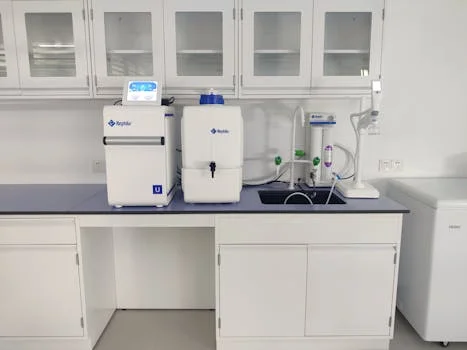
Effective treatment of hospital wastewater requires a multi-stage process flow designed to address its unique contaminant profile. A typical engineering solution for Nottingham hospitals involves a sequence of physical, biological, and advanced disinfection stages. The process generally begins with initial screening to remove larger solids, followed by equalization to buffer flow and concentration fluctuations. Biological treatment, often via advanced membrane bioreactor (MBR) systems, then degrades organic matter and removes nutrients. Finally, robust disinfection ensures pathogen inactivation before discharge.
The initial stage typically involves screening with rotary bar screens designed for 3–6 mm solids removal, preventing clogging in downstream equipment. This is followed by equalization tanks, sized for 6–12 hours retention, to ensure a consistent flow and concentration to the biological treatment unit, managing the variable loads characteristic of hospital operations. For biological treatment, MBR systems for hospital effluent treatment are increasingly preferred over conventional activated sludge. MBR technology offers a significantly smaller footprint, produces superior effluent quality (virtually free of suspended solids), and achieves high removal rates for BOD and COD. While MBRs have higher energy consumption for membrane aeration and permeate pumping, their benefits in terms of effluent quality and space efficiency often outweigh these costs for hospital applications, especially given Nottingham's urban development constraints.
Disinfection is a critical final step, with chlorine dioxide (ClO₂) and ozone being highly effective options for medical effluent. HydropureWater's on-site chlorine dioxide generators for hospital effluent offer outputs ranging from 50–20,000 g/h, achieving a 99.9% kill rate for bacteria and viruses without forming harmful trihalomethanes (THMs) or other chlorinated organic compounds. Ozone generators, such as 2025 models with outputs from 5–20,000 g/h, are also highly effective, capable of achieving up to 95% COD reduction and superior pathogen inactivation, particularly against antibiotic-resistant strains and viruses. For a comprehensive overview of water disinfection technologies, consult our 2025 disinfection equipment specifications.
HydropureWater's compact medical wastewater treatment units integrate these processes into modular systems suitable for the specific flow rates and space availability of Nottingham's hospital facilities. These units are designed to handle flow rates typically found in hospital settings, ensuring compliance with stringent discharge limits.
Table: Key Equipment Specifications for Nottingham Hospital Wastewater Treatment
| Process Stage | Equipment Type | Key Specifications (HydropureWater Relevant) | Typical Performance |
|---|---|---|---|
| Pre-treatment | Rotary Bar Screen | Screen opening: 3–6 mm; Material: SS304/316 | Removes >95% of solids >3mm |
| Equalization | Equalization Tank | Retention time: 6–12 hours; Volume: 1–2 times daily flow | Buffers flow & concentration variability by >50% |
| Biological Treatment | MBR System (e.g., HydropureWater MBR) | Membrane pore size: 0.05–0.4 µm; Flux: 10–30 LMH | TSS removal: 99.9%; BOD/COD reduction: >95%; Pathogen reduction: >99.9% |
| Disinfection | Chlorine Dioxide Generator | Output: 50–20,000 g/h; Dosage: 1–5 mg/L | Pathogen kill rate: 99.99%; Disinfection byproducts: Minimal |
| Disinfection | Ozone Generator (2025 models) | Output: 5–20,000 g/h; Concentration: 8–12% (wt) | COD reduction: up to 95%; High pathogen inactivation |
| Overall System | Integrated Medical WWTP | Flow rates: 10–200 m³/h; Modular design | Effluent quality meets UK EPA & NHS Trust standards |
Cost Breakdown for Hospital Wastewater Treatment in Nottingham: Capital, Operational, and Compliance Costs
Implementing a dedicated hospital wastewater treatment system in Nottingham involves a significant financial commitment, encompassing capital expenditure, ongoing operational costs, and compliance-related expenses. Understanding these costs is crucial for NHS Trust facility managers in budgeting and project planning.
Capital costs for on-site treatment systems in Nottingham typically range from £800–£1,500 per cubic meter per day (£/m³/day) of treatment capacity. For example, a medium-sized MBR system designed to treat 50 m³/h (1,200 m³/day) of hospital effluent could represent a capital investment of approximately £1.2M to £1.8M, depending on the complexity, level of automation, and site-specific requirements. This includes costs for design, equipment purchase, civil works, installation, and commissioning.
Operational costs are a continuous expenditure and are generally broken down into several components. Energy consumption, primarily for pumps, blowers, and disinfection units, typically accounts for £0.15–£0.30/m³ of treated wastewater. Chemical costs, including coagulants, pH adjusters, and disinfectants, range from £0.05–£0.15/m³. Labor for operation and routine maintenance can add £0.10–£0.20/m³, while spare parts and unscheduled maintenance typically cost £0.05–£0.10/m³. Therefore, total operational costs for on-site treatment systems in Nottingham generally fall within £0.30–£0.60/m³.
Comparing on-site treatment with off-site disposal highlights a clear financial incentive for investment. Off-site disposal, which often involves tankering hazardous medical effluent to specialized treatment facilities, can cost £0.50–£1.20/m³, depending on distance, volume, and contaminant profile. Over time, the lower operational cost of an on-site system often leads to substantial savings. Compliance costs include Environment Agency permit application fees, annual subsistence fees, and the cost of regular effluent monitoring equipment and analysis, which can be thousands of pounds annually.
A simple ROI calculator framework can help justify the capital outlay: Payback Period (Years) = (Total Capital Cost) / (Annual Savings from Reduced Disposal Fees + Avoided Fines).
For instance, if an on-site system costing £1.5M saves £250,000 annually in disposal fees, the payback period would be approximately 6 years, not including the benefits of enhanced environmental compliance and reduced reputational risk.
Table: Estimated Cost Breakdown for Hospital Wastewater Treatment in Nottingham
| Cost Category | Component | Estimated Range (Nottingham, per m³) | Notes |
|---|---|---|---|
| Capital Costs | System Purchase & Installation | £800–£1,500 / m³/day capacity | Includes equipment, civil works, design, commissioning |
| Operational Costs | Energy Consumption | £0.15–£0.30 / m³ | Pumps, blowers, disinfection, automation |
| Chemicals (Coagulants, Disinfectants) | £0.05–£0.15 / m³ | Dependent on effluent quality and treatment method | |
| Labor (Operation & Maintenance) | £0.10–£0.20 / m³ | Skilled technicians, routine checks | |
| Maintenance & Spare Parts | £0.05–£0.10 / m³ | Preventative maintenance, consumable parts | |
| Total Operational Cost (On-site) | £0.30–£0.60 / m³ | ||
| Off-site Disposal Cost | Tankering & Specialized Treatment | £0.50–£1.20 / m³ | Variable by volume, distance, and hazard level |
| Compliance Costs | Permit Fees (EA, Severn Trent) | £Thousands annually | Application, annual subsistence, monitoring |
| Monitoring Equipment & Analysis | £Hundreds to £Thousands annually | Lab tests, online sensors, reporting |
How to Select the Right Wastewater Treatment System for Nottingham Hospitals: A Decision Framework

Selecting the optimal wastewater treatment system for Nottingham hospitals requires a structured evaluation process that considers technical, regulatory, and financial factors. This decision framework guides facility managers through critical steps to ensure the chosen solution is both effective and sustainable.
- Step 1: Define Effluent Quality Requirements. Begin by thoroughly understanding all applicable discharge limits. This includes UK EPA standards (e.g., Urban Waste Water Treatment Directive), NHS Trust internal guidelines, and specific local discharge permits issued by Severn Trent Water for the Nottingham area. Accurate characterization of your current raw wastewater (flow rates, COD, BOD, TSS, specific contaminants like pharmaceuticals and pathogens) is essential for setting appropriate treatment targets.
- Step 2: Assess Site Constraints. Evaluate the physical limitations of your facility. Key considerations include available space for equipment, power availability and reliability, potential noise restrictions for neighboring areas, and odor control needs. For sites with limited space, compact solutions like membrane bioreactors (MBRs) or underground treatment units (e.g., HydropureWater WSZ series) may be necessary.
- Step 3: Evaluate Treatment Technologies. Compare different treatment technologies based on their suitability for hospital effluent. For instance, MBRs offer high effluent quality and a small footprint but may have higher energy demands. Dissolved Air Flotation (DAF) can be effective for high TSS and oil/grease loads, while advanced oxidation processes (AOPs) or specialized chemical disinfection are often required for pharmaceutical residues and antibiotic-resistant bacteria. Consider the pros and cons of each technology in the context of your specific contaminant profile and desired effluent quality.
- Step 4: Compare Suppliers. Evaluate potential suppliers based on their experience with hospital wastewater treatment, compliance with UK standards, and the level of service support offered. Assess their track record in similar projects, their engineering capabilities, and the availability of local maintenance and spare parts.
- Step 5: Calculate Lifecycle Costs. Beyond initial capital expenditure, project the total lifecycle costs over a 10–15 year period. This includes not only capital costs but also ongoing operational expenses (energy, chemicals, labor, maintenance) and compliance costs (permit fees, monitoring). A comprehensive lifecycle cost analysis often reveals that a higher upfront investment in a more efficient system can lead to significant long-term savings. Insights from how Portugal’s hospitals handle similar compliance challenges or Dallas’s approach to hospital wastewater compliance can provide valuable comparative perspectives.
Table: Hospital Wastewater Treatment System Decision Matrix
| Decision Factor | High Pathogen/ARB Risk | Space Constraints | High Pharmaceutical Load | Strict Nutrient Limits |
|---|---|---|---|---|
| Recommended Technology | MBR + ClO₂/Ozone | Compact MBR / Underground WSZ | MBR + AOPs (e.g., Ozone) | MBR (A/O configuration) |
| Key Considerations | Robust disinfection, effluent quality | Vertical integration, modular design | Advanced oxidation, chemical resistance | Denitrification, phosphorus removal |
| Operational Impact | Higher chemical/energy for disinfection | Accessibility for maintenance | Specialized chemical handling | Precise control of aeration |
| Cost Implications | Increased OPEX for advanced disinfection | Potentially higher CAPEX for compact design | Higher CAPEX/OPEX for AOPs | Moderate increase in CAPEX/OPEX |
Frequently Asked Questions
What is the Nottingham City Hospital Energy Centre?
The Nottingham City Hospital Energy Centre is a £25 million project focused on upgrading the hospital's energy infrastructure, including combined heat and power (CHP) systems, to improve efficiency and reduce carbon emissions. While it supports overall hospital operations, its primary function is energy generation, not wastewater treatment.
What is Nottingham hospital known for?
Nottingham University Hospitals NHS Trust, comprising Queen’s Medical Centre and City Hospital, is known for being one of the largest acute teaching trusts in the UK. It handles approximately 2.5 million m³/year of medical effluent, serving a vast patient population and offering a wide range of specialist services, including trauma and neuroscience.
What is the pH of hospital wastewater?
The pH of hospital wastewater typically ranges from 6.5 to 8.5. This range is influenced by various discharges, including laboratory waste, cleaning agents, and bodily fluids. Maintaining pH within this range is crucial for the optimal performance of biological treatment processes and to comply with discharge regulations.
What are the two main hospitals in Nottingham?
The two main hospitals managed by Nottingham University Hospitals NHS Trust are Queen’s Medical Centre (QMC) and Nottingham City Hospital. Both facilities contribute significantly to the total volume and complexity of hospital wastewater generated in the Nottingham area.