
Why Dallas Hospitals Need Specialized Wastewater Treatment
Dallas County's 47 hospitals generate approximately 2.3 million gallons of effluent daily, containing high concentrations of pharmaceuticals, pathogens, and heavy metals that exceed standard municipal processing capabilities. Unlike domestic sewage, hospital wastewater in North Texas often contains specific contaminants such as carbamazepine (detected at levels of 12–45 µg/L), norovirus, MRSA, and mercury from legacy dental amalgam. These substances pose a direct threat to the Trinity River Basin, leading to stringent local enforcement. In 2023, the Texas Commission on Environmental Quality (TCEQ) cited 12 Dallas-area hospitals for exceeding pretreatment limits, with fines averaging $18,500 per violation according to the TCEQ 2023 Annual Enforcement Report.
The Dallas Water Utilities (DWU) pretreatment program requires healthcare facilities to meet local limits that are significantly stricter than federal EPA standards. This is primarily due to the limited dilution capacity of the Trinity River during dry Texas summers. For example, while federal guidelines might be more lenient on total suspended solids (TSS), DWU mandates a TSS limit of ≤ 200 mg/L to prevent clogging and interference at the Central Wastewater Treatment Plant. Failure to comply results in heavy sewer surcharges, which can exceed $100,000 annually for large medical centers.
Practical engineering upgrades have demonstrated immediate financial and regulatory relief for Dallas facilities. A notable case involves Parkland Hospital's 2022 implementation of a 150 m³/h treatment system. By integrating advanced solids removal, the facility reduced influent TSS from 420 mg/L to just 18 mg/L. According to data from the DWU 2023 rate study, this upgrade allowed the hospital to avoid $82,000 per year in sewer surcharges while ensuring 100% compliance with TCEQ discharge permits. This scenario underscores the necessity of moving beyond basic grease traps toward sophisticated DAF systems for hospital wastewater pretreatment and disinfection technologies.
Dallas Hospital Wastewater: Regulatory Standards and Permit Requirements
The regulatory framework governing hospital wastewater in Dallas is complex, with multiple stakeholders involved.The Texas Commission on Environmental Quality (TCEQ) enforces categorical pretreatment standards for Dallas medical facilities to protect the Trinity River Basin and municipal infrastructure. Facilities managers must navigate both state-level TCEQ Title 30 Texas Administrative Code (TAC) Chapter 315 and local Dallas City Code Chapter 49. These regulations mandate that any hospital discharging into the 700-square-mile Dallas Water Utilities system must obtain a Wastewater Discharge Permit if they are classified as a Significant Industrial User (SIU) or if their flow exceeds 25,000 gallons per day.
| Parameter | TCEQ/DWU Limit | Monitoring Frequency | Sampling Method |
|---|---|---|---|
| Biochemical Oxygen Demand (BOD) | ≤ 250 mg/L | Weekly | 24-Hour Composite |
| Total Suspended Solids (TSS) | ≤ 200 mg/L | Weekly | 24-Hour Composite |
| Fecal Coliform | ≤ 200 CFU/100mL | Monthly | Grab Sample |
| pH Range | 6.0 – 9.0 Standard Units | Continuous | In-line Meter |
| Oil & Grease | ≤ 100 mg/L | Monthly | Grab Sample |
| Silver (Ag) | ≤ 0.1 mg/L | Monthly | 24-Hour Composite |
| Mercury (Hg) | ≤ 0.002 mg/L | Monthly | 24-Hour Composite |
| Chlorine Residual | ≤ 0.1 mg/L | Daily | Grab Sample |
Beyond these numeric limits, Dallas hospitals are subject to Whole Effluent Toxicity (WET) testing if their discharge contains complex chemical mixtures from oncology or radiology departments. The permit application process typically requires a 90-day review period and includes a fee ranging from $1,200 to $3,500, depending on the projected flow rate. For new installations, a mandatory engineering design review is required by TCEQ (Section 4.2 of the 2024 Pretreatment Manual) to ensure the proposed system can handle peak hydraulic loads during sterilization cycles or emergency department surges. Compliance officers must also maintain three years of records on-site for unannounced DWU inspections, which occur at least annually for major healthcare providers.
Engineering Specifications for Hospital Wastewater Treatment Systems
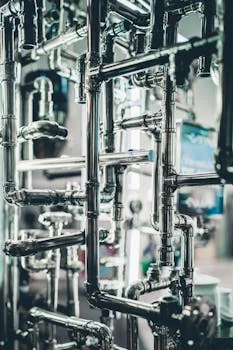
Engineering flow rates for Dallas medical facilities typically range from 10 m³/h for outpatient clinics to over 500 m³/h for major regional trauma centers such as Baylor University Medical Center. Designing a treatment train for these facilities requires a multi-stage approach to address the high variability of hospital effluent. The primary stage must include fine screening with 6mm bar spacing to remove fibrous materials and plastics common in medical waste, followed by an equalization tank with at least 24-hour retention to buffer chemical spikes from laboratory cleaning agents.
Secondary and tertiary treatment stages are selected based on the specific removal efficiencies required for compliance. Dissolved Air Flotation (DAF) is the industry standard for high-solids removal, utilizing micro-bubbles to loft fats and suspended solids to the surface for mechanical skimming. For facilities with more stringent pathogen or pharmaceutical removal requirements, Membrane Bioreactor (MBR) technology combines biological treatment with ultrafiltration. This approach is increasingly favored in Dallas due to its compact footprint and ability to produce high-quality effluent suitable for non-potable reuse.
| System Type | TSS Removal Efficiency | BOD Removal Efficiency | Pathogen Reduction | Energy Consumption |
|---|---|---|---|---|
| DAF (Dissolved Air Flotation) | 92–97% | 60–80% | 1–2 Log | 0.3–0.5 kWh/m³ |
| MBR (Membrane Bioreactor) | 99%+ | 95%+ | 4-Log (99.99%) | 0.6–1.2 kWh/m³ |
| Chlorine Dioxide (ClO₂) | N/A | < 5% | 4-Log (99.99%) | 0.1 kWh/m³ |
| Activated Sludge | 85–90% | 85–92% | 1–2 Log | 0.4–0.7 kWh/m³ |
Footprint requirements are a critical constraint for urban Dallas hospitals. DAF systems generally require 0.5–1.2 m² per m³/h of flow, whereas compact MBR systems for space-constrained hospitals utilize 0.8–1.5 m² per m³/h but eliminate the need for secondary clarifiers. Disinfection is the final critical component; chlorine dioxide generators are preferred over traditional chlorination because they do not produce harmful trihalomethanes (THMs) and maintain a longer-lasting residual in the effluent piping, ensuring a 99.99% fecal coliform kill at a standard 2 mg/L dose with 30 minutes of contact time.
DAF vs MBR vs Chlorine Dioxide: System Comparison for Dallas Hospitals
When selecting a treatment system, Dallas hospitals must consider several factors.Selecting between Dissolved Air Flotation (DAF), Membrane Bioreactor (MBR), and Chlorine Dioxide (ClO₂) systems requires balancing influent variability against Dallas Water Utilities' (DWU) surcharge thresholds. DAF systems are the most effective solution for facilities with high TSS and oil/grease loads, such as surgical centers or hospitals with large commercial kitchens. However, DAF is a physical-chemical process and often requires a secondary biological or disinfection stage to meet all TCEQ fecal coliform and BOD standards. In contrast, MBR systems offer a comprehensive single-unit solution that addresses solids, organics, and pathogens simultaneously, making them ideal for new builds or total system overhauls where space is limited.
| Criteria | DAF System | MBR System | ClO₂ Generator |
|---|---|---|---|
| Best Use Case | High TSS/Grease removal | Total compliance/Reuse | Standalone disinfection |
| Capital Cost (Avg) | $80,000 – $250,000 | $120,000 – $400,000 | $20,000 – $80,000 |
| O&M Cost (per m³) | $0.15 – $0.30 | $0.40 – $0.80 | $0.05 – $0.15 |
| Footprint | Moderate | Low/Compact | Minimal (< 1 m²) |
| Maintenance | Weekly Skimming | Quarterly Cleaning | Monthly Calibration |
Operational complexity varies significantly between these technologies. DAF units require weekly adjustments to skimmer speeds and monthly checks on the saturation vessel, whereas MBR systems necessitate automated "clean-in-place" (CIP) cycles every 3 to 6 months to maintain membrane permeability. For hospitals that already meet solids and BOD limits but struggle with microbial compliance, installing chlorine dioxide generators for hospital effluent disinfection is a cost-effective upgrade. This technology provides superior inactivation of antibiotic-resistant bacteria compared to UV or bleach, and the generators occupy less than 0.1 m² of floor space. Facilities managers should consider that while MBR has higher O&M costs due to membrane replacements every 5–8 years, the reduction in sewer surcharges often offsets these expenses more rapidly than other combinations.
Cost Breakdown and ROI Analysis for Dallas Hospital Wastewater Systems
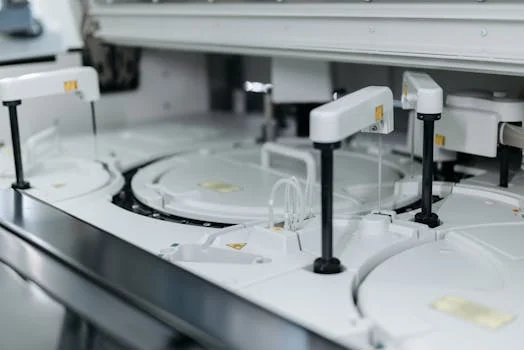
Capital expenditures for hospital wastewater systems in Dallas range from $120,000 to $450,000, with operational savings often yielding a full return on investment within 36 to 60 months. The initial investment includes the core equipment ($50,000–$400,000), specialized installation by licensed Texas contractors ($20,000–$100,000), and the mandatory TCEQ permitting and engineering fees ($16,000–$55,000). While these figures may seem substantial, they must be weighed against the escalating costs of non-compliance in the North Texas region.
Operational and maintenance (O&M) costs are driven by three primary factors: labor, chemicals, and energy. A typical 100 m³/h system requires approximately 0.5 to 1.5 full-time equivalent (FTE) hours daily for monitoring and calibration. Chemical costs for coagulants (in DAF) or precursors (in ClO₂ generators) range from $0.05 to $0.30 per cubic meter. Energy consumption is highest for MBR systems due to aeration requirements, costing between $0.10 and $