Seattle hospitals that discharge process wastewater to the municipal sewer must hold a King County Industrial Waste Program (KCIW) discharge authorization. Hospital wastewater treatment for medical campuses typically combines screening, equalization, biological or flotation pretreatment, and disinfection before the sewer connection. Earlier local summaries cited design targets of <30 mg/L BOD, <30 mg/L TSS, and <200 CFU/100 mL fecal coliform. Harborview Medical Center’s Minor Discharge Authorization No. 712-05 instead applies King County Code 28.84.060 local limits. Those limits cover metals, nonpolar FOG at 100 mg/L, and settleable solids at 7.0 ml/L. pH bands are instantaneous minimum 5.0, daily minimum 5.5, and maximum 12.0 (King County Industrial Waste Program, 2022). Issuance fees for a renewed Minor Discharge Authorization are currently $1,500. Broader annual fee bands in past market estimates still run about $1,200–$5,000 by flow tier.
Why Seattle Hospitals Need Dedicated Pretreatment
Seattle-area hospitals need dedicated pretreatment because medical effluent carries pharmaceuticals, pathogens, and high organic loads that can disrupt West Point and other regional plants if sent untreated. Antibiotics and chemotherapy agents often pass through municipal secondary treatment. Pathogen loads raise worker and biosolids risk, so KCIW requires hospital authorizations with generator treatment and BMPs before sewer discharge.
Most plants we size for urban medical campuses run equalization at the lower end of the 24-hour peak-flow envelope rather than oversizing reactors for rare spikes. High organic strength from labs, kitchens, and patient care can also trigger surcharge treatment fees when BOD and TSS exceed domestic-strength thresholds. Implementing a healthcare wastewater system for large medical facilities at the source reduces surcharge exposure and protects Puget Sound receiving waters. Swedish Medical Center’s 2022 upgrade, reported at about $2.1 million, combined advanced screening, biological oxidation, and multi-stage disinfection as one documented local precedent.
King County Permit Requirements for Hospital Dischargers
King County Industrial Waste Program authorizations for hospitals follow a staged application, review, issuance, and monitoring path under King County Code 28.84.060. Facilities planning King County–regulated discharges greater than 25,000 gallons must file at least 90 days before discharge. Federally regulated categorical discharges need 120 days. Most other discharges need 30 to 60 days (King County Industrial Waste Program fact sheet).
Step 1: Application Submission
Submit the Discharge Application for Hospitals and Medical Laboratories to KCIW. Include average and peak flow, wastewater characterization for BOD, TSS, pH, metals, and pathogens, plus a process flow diagram of pretreatment.
Step 2: Technical Review and Site Inspection
Review windows commonly span 45–90 days for complex medical sites, aligning with the official 90-day lead time above 25,000 gallons. Inspectors verify sampling-port access, chemical storage, emergency containment, and premises isolation from potable water.
Step 3: Permit or Authorization Issuance
KCIW may issue a Minor Discharge Authorization, Major Discharge Authorization, or individual permit. Harborview Medical Center holds Minor Discharge Authorization No. 712-05 for hospital and clinical laboratory wastewater to West Point Treatment Plant. The authorization runs from 7 September 2022 through 6 September 2027. Pretreatment is defined as waste treatment by generator and BMPs. Reapplication is due at least 90 days before expiration.
Step 4: Monitoring and Reporting
Self-monitoring frequency follows the control document. Accredited Washington State Department of Ecology laboratories must analyze required parameters. Notify KCIW at least 60 days before increasing volume or changing discharged substances.
| Facility Tier (Flow Rate) | Annual Permit Fee (2025 Est.) | Required Sampling Frequency |
|---|---|---|
| Small (<50,000 GPD) | $1,200 – $1,800 | Quarterly |
| Medium (50,000 – 200,000 GPD) | $1,800 – $3,500 | Monthly |
| Large (>200,000 GPD) | $3,500 – $5,000 | Bi-Weekly / Continuous (pH) |
Renewed Minor Discharge Authorization issuance currently costs $1,500 per Harborview’s 2022 cover letter, which sits inside the small-tier band above. Prior enforcement summaries commonly flagged pH excursions, incomplete sampling logs, and failure to notify process changes. Automated logging still pays for itself when inspectors arrive unannounced.
Hospital Wastewater Treatment Process Specs for Seattle Facilities
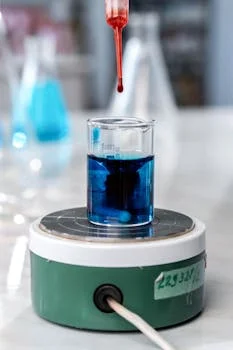
Primary treatment for Seattle medical facilities must use mechanical screening to protect downstream biology and municipal trunks. Rotary bar screens with 6–25 mm spacing typically handle 10–500 m³/h and strip debris from patient care and kitchen lines before reactors. Equalization tanks sized for 24-hour peak flow stabilize pH and organic spikes that otherwise trip local limits.
Secondary selection usually turns on footprint and FOG load. For dense Seattle campuses, a compact MBR system for hospital effluent polishing often wins because membranes deliver about 90–98% BOD/COD removal in a small pad. Facilities with large kitchens instead lead with a DAF system for high-FOG kitchen effluent, which removes 95–99% FOG before biology. Small clinics can package these stages on a skid when daily flow stays under about 50,000 GPD. The Medical & Hospital Wastewater Treatment System fits that duty.
| Parameter | MBR (DF Series) | DAF |
|---|---|---|
| BOD/COD Removal | 90–98% | 70–85% |
| FOG Removal | Moderate | 95–99% |
| Footprint | Compact (Integrated) | Moderate to Large |
| Effluent Quality | High (Reuse Quality) | Moderate (Pretreatment Quality) |
Tertiary disinfection closes the train. An on-site chlorine dioxide generator for medical effluent disinfection remains the workhorse when residual kill and biofilm penetration matter more than UV transmissivity. Plate-and-frame presses with 1–500 m² filtration area typically dewater sludge toward <20% solids before licensed hauling. Secondary containment must hold 110% of the largest chemical or waste tank volume.
What Do Disinfection Upgrades for Piping and Tanks Typically Cost?
Disinfection upgrades for hospital piping, tanks, structures, and equipment typically cost $20,000–$85,000 for ClO2 or ozone generation hardware alone, scaled by flow tier in the Seattle market. Small systems under 50,000 GPD often land near $20,000 for the generator package. Medium campuses (50,000–200,000 GPD) budget about $45,000. Large regional centers above 200,000 GPD commonly allocate about $85,000 before installation labor.
Those figures cover generation and feed equipment, not full pipe replacement. Loop recirculation, residual analyzers, tank coatings, and shutdown labor can equal or exceed the generator line item on older Seattle wings. When UV is considered instead, high turbidity and pharmaceutical complexity often force higher dose or prefiltration. Most hospitals we brief still prefer ClO2 for residual control. Compare detailed dose and contact-time data in our disinfection equipment specifications for medical effluent before freezing the P&ID.
Equipment Cost Breakdown for Seattle Hospital Projects
Capital expenditures for Seattle medical wastewater systems range from $180,000 for small outpatient clinics to over $1.2 million for major regional centers. A medium facility treating 50,000–200,000 GPD typically budgets $450,000–$750,000 for equipment plus installation.
| System Component | Small (<50k GPD) | Medium (50k-200k GPD) | Large (>200k GPD) |
|---|---|---|---|
| Primary Screening | $25,000 | $55,000 | $90,000 |
| Biological/MBR System | $110,000 | $220,000 | $450,000 |
| DAF Unit (If required) | $40,000 | $90,000 | $160,000 |
| Disinfection (ClO2/Ozone) | $20,000 | $45,000 | $85,000 |
| Installation & Permitting | $60,000 | $150,000 | $300,000+ |
Operating costs typically run $0.80–$1.50 per 1,000 gallons treated. On MBR trains, aeration and membrane scouring consume about 40% of OPEX. Disinfection and pH chemicals take about 30%. Labor and routine maintenance fill the remaining 30%. King County surcharge treatment fees recover the cost of high-strength BOD and TSS at the regional plants. Past Seattle estimates used $0.50–$2.00 per 1,000 gallons when limits were exceeded. For a 150-bed hospital discharging about 40,000 GPD, non-compliance can exceed $120,000 per year in combined surcharges, fines, and excess fees. Compliant upgrades typically show a 4-to-6-year payback on those avoided costs alone.
Technology Comparison for Seattle Hospital Campuses
Technology selection for Seattle medical campuses balances footprint, pathogen removal, and kitchen FOG. Harborview-style urban sites often favor compact MBR pads. Campuses with expansive food service still need DAF ahead of biology. Conventional activated sludge remains viable only where land is cheap and odor buffers exist.
| Feature | MBR | DAF | CAS (Conventional) |
|---|---|---|---|
| Footprint | Minimal | Moderate | Large |
| Pathogen Removal | 99.9% | Low | Moderate |
| Energy Use | High | Moderate | Moderate |
| Sludge Production | Low | High | Moderate |
| Chemical Use | Low | High | Low |
| Capital Cost | High | Moderate | Low |
| Operating Cost | Moderate | High | Moderate |
| Scalability | High | Moderate | Low |
Electrochemical oxidation pilots in the region have reported up to about 90% pharmaceutical compound reduction, but capital cost still exceeds ClO2 packages for most budgets. Cross-check national design envelopes in the national standards guide for U.S. medical effluent pretreatment when your counsel asks how Seattle local limits sit beside federal pretreatment rules.
Compliance Checklist: 10 Steps to King County Authorization
Facility managers should close the following items before filing with KCIW. Skipping characterization or containment is the fastest path to a 30-day review delay.
- Conduct Wastewater Characterization: Partner with a Seattle-based, Ecology-accredited lab to test BOD, TSS, pH, metals (mercury, cadmium, lead), and fecal coliform.
- Install Pretreatment Equipment: Size primary screening and equalization for 24-hour peak flow.
- Select Treatment Technology: Choose MBR, DAF, or CAS from measured flow and contaminant profile.
- Design Disinfection System: Specify ClO2, ozone, or UV hardware that can hold design coliform targets under peak turbidity.
- Implement Emergency Containment: Verify 110% spill volume for chemical and waste tanks, with alarms.
- Install Sampling Ports: Keep ports accessible, representative of final effluent, and tamper-resistant.
- Train Staff: Document operation, spill response, and KCIW reporting duties.
- Submit KCIW Application: Attach site plan, process flow diagrams, and characterization data.
- Schedule Site Inspection: Ready chemical storage and sampling locations for the walkthrough.
- Establish Reporting Cadence: Calendar self-monitoring dates and fee payments; reapply 90 days before authorization expiry.
Who This Is For and Next Step
This guide is for Seattle and King County hospital facility managers, EPC engineers, and procurement teams sizing pretreatment for sewer discharge. Look elsewhere if you need onsite septic design for low-flow rural clinics. King County and Washington State Department of Health generally prohibit septic systems for high-hazard medical campuses. To match a Medical & Hospital Wastewater Treatment System or a larger MBR/DAF train to your flow and KCIW tier, share average/peak GPD and recent lab results. You can request an engineered pretreatment quote from there.
Frequently Asked Questions
What is the penalty for discharging hospital wastewater without a King County permit?
Unauthorized discharge can draw civil fines and cost recovery from KCIW. Earlier local summaries cited $5,000–$25,000 per violation per day under King County Code penalty sections. The current KCIW program fact sheet states fines are up to $10,000 a day, plus reimbursement for post-violation inspection, sampling, and administrative costs. Repeat problems can escalate oversight from a Minor Discharge Authorization to a full industrial waste permit with tighter monitoring.
How often does King County inspect hospital wastewater systems?
KCIW typically inspects high-risk medical dischargers about one to two times per year, often without advance notice. Extra visits follow effluent excursions, spills, or bypass reports tied to West Point or other plants. Facilities should keep sampling ports and chemical storage inspection-ready on every shift, not only on scheduled audit weeks or after a written notice arrives.
Can Seattle hospitals use septic systems instead of connecting to the municipal sewer?
No. King County and the Washington State Department of Health prohibit septic systems for hospitals and other high-hazard medical facilities. Medical campuses generating large process flows or hazardous medical wastes must connect to a municipal sewer with an approved pretreatment program and a KCIW control document before discharge begins.
What are the most common contaminants in hospital wastewater?
The primary contaminants of concern are pharmaceuticals, pathogens including antibiotic-resistant organisms, and high BOD/COD from laboratories and food service. Effluent also frequently carries mercury and silver traces from older imaging and dental processes, which is why Harborview’s authorization pairs numeric metal limits with chemical-specific best management practices for labs and clinics.
How long does it take to get a King County wastewater discharge authorization?
Official KCIW lead times are 90 days for King County–regulated discharges above 25,000 gallons, 120 days for federally regulated discharges, and 30–60 days for most other discharges. Incomplete characterization or weak containment documentation still adds weeks during technical review. File renewal applications at least 90 days before an existing authorization expires to avoid a lapse.