Why Almaty Hospitals Need Upgraded Wastewater Treatment in 2025
Hospitals in Almaty must treat wastewater to Kazakh SanPiN 2.1.5.980-00 standards, which require effluent COD < 50 mg/L, BOD < 10 mg/L, and fecal coliforms < 100 CFU/100 mL. With Almaty’s existing municipal treatment facilities located 12 km northwest of the city in a state of unsatisfactory technical condition (per 2022 national reports), decentralized on-site treatment has become a regulatory necessity rather than an operational choice. Hospitals discharging untreated or poorly treated effluent face administrative fines up to ₸2,000,000 or temporary operational shutdowns under Kazakh Environmental Law No. 217-III.
The urgency for modernization is driven by the fact that raw sewage discharge onto filtration beds or landfills—a historical practice in parts of the Almaty region—is now strictly prohibited. Such practices risk contaminating the Trans-Ili Alatau groundwater basins, which are critical for the city’s water supply. A real-world scenario involves a 200-bed hospital in Almaty that was fined approximately ₸1.5 million in 2023 after a Department of Ecology audit revealed COD levels exceeding 400 mg/L in their discharge to the municipal sewer, which was unable to handle the high organic load.
Investment in 2025 is typically triggered by three factors: increasing regulatory pressure from the Almaty Akimat, hospital expansion projects that exceed current treatment capacities, or the failure of 30+ year-old Soviet-era sedimentation tanks. Upgrading to compact, fully automated hospital wastewater treatment systems ensures that facilities remain compliant even as local discharge limits tighten in response to Almaty’s "Green City" initiatives.
Almaty Hospital Wastewater: Influent Characteristics and Treatment Challenges
Hospital effluent in Almaty presents unique engineering challenges due to high concentrations of disinfectants, pharmaceutical residues, and significant seasonal temperature fluctuations. Based on field data from HydropureWater’s Kazakh projects, influent parameters for a standard multi-profile hospital in Almaty typically range from 300 to 800 mg/L for COD and 150 to 400 mg/L for BOD. These levels are significantly higher than standard domestic sewage due to laboratory activities and specialized medical departments.
One of the primary challenges unique to Almaty is the extreme temperature variation, ranging from -20°C in winter to +30°C in summer. This affects the kinetics of biological treatment processes; without proper insulation or heat recovery, traditional activated sludge systems often fail during the winter months. the high salinity of local water sources can inhibit microbial growth, requiring the use of halotolerant bacteria or specialized membrane configurations. Untreated hospital wastewater contributes to the fact that nearly 40% of the city’s total wastewater volume is processed by aging infrastructure that cannot effectively remove antibiotics or endocrine disruptors.
| Parameter | Almaty Influent Range (Typical) | SanPiN 2.1.5.980-00 Limit | WHO Guideline (Comparison) |
|---|---|---|---|
| Chemical Oxygen Demand (COD) | 300 – 800 mg/L | < 50 mg/L | < 150 mg/L |
| Biochemical Oxygen Demand (BOD₅) | 150 – 400 mg/L | < 10 mg/L | < 30 mg/L |
| Total Suspended Solids (TSS) | 200 – 500 mg/L | < 10 mg/L | < 35 mg/L |
| Fecal Coliforms | 10^6 – 10^8 CFU/100 mL | < 100 CFU/100 mL | < 1000 CFU/100 mL |
| Pharmaceutical Residues | 0.1 – 5.0 mg/L | Not specified (monitoring only) | Varies by compound |
Treatment Technologies for Almaty Hospitals: MBR vs. DAF vs. Chlorine Dioxide Systems
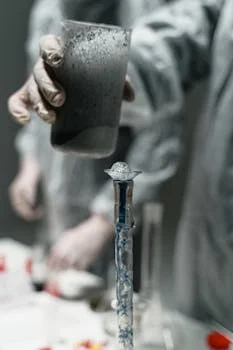
Selecting the appropriate technology depends on the hospital's specific discharge goals, available footprint, and technical capacity of the maintenance staff. Membrane Bioreactor (MBR) systems have become the gold standard for Almaty’s urban hospitals because they provide a 6-log pathogen removal and achieve COD removal rates of 95–98%. Using compact MBR systems for hospital wastewater allows for a footprint reduction of up to 60% compared to traditional secondary clarifiers, which is vital for facilities located in Almaty’s densely populated Medeu or Almaly districts.
Dissolved Air Flotation (DAF) systems serve a different purpose, primarily focusing on the removal of Total Suspended Solids (TSS) and Fats, Oils, and Grease (FOG). For hospitals with large industrial kitchens or specialized pathology labs, DAF systems for pre-treatment of hospital wastewater are essential to prevent clogging of downstream biological processes. While DAF is highly efficient at removing 92–97% of TSS, it requires active chemical dosing and is typically used as a pre-treatment stage rather than a standalone solution for SanPiN compliance.
Disinfection is the final critical hurdle. While UV systems are common, many Almaty engineers prefer chlorine dioxide generators for hospital effluent disinfection because ClO₂ is significantly more effective at penetrating the biofilms and neutralizing antibiotic-resistant bacteria (ARB) often found in medical waste. Unlike traditional chlorine, chlorine dioxide does not produce harmful trihalomethanes (THMs) at the same rate, making it safer for discharge into Almaty’s local water bodies.
| Technology | Removal Efficiency (COD/BOD) | Footprint Requirement | O&M Cost (₸/m³) | Compliance Rating |
|---|---|---|---|---|
| MBR (Membrane Bioreactor) | 95% – 98% | Very Low | ₸1,500 – 4,000 | Excellent (SanPiN + Reuse) |
| DAF (Pre-treatment) | 30% – 50% (Organic) | Medium | ₸800 – 2,000 | Partial (Requires Bio-stage) |
| Chlorine Dioxide | Pathogen Kill Only | Minimal | ₸500 – 1,500 | Essential for Disinfection |
| Hybrid (DAF+MBR+ClO₂) | > 98% | Compact/Modular | ₸2,500 – 5,000 | Full Regulatory Compliance |
Almaty Compliance Checklist: Meeting Kazakh and Municipal Standards
Compliance in Almaty is governed by a combination of national SanPiN standards and municipal regulations enforced by the Almaty Department of Ecology. To ensure a system is legally compliant, facility managers must verify that the effluent meets the strict limits of SanPiN 2.1.5.980-00, particularly for TSS (< 10 mg/L) and fecal coliforms (< 100 CFU/100 mL). If the hospital uses chlorination for disinfection, the residual chlorine must be strictly maintained between 0.3 and 0.5 mg/L to avoid toxicity fines.
Per Almaty Akimat Resolution No. 423, hospitals discharging more than 50 cubic meters of wastewater per day are required to obtain an individual discharge permit. This process involves quarterly sampling and reporting to the municipal authorities. Failure to provide consistent data can lead to the revocation of the facility's environmental passport. Key compliance steps include:
- Permit Acquisition: Submit engineering drawings and environmental impact assessments 3–6 months prior to system commissioning.
- Chemical Management: Ensure an automatic chemical dosing system is in place to maintain pH between 6.5 and 8.5 and to manage coagulant levels.
- Monitoring: Install flow meters and sampling ports that are accessible to municipal inspectors.
- Redundancy: Kazakh standards often require N+1 redundancy for critical pumps and blowers to ensure the system remains operational during maintenance.
Common pitfalls in Almaty include using UV disinfection in high-turbidity effluent without proper pre-filtration, leading to pathogen breakthrough, and failing to account for the pharmaceutical residue limits that are increasingly being scrutinized by the Ministry of Health.
Cost Breakdown: Hospital Wastewater Treatment Systems in Almaty (2025)

Capital expenditures (CAPEX) for turnkey hospital wastewater treatment systems in Almaty currently range from ₸5,000,000 for small clinics to over ₸20,000,000 for large multi-bed regional hospitals. A 100 m³/day MBR system typically requires a budget of approximately ₸8,000,000, which includes equipment procurement, freight, and basic installation. Hybrid systems that incorporate DAF pre-treatment and chlorine dioxide disinfection for a 200-bed facility can reach ₸12,000,000 to ₸15,000,000 depending on the degree of automation required.
Operational expenditures (OPEX) are driven by electricity consumption, chemical reagents, and membrane replacement cycles. In Almaty, labor costs for a full-time operator range from ₸150,000 to ₸300,000 per month, though fully automated systems can reduce this to periodic inspections. Sludge disposal is another significant cost, with Almaty landfills charging between ₸2,000 and ₸5,000 per ton for treated sludge. It is also important to factor in the 12–20% import duties on specialized components like membranes or high-precision sensors that are not manufactured within the Eurasian Economic Union (EAEU).
| System Type | Capacity (m³/day) | Capital Cost (₸) | Annual OPEX (₸/year) | Estimated Payback (Years) |
|---|---|---|---|---|
| Integrated compact medical wastewater system | 50 | ₸5M – ₸7M | ₸1.2M | 3.5 – 4.5 |
| MBR (Standard) | 100 | ₸8M – ₸10M | ₸2.5M | 4.0 – 5.0 |
| Hybrid (DAF+MBR+ClO₂) | 200 | ₸12M – ₸18M | ₸4.8M | 5.0 – 6.5 |
The Return on Investment (ROI) is calculated by comparing the CAPEX against the avoided costs of environmental fines and the potential for water reuse. For instance, a hospital paying ₸2,000,000 annually in fines and water discharge fees can see a payback on a ₸10,000,000 system in approximately five years. selecting the best wastewater system for healthcare facilities can allow for the reuse of treated water for landscape irrigation, which is highly valuable during Almaty's dry summer months.
Step-by-Step Procurement Guide for Almaty Hospitals
Procuring a wastewater treatment system in Almaty requires a structured approach to navigate both technical requirements and local bureaucratic hurdles. Following a framework similar to how U.S. hospitals manage wastewater treatment and compliance can help Almaty facilities achieve international standards while remaining within local budget constraints.
- Needs Assessment: Calculate the daily flow rate (typically 0.5–1.0 m³ per bed) and conduct a laboratory analysis of the current raw influent to identify specific pollutants like high antibiotic loads.
- Site Evaluation: Determine if the system will be underground (to save space and provide natural insulation) or above-ground. Ensure 380V power supply is available.
- Technology Selection: Match the system to the hospital's specific needs. Use MBR if space is limited and high purity is required; use DAF if the hospital has a high volume of laboratory and kitchen waste.
- Vendor Shortlisting: Prioritize suppliers with local technical support in Almaty and those who provide Kazakh-certified (GOST-K) equipment.
- Permitting: Submit the technical project description to the Almaty Department of Ecology. This step should begin at least 4 months before the intended installation date.
- Installation and Commissioning: After construction, perform a 30-day trial run with third-party water quality testing to verify that the effluent consistently meets SanPiN 2.1.5.980-00 before final handover.
For more regional context on how these steps are implemented in different regulatory environments, facility managers can review the hospital wastewater treatment in Portugal guide to compare procurement timelines and certification requirements.
Frequently Asked Questions
What are the penalties for non-compliant hospital wastewater discharge in Almaty?
Fines range from ₸500,000 to ₸2,000,000 per violation. Repeat offenders risk temporary shutdowns of the facility under Kazakh Environmental Code Article 317, which can be devastating for healthcare operations.
Can hospitals reuse treated wastewater in Almaty?
Yes, treated effluent can be reused for non-potable purposes such as landscape irrigation or cooling tower make-up water. However, this requires additional disinfection (typically ClO₂) and a separate permit from the Almaty Water Utility (Almaty Su).
What is the lifespan of an MBR system in Almaty’s climate?
The structural components and tanks typically last 15–20 years. The membrane modules require replacement every 5–8 years, depending on the effectiveness of the pre-treatment and cleaning protocols. Winterization is essential to protect biological activity.
Are there government subsidies for hospital wastewater treatment in Almaty?
Subsidies are occasionally available through the Kazakh Green Economy Fund or international development grants. However, these are competitive and often require the hospital to demonstrate significant water savings or environmental protection metrics.
What are the most common failures in Almaty’s hospital wastewater systems?
The most frequent issues are membrane fouling due to poor pre-treatment, frozen pipes or inhibited bacterial growth during the winter, and inaccurate chemical dosing caused by a lack of automated sensors.