SO2 Removal Performance at a Glance
SO2 scrubber specifications typically deliver 95% to 99.9% sulfur dioxide removal when L/G, packing depth, and reagent stoichiometry stay on design. Wet lime or limestone units often hold 99%+ on 500–5,000 ppmv inlet gas at 3–5 m/s, L/G 5–15 L/m³, and 1.5–3 m structured packing. Dry scrubbers more often top out near 90–98% on lower-SO2 streams or tight plots.
Engineers size units from measured Nm³/h, inlet SO2 in ppmv, the stack limit, water balance, and byproduct handling. Most industrial boilers we size for run at the lower L/G end below about 1,000 ppmv SO2, and climb toward 12–15 L/m³ when the permit forces sub-10 ppmv stack SO2.
How SO2 Scrubber Systems Work: Process Flow and Core Components
SO2 scrubber systems treat flue gas in three contact stages: quench cooling, alkaline absorption, and mist elimination. Hot gas enters the quench, where recirculated liquor drops temperature and knocks out coarse solids before the packing or spray zone. In the absorber, SO2 dissolves and reacts with lime, limestone, or sodium reagent to form sulfite or sulfate salts. A mist eliminator then strips entrained droplets so the stack does not re-emit reagent or dissolved SO2.
Structured packing (corrugated metal or plastic) typically shows 0.5–1.5 kPa/m pressure drop and high surface area per meter of bed. Random rings or saddles tolerate higher solids but often run 1.0–2.5 kPa/m. Plastic and ceramic media resist scaling better than many alloys when chlorides and low pH appear at the wet-dry interface. Downstream particulate polishers such as a baghouse dust collector are common when the scrubber alone cannot meet opacity or PM limits.
How do chemical processes affect industrial scrubber performance?
Chemical process choice sets both removal rate and the waste stream you must treat. Lime (Ca(OH)2) absorbers usually hold pH 7–8; limestone (CaCO3) trains often run pH 5.5–6.5 to balance dissolution rate against scaling. The primary solid is calcium sulfite, which forced oxidation converts to gypsum (CaSO4·2H2O) when a saleable byproduct is required. Sodium hydroxide raises kinetics on short contact-time towers but increases reagent cost and produces soluble sodium salts that load wastewater TDS.
On streams above about 2,000 ppmv SO2, regenerable amine loops such as Shell CANSOLV strip and recover SO2 instead of committing full stoichiometric lime. That path cuts reagent tonnage and landfill volume when sulfur recovery pays for the stripper energy. According to EPA APTI Course SI 412c (Wet Scrubber Plan Review), gas absorption needs large interfacial area, mixing, and residence time. Packed or spray towers beat high-velocity venturis when SO2, not fine PM, drives design.
SO2 Scrubber Specifications: Design Parameters and Efficiency Benchmarks
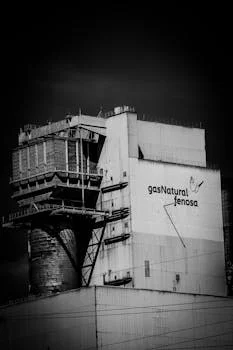
Industrial SO2 scrubbers handle gas flows from about 1,000 Nm³/h on small boilers to more than 500,000 Nm³/h on utility units, typically with 3:1 turndown and advanced trains near 5:1. Wet units cover roughly 500–5,000 ppmv inlet SO2; dry absorbers are usually specified for about 100–2,000 ppmv. Liquid-to-gas ratio remains the first knob: wet L/G of 5–15 L/m³ raises both efficiency and pump power, while spray-dryer dry systems often run 0.1–0.5 L/m³ as atomized slurry.
Structured packing depths of 1.5–3 m commonly deliver about 95% removal near 1.5 m and above 99% near 3 m when L/G and pH are held. Random packing more often needs 2–4 m for the same duty. Lime stoichiometry for high-efficiency wet service sits near 1.05–1.1 times theoretical SO2, with field consumption often 1.02–1.2 kg lime per kg SO2 removed. Dry sodium bicarbonate use is higher, about 1.5–2 kg per kg SO2.
| SO2 Inlet Concentration (ppmv) | Wet Scrubber Removal Efficiency (%) | Dry Scrubber Removal Efficiency (%) | Typical Packing Depth (m) | L/G Ratio (L/m³) |
|---|---|---|---|---|
| 100 - 500 | 95 - 98 | 90 - 95 | 1.5 - 2.0 | 5 - 10 (Wet), 0.1 - 0.3 (Dry) |
| 501 - 2,000 | 98 - 99 | 95 - 98 | 2.0 - 2.5 | 8 - 12 (Wet), 0.2 - 0.4 (Dry) |
| 2,001 - 5,000 | 99 - 99.9 | N/A (typically not used) | 2.5 - 3.0 | 10 - 15 (Wet) |
Reagent price bands still dominate OPEX models: lime about $120–$200/ton, limestone about $80–$150/ton, and sodium bicarbonate about $300–$500/ton. Wet water use is typically 1–3 m³/h per MW of plant capacity for evaporation and blowdown; dry trains often need only 0.1–0.5 m³/h per MW for slurry make-up. HydropureWater’s integrated FGD scrubber with 99%+ SO2 removal is sized around these L/G, packing, and stoichiometry bands when the RFQ states flow, fuel sulfur, and stack limits.
What makes a high-efficiency wet scrubber?
A high-efficiency wet scrubber reaches 95–99.9% SO2 removal when gas velocity, packing depth, L/G, and pH stay inside the design envelope at the stated inlet ppmv. Wet trains beat dry units on the tightest limits—such as about 5 ppmv under Southern California RECLAIM or demanding BAT-driven caps—because liquid contact time and alkalinity can be raised without the same water-limited mist constraints. Dry scrubbers remain the better match below roughly 1,000 ppmv SO2 when plot space or water scarcity rules out a full wet FGD island.
Capital cost for wet systems commonly falls in the $150–$300/kW band once wastewater and reagent prep are included; dry systems more often quote $100–$200/kW. OPEX typically lands near $0.005–$0.015/kWh wet versus $0.003–$0.01/kWh dry. Wet blowdown still needs solids separation. A High-Efficiency Sedimentation Tank (Lamella Clarifier) is the usual first cut before filter press or gypsum dewatering. Site water chemistry often mirrors the broader wastewater treatment requirements for wet SO2 scrubbers.
| CAPEX Component | Wet Scrubber (% of total CAPEX) | Dry Scrubber (% of total CAPEX) |
|---|---|---|
| Scrubber Vessel & Internals | 30-40% | 40-50% |
| Reagent Preparation & Handling | 15-20% | 10-15% |
| Wastewater Treatment | 10-15% | N/A |
| Fans & Ductwork | 10-15% | 10-15% |
| Installation & Civil Works | 15-20% | 15-20% |
| Parameter | Wet Scrubber (100 MW Plant) | Dry Scrubber (100 MW Plant) |
|---|---|---|
| Footprint (approx.) | 1,500 - 2,500 m² | 800 - 1,200 m² |
| Height (approx.) | 30 - 50 m | 20 - 35 m |
Gypsum from forced-oxidation wet FGD can sell near $5–$15/ton when wallboard markets are open. Dry powder byproduct more often costs $50–$100/ton to landfill. Choose wet above about 2,000 ppmv SO2 or when the permit needs 99%+; choose dry for compact retrofits and low water budgets.
Regulatory Compliance: SO2 Emission Standards and Scrubber Certification Requirements
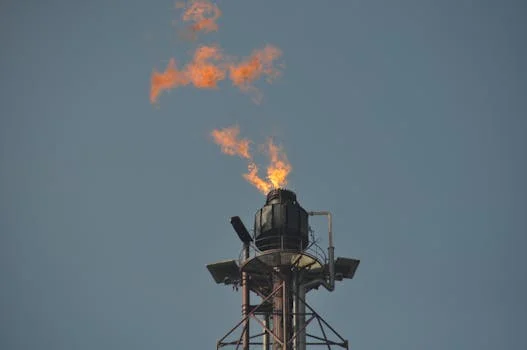
SO2 permit limits set the minimum removal the scrubber must guarantee on a rolling average. Earlier guidance used 0.15 lb/MMBtu for coal-fired units and 0.06 lb/MMBtu for oil-fired units as shorthand NSPS figures.Southern California RECLAIM still drives many designs toward less than 5 ppmv stack SO2.
EU Industrial Emissions Directive 2010/75/EU large-combustion SO2 limits commonly cited span about 35–200 mg/Nm³ by fuel and plant age. BAT-AELs tighten yearly and daily averages further for coal and lignite. World Bank–influenced project finance packages often quote 50–200 mg/Nm³ for new plants and 100–400 mg/Nm³ for existing units. CE marking applies for EEA equipment supply; US projects document NSPS or SIP performance tests. Facilities frequently seek ISO 14001 for the management system that owns CEMS records and corrective actions.
Continuous Emission Monitoring Systems for SO2, opacity, and flue-gas flow remain the compliance backbone. Hourly averages and 30-day rolling means are the usual reportables. Keep performance-test reports, reagent certificates, material specs, and maintenance logs in one package before the next stack test.
Cost Breakdown: CAPEX, OPEX, and ROI for SO2 Scrubber Systems
SO2 scrubber CAPEX typically ranges $100–$300/kW for wet systems and $50–$200/kW for dry systems when scope includes vessel, reagent prep, and installation. Equipment often takes about 60% of CAPEX, installation 20%, engineering 10%, and contingency 10%. OPEX spans about $0.003–$0.015/kWh, with reagent near 40% of that total when lime or bicarbonate prices sit in the bands above.
| OPEX Cost Driver | Typical Percentage of Total OPEX | Notes |
|---|---|---|
| Reagent Consumption | 40% | Lime ($120–$200/ton), Limestone ($80–$150/ton), Sodium Bicarbonate ($300–$500/ton) |
| Water Usage | 20% | Evaporation, blowdown, makeup water for wet scrubbers |
| Energy Consumption | 15% | Fans, pumps, agitators |
| Labor | 10% | Operation, monitoring, routine checks |
| Maintenance | 10% | Spare parts, specialized repairs, inspections |
| Waste Disposal | 5% | Gypsum ($20–$50/ton), dry waste ($50–$100/ton) |
Targeting 99% wet removal often needs about 1.1 kg lime per kg SO2 removed, so small stoichiometry errors show up fast on the monthly chemical invoice. PLC-controlled dosing such as HydropureWater’s automatic chemical dosing system keeps pH and ORP on setpoint and cuts overfeed. Simple payback for many industrial installs still falls in the 3–7 year band when avoided fines, gypsum sales at $5–$15/ton, and downtime risk are counted. For a 100 MW coal example, about $20M CAPEX and $1.5M/year OPEX can still pencil if avoided penalties approach $2M/year. Hidden adders include wet wastewater treatment at about $0.5–$2/m³ after the High-Efficiency Sedimentation Tank (Lamella Clarifier), reagent storage at $50–$100/m³ of volume, and 1–3% annual operating hours lost to outages.
Common SO2 Scrubber Problems and Troubleshooting Guide
Scaling from calcium sulfate or sulfite on packing and nozzles raises pressure drop and cuts removal when pH runs high or L/G runs low. Hold design pH, keep L/G on curve, and schedule acid washes before ΔP climbs more than a few hundred pascals above baseline. Corrosion accelerates below about pH 5; Hastelloy C-276 and FRP remain the usual material answers, with continuous pH monitoring and inhibitors as operating controls.
Reagent carryover points to mist-eliminator fouling or gas velocity above the demister rating—symptoms include a wet plume and unexplained reagent loss. Low SO2 removal with high stack ppmv usually means short contact time: raise L/G first, then add packing depth if fan margin allows. Foaming from organics or poor makeup water causes sump overflow and pump cavitation; antifoam plus feed pretreatment restores level control.
Most plants we commission log baseline ΔP across packing and demister during the acceptance test. A rise of only a few hundred pascals at constant gas flow usually means scaling or mist-pad loading, not a fan problem. Clear the sprays and strainers before you open the vessel if the liquor side is the restricted path.
Selection Checklist and Next Step
Who this is for: plant engineers, EPC process leads, and procurement teams writing SO2 FGD RFQs for boilers, kilns, and chemical oxidizers. Who should look elsewhere: buyers seeking only particulate venturi specs with no SO2 duty, or municipal drinking-water projects without a flue-gas source. Before you freeze scope, clear this checklist:
- Measured flue-gas flow (Nm³/h) and SO2 inlet (ppmv) at max and average load
- Permit form: ppmv, lb/MMBtu, lb/MWh, or mg/Nm³, plus averaging time
- Wet vs dry decision drivers: water balance, plot space, gypsum market, inlet SO2
- L/G, packing depth, and stoichiometric ratio needed for the removal guarantee
- Reagent logistics, wastewater or dry-waste path, and CEMS scope
- Materials of construction for chlorides, temperature, and wet-dry interfaces
- Turndown, fan margin, and maintenance access for packing and demisters
Next step: send gas flow, fuel sulfur, stack limit, and water constraints through Request a free quote so vessel diameter, L/G, and reagent prep can be checked against your envelope.
Frequently Asked Questions
What is the typical lifespan of an SO2 scrubber system?
Wet SO2 scrubbers typically last 20–30 years and dry scrubbers 15–25 years when materials match the chloride and pH duty. Stainless steel, Hastelloy C-276, and FRP each change that window if inspections and lining repairs slip. Scheduled packing, nozzle, and demister replacement usually matters more than the vessel shell for keeping removal on guarantee.
How much does an SO2 scrubber cost per ton of SO2 removed?
SO2 removal cost typically ranges $1,500–$4,000 per ton for wet scrubbers and $1,000–$3,000 per ton for dry scrubbers on a levelized basis. Reagent type, fan and pump energy, water makeup, and byproduct disposal set most of the spread. Plants that sell gypsum near $5–$15/ton move toward the low end of the wet band.
Can SO2 scrubbers remove other pollutants like NOx or mercury?
Standard SO2 scrubbers remove little NOx; SCR or SNCR remains the usual NOx path. Wet SO2 absorbers can capture oxidized mercury well when activated carbon is injected upstream, and they also knock down fine particulate often toward 0.1 micron when mist elimination is healthy. Treat multi-pollutant claims as additive systems, not as a single packed bed replacing SCR.
What are the water requirements for a wet SO2 scrubber?
Wet SO2 scrubbers typically need 1–3 m³/h of water per MW of plant capacity. Evaporation and blowdown to control dissolved solids drive most of that demand, with evaporation often 10–20% of total makeup depending on flue-gas temperature and L/G. Dry scrubbers usually stay near 0.1–0.5 m³/h per MW for reagent preparation only.
How do I size an SO2 scrubber for my facility?
Size from five inputs: flue-gas flow (Nm³/h), SO2 inlet (ppmv), the numeric compliance target, wet vs dry constraints, and reagent plus wastewater scope. Set L/G and packing depth to hit the removal curve at your turndown, then specify dosing, clarification, and byproduct handling. Confirm fan static against packing and demister ΔP before you freeze the vessel diameter.