Minneapolis Sewage Treatment Equipment Suppliers: 2025 Engineering Guide with Costs, Compliance & Decision Framework
Minneapolis sewage treatment projects face strict MPCA discharge limits (e.g., 30 mg/L TSS, 25 mg/L BOD₅ for municipal systems) and rising industrial scrutiny. In 2025, local suppliers offer equipment ranging from compact underground WSZ systems (1–80 m³/h) to industrial DAF units (4–300 m³/h) and MBR membrane bioreactors (10–2,000 m³/day). This guide compares 5 top suppliers, details engineering specs, and provides a decision framework to match your project’s flow rate, footprint, and compliance needs—with cost benchmarks from $50K for small systems to $2M+ for municipal plants.
Why Minneapolis Needs Local Sewage Treatment Equipment Suppliers
MPCA Chapter 7050 mandates that all point-source discharges into Minnesota waters meet specific water quality standards, which for many Minneapolis municipal facilities includes a limit of 30 mg/L for Total Suspended Solids (TSS) and 25 mg/L for five-day Biological Oxygen Demand (BOD₅). These standards are increasingly difficult to meet with aging infrastructure, especially as the Metropolitan Council Environmental Services (MCES) tightens oversight on industrial pre-treatment. For instance, a Minneapolis food processing plant was fined $120,000 in 2023 after its effluent exceeded TSS limits by 400% over a six-month period, demonstrating the financial risk of inadequate treatment capacity. The influent in such facilities often reaches 1,200 mg/L BOD₅, necessitating high-efficiency primary and secondary treatment to avoid surcharges or legal action.
Local environmental conditions also dictate equipment engineering. Minneapolis experiences an average of 150 days per year where temperatures drop below freezing, which significantly inhibits biological activity in traditional open-air lagoons or uninsulated tanks. Biological nitrogen removal and aerobic digestion efficiency can drop by as much as 60% when wastewater temperatures fall below 10°C. urban density in the Twin Cities creates significant space constraints, forcing procurement teams to look toward compact underground sewage treatment systems for Minneapolis projects that offer high volumetric loading rates in a minimal footprint.
The cost of non-compliance in Minnesota is substantial. According to the 2024 MPCA enforcement report, administrative penalty orders for wastewater violations typically range from $10,000 to $50,000 per violation, not including the cost of mandatory corrective actions. With rising demand from the medical device manufacturing and food processing sectors, Minneapolis industrial sewage treatment must prioritize equipment that offers both cold-weather resilience and verifiable removal efficiencies to maintain NPDES permit compliance.
Minneapolis Sewage Treatment Equipment: Types, Specs & Use Cases
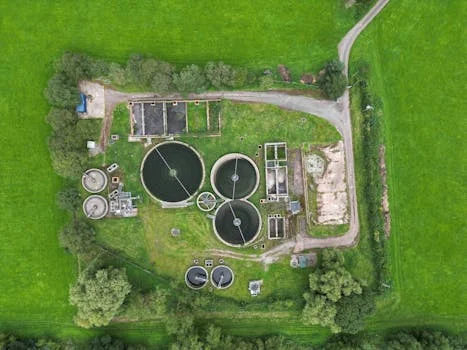
The selection of wastewater technology in the Twin Cities is driven by the specific discharge requirements of the receiving body—often the Mississippi River—and the physical constraints of the site. Integrated underground systems, such as the WSZ Series, utilize an A/O (Anaerobic/Oxic) process to achieve high removal rates for organic matter while remaining shielded from ambient air temperatures. These systems are rated for 1–80 m³/h and typically require less than 10 m² of surface area, making them the standard for decentralized commercial developments and residential clusters in Hennepin County.
For industrial applications, particularly those involving fats, oils, and grease (FOG), a high-efficiency DAF system for Minneapolis industrial wastewater is often the preferred primary treatment. Based on EPA 2024 benchmarks, DAF units achieve 92–97% TSS removal and up to 90% FOG removal, which is critical for food processing plants aiming to reduce MCES sewer surcharges. In contrast, projects requiring high-quality effluent for MBR systems for Minneapolis water reuse projects utilize PVDF membranes with pore sizes smaller than 0.1 μm. While MBR systems have higher energy requirements for membrane scouring, they produce effluent that meets the most stringent non-potable reuse standards.
Sludge management is the final critical component. Modern facilities are shifting from traditional drying beds to mechanical dewatering. High-pressure sludge dewatering equipment for Minneapolis treatment plants, such as plate-and-frame presses, can produce cake solids of 30–45%, significantly reducing hauling and disposal costs at local landfills. In 2025, cold-weather adaptations like heat-traced piping and insulated tankage are no longer optional but are standard engineering requirements for any system installed above the frost line in Minnesota.
| Equipment Type | Flow Rate Capacity | TSS Removal Efficiency | Best Use Case | Cold-Weather Adaptation |
|---|---|---|---|---|
| WSZ Integrated (Underground) | 1 – 80 m³/h | 85 – 90% | Commercial/Residential | Geothermal insulation |
| DAF | 4 – 300 m³/h | 92 – 97% | Food Processing/Oily Waste | Indoor installation/Heat tracing |
| MBR Bioreactor | 10 – 2,000 m³/day | >99% | Water Reuse/High-Purity | Submerged membranes/Heated tanks |
| Plate-Frame Filter Press | 1 – 500 m² (Area) | N/A (Dewatering) | Municipal Sludge/Industrial | Hydraulic oil heaters |
Top 5 Sewage Treatment Equipment Suppliers in Minneapolis (2025)
Local procurement for wastewater assets in the Twin Cities reduces lead times for critical replacement parts and ensures equipment is engineered for Minnesota’s freeze-thaw cycles. The following comparison highlights the primary suppliers serving the Minneapolis market in 2025, focusing on their technical strengths and compliance support.
| Supplier | Core Specialization | MPCA Compliance Support | Lead Time (Standard Units) | Key Differentiator |
|---|---|---|---|---|
| HydropureWater | WSZ, DAF, and MBR Systems | Full documentation & design support | 8 – 12 weeks | Modular, pre-engineered cold-weather units |
| Supplier 2 (Municipal Focus) | Large-scale activated sludge | Pre-approved MPCA designs | 20 – 30 weeks | Extensive history with MCES projects |
| Supplier 3 (Industrial Service) | Chemical precipitation & DAF | Industrial pre-treatment focus | 10 – 14 weeks | 24/7 on-site emergency maintenance |
| Supplier 4 (Mobile/Rental) | Containerized MBR & Dewatering | Temporary permit assistance | 2 – 4 weeks | Short-term leasing for emergency bypass |
| Supplier 5 (National Modular) | Packaged SBR systems | Standardized EPA documentation | 16 – 22 weeks | Proprietary remote monitoring software |
HydropureWater provides a comprehensive range of WSZ, DAF, and MBR systems tailored for both municipal and industrial applications in the Midwest. Their engineering focus emphasizes reducing the total cost of ownership through automated controls and energy-efficient aeration. For projects requiring advanced solids management, their sludge dewatering equipment options for Minneapolis plants offer a high degree of automation to minimize labor costs. Other local suppliers specialize in turnkey municipal infrastructure or provide mobile units that are essential during plant upgrades or emergency equipment failures. When evaluating these suppliers, procurement teams should prioritize those with a local service presence to ensure response times under 24 hours during winter months.
Minneapolis Wastewater Treatment Costs: 2025 Benchmarks & ROI Calculator
Capital expenditures for Minneapolis sewage treatment systems in 2025 range from $50,000 for decentralized units to over $2 million for municipal-scale infrastructure. These figures are influenced by the complexity of the influent and the required effluent quality. For example, a standard DAF system for a small food processor (20 m³/h) typically costs between $75,000 and $150,000, whereas an MBR system of similar capacity can reach $250,000 due to the cost of membrane modules and advanced filtration controls. These costs often align with how Ontario’s municipal sewage standards compare to Minneapolis, where similar climate-driven engineering adds a 15–20% premium over systems designed for southern climates.
Operating expenses (OPEX) in Minneapolis are driven by energy rates and chemical consumption. DAF systems generally have lower energy costs but higher chemical costs (coagulants/flocculants), averaging $0.60–$1.20/m³. MBR systems have higher energy demands for membrane scouring but lower chemical needs, averaging $0.80–$1.50/m³. Additionally, the MPCA NPDES permit process requires a budget of $10,000 to $50,000 for engineering reviews and public notice periods, with a typical timeline of 6 to 12 months for approval.
| System Capacity | CAPEX Range (Installed) | Avg. OPEX ($/m³) | Permitting Timeline |
|---|---|---|---|
| Small (1–50 m³/h) | $50,000 – $200,000 | $0.50 – $1.10 | 4 – 6 Months |
| Medium (50–200 m³/h) | $250,000 – $750,000 | $0.70 – $1.30 | 6 – 9 Months |
| Large (Municipal Scale) | $1,000,000 – $5,000,000+ | $0.40 – $0.90 | 9 – 15 Months |
ROI Calculator Formula:
ROI (%) = [(Annual Savings from Surcharges/Reuse - Annual O&M Costs) / Total Capital Investment] × 100
Example: A Minneapolis brewery installs a $200,000 DAF system. They save $80,000 annually in MCES surcharges and spend $20,000 on chemicals/electricity.
($80,000 - $20,000) / $200,000 = 30% ROI. The system pays for itself in approximately 3.3 years. For more context on cost structures, see wastewater treatment plant cost breakdowns in other regions to understand how Minnesota's climate affects the baseline.
How to Choose the Right Sewage Treatment Equipment for Your Minneapolis Project
A successful procurement strategy in Minneapolis requires a six-step technical evaluation that aligns influent characteristics with National Pollutant Discharge Elimination System (NPDES) permit requirements. Misjudging the influent strength—particularly in industrial settings—is the most common cause of system failure. For instance, Minneapolis food processing wastewater often averages 1,200 mg/L BOD₅, which can overwhelm a system designed for standard municipal sewage (typically 250 mg/L BOD₅).
- Step 1: Define Influent Characteristics: Conduct a 24-hour composite sampling to determine peak flow rates, TSS, BOD₅, FOG, and pH.
- Step 2: Match to MPCA Discharge Limits: Review your NPDES permit or MCES pre-treatment agreement to identify the exact "never-to-exceed" limits for each parameter.
- Step 3: Evaluate Site Constraints: Assess available footprint and soil conditions. For urban Minneapolis sites, underground or modular vertical systems are often mandatory.
- Step 4: Compare Technologies: Use the performance data from the tables above. If high-quality reuse is the goal, MBR is the logical choice; if FOG removal is the priority, DAF is superior.
- Step 5: Request Pilot Testing: For large investments, insist on a 3-month pilot trial. This is especially important for evaluating how Utah’s sewage treatment challenges compare to Minneapolis regarding cold-weather biological performance.
- Step 6: Negotiate Service Contracts: Ensure the contract includes a 24-hour response guarantee and specific clauses for cold-weather performance warranties and spare parts availability within the Twin Cities metro area.
Frequently Asked Questions
What are the MPCA discharge limits for industrial wastewater in Minneapolis?
Limits vary by sector but generally align with MPCA Chapter 7041 and 7050. For many food processors, the target is 30 mg/L TSS, 25 mg/L BOD₅, and 10 mg/L FOG to avoid significant surcharges or environmental fines.
How much does a small sewage treatment plant cost in Minneapolis?
A system with a capacity of 1–50 m³/h typically costs between $50,000 and $200,000. This includes the equipment, basic installation, and initial permitting fees, based on 2024–2025 project data.
What’s the best sewage treatment technology for cold climates?
Integrated underground systems (WSZ Series) are highly effective because they utilize the earth's natural insulation. For above-ground systems, MBR and DAF units require insulated housing and heat tracing to maintain microbial activity and prevent mechanical freezing.
Can I reuse treated sewage water in Minneapolis?
Yes, but it requires specific MPCA approval. MBR systems are the gold standard for reuse because they provide filtration down to <1 μm, producing effluent suitable for irrigation, cooling towers, or industrial process water.
How long does it take to get an MPCA permit for a new sewage treatment plant?
The NPDES permit process typically takes 6 to 12 months. This includes the application phase, technical review by MPCA engineers, and a mandatory 30-day public comment period.