Why Yekaterinburg Hospitals Need Specialized Wastewater Treatment
Hospital wastewater in Yekaterinburg requires treatment to meet Russian SanPiN 2.1.3684-21 standards, with key parameters including COD < 150 mg/L, BOD₅ < 10 mg/L, and pathogen reduction to <100 CFU/mL. Local regulations mandate tertiary treatment for hospitals over 100 beds, with average equipment costs ranging from ₽5M for compact MBR systems (10 m³/day) to ₽45M for large-scale DAF + chlorine dioxide disinfection (100 m³/day). Mercury levels in untreated effluent can reach 20 mg/dm³, requiring specialized precipitation systems.
Medical effluent in the Sverdlovsk Oblast contains pathogen loads that are 10 to 100 times higher than typical municipal sewage. According to recent epidemiological studies in the region, untreated wastewater from infectious disease wards in Yekaterinburg can exhibit E. coli concentrations exceeding 10⁶ CFU/mL, necessitating disinfection protocols far more rigorous than those used for domestic waste. the presence of pharmaceutical residues, such as ciprofloxacin at levels of 1-5 µg/L, creates a complex chemical profile that standard municipal systems are not designed to neutralize.
A 2024 environmental audit of Yekaterinburg’s healthcare facilities revealed that 68% of hospitals were non-compliant with mercury discharge limits, with concentrations of 15-20 mg/dm³ detected in untreated streams. This mercury primarily originates from legacy medical equipment and specialized laboratory reagents. SanPiN 2.1.3684-21 sets significantly stricter limits for hospital discharge compared to municipal standards: Chemical Oxygen Demand (COD) must be below 150 mg/L, whereas municipal limits often allow up to 500 mg/L. Residual chlorine requirements are also elevated to 1.5-3 mg/L to ensure total pathogen inactivation, compared to the 0.3-0.5 mg/L standard for urban sewage networks.
| Parameter | Untreated Hospital Effluent (Yekaterinburg) | SanPiN 2.1.3684-21 Limit | Municipal Standard (Comparison) |
|---|---|---|---|
| COD (mg/L) | 400 – 800 | < 150 | < 500 |
| BOD₅ (mg/L) | 200 – 400 | < 10 | < 20 |
| Total Suspended Solids (TSS) | 200 – 500 mg/L | < 15 mg/L | < 250 mg/L |
| Pathogen Load (E. coli) | 10⁵ – 10⁷ CFU/mL | < 100 CFU/mL | < 1,000 CFU/mL |
| Mercury (Hg) | 15 – 20 mg/dm³ | < 0.005 mg/dm³ | N/A (Strictly regulated) |
| pH Range | 6.5 – 8.5 (varies) | 6.5 – 8.5 | 6.0 – 9.0 |
Yekaterinburg’s Regulatory Requirements for Hospital Wastewater
Compliance for medical facilities in Yekaterinburg is governed by a tiered regulatory structure that dictates treatment intensity based on bed count and facility type. SanPiN 2.1.3684-21 categorizes healthcare providers into three distinct tiers, each with escalating technological requirements. Tier 1 facilities, typically small clinics or hospitals with fewer than 100 beds, are required to implement at least secondary biological treatment followed by robust disinfection, often utilizing compact systems for small clinics and dental offices to manage space constraints.
Tier 2 facilities (100-500 beds) face more stringent mandates, including the necessity for tertiary treatment such as advanced filtration or oxidation. In Yekaterinburg, these facilities must specifically address heavy metal contamination, with mercury limits strictly enforced at < 0.005 mg/L. Tier 3 hospitals, which include major regional centers with over 500 beds, are increasingly pushed toward membrane-based systems or zero-liquid discharge (ZLD) configurations. For these large operators, quarterly pathogen testing is mandatory, and results must be submitted to the regional environmental supervisory board.
A critical local development is Yekaterinburg Decree 12-45 (issued in 2023), which mandates that all hospitals with a discharge volume exceeding 50 m³/day must install real-time Total Organic Carbon (TOC) monitors by 2026. This move toward automated oversight increases the pressure on facility managers to ensure their systems are not only operational but consistently high-performing. The permitting process in the Sverdlovsk region remains a significant undertaking, typically requiring 6 to 12 months for approval and involving ₽250K to ₽800K in administrative and engineering fees, depending on the complexity of the discharge permit.
| Facility Tier | Bed Count | Required Treatment Technology | Monitoring Frequency |
|---|---|---|---|
| Tier 1 | < 100 | Secondary + UV/Chlorine Disinfection | Semi-annual |
| Tier 2 | 100 – 500 | Tertiary (Filtration + Advanced Oxidation) | Monthly (Pathogens) |
| Tier 3 | > 500 | MBR or ZLD + Real-time TOC Monitoring | Quarterly (Full Audit) |
| Specialized (Infectious) | Any | Dual-stage Disinfection + Mercury Precipitation | Monthly (Full Audit) |
Treatment Technology Comparison: MBR vs. DAF vs. Chlorine Dioxide for Hospital Effluent
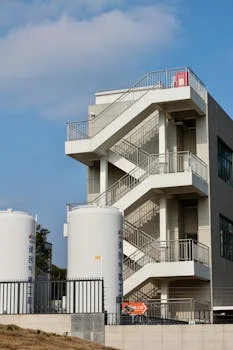
Membrane Bioreactor (MBR) technology achieves 99.9% pathogen removal and 95% COD reduction, making it the gold standard for Yekaterinburg hospitals aiming for SanPiN compliance. While highly effective, compact MBR systems for hospital effluent involve higher energy consumption (0.8-1.2 kWh/m³) and significant membrane replacement costs, which can average ₽1.2M annually for a system processing 50 m³/day. However, the footprint is 50-70% smaller than traditional activated sludge plants, a critical factor for urban hospitals in Yekaterinburg with limited land availability.
Dissolved Air Flotation (DAF) serves as an essential pre-treatment stage, particularly for facilities with high Fats, Oils, and Grease (FOG) from hospital kitchens or high Total Suspended Solids (TSS) from laundry services. DAF systems provide 90-95% TSS removal and 70-80% FOG removal, protecting downstream biological processes from fouling. Capital costs for DAF units typically range from ₽8M to ₽15M. When combined with SanPiN-compliant chlorine dioxide disinfection, DAF creates a robust primary and tertiary barrier against contaminants.
Chlorine dioxide (ClO₂) is preferred over liquid chlorine or bleach due to its superior efficacy against viruses and cysts, and its ability to maintain a residual concentration of 1.5-3 mg/L without forming harmful trihalomethanes (THMs). On-site ClO₂ generators eliminate the risks associated with transporting and storing hazardous chemicals in densely populated urban areas. For Tier 3 hospitals, a hybrid approach is often the most resilient: DAF for primary clarification, MBR for high-efficiency biological degradation, and ClO₂ for final sterilization. A recent 2024 installation at Yekaterinburg City Hospital #42 (800 beds) utilized this hybrid configuration with a total system cost of ₽38M, successfully meeting all regional discharge mandates.
| Technology | Removal Efficiency (COD/TSS) | Disinfection Capability | OpEx (Relative) | Primary Benefit |
|---|---|---|---|---|
| MBR | 95% / 99% | High (Physical Barrier) | High | Small footprint; High purity |
| DAF | 40% / 95% | Low (Pre-treatment only) | Medium | Removes FOG and heavy solids |
| Chlorine Dioxide | Negligible | Very High (99.99%) | Low | SanPiN residual compliance |
| Sulfide Precipitation | N/A | N/A | Medium | Removes Mercury to <0.001 mg/L |
Mercury removal requires a specific chemical precipitation step. By dosing effluent with sodium sulfide or specialized organosulfides, mercury is converted into insoluble mercury sulfide (HgS), which can then be removed via fine filtration or sedimentation. This process is essential for Yekaterinburg hospitals to reach the <0.005 mg/L threshold required by regional inspectors.
Cost Breakdown: Hospital Wastewater Treatment in Yekaterinburg (2025)
Capital expenditure for hospital wastewater systems in Yekaterinburg is primarily driven by the required flow rate and the stringency of local discharge permits. A basic 10 m³/day MBR system starts at approximately ₽5M, whereas a comprehensive 100 m³/day facility incorporating DAF, MBR, chlorine dioxide generation, and automated sludge handling solutions for hospital wastewater can reach ₽45M. These figures include engineering, equipment procurement, and commissioning but exclude major civil works.
Operating expenses (OpEx) typically range from ₽800 to ₽1,500 per cubic meter of treated water. This includes electricity for aeration and pumping, chemical reagents (coagulants, flocculants, and ClO₂ precursors), labor for maintenance, and the periodic replacement of membranes or filter media. Maintenance costs generally account for 10-15% of the initial capital investment annually, though MBR systems may require up to 20% due to the specialized nature of membrane cleaning and replacement. Understanding these costs is as vital as the engineering breakdown of wastewater costs in other industrial regions.
| Expense Category | Estimated Cost (10 m³/day) | Estimated Cost (100 m³/day) | Frequency |
|---|---|---|---|
| Capital Equipment (CapEx) | ₽5M – ₽8M | ₽35M – ₽45M | One-time |
| Permitting & Legal Fees | ₽250K | ₽800K | Initial + Renewal |
| Annual OpEx (Power/Chem) | ₽1.2M | ₽6.5M | Ongoing |
| Membrane/Media Replacement | ₽400K | ₽2.2M | Every 3–5 years |
| Non-compliance Fines | Up to ₽1.2M/year | Up to ₽1.2M/year | Avoidable |
The Return on Investment (ROI) for these systems is often calculated against the high cost of non-compliance. Environmental fines in the Sverdlovsk Oblast can reach ₽1.2M annually for persistent violations, not including the potential for mandatory facility closure. Additionally, hospitals can realize savings by reusing treated tertiary effluent for non-potable applications such as landscape irrigation or cooling towers, which is valued at approximately ₽300/m³ based on local process water rates.
Equipment Checklist for Yekaterinburg Hospital Wastewater Systems
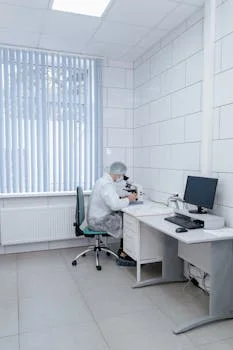
Facility managers must ensure that every stage of the treatment train is specifically rated for medical waste characteristics. Standard municipal equipment often fails prematurely due to the high concentration of disinfectants and fibrous materials found in hospital streams. The following checklist provides a framework for evaluating system proposals:
- Pre-treatment: Installation of a rotary bar screen for solids removal is critical to protect pumps and membranes from medical debris (syringes, bandages, plastics). The GX Series is recommended for TSS > 200 mg/L.
- Primary Clarification: A Dissolved Air Flotation (DAF) system should be utilized if the hospital kitchen or laundry contributes more than 50 mg/L of FOG to the influent.
- Secondary Biological Treatment: For high-strength medical waste, MBR modules or A/O biological contact oxidation (WSZ Series) provide the necessary microbial density to break down pharmaceutical compounds.
- Tertiary Disinfection: A chlorine dioxide generator is required to meet the 1.5-3 mg/L residual chlorine mandate of SanPiN 2.1.3684-21. UV systems may be used as a secondary barrier but cannot replace the residual requirement for discharge.
- Sludge Management: To minimize disposal costs, a plate and frame filter press or screw press should be used to achieve 30-40% dry solids content in the sludge cake.
- Monitoring Suite: Real-time sensors for TOC, pH, and residual chlorine are now required for larger facilities under Decree 12-45 to ensure continuous compliance.
Frequently Asked Questions
What is the typical pH of hospital wastewater in Yekaterinburg?
The pH typically ranges from 6.5 to 8.5. However, effluent from chemotherapy or pathology departments can drop to 4.5 or 5.5. These streams require automated pH neutralization before entering biological treatment stages to prevent biomass inhibition.
Do small private clinics in Yekaterinburg need dedicated treatment systems?
Yes, SanPiN 2.1.3684-21 applies to all medical facilities regardless of size. While they may not need a full MBR plant, they must ensure disinfection and solids removal. Compact, skid-mounted systems start at ₽2.5M and are designed specifically for 5 m³/day flows. For comparison, facility managers can see how Samarkand hospitals meet similar regulations in the CIS region.
How often should hospital wastewater treatment equipment be serviced?
Disinfection systems require quarterly calibration. DAF skimmers and mechanical screens should be inspected monthly. MBR membranes require chemical cleaning (CIP) every 3 to 6 months depending on the flux rate and organic loading.
What are the penalties for non-compliance with hospital wastewater regulations?
Under Decree 12-45 and federal environmental law, Yekaterinburg hospitals face fines up to ₽1.2M per year, potential suspension of medical licenses, and mandatory court-ordered system upgrades at the facility's expense.
Can hospital wastewater be reused for irrigation?
Yes, but only after tertiary treatment and disinfection. SanPiN 2.1.3684-21 permits the use of treated effluent for non-potable purposes if pathogen levels are maintained below 10 CFU/mL and residual chlorine is carefully monitored to prevent soil toxicity.