Java’s sewage treatment equipment market is fragmented, with suppliers offering modular, custom, and hybrid systems to meet Indonesia’s strict wastewater discharge limits (e.g., COD < 100 mg/L for industrial effluent per Minister of Environment Regulation No. 68/2016). In 2025, projects in Jakarta, Surabaya, and Bandung face unique challenges: land scarcity (driving demand for underground or containerized systems), PDAM integration (requiring effluent quality of <30 mg/L BOD for reuse), and high organic loads from textile and food processing industries. This guide compares 8 leading supplier categories on technical performance, cost (CAPEX: $50–$500/m³/day), and compliance support, with a decision framework tailored to Java’s regulatory and operational constraints.
Java’s Wastewater Challenges: Why Equipment Selection Matters in 2025
In Java, the urgency for high-performance sewage treatment equipment is driven by a combination of infrastructure deficits and tightening environmental oversight. Jakarta’s municipal sewer system covers only 2% of the city’s population, according to PAA (Perusahaan Air Aman) data. For industrial facilities in West Java and East Java, this lack of centralized infrastructure means that on-site wastewater treatment plants (WWTP) are not optional—they are a prerequisite for operational licensing. In 2025, equipment selection must account for land scarcity, particularly in the Kawasan Industri areas of Bekasi and Karawang, where industrial land prices exceed $3,000 per square meter.
Indonesia’s wastewater discharge limits are increasingly stringent compared to regional peers. While Thailand allows a COD of < 120 mg/L for certain industrial effluents, Indonesia’s Minister of Environment Regulation No. 68/2016 mandates < 100 mg/L for industrial effluent and even stricter limits for municipal discharge near sensitive water bodies. When targeting non-potable reuse for cooling towers or landscaping—a growing trend due to rising PDAM water tariffs—the BOD requirements often drop below 30 mg/L. This necessitates robust biological stages and advanced filtration.
Java’s specific industrial profile also presents unique technical hurdles. Textile wastewater in Bandung often reaches COD concentrations of 1,000–3,000 mg/L, while food processing plants in Surabaya face BOD levels of 500–1,500 mg/L. These loads are significantly higher than the 300–800 mg/L COD typical in European municipal contexts, requiring equipment with high hydraulic retention times and superior oxygen transfer rates.
| Parameter | Java Industrial Average (Textile/F&B) | Regulation No. 68/2016 Limit | PDAM Reuse Standard (Target) |
|---|---|---|---|
| COD (mg/L) | 1,000 – 3,000 | < 100 | < 50 |
| BOD (mg/L) | 500 – 1,500 | < 50 | < 30 |
| TSS (mg/L) | 200 – 800 | < 50 | < 10 |
| Ammonia (mg/L) | 20 – 100 | < 5 | < 5 |
Key Technical Specifications for Sewage Treatment Equipment in Java
Evaluating equipment for the Java market requires a focus on efficiency-to-footprint ratios. For facilities facing land constraints, a high-efficiency MBR system for Java’s high-organic-load industrial wastewater offers a footprint benchmark of 0.5–1 m²/m³/day, compared to 2–3 m²/m³/day for conventional activated sludge (CAS). This 60% reduction in space is critical for urban factories in Jakarta or Surabaya.
COD/BOD Removal Efficiency: To remain compliant with Regulation No. 68/2016, equipment must maintain a removal efficiency of 90–98%. While municipal-grade systems often target 85–95% removal, Java’s industrial loads require secondary and often tertiary treatment stages to bridge the gap between 3,000 mg/L influent and 100 mg/L effluent.
Hydraulic Retention Time (HRT): Given the high organic loads, Java-based projects typically require an HRT of 12–24 hours for biological treatment. Shorter HRTs in standard package plants often lead to "bulking" or incomplete degradation when processing textile dyes or food fats. Engineers must balance HRT with tank volume to avoid excessive CAPEX.
Energy Consumption and OPEX: Energy is a major cost driver in Indonesia, with industrial electricity rates ranging from $0.10 to $0.15/kWh. MBR systems consume significantly more energy (0.8–1.5 kWh/m³) than CAS (0.3–0.6 kWh/m³). However, the trade-off is often justified by the higher quality of effluent and the potential for water reuse savings.
Sludge Management: Java’s high organic loads produce 0.2–0.4 kg of dry sludge per kg of BOD removed. With limited industrial landfills and tipping fees rising to $50–$100 per ton, integrating sludge dewatering equipment to reduce disposal costs in Java is essential. For more details on managing these outputs, refer to this detailed guide to sludge dewatering equipment in Indonesia.
| Technical Metric | Modular/Package System | Custom/Civil WWTP | MBR Integrated System |
|---|---|---|---|
| Footprint (m²/m³/day) | 1.0 – 1.5 | 2.0 – 3.5 | 0.5 – 1.0 |
| Energy (kWh/m³) | 0.4 – 0.7 | 0.3 – 0.6 | 0.8 – 1.5 |
| Installation Time | 2 – 4 weeks | 4 – 8 months | 3 – 6 weeks |
| Effluent Quality (BOD) | < 30 mg/L | < 50 mg/L | < 10 mg/L |
Top 8 Sewage Treatment Equipment Suppliers in Java: Technical and Cost Comparison
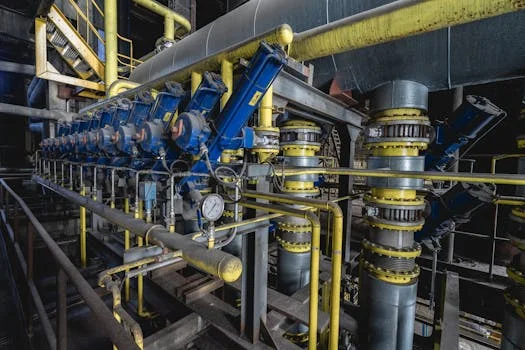
The supplier landscape in Java ranges from global technology leaders to local fabrication specialists. For 2025 projects, procurement managers must distinguish between suppliers focused on municipal flow rates and those specialized in high-strength industrial effluent. A compact underground sewage treatment system for land-scarce projects in Java is often the preferred choice for commercial developments and medical facilities.
Supplier Categories and Performance: Global Tier-1 suppliers generally offer the highest COD/BOD removal rates (95%+) and advanced automation, but they carry a higher CAPEX ($300–$500/m³/day). Conversely, local Java-based manufacturers specializing in Fiberglass Reinforced Plastic (FRP) modular tanks offer a lower CAPEX ($100–$200/m³/day) and faster lead times, though they may require more frequent maintenance of internal media.
Case Study Example: A textile factory in Bandung recently replaced a failing concrete CAS system with modular FRP tanks. The project achieved a COD reduction from 2,500 mg/L to 80 mg/L, meeting compliance while reducing the installation footprint by 45%. The CAPEX was approximately 40% lower than a traditional custom concrete build, primarily due to reduced civil engineering requirements. For engineers seeking specific design data, the technical specifications for modular sewage treatment plants provide a baseline for comparison.
| Supplier Type | Capacity (m³/day) | COD Removal | CAPEX ($/m³/day) | Local Support |
|---|---|---|---|---|
| Global Tech Leader | 500 – 10,000+ | 98% | $350 – $550 | Jakarta/Surabaya Offices |
| FRP Modular Specialist | 10 – 500 | 88 – 92% | $120 – $220 | High (Local Fab) |
| Industrial Integrator | 100 – 2,000 | 95% | $250 – $400 | Regional Service Centers |
| Municipal Contractor | 1,000 – 50,000 | 85 – 90% | $200 – $350 | Jakarta-based |
Cost Breakdown: Sewage Treatment Equipment for Java Projects in 2025
Budgeting for a sewage treatment project in Java requires balancing initial CAPEX with 10-year OPEX. For a standard 500 m³/day system, equipment typically accounts for 50-60% of the total project cost, with the remainder allocated to civil works, installation, and permitting.
CAPEX Projections: In Jakarta and Surabaya, civil works are approximately 20–30% more expensive for underground systems compared to above-ground installations. However, given land prices, the "opportunity cost" of land often makes underground systems more economical in the long run. Permitting costs in Jakarta can reach $20,000 due to the complexity of environmental impact assessments (AMDAL/UKL-UPL).
OPEX Projections: Annual OPEX is dominated by energy and chemicals. Java’s chemical costs for coagulants and flocculants range from $0.05 to $0.15 per m³ of treated water. Sludge disposal is the most volatile cost, often overlooked in initial budgets. A textile factory in West Java, for instance, can see a 4-year ROI by integrating water reuse, saving $80,000 annually in PDAM fees and avoided fines.
| Cost Category | Modular (500 m³/day) | Custom (500 m³/day) | Key Variables |
|---|---|---|---|
| Equipment | $100k – $150k | $200k – $300k | Automation level |
| Civil Works | $30k – $50k | $80k – $120k | Soil quality/excavation |
| Installation | $20k – $40k | $50k – $80k | Local labor rates |
| Annual Energy | $15k – $25k | $12k – $22k | Blower efficiency |
Compliance Checklist: Meeting Indonesia’s Wastewater Regulations in Java
Compliance is the primary driver for equipment upgrades in 2025. Failure to meet Minister of Environment Regulation No. 68/2016 can result in administrative fines, suspension of operations, or criminal charges. For facilities located within PDAM service areas, the standards for "reuse water" are often more stringent than discharge limits.
Monitoring and Automation: Modern regulations require monthly reporting for industrial effluent and quarterly for municipal. Implementing an automated dosing for compliance with Indonesia’s wastewater regulations ensures that chemical levels are optimized even during flow fluctuations, preventing "shocks" to the biological system. For healthcare facilities, specific standards apply, which can be met using specialized medical wastewater treatment solutions.
Tertiary Treatment for Reuse: To achieve PDAM reuse standards (<30 mg/L BOD), tertiary treatment is mandatory. This usually involves sand filtration, carbon adsorption, and advanced disinfection. For disinfection, disinfection solutions for Indonesia’s wastewater reuse standards are increasingly preferred over traditional chlorine due to their effectiveness against a wider range of pathogens without forming harmful byproducts.
| Regulation/Standard | Key Requirement | Equipment Implication |
|---|---|---|
| Reg No. 68/2016 | COD < 100 mg/L | Robust Secondary Bio-treatment |
| PDAM Reuse | BOD < 30 mg/L | Tertiary Filtration/MBR |
| Local Jakarta (Dinas LH) | Online Monitoring | Digital Sensors (pH, COD, TSS) |
| Medical Standards | Pathogen Removal | Chlorine Dioxide / UV Sterilization |
Decision Framework: How to Choose the Right Supplier for Your Java Project
Selecting a supplier is a multi-stage process that must prioritize technical fit over the lowest initial bid. Use the following framework to evaluate potential partners for 2025 Java projects:
- Define Project Scope: Determine if the project is a "Greenfield" (new build) or "Brownfield" (upgrade). Identify the peak flow rate and influent characteristics (e.g., high fats/oils or dyes).
- Technical Fit Assessment: Use the comparison matrix to match your footprint constraints with the appropriate technology (Modular vs. Custom). For urban Java, prioritize modularity.
- Compliance Verification: Request documented proof of effluent quality from previous Java-based projects. Ensure the equipment can meet Regulation 68/2016 under peak load conditions.
- Evaluate Local Presence: Verify the supplier’s service center location. A supplier with a warehouse in Jakarta or Surabaya can provide spare parts within 24–48 hours, whereas international-only suppliers may take weeks.
- OPEX Audit: Request a detailed breakdown of energy consumption and chemical requirements. A lower CAPEX often masks a high OPEX that erodes ROI within three years.
- Sludge Strategy: Ensure the supplier provides or integrates dewatering equipment. Ignoring sludge disposal is a common mistake that leads to significant unplanned costs in Java.
Common Pitfalls to Avoid: Underestimating the impact of Java’s humidity on electrical components and failing to coordinate with local PDAM authorities early in the design phase. Projects in Jakarta are frequently delayed by 3–6 months due to improper environmental permitting (AMDAL) documentation.
Frequently Asked Questions
What are the wastewater discharge limits for industries in Java for 2025?
The primary national standard is the Minister of Environment Regulation No. 68/2016. For most industrial effluents, the limits are COD < 100 mg/L, BOD < 50 mg/L, and TSS < 50 mg/L. However, regional authorities in Jakarta (Dinas Lingkungan Hidup) may impose stricter local standards, especially for facilities discharging into Class 1 water bodies or those seeking PDAM reuse certification.
How much does a sewage treatment plant cost in Java?
For a 500 m³/day system, CAPEX ranges from $100,000 for modular package plants to over $300,000 for custom-engineered civil WWTPs. OPEX typically runs between $0.15 and $0.35 per cubic meter treated, depending on energy efficiency and chemical dosing requirements. Underground systems in Jakarta or Surabaya generally carry a 20% premium on civil works.
Does Jakarta have a centralized sewer system?
No, Jakarta’s centralized sewer coverage is currently limited to approximately 2% of the city, primarily in the central business district (Kuningan/Sudirman). Most industrial and commercial facilities must operate on-site sewage treatment equipment to remain compliant with environmental laws. This has driven the high demand for containerized and MBR-based systems.
What is the best equipment for textile wastewater in Bandung?
Textile wastewater requires robust biological treatment combined with chemical coagulation to remove dyes and high COD. MBR (Membrane Bioreactor) systems are highly effective for these high-organic loads, as they maintain a high sludge concentration and provide superior filtration. Integrating a filter press for sludge dewatering is also mandatory to manage the high volume of chemical sludge produced.