Municipal Sewage Treatment Plants in North Dakota USA: 2025 Engineering Guide with Costs, Compliance & Equipment Checklist
North Dakota operates more than 50 municipal sewage treatment plants, with capacities from 0.05 MGD in small towns to 12.0 MGD at the Fargo Regional Water Reclamation Facility. Plants must meet EPA Clean Water Act secondary treatment limits of 30 mg/L BOD and 30 mg/L TSS as a 30-day average under 40 CFR 133.102, plus weekly averages of 45 mg/L, and NDDEQ nutrient reduction requirements. Cold-climate effects—ice cover, mixed liquor below 5°C for over 90 days per year, and spring flows that can double design loading—drive choices such as insulated membrane bioreactors (MBR), heated diffused aeration, and buried heat-traced conveyance.
2025 Inventory: Where the Plants Sit and What They Run
North Dakota's municipal wastewater infrastructure includes over 50 treatment plants, and roughly 70% of them serve populations under 5,000. Wastewater stabilization lagoons dominate rural installations at over 80% of small systems (NDDEQ, 2024), while urban centers—Fargo, Bismarck, Minot—rely on activated sludge, MBR, or hybrid processes to meet stricter effluent targets.
Three regions define the operating envelope. The Red River Valley (Fargo, Grand Forks, Devils Lake) carries higher population density and industrial loadings. The Missouri River Basin (Bismarck, Mandan) discharges to sensitive receiving waters with ammonia-nitrogen controls of 10 mg/L. Western North Dakota runs dispersed, smaller flows where lagoons remain standard. Winter routinely drops biological activity, with BOD removal falling below 60% in lagoons when water temperature nears 0°C, and Minot has reported a 50% flow increase during spring thaw that stresses hydraulic capacity.
For a regional comparison, engineers may find Iowa's municipal sewage treatment guide useful, as it outlines similar cold-climate operational considerations.
| City/Facility | Region | Capacity (MGD) | Primary Treatment Type | Key Characteristics |
|---|---|---|---|---|
| Fargo Regional WWTF | Red River Valley | 12.0 | Activated Sludge, MBR | Largest facility, serves 165,000+ residents, advanced nutrient removal. |
| Bismarck WWTF | Missouri River Basin | 6.5 | Activated Sludge | Discharges to Missouri River, high energy use for aeration. |
| Mandan WWTF | Missouri River Basin | 1.6 | Activated Sludge | Serves residential, commercial, and industrial, recently upgraded disinfection. |
| Minot WWTF | Western ND | 1.2 | Activated Sludge, Aeration Pond, Wetlands | Manages seasonal flow increases, utilizes wetland cells for polishing. |
| Devils Lake WWTF | Red River Valley | 0.75 | Lagoons + Lemna System | Hybrid system for cold climate, high reliance on natural processes. |
| Rural Plants (e.g., Lisbon, Bottineau) | Various | 0.05 - 0.5 | Wastewater Lagoons | Dominant for <5,000 population, low O&M but large footprint. |
Cold-Climate Treatment Technologies: Engineering Trade-offs
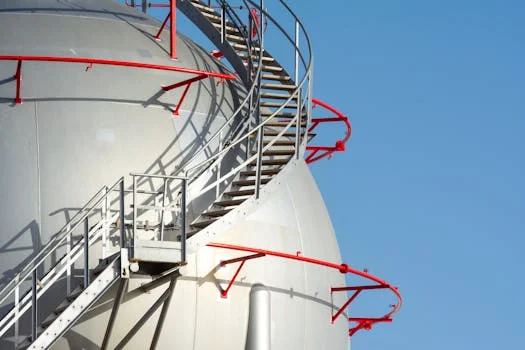
Biological wastewater treatment efficiency in North Dakota drops 30-50% when mixed liquor temperatures fall below 5°C, which shapes the technology decision. Selecting a process means weighing capital cost, energy use, footprint, effluent target, and winter resilience against each other. Most plants we size for North Dakota communities run at the lower end of design flow in summer and push toward upper-end hydraulic plus low-temperature loading in spring melt.
Wastewater stabilization lagoons remain the cost-effective choice for rural plants with land available. Capital runs $3-$4 per gallon of capacity, and energy is minimal. The trade-off is footprint (20-40 acres per MGD) and winter BOD removal dropping to 60% or lower when temperatures approach 0°C. Activated sludge, used at Bismarck and Fargo, delivers 90%+ BOD removal in a 1-5 acre-per-MGD envelope but consumes 1,200-1,800 kWh per MG and needs heating or insulation to keep microbial kinetics on track.
Membrane bioreactor (MBR) systems produce effluent below 5 mg/L BOD/TSS in a compact 0.5-1.5 acres-per-MGD footprint, which fits space-constrained urban sites or strict discharge envelopes like Minot's wetland polishing cells. Capital runs $6-$8 per gallon and energy 2,000-3,000 kWh per MG, but the enclosed tanks retain heat and protect membranes. Hydropure Water supplies compact MBR systems for space-constrained urban plants built for these conditions, plus Underground Package Sewage Treatment Plant (WSZ Series) units suited to smaller cold-climate communities.
Sequencing Batch Reactors (SBRs) operate activated sludge in batches, giving operators flexibility on nutrient removal stages and a moderate footprint. Constructed wetlands, often paired with lagoons like Devils Lake's Lemna hybrid, use 50-100 kWh per MG but need 10-20 acres per MGD and largely stop working during frozen months.
| Technology | BOD/TSS Removal (%) | Footprint (Acres/MGD) | Energy Use (kWh/MG) | O&M Costs ($/MG) | Cold-Weather Performance |
|---|---|---|---|---|---|
| Wastewater Lagoons | 60-85% (winter <60%) | 20-40 | 50-200 | $0.50-$0.80 | Significant reduction in efficiency due to ice cover and low temp. |
| Activated Sludge | 90-95%+ | 1-5 | 1,200-1,800 | $0.80-$1.50 | Sensitive to temperature swings, requires heating/insulation for optimal performance. |
| MBR | 95-99%+ | 0.5-1.5 | 2,000-3,000 | $1.50-$2.00 | Excellent, often insulated tanks maintain biological activity, high effluent quality. |
| SBR | 90-95%+ | 1-3 | 1,000-1,600 | $0.90-$1.60 | Batch operation offers flexibility, can be designed for cold, but still sensitive. |
| Constructed Wetlands | 70-90% (seasonal) | 10-20 | 50-100 | $0.40-$0.70 | Limited to no biological activity during frozen periods, seasonal effectiveness. |
2025 Compliance Standards: EPA and NDDEQ Requirements
All North Dakota municipal sewage treatment plants must satisfy EPA Clean Water Act secondary treatment standards and updated NDDEQ nutrient reduction mandates. According to 40 CFR 133.102, the federal rule sets 30 mg/L BOD and 30 mg/L TSS as 30-day average effluent limits, with 7-day averages capped at 45 mg/L. Plants discharging to sensitive waters such as the Missouri River also face 10 mg/L ammonia-nitrogen limits.
The NDDEQ has set firm nutrient deadlines. Municipal wastewater treatment plants must submit nutrient management plans by June 2025, with full compliance against the new N/P limits required by 2027. Plants with design flows under 1 MGD receive a two-year extension, pushing their compliance deadline to 2029.
Cold-climate performance is an operations issue, not a blanket federal allowance. Earlier draft guidance sometimes described up to 10% higher BOD and TSS limits for plants below 5°C for more than 90 days; 40 CFR 133.103 instead covers case-by-case special considerations such as waste stabilization ponds, industrial loadings, and less-concentrated influent—not a statewide cold-temperature uplift. Plants such as Minot's aeration pond still document best practicable treatment when winter kinetics drop.
2025 Cost Benchmarks: Capital, O&M, and Upgrade Numbers
New municipal sewage treatment plant construction in North Dakota runs $3 to $8 per gallon of installed capacity, driven by technology choice and site conditions. Rural lagoon systems sit at $3-$4 per gallon, while urban MBR systems reach $6-$8 per gallon. Fargo's 2023 Regional Water Reclamation Facility upgrade cost $120 million for a 12 MGD expansion, about $10 per gallon of new capacity, which reflects advanced treatment and 2023 inflation.
Operational and Maintenance (O&M) costs range from $0.50 to $2.00 per 1,000 gallons treated. Lagoons run $0.50-$0.80 per 1,000 gallons because mechanical equipment is minimal. MBR systems run $1.50-$2.00 per 1,000 gallons because of membrane cleaning and energy. Energy alone is 30-50% of total O&M, and Bismarck's plant spends about $1.2 million per year on electricity.
Retrofit costs are significant. Converting existing lagoons to activated sludge for secondary compliance costs $2-$4 per gallon. Adding MBR technology to an existing mechanical plant runs $5-$7 per gallon. Minot's 2024 lift station program cost $3.2 million across 41 stations, about $78,000 per station. North Dakota's 2025 infrastructure report puts the statewide compliance funding shortfall at $500 million, which is why municipalities should file CWSRF applications by Q3 2025.
| Cost Category | Range (2025 Data) | Notes/Examples |
|---|---|---|
| New Plant Capital Cost | $3–$8 / gallon capacity | Rural lagoons: $3–$4/gallon; Urban MBR: $6–$8/gallon (Fargo 2023 upgrade: $10/gallon) |
| O&M Costs | $0.50–$2.00 / 1,000 gallons | Lagoons: $0.50–$0.80/1,000 gallons; MBR: $1.50–$2.00/1,000 gallons |
| Energy Share of O&M | 30–50% | Bismarck WWTF: $1.2M/year on electricity |
| Lagoon to Activated Sludge Upgrade | $2–$4 / gallon capacity | Cost to retrofit existing lagoon systems for higher efficiency. |
| MBR Addition/Upgrade | $5–$7 / gallon capacity | Cost to integrate MBR into existing mechanical plants. |
| Lift Station Upgrade | $78,000 / station | Minot 2024 upgrades: $3.2M for 41 stations. |
Equipment Checklist: What to Specify in 2025
Specifying equipment for a North Dakota municipal sewage treatment plant in 2025 starts with cold-weather survivability. Insulate biological tanks and heat the process buildings, use freeze-resistant fine-bubble diffusers with EPDM membranes, and bury conveyance with heat tracing—the same approach Minot uses on its forcemains. Preliminary solids removal should start with reliable rotary mechanical bar screens engineered for cold conditions so rags and ice do not choke downstream processes.
Energy efficiency drives operating cost. Specify high-efficiency turbo blowers on activated sludge aeration and pair pumps and motors with variable-frequency drives (VFDs). Bismarck cut energy use 20% by retrofitting VFDs across its pumping and aeration system, and the same approach pays back quickly when electricity runs 30-50% of O&M.
Rural plants need remote monitoring because crews are thin and travel distances are long. A SCADA platform with satellite-linked sensors tracks lagoon level, ice thickness (the method Devils Lake already uses), and equipment status so a single operator can cover multiple sites. Sludge handling should match the climate: freeze-thaw dewatering beds cut sludge volume up to 50% at rural plants with free land, while urban plants like Fargo rely on mechanical dewatering such as plate and frame filter presses that can handle over 100 wet tons per day.
Disinfection must hold up at low water temperatures. UV systems skip chemical storage but lose dose in cold, dirty water, so many North Dakota plants pair UV with a backup. Cold-weather disinfection with chlorine dioxide generators keeps efficacy at low temperatures, which is why Mandan switched from chlorine gas to ClO₂ in 2023 for safety and performance.
How do plants specify aeration equipment?
Design, operation, maintenance, and procurement of aeration equipment for municipal wastewater treatment plants should start with winter oxygen transfer, blower turndown, and freeze-resistant fine-bubble diffusers. Pair turbo blowers with VFDs, size for spring peak plus low-temperature kinetics, and compare vendor O&M against the cost data above before issuing bids.
What drives disinfection equipment cost?
Disinfection of piping, tanks, structures, and equipment typically costs more when plants need dual trains, heated chemical feed, or UV plus chemical backup for cold, turbid water. Capital and O&M rise with dose margin for low-temperature kinetics; Mandan's ClO₂ switch in 2023 illustrates the safety and performance trade-off many North Dakota plants now evaluate.
Who this is for: municipal engineers, EPC firms, and plant managers sizing cold-climate upgrades or lagoon-to-mechanical conversions. Who should look elsewhere: communities seeking only drinking-water treatment. Next step: request a quote with flow, effluent target, and site data so equipment scope matches NDDEQ and EPA limits.
Frequently Asked Questions
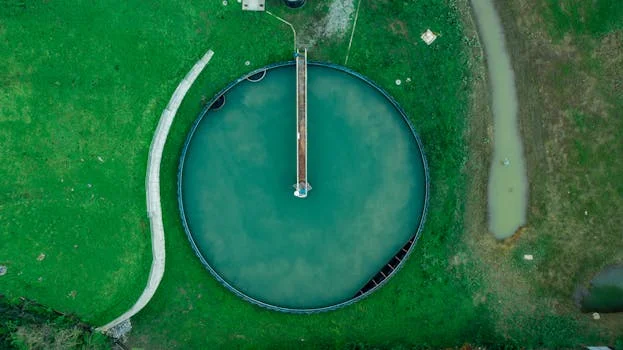
What is municipal sewage treatment?
Municipal sewage treatment is the multi-stage process of removing contaminants from wastewater—residential, commercial, and industrial—before discharge. Stages typically include preliminary screening, primary sedimentation, secondary biological treatment (activated sludge, MBR, SBR), and tertiary disinfection, with the goal of meeting EPA's 30 mg/L BOD/TSS 30-day average limits and protecting receiving waters.
How much does a municipal sewage treatment plant cost in North Dakota?
New municipal sewage treatment plant capital cost in North Dakota runs $3 to $8 per gallon of capacity, with rural lagoons at $3-$4 per gallon and urban MBR at $6-$8 per gallon. O&M costs run $0.50 to $2.00 per 1,000 gallons treated, and energy accounts for 30-50% of that. Lagoon-to-activated-sludge retrofits cost $2-$4 per gallon, while MBR additions run $5-$7 per gallon of capacity.
What are the 2025 effluent compliance limits for North Dakota plants?
EPA Clean Water Act secondary treatment limits under 40 CFR 133.102 apply: 30 mg/L BOD and 30 mg/L TSS as 30-day averages, with 7-day averages not exceeding 45 mg/L. Plants discharging to sensitive waters such as the Missouri River must also meet 10 mg/L ammonia-N. NDDEQ requires nutrient management plans by June 2025 and full N/P compliance by 2027, with a 2029 deadline for plants under 1 MGD design flow.
Which treatment technology performs best in North Dakota winters?
Enclosed, insulated processes perform best. MBR systems hold biological activity at 95-99%+ BOD/TSS removal because the tank retains heat, while open lagoons can drop below 60% BOD removal when temperatures approach 0°C. Activated sludge with heated tanks and insulated SBRs also work, but lagoons and constructed wetlands need to be accepted as seasonal systems.
What funding is available for North Dakota wastewater upgrades?
The North Dakota Clean Water State Revolving Fund (CWSRF) provides low-interest loans at an effective 2.0% rate (1.5% interest plus 0.5% administrative fee), and EPA grants can cover 50-75% of project costs for disadvantaged communities. Given the state's 2025 estimated $500 million compliance shortfall, municipalities should file CWSRF applications by Q3 2025 to keep upgrade projects on the funding pipeline.