Why Manitoba Needs Containerized Wastewater Treatment Solutions
Manitoba package and containerized wastewater treatment solutions typically treat 1–80 m³/h at modular sites and more than 500 m³/h on regional projects. Provincial secondary standards require BOD and TSS at or below 25 mg/L; modern package units often achieve below 10 mg/L. Designs for −40°C rely on buried tanks, insulation, and heat-traced piping.
Thirteen southeastern communities, including Niverville, face lagoon capacity limits as populations grow. According to project reporting in early 2026, a CAD $205 million regional plant north of Niverville is contracted to serve those communities, with modular capacity planned for up to 70,000 people and initial service for more than 30,000 residents. Food processing and mining sites still need reliable pre-treatment so final effluent meets Manitoba’s BOD and TSS limits of 25 mg/L.
Package plants close three common gaps versus aging lagoons: shorter deployment than a new centralized works, lower O&M per cubic metre on many small-to-medium sites, and year-round compliance when freeze protection is designed in. Winter air temperatures can reach −40°C, with repeated freeze–thaw cycles. Most plants we size for prairie towns therefore favour underground or heavily insulated tanks, heat tracing on exposed lines, and redundant power for aeration and pumping.
Where industrial loads dominate, pair the biological package with upstream solids and oil removal. For process selection on food and other industrial streams, see the companion guide to industrial wastewater treatment in Manitoba. Shared collection without pre-treatment is the failure mode we see most often on mixed municipal–industrial networks.
Technical Specifications for Manitoba’s Package Wastewater Treatment Plants
Package wastewater treatment plants specified for Manitoba usually cover flow rates from 1 m³/h for remote camps or single facilities up to 80 m³/h for larger community modules. Regional schemes, such as the $205 million plant serving 13 southeastern communities near Niverville, can exceed 500 m³/h. Traditional lagoons often struggle to hold BOD and TSS below 25 mg/L through winter; modern package trains commonly deliver <10 mg/L when aeration, clarification, and sludge wasting stay in control.
Footprint is a hard constraint on prairie lots and industrial pads. Underground integrated systems, including the Underground Package Sewage Treatment Plant (WSZ Series), can occupy about 10–50 m². Conventional lagoons often need 1–5 hectares. Process choice follows the discharge goal: A/O (anaerobic–anoxic–oxic) contact oxidation for robust BOD/TSS removal; MBR integrated wastewater treatment when reuse-quality effluent is required; and dissolved air flotation (DAF) for industrial pre-treatment of suspended solids and oils.
Climate adaptations are non-negotiable on the Prairies. Insulated tanks keep biological reactors near design temperature, heat tracing protects exposed pipe, and buried installation uses ground temperature to limit freeze risk. WSZ-class underground packages are commonly rated for −40°C operation when installed and traced as designed. Above-ground steel tanks need thicker insulation and continuous heat input; most prairie sites we review still prefer buried concrete or FRP shells for winter stability.
Hydraulic peaks from snowmelt and weekend tourism loads still catch under-sized equalization. Specify at least 6–12 hours of peak-flow buffering on small modular trains when the collection system has limited storage, and confirm blower turndown covers both winter low load and summer peaks.
| Parameter | Package Plants (Typical) | Lagoons (Typical) | Centralized Systems (Large Scale) |
|---|---|---|---|
| Flow Rate Range | 1–80 m³/h (Small Modular) to 500+ m³/h (Regional) | Variable, often sized for peak seasonal loads | 1,000+ m³/h |
| BOD Removal Efficiency | 90–97% (achieving <10 mg/L) | 50–90% (variable, often >25 mg/L) | 95–99% (achieving <10 mg/L) |
| TSS Removal Efficiency | 90–97% (achieving <10 mg/L) | 50–90% (variable, often >25 mg/L) | 95–99% (achieving <10 mg/L) |
| Footprint | 10–50 m² (Underground) to 100–500 m² (Above-ground) | 1–5 Hectares (or more) | Highly variable, often large land acquisition |
| O&M Costs (per m³) | $0.20–$0.30 | $0.50–$0.75 | $0.15–$0.25 |
| Cold Climate Adaptation | Excellent (e.g., underground, insulated, heated) | Challenging (reduced efficiency in winter, ice formation) | Requires significant infrastructure investment for cold weather operation |
How Much Does a Package Sewage Treatment Plant Upgrade Cost?
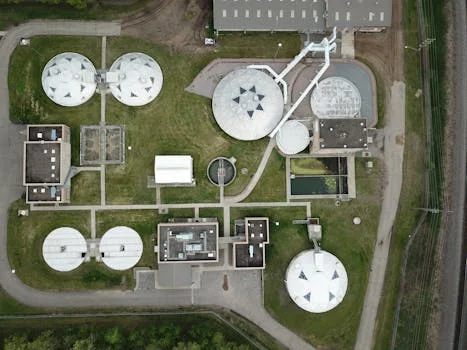
Package sewage treatment plant upgrade costs in Manitoba scale mainly with flow, technology, and freeze protection—not with brochure features. Small modular systems at 1–10 m³/h for camps, farms, or very small communities typically cost CAD $150,000 to $500,000. Medium plants at 10–50 m³/h for growing towns or industrial pre-treatment usually fall between $500,000 and $5 million. Large regional plants above 50 m³/h, including the $205 million southeastern Manitoba project, sit in the $5 million to $205 million band.
What drives package treatment plant upgrade costs?
Flow rate scales capital almost linearly once hydraulic and solids loading are fixed. MBR trains usually cost more than A/O packages because of membranes and spare modules. Cold-climate packages rated for −40°C can add up to about 30% versus a temperate design. Turnkey delivery often runs about 20% higher upfront than owner-managed modular phases, but it shortens schedule and shifts construction risk.
O&M drives payback. Package plants in the $0.20–$0.30 per m³ range are often about 50% cheaper to run than lagoons at $0.50–$0.75 per m³ when labour, sludge handling, and winter performance are counted. Non-compliance exposure in Manitoba can reach up to $50,000 per day under enforcement scenarios cited for serious offences, so reliable winter effluent quality is a cost control item, not only an environmental one. Design for future population—as with the Niverville-area plant sized toward 70,000 people—avoids a second capital cycle within a decade.
| Project Scale / Flow Rate | Technology Type | Estimated Capital Cost (2025 CAD) | Estimated O&M Cost (per year) | Estimated Payback Period (vs. Lagoon) |
|---|---|---|---|---|
| Small Modular (1–10 m³/h) | A/O Biological | $150,000 – $500,000 | $15,000 – $40,000 | 3–7 years |
| Medium (10–50 m³/h) | A/O Biological / MBR | $500,000 – $5,000,000 | $50,000 – $300,000 | 5–10 years |
| Large Regional (50–500+ m³/h) | Advanced Biological / MBR | $5,000,000 – $205,000,000 | $300,000 – $5,000,000+ | 8–15 years |
Selection checklist before you tender: (1) confirmed average and peak flow in m³/h; (2) influent BOD, TSS, FOG, and any metals; (3) discharge licence limits and receiving-water class; (4) −40°C freeze-protection scope; (5) sludge haul distance and disposal route; (6) operator hours available per week; (7) expansion path for 10–20 year growth.
Manitoba’s Regulatory Compliance for Package Wastewater Treatment Plants
Manitoba secondary treatment standards for municipal effluent discharged to a water body require CBOD or BOD at 25 mg/L and total suspended sediments at 25 mg/L, with fecal coliform or E. coli at 200 organisms/100 mL, under the Manitoba Water Quality Standards, Objectives, and Guidelines (document dated 28 November 2011; adopted via M.R. 196/2011). Earlier marketing copy sometimes labelled these “2024 standards”; the numeric limits above remain the Tier I secondary benchmarks. These values align with CCME national performance standards of 25 mg/L CBOD₅ and 25 mg/L TSS for municipal wastewater effluent.
Typical licence language also keeps pH in the 6–9 range. Permitting starts with an Environment Act Licence (EAL) from the provincial environment authority, then municipal approvals. Projects above about $1 million capital often trigger public consultation. Plants exceeding 10 m³/h frequently face continuous flow and quality monitoring with quarterly reporting. Industrial pre-treatment limits commonly include copper <0.3 mg/L, zinc <0.5 mg/L, and FOG controls for food processors. Year-round compliance implies freeze protection on critical pipework and emergency power so automated trains stay online through winter storms.
Supplier Checklist: How to Evaluate Package Wastewater Treatment Vendors in Manitoba
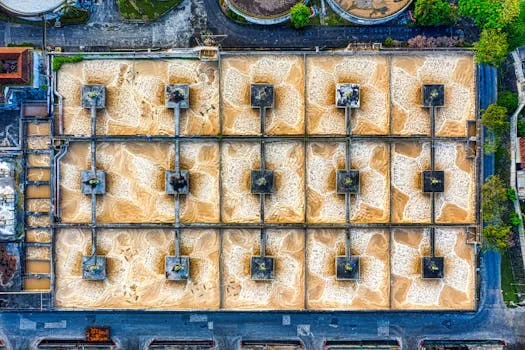
Vendor choice for containerized wastewater treatment solutions in Manitoba should weight local permitting support against engineered modular cost and cold-climate references. Local suppliers can shorten EAL coordination. International modular manufacturers often deliver tighter factory quality control and lower capital on repeatable designs. Decide early between turnkey design-build-operate and phased modular supply: turnkey can raise upfront cost by about 20% while cutting owner risk; modular phases suit staged population growth.
Demand documented −40°C installations—references from similar prairie or northern climates, including cold-region package work such as package wastewater treatment plants for Alaska, help stress-test claims. Ask for EAL application support, an effluent monitoring plan template, and written confirmation that the process can meet Manitoba’s 25 mg/L BOD/TSS secondary limits year-round. Compare five-year O&M projections against lagoon benchmarks near $0.50/m³ and package benchmarks at $0.20–$0.30/m³.
| Evaluation Criterion | Weighting (%) | Vendor A (Local) Score (1-5) | Vendor B (International) Score (1-5) | Vendor C (Specialist) Score (1-5) |
|---|---|---|---|---|
| Capital Cost Competitiveness | 20 | 3 | 5 | 4 |
| Climate Adaptation Expertise (-40°C) | 25 | 4 | 4 | 5 |
| Compliance Support & EAL Assistance | 20 | 5 | 3 | 4 |
| Projected O&M Costs & Reliability | 20 | 4 | 4 | 4 |
| Technical Support & Local Presence | 15 | 5 | 3 | 4 |
| Total Weighted Score | 100 | 4.10 | 4.00 | 4.30 |
Who This Is For / Next Step
This guide is for municipal engineers, EPC contractors, and industrial EHS managers sizing package or containerized plants for Manitoba’s cold climate and 25 mg/L BOD/TSS secondary limits. Look elsewhere if you need a multi-hundred-megalitre-per-day urban mega-plant with a full interceptor network—those projects follow centralized delivery, not modular packages. If you have flow, influent data, and a discharge target, request a sized proposal through our request-quote form so equipment selection matches licence conditions before tender.
Frequently Asked Questions
What is the typical lead time for a package wastewater treatment plant in Manitoba?
Modular package plants such as underground WSZ-class units typically take 6 to 12 months from order to installation. Larger custom regional plants on the scale of the Niverville-area $205 million project often need 2 to 3 years for design, construction, and commissioning. Environment Act licensing commonly adds another 3 to 6 months, so permit work should start in parallel with process design.
Can package plants handle Manitoba’s extreme winter conditions?
Yes—plants engineered for Manitoba are designed for ambient temperatures down to −40°C. Buried tanks use stable ground temperature, insulated reactor walls limit heat loss, and heat tracing protects exposed pipe and instruments. Fully automated underground packages can run with limited on-site labour when alarms, standby power, and freeze protection are commissioned correctly.
How much does a package plant typically cost per household in Manitoba?
For a small town of about 500 households, capital often falls between $3,000 and $5,000 per household, or about $1.5 million to $2.5 million total. Centralized systems with long collection networks can reach $10,000 to $20,000 per household. Per-household figures move with density, sewer length, and whether industrial strength wastewater shares the plant.
What are the routine O&M requirements for a package plant in Manitoba?
Typical O&M includes weekly visual checks, quarterly sludge removal on A/O trains, and annual membrane cleaning or replacement on MBR systems. Highly automated underground packages can keep operator time under about 5 hours per week when monitoring and scheduled maintenance replace continuous manual control. Winter rounds should confirm heat tracing, tank covers, and alarm dial-out before deep cold arrives.
Are package wastewater treatment plants eligible for provincial funding in Manitoba?
Yes—projects that meet provincial and federal water and wastewater infrastructure criteria can qualify for cost-sharing when effluent performance, including BOD/TSS at or below 25 mg/L, is demonstrated in the design basis. Assistance has historically covered a substantial share of eligible costs, sometimes approaching 50%, subject to program rules and application timing. Confirm current intakes with the funding authority before freezing the capital budget.
Further Reading
Explore these in-depth articles on related wastewater treatment topics:
- Manitoba’s industrial wastewater treatment standards and equipment
- How Pittsburgh budgets for wastewater treatment plants