Lusail’s Industrial Wastewater Treatment Landscape: Infrastructure and Regulatory Drivers
Lusail’s industrial wastewater treatment infrastructure includes a 60,000 m³/day MBR plant, two sewage pump stations (450–1,950 l/s), and a 5,000 m³/h treated effluent pump station. Factories must comply with Qatar’s TSE reuse standards (e.g., <10 mg/L BOD, <1 NTU turbidity) and may require additional pretreatment (e.g., DAF for FOG removal). Costs range from $0.50–$2.00/m³ for industrial-scale systems, with MBR offering 60% smaller footprints than conventional activated sludge. For a facility manager in Lusail, the challenge is not just treatment, but the integration of decentralized industrial effluent into a municipal network designed for high-purity Treated Sewage Effluent (TSE) recovery.
The Lusail Area Development Sewage Treatment Works (STW) operates as a critical node in Qatar’s National Water Strategy, utilizing a 10,000-meter TSE main network to distribute recycled water for district cooling and irrigation. However, industrial dischargers—ranging from food processing plants in the nearby industrial zones to petrochemical support facilities—face stringent limits. Qatar’s Ministry of Municipality and Environment (MME) mandates that industrial effluent meets specific thresholds before entering the municipal gravity sewer, which spans 4,600 meters with diameters up to 1,500 mm. High salinity from desalination brine, high Fats, Oils, and Grease (FOG) from food production, and heavy metal concentrations from metalworking are the primary technical hurdles for local engineers.
Regulatory drivers in Lusail are increasingly focused on the circular economy. The requirement for <1,000 CFU/100 mL fecal coliform and near-zero turbidity for irrigation means that conventional secondary treatment is often insufficient. Industrial facilities must evaluate the role of pretreatment, such as screening and Dissolved Air Flotation (DAF), to protect the high-capacity Lusail sewage pump stations from blockages and to ensure the downstream 60,000 m³/day MBR plant remains protected from toxic shocks or excessive organic loading.
MBR vs. Conventional Activated Sludge for Industrial Wastewater in Lusail: Technical Comparison
Membrane Bioreactor (MBR) systems achieve 99% removal of suspended solids and pathogens, making them the technical benchmark for meeting Lusail’s <1 NTU turbidity requirement for TSE reuse. While Conventional Activated Sludge (CAS) remains a viable option for facilities with large land availability and lower effluent quality requirements, the industrial density of Lusail often favors the compact nature of MBR. MBR membrane bioreactor systems for Lusail’s TSE reuse standards provide a physical barrier to bacteria and viruses, which CAS cannot achieve without intensive tertiary filtration and chlorination.
The technical divergence between these systems is most evident in the Mixed Liquor Suspended Solids (MLSS) concentrations. MBR systems typically operate at MLSS levels of 8,000 to 12,000 mg/L, whereas CAS is limited to 3,000 to 5,000 mg/L to prevent sludge settling issues in secondary clarifiers. This higher biomass concentration allows MBRs to handle higher volumetric loading rates, effectively reducing the bioreactor volume by up to 60%. For industrial sites in Lusail where real estate is at a premium, this footprint reduction translates directly into lower civil engineering costs. However, engineers must account for membrane fouling, particularly in high-salinity environments common in Qatar. Mitigation strategies involve automated Citric Acid or Sodium Hypochlorite backpulsing and maintaining a specific aeration rate of 0.2–0.4 kWh/m³ to scour the membrane surface.
| Parameter | Conventional Activated Sludge (CAS) | Membrane Bioreactor (MBR) |
|---|---|---|
| Effluent BOD₅ (mg/L) | <20 | <5 |
| Effluent TSS (mg/L) | 15–30 | <1 |
| Turbidity (NTU) | 5–10 | <1 |
| Footprint Requirement | 100% (Baseline) | 35–45% of CAS |
| Energy Consumption (kWh/m³) | 0.1–0.3 | 0.2–0.4 |
| CAPEX ($/m³/day) | $800–$1,500 | $1,500–$3,000 |
When evaluating MBR wastewater treatment requirements in the Gulf region, it is clear that the transition toward MBR is driven by the need for high-quality permeate that can be directly injected into district cooling loops. In Lusail, where the treated effluent pump station has a capacity of 5,000 m³/h, the consistency of MBR effluent ensures that the distribution network remains free of biological growth and scaling, which are common risks with CAS-treated water.
Pretreatment Technologies for Industrial Wastewater in Lusail: DAF, Screening, and Chemical Dosing
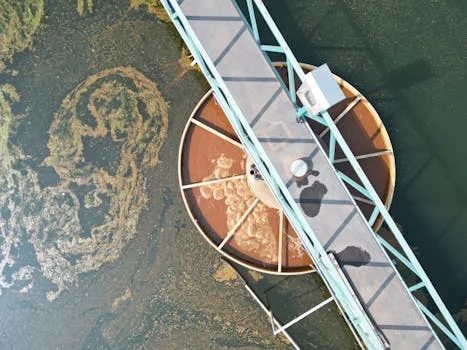
Dissolved Air Flotation (DAF) systems remove up to 95% of Fats, Oils, and Grease (FOG) and 80% of Total Suspended Solids (TSS), serving as the primary defense for industrial facilities discharging into Lusail’s municipal grid. Without effective pretreatment, high FOG concentrations from food processing or industrial laundries can lead to "fatbergs" in the 4,600-meter gravity sewer or cause irreversible fouling of downstream membranes. DAF systems for FOG and TSS removal in Lusail’s food processing and petrochemical industries utilize micro-bubbles (30–50 microns) to attach to hydrophobic particles, lifting them to the surface for mechanical skimming.
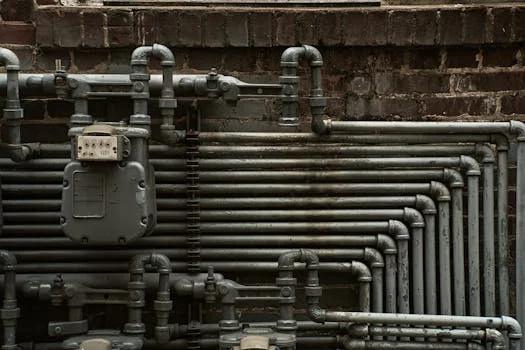
Physical screening is the first stage of any robust industrial system. In Lusail, rotary mechanical bar screens with 1–6 mm apertures are utilized to protect the high-capacity sewage pump stations (450–1,950 l/s) from fibrous waste and plastic debris. For textile or packaging facilities, these screens are non-negotiable to prevent pump impeller damage. Following screening, chemical dosing systems for pH adjustment and heavy metal removal in Lusail’s industrial wastewater are employed. Coagulants like Polyaluminum Chloride (PAC) and flocculants like Polyacrylamide (PAM) are dosed at rates of 50–200 mg/L to aggregate fine particulates and heavy metals into settleable or floatable flocs.
In a typical food processing application in Lusail, a multi-stage pretreatment train is required to meet the MME discharge limit of <50 mg/L COD. This usually involves:
- Mechanical Screening: Removal of large organic solids.
- Equalization: Balancing flow and pH fluctuations (essential for Qatar’s variable production shifts).
- DAF: Reducing FOG from 500 mg/L to <10 mg/L.
- Chemical Dosing: pH correction to 6.5–8.5 using sulfuric acid or caustic soda.
Cost Breakdown for Industrial Wastewater Treatment in Lusail: CAPEX, OPEX, and ROI Scenarios
The total cost of ownership for an MBR-based industrial treatment system in Lusail averages $0.80–$2.00/m³, factoring in Qatar’s specific electricity tariffs and specialized labor costs. While the initial CAPEX for MBR is higher—ranging from $1,500 to $3,000 per m³/day of capacity—the return on investment is driven by the avoidance of freshwater purchase costs and desalinated water surcharges. For a facility using 100 m³/day for irrigation or cooling, the payback period for a TSE-grade recycling system typically falls between 3 and 5 years.
OPEX in Lusail is heavily influenced by environmental factors. High ambient temperatures increase the rate of biological activity, necessitating higher aeration energy, while high humidity accelerates corrosion of outdoor mechanical components. Stainless steel (SS316L) is the standard for tanks and pipework to mitigate this risk. Additionally, the cost of sludge disposal in Qatar, which can range from $0.50 to $1.00/m³ for liquid transport, makes sludge thickening and dewatering equipment (like screw presses) a critical component for reducing daily operational expenses.
| Cost Component | Pretreatment (DAF) | Secondary (CAS) | Advanced (MBR) |
|---|---|---|---|
| CAPEX (Typical Range) | $50k – $200k | $800 – $1,500/m³ | $1,500 – $3,000/m³ |
| Energy Cost ($/m³) | $0.02 – $0.05 | $0.05 – $0.15 | $0.15 – $0.35 |
| Chemical Cost ($/m³) | $0.05 – $0.15 | $0.02 – $0.08 | $0.04 – $0.12 |
| Maintenance/Labor ($/m³) | $0.03 – $0.10 | $0.10 – $0.25 | $0.15 – $0.40 |
| Total OPEX ($/m³) | $0.10 – $0.30 | $0.17 – $0.48 | $0.34 – $0.87 |
Local cost factors also include membrane replacement cycles. In the high-salinity conditions of Lusail, MBR membranes typically last 5–7 years, provided that chemical cleaning (CIP) protocols are strictly followed. Facilities that neglect pretreatment see this lifespan drop to <3 years, doubling the long-term OPEX. When calculating ROI, facility managers should also account for "avoided fines," as MME enforcement in Lusail can result in penalties of up to QAR 500,000 for repeated non-compliance with discharge limits.
Compliance Checklist for Industrial Wastewater Discharge in Lusail: Permits, Monitoring, and Penalties

Industrial facilities in Lusail must obtain an Environmental Permit from the Ministry of Municipality and Environment (MME) before commissioning any wastewater treatment or discharge system. The permitting process begins with a comprehensive Wastewater Characterization Report, detailing expected flow rates and concentrations of regulated pollutants like Chemical Oxygen Demand (COD), Biological Oxygen Demand (BOD), and heavy metals. Once the permit is granted, the facility is subject to regular monitoring to ensure compliance with the 2024 MME guidelines.
Monitoring requirements for Lusail-based industries typically include:
- Weekly Testing: pH, Total Suspended Solids (TSS), and COD.
- Monthly Testing: BOD₅, FOG, and Heavy Metals (Cr, Ni, Pb, Cu).
- Microbiological: Fecal coliform counts (required only if reusing water for irrigation).
The 2024 discharge limits for industrial effluent into the Lusail municipal sewer are as follows:
- COD: <50 mg/L
- BOD₅: <30 mg/L
- TSS: <50 mg/L
- FOG: <10 mg/L
- Heavy Metals: <1 mg/L (Total)
- pH: 6.0 – 9.0
Non-compliance is met with strict enforcement. Under Qatar’s environmental laws, fines can reach QAR 500,000 (~$137,000) for illegal discharge or exceeding limits. the MME has the authority to order an immediate facility shutdown if the discharge is found to be damaging the municipal infrastructure or the 60,000 m³/day MBR treatment plant. For facilities aiming for TSE reuse within Lusail’s district cooling or irrigation network, the standards are even stricter, requiring BOD <10 mg/L and Turbidity <1 NTU at all times.
How to Select the Right Wastewater Treatment System for Your Lusail Facility: Decision Framework
Selecting the optimal wastewater treatment system in Lusail requires a structured evaluation of influent chemistry, available space, and the desired end-use of the treated water. A metalworking facility with low organic load but high heavy metal concentrations requires a vastly different approach than a food processing plant with high FOG and BOD levels. This decision framework assists engineers in navigating these variables.
Step 1: Characterize the Influent. Conduct a 24-hour composite sampling to determine peak and average concentrations of COD, BOD, TSS, and FOG. If salinity is >2,000 mg/L (common in Qatar), specific membrane materials or biological strains may be required. Step 2: Define the Discharge Pathway. If the goal is municipal sewer discharge, a combination of screening and DAF is often sufficient. If the goal is TSE reuse for irrigation or cooling (highly recommended for ROI), an MBR system is mandatory to meet the <1 NTU turbidity threshold. Step 3: Evaluate Footprint Constraints. Measure the available land. If the site is constrained, MBR’s 60% footprint reduction makes it the only viable secondary treatment option. Step 4: Analyze Life-Cycle Costs. Compare the higher CAPEX of MBR against its lower long-term sludge handling costs and the revenue from recycled water. Step 5: Assess Operational Capacity. Determine if the facility has the technical staff to manage an MBR system. MBRs require more sophisticated PLC control and chemical cleaning knowledge than CAS systems.
| Scenario | Recommended Technology | Key Reason |
|---|---|---|
| Food Processing (High FOG/BOD) | DAF + MBR | DAF protects MBR from grease fouling; MBR meets reuse standards. |
| Metalworking (High Metals/Low BOD) | Chemical Dosing + Clarifier | Focus on precipitation and removal of inorganic toxins. |
| Commercial/Hospital (High Pathogens) | MBR + UV Disinfection | MBR provides physical barrier to bacteria; UV ensures total sterilization. |
| Logistics/Warehousing (Low Flow/TSS) | Screening + CAS | Simple, low-CAPEX solution for basic sewage compliance. |
Frequently Asked Questions
What are the penalties for non-compliance with Lusail’s industrial wastewater discharge limits? Per MME 2024 guidelines, penalties for non-compliance include fines up to QAR 500,000 ($137,000), facility shutdown, and the cost of repairing any damage to the municipal sewer network or pump stations.
Can treated industrial wastewater be reused in Lusail? Yes, industrial wastewater can be reused for irrigation, cooling tower makeup, or toilet flushing, provided it meets Qatar’s TSE reuse standards: <10 mg/L BOD, <1 NTU turbidity, and <1,000 CFU/100 mL fecal coliform.
How much does it cost to treat 1 m³ of industrial wastewater in Lusail? The total OPEX ranges from $0.10–$0.30/m³ for DAF pretreatment, $0.17–$0.48/m³ for conventional activated sludge, and $0.34–$0.87/m³ for advanced MBR systems.
What pretreatment is required before discharging to Lusail’s municipal sewer? Most industrial facilities require rotary mechanical screening for solids removal, DAF for FOG removal (if >10 mg/L), and chemical dosing for pH adjustment (target 6.0–9.0).
Is MBR mandatory for industrial wastewater treatment in Lusail? While not mandatory for sewer discharge, MBR is the industry standard for facilities pursuing TSE reuse due to its ability to achieve <1 NTU turbidity and <1 μm filtration without massive tertiary treatment stages.