In Malaysia, hospital wastewater treatment must achieve DOE discharge limits (BOD ≤ 20 mg/L, COD ≤ 80 mg/L, TSS ≤ 50 mg/L) while mitigating antimicrobial resistance (AMR) risks from ESKAPE pathogens. Studies in Klang Valley show hospital WWTPs harbor antibiotic-resistant bacteria, with ciprofloxacin contamination disrupting microbial communities. Effective systems combine biological treatment (e.g., MBR) with advanced disinfection (e.g., chlorine dioxide or ozone), achieving 99%+ kill rates. This guide provides 2025 engineering specs, cost benchmarks, and a compliance checklist for Malaysian hospitals.
Why Hospital Wastewater Treatment in Malaysia is a Regulatory and AMR Crisis
Hospital wastewater in Malaysia presents a significant public health and environmental challenge, primarily due to the presence of antibiotic-resistant bacteria and pharmaceutical residues. The Department of Environment (DOE) Malaysia enforces stringent discharge limits for hospital effluent, including BOD ≤ 20 mg/L, COD ≤ 80 mg/L, and TSS ≤ 50 mg/L, as observed in studies focusing on hospital wastewater treatment plants (WWTPs).
Research conducted in the Klang Valley, a major urban area, has identified the widespread presence of ESKAPE pathogens (Enterococcus faecium, Staphylococcus aureus, Klebsiella pneumoniae, Acinetobacter baumannii, Pseudomonas aeruginosa, Enterobacter spp.) in hospital wastewater, many of which exhibit resistance to common antibiotics (Bakon et al., 2025). This finding underscores the role of hospital effluent as a hotspot for the dissemination of antimicrobial resistance genes into the environment.
studies investigating microbial communities in hospital WWTPs have revealed that contaminants like ciprofloxacin (CIP), a widely used antibiotic, significantly disrupt the natural microbial balance, thereby reducing the overall efficiency of wastewater treatment processes (Wan Nurhayati Wan Hanafi et al., 2025). This disruption not only compromises the removal of conventional pollutants but also exacerbates the challenge of eliminating antibiotic-resistant microorganisms.
Non-compliance with DOE Malaysia's environmental quality regulations carries severe consequences for hospital operators. Penalties can include substantial fines up to MYR 500,000, operational shutdowns, and significant reputational damage. The DOE actively monitors industrial and medical facilities, with enforcement actions often involving public disclosure of non-compliant entities, underscoring the critical need for robust and compliant hospital wastewater treatment in Malaysia.
Malaysia’s Hospital Wastewater Treatment Standards: DOE Requirements and AMR Mitigation
The Department of Environment (DOE) Malaysia sets specific discharge limits for hospital wastewater to protect public health and the environment. These standards are critical for preventing the spread of waterborne diseases and mitigating antimicrobial resistance (AMR) risks.
Table 1 outlines the key DOE discharge limits for hospital effluent, alongside typical influent characteristics and important notes for compliance.
| Parameter | DOE Discharge Limit (Standard B) | Typical Hospital Influent Range | Notes |
|---|---|---|---|
| pH | 6.0 - 9.0 | 6.5 - 8.5 | Must be within range |
| Biochemical Oxygen Demand (BOD₅) | ≤ 20 mg/L | 150 - 400 mg/L | Measures organic pollution |
| Chemical Oxygen Demand (COD) | ≤ 80 mg/L | 300 - 800 mg/L | Higher than BOD, indicates non-biodegradable organics |
| Total Suspended Solids (TSS) | ≤ 50 mg/L | 100 - 350 mg/L | Physical pollutants, can harbor pathogens |
| Oil & Grease | ≤ 10 mg/L | 5 - 50 mg/L | Requires effective separation |
| Ammoniacal Nitrogen (NH₃-N) | ≤ 10 mg/L | 20 - 60 mg/L | Nutrient that can cause eutrophication |
| Total Coliform | ≤ 100 CFU/100mL | 10⁶ - 10⁸ CFU/100mL | Indicator of fecal contamination, requires robust disinfection |
| Chlorine (Residual) | ≤ 1.0 mg/L | N/A (post-disinfection) | Monitored to prevent environmental toxicity |
Beyond these general parameters, DOE Malaysia's guidelines for medical facilities implicitly require a high level of pathogen reduction, typically targeting a 99%+ kill rate for bacteria and viruses. While explicit antibiotic residue monitoring is not yet a universal discharge standard, the growing concern over AMR necessitates systems capable of degrading or removing these compounds. Hospitals are encouraged to implement advanced treatment stages that can address these emerging contaminants.
The permitting process for new hospital WWTPs or significant upgrades involves several steps. Hospitals exceeding 100 beds are typically required to conduct an Environmental Impact Assessment (EIA) to evaluate potential environmental effects and propose mitigation measures. This is followed by detailed design submission and approval from the DOE, ensuring the proposed system meets all regulatory requirements before construction commences.
As a case study, a Kuala Lumpur hospital recently upgraded its existing conventional activated sludge system to a membrane bioreactor (MBR) system to address recurrent non-compliance issues. Prior to the upgrade, influent BOD averaged 250 mg/L and COD 550 mg/L, with effluent often exceeding DOE limits at BOD 35 mg/L and COD 120 mg/L. Post-upgrade, the MBR system consistently achieved effluent quality of BOD ≤ 5 mg/L and COD ≤ 30 mg/L, with significant reduction in total coliforms, demonstrating the efficacy of advanced treatment in meeting stringent DOE limits.
Hospital Wastewater Treatment Technologies: Engineering Comparison for Malaysian Facilities
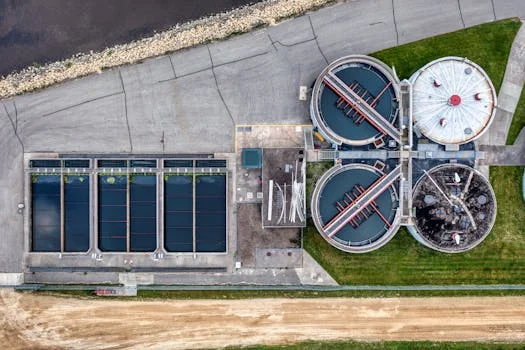
Selecting the appropriate hospital wastewater treatment technology is a critical decision influenced by factors such as influent characteristics, required effluent quality, available footprint, and budget. Each technology offers distinct advantages and trade-offs, particularly concerning pollutant removal and antimicrobial resistance (AMR) mitigation.
Table 2 provides an engineering comparison of common and advanced treatment technologies relevant for Malaysian hospitals.
| Technology | COD Removal | Pathogen Kill Rate | Footprint | Energy Use | Capital Cost | O&M Cost | Best For |
|---|---|---|---|---|---|---|---|
| Conventional Activated Sludge (CAS) | 70-85% | 90-95% | Large | Medium | Low | Medium | Hospitals with ample space, lower budget, less stringent AMR concerns |
| Membrane Bioreactor (MBR) | 90-98% | 99.9%+ | Small (60% less than CAS) | High | Medium-High | Medium-High | Urban hospitals with limited space, high effluent quality demands, strong AMR mitigation |
| Dissolved Air Flotation (DAF) | 30-60% (pre-treatment) | N/A (physical separation) | Medium | Medium | Medium | Medium | Pre-treatment for high TSS/Oil & Grease, enhances downstream biological processes |
| Chlorine Dioxide Disinfection | N/A (disinfection only) | 99.99%+ | Small | Low-Medium | Low-Medium | Medium | Post-treatment for high pathogen kill, effective against resistant strains |
| Ozone Disinfection | Minimal (disinfection only) | 99.99%+ | Medium | High | High | High | Advanced disinfection, strong oxidizing agent for complex compounds, no residual |
| Integrated Package Systems | 85-95% | 99%+ | Very Small | Medium | Medium | Medium | Small to medium hospitals, rapid deployment, compact footprint, modular design |
For AMR mitigation, MBR technology stands out, achieving pathogen removal rates of 99.9% or higher, significantly surpassing the 90-95% typical for conventional activated sludge (CAS) systems (HydropureWater product catalog). This superior performance is due to the physical barrier of the membrane, which effectively retains bacteria, viruses, and even some antibiotic residues, as noted in various studies on hospital wastewater treatment. Compared to CAS, MBR systems for hospital wastewater treatment require approximately 60% less space, a critical advantage for urban hospitals in Malaysia where land is at a premium. For example, a 200-bed hospital requiring a 100 m³/day WWTP might need 200-300 m² for a CAS system, whereas an MBR system could fit into 80-120 m².
While CAS is a lower-cost option, its limited pathogen removal capability often necessitates additional disinfection stages to meet stringent discharge standards. Dissolved air flotation (DAF) systems, though primarily for physical separation, can significantly improve the efficiency of subsequent biological treatment by removing fats, oils, grease, and suspended solids, making them valuable as a pretreatment step.
For disinfection, chlorine dioxide and ozone are highly effective against a broad spectrum of pathogens, including antibiotic-resistant strains. Chlorine dioxide disinfection, often generated on-site using a chlorine dioxide generator, provides a persistent residual and is less prone to forming harmful byproducts compared to conventional chlorination. Integrated package systems, such as the compact medical wastewater treatment systems, offer a pre-engineered, modular solution, ideal for small to medium-sized hospitals seeking rapid deployment and optimized performance within a constrained footprint.
For a detailed comparison of biological treatment options, refer to our article on MBR vs. conventional activated sludge for hospital wastewater.
Designing a Hospital Wastewater Treatment System: Process Flow and Engineering Specifications
Designing an effective hospital wastewater treatment system in Malaysia requires a structured approach, integrating various treatment stages to meet DOE discharge limits and mitigate AMR risks. The typical process flow involves several key stages, each with specific engineering parameters.
The standard process flow for hospital wastewater treatment is: Pretreatment → Primary Treatment → Biological Treatment → Disinfection → Discharge.
- Pretreatment: This initial stage focuses on removing large solids and coarse materials to protect downstream equipment. A rotary mechanical bar screen (GX Series) is typically employed, featuring bar spacing of 1-3 mm. This stage can achieve approximately 90% removal of total suspended solids (TSS) larger than the screen opening, preventing blockages and reducing the organic load on subsequent processes.
- Primary Treatment: Often involves a balancing tank or equalization basin to homogenize the wastewater flow and concentration, followed by a primary sedimentation tank. This step allows for the gravitational settling of finer suspended solids and some organic matter, typically removing 20-30% of BOD and 50-70% of TSS.
-
Biological Treatment: This is the core stage for removing dissolved and colloidal organic matter (BOD and COD) and nutrients (nitrogen and phosphorus). An anoxic/aerobic (A/O) process is commonly used, promoting both nitrification and denitrification. Key operational parameters include:
- Hydraulic Retention Time (HRT): 6-12 hours
- Mixed Liquor Suspended Solids (MLSS): 3,000-5,000 mg/L
- Food-to-Microorganism (F/M) Ratio: 0.1-0.3 kg BOD/kg MLSS·day
- For enhanced performance and a smaller footprint, MBR systems for hospital wastewater treatment integrate biological treatment with membrane separation, offering superior effluent quality and pathogen removal.
-
Disinfection: Essential for achieving the required 99%+ pathogen kill rate, especially for total coliforms. Chlorine dioxide disinfection or ozone are preferred due to their effectiveness against antibiotic-resistant bacteria and viruses, with minimal disinfection byproducts. Typical parameters include:
- Contact Time: 30-60 minutes
- Residual Disinfectant: 0.5-1.0 mg/L (for chlorine dioxide)
- Sludge Management: The biological treatment process generates excess sludge, which requires dewatering for cost-effective disposal. A plate and frame filter press is a robust solution, capable of achieving 20-30% solids content in the dewatered cake. Polymer dosing, typically 1-2 kg/m³ of dry solids, is often used to enhance flocculation and dewatering efficiency.
Each stage is critical, and proper sizing and selection of equipment are vital to ensure the entire system can handle the hospital's specific wastewater characteristics and flow rates, ultimately meeting Malaysia's hospital wastewater treatment standards.
Cost Breakdown for Hospital Wastewater Treatment in Malaysia: Budgeting and ROI Framework
Budgeting for a hospital wastewater treatment system in Malaysia involves understanding both capital expenditure (CapEx) and operational expenditure (OpEx). These costs vary significantly based on the chosen technology, system capacity, level of automation, and site-specific conditions.
Capital costs for a new hospital WWTP in Malaysia typically range from MYR 500,000 to MYR 2,000,000 for systems designed to treat 50–200 m³/day. Factors influencing this range include: the complexity of the treatment technology (e.g., MBR systems are generally higher CapEx than CAS), the required footprint (compact systems can incur higher per-unit costs), and the degree of automation desired.
Operating costs are ongoing expenses crucial for the long-term sustainability of the WWTP. Table 3 provides a typical breakdown of operating costs for hospital wastewater treatment in Malaysia.
| Cost Category | Typical Range (MYR/m³) | Percentage of Total OpEx | Notes |
|---|---|---|---|
| Energy (Electricity) | 0.20 - 0.50 | 30-40% | Pumps, blowers, mixers, membrane aeration; higher for MBR/Ozone |
| Chemicals | 0.15 - 0.40 | 20-30% | Coagulants, flocculants, disinfectants (e.g., chlorine dioxide), anti-scalants |
| Labor | 0.10 - 0.25 | 10-20% | Operator salaries, routine checks, sampling, data logging |
| Maintenance & Spares | 0.08 - 0.20 | 10-15% | Replacement parts, membrane cleaning chemicals, equipment servicing |
| Sludge Disposal | 0.05 - 0.15 | 5-10% | Transportation and landfilling fees for dewatered sludge |
Calculating the Return on Investment (ROI) for a hospital WWTP involves comparing the initial investment and ongoing operating costs against the financial risks of non-compliance. For a 100-bed hospital generating 50 m³/day of wastewater, non-compliance could result in daily fines, potential operational shutdowns leading to revenue loss, and significant reputational damage. A single major environmental violation could incur a fine of up to MYR 500,000, dwarfing the initial investment over the system's lifespan (typically 15-20 years). Investing in a compliant WWTP ensures uninterrupted operation, avoids penalties, and protects the hospital's public image, offering a strong ROI through risk mitigation.
Hospitals can also explore various funding options to ease the financial burden. The Malaysian government offers initiatives like the DOE Green Technology Financing Scheme (GTFS), which provides financing for green technology projects, including advanced wastewater treatment. Leasing options and public-private partnerships (PPPs) are also viable strategies, allowing hospitals to implement necessary upgrades without a large upfront capital outlay. Eligibility for grants often requires adherence to specific green technology criteria and a robust application process demonstrating environmental benefits.
Compliance Checklist: Step-by-Step Guide to Meeting DOE and AMR Standards
Achieving and maintaining compliance with DOE regulations and mitigating antimicrobial resistance (AMR) risks in hospital wastewater requires a systematic approach. This checklist outlines the key steps for hospital operators in Malaysia.
-
Pre-construction Phase:
- Environmental Impact Assessment (EIA): For hospitals exceeding 100 beds, complete a detailed EIA report and obtain approval from the DOE. This process typically takes 6-12 months.
- DOE Permitting: Apply for and secure all necessary discharge permits from the DOE before any construction commences.
- Site Selection: Evaluate potential locations for the WWTP, considering accessibility, proximity to discharge points, and future expansion needs.
-
Design Phase:
- Influent Characterization: Conduct comprehensive analyses of hospital wastewater to determine average and peak flow rates, BOD, COD, TSS, pH, and specific contaminants like antibiotics and pathogens.
- Technology Selection: Choose a treatment technology (e.g., MBR, CAS with advanced disinfection) that meets current and future discharge limits and addresses AMR concerns.
- Process Sizing: Engineer the WWTP components (tanks, pumps, membranes, disinfection units) to handle maximum expected loads and achieve target effluent quality. Specify parameters such as HRT, MLSS, and disinfection contact times.
-
Construction Phase:
- Contractor Qualifications: Engage experienced contractors with a proven track record in hospital or industrial WWTP construction.
- Equipment Certification: Ensure all installed equipment meets relevant Malaysian standards and international certifications.
- Commissioning Protocol: Develop and execute a detailed commissioning plan, including system testing, performance verification, and operator training. DOE inspections are mandatory before final operational approval.
-
Operation Phase:
- Monitoring: Implement a robust monitoring program for key effluent parameters (BOD, COD, TSS, pH, NH₃-N, Total Coliform) as per DOE permit requirements. Conduct daily visual checks and weekly/monthly laboratory analyses.
- Record-Keeping: Maintain accurate and detailed records of operational data, monitoring results, maintenance activities, and sludge disposal manifests.
- Maintenance: Adhere to a preventative maintenance schedule for all equipment, including regular cleaning of membranes (for MBR systems), pump inspections, and sensor calibration.
-
AMR Mitigation:
- Antibiotic Residue Testing: Periodically test for common antibiotic residues (e.g., ciprofloxacin) in influent and effluent to assess removal efficiency.
- Pathogen Monitoring: Beyond total coliforms, consider periodic testing for specific ESKAPE pathogens or indicator genes in effluent to validate disinfection effectiveness.
- Disinfection Validation: Regularly verify the efficacy of disinfection systems through bioassays or direct pathogen counts, ensuring consistent 99%+ kill rates and meeting DOE reporting requirements for medical facilities.
Frequently Asked Questions

Hospital facility managers, environmental engineers, and procurement teams often have specific questions regarding hospital wastewater treatment in Malaysia. Here are answers to some common inquiries:
How is hospital wastewater treated in Malaysia?
Hospital wastewater in Malaysia is typically treated through a multi-stage process involving pretreatment (screening), primary treatment (sedimentation), biological treatment (e.g., conventional activated sludge or membrane bioreactor), and advanced disinfection (e.g., chlorine dioxide or ozone). The goal is to meet strict DOE discharge limits, such as BOD ≤ 20 mg/L and COD ≤ 80 mg/L, while also mitigating antimicrobial resistance (AMR) risks by achieving high pathogen kill rates.
What are the key DOE discharge limits for Malaysian hospitals?
The Department of Environment (DOE) Malaysia enforces several critical discharge limits for hospital effluent under Environmental Quality (Industrial Effluent) Regulations 2009 (Standard B). Key parameters include: Biochemical Oxygen Demand (BOD₅) ≤ 20 mg/L, Chemical Oxygen Demand (COD) ≤ 80 mg/L, Total Suspended Solids (TSS) ≤ 50 mg/L, pH between 6.0-9.0, and Ammoniacal Nitrogen (NH₃-N) ≤ 10 mg/L. Disinfection is also crucial, with Total Coliforms typically limited to ≤ 100 CFU/100mL.
Why is antimicrobial resistance (AMR) a concern in hospital wastewater?
Antimicrobial resistance (AMR) is a major concern because hospital wastewater is a known reservoir for antibiotic-resistant bacteria, including ESKAPE pathogens, and antibiotic residues like ciprofloxacin. Studies in Klang Valley hospitals have confirmed the presence of these resistant strains. Inadequate treatment allows these resistant microorganisms and compounds to be discharged into the environment, potentially spreading resistance to other bacteria and compromising public health. Effective hospital wastewater treatment systems are designed to achieve a 99%+ pathogen kill rate to minimize this risk.
What is the largest STP in Malaysia?
While the largest sewage treatment plant (STP) in Malaysia, such as the Pantai 2 Regional Sewage Treatment Plant in Kuala Lumpur, handles massive volumes of municipal wastewater (e.g., 320,000 cubic meters per day), hospital wastewater treatment plants are distinct. Hospital WWTPs are specialized facilities designed to treat unique influent characteristics, including high concentrations of pharmaceuticals, disinfectants, and pathogenic microorganisms, requiring specific technologies and higher disinfection standards than typical municipal STPs. Regardless of size, all hospital WWTPs must meet the same stringent DOE discharge limits and address AMR.