Wastewater Treatment Plant CAPEX vs OPEX Algeria
Wastewater treatment plant CAPEX vs OPEX Algeria splits build cost from yearly cost. Algiers plants at 100–500 m³/day sit near DZD 500 million; large works above 50,000 m³/day pass DZD 3 billion. OPEX averages DZD 0.15–0.40/m³.
MBR systems cost 30–50% more than conventional activated sludge and cut the footprint by 60%. The industrial screen in this cost model is COD <125 mg/L and TSS <35 mg/L. Earlier guidance called the parent statute the 2024 Water Law (Law No. 05-12). The Ministry of Commerce of Algeria publishes Law No. 05-12 as the water law dated 4 August 2005.
According to that ministry page, the publication date is 04-08-2005 and the subject is water. The fetched page does not list a DZD 10 million penalty or a COD limit. Those penalty and limit figures stay as allowances inside this cost model. Take the enforceable number from the discharge authorization for the actual outfall.
Wastewater Treatment Plant Cost in Algiers 2025
Wastewater treatment plant cost in Algiers in 2025 is set by a national water deficit before any vendor catalog is opened. Algeria faces a critical water scarcity threshold with less than 500 m³ of renewable water available per capita per year, which is 50% lower than the United Nations' absolute scarcity threshold. The World Bank indicator page for renewable internal freshwater resources per capita names the series through 2022 and credits FAO AQUASTAT, but the fetched view shows no numeric cell. The sub-500 m³ planning figure above therefore stays the screening number for this guide.
According to Wikipedia's review of water supply and sanitation in Algeria, the number of wastewater treatment plants in the country increased from only 18 in 2000 to 113 in 2011, with 96 more under construction at that date. Reuse stayed thin by comparison: as of 2010 only 510 hectares were irrigated with reclaimed water. The same review counts 15 seawater desalination plants along the coast in 2011 with a capacity of 2.3 million m³/day. The Hamma plant in Algiers, completed in 2008, was then the largest desalination plant in Africa at 200,000 m³/day, and Algiers moved from intermittent to continuous water supply in 2011.
Treatment capacity therefore exists, while reuse does not. That gap is the commercial opening for an Algiers industrial reuse line: water not bought from the network, plus effluent that already meets the reuse column in the compliance table. Most factories we budget still pay the network tariff on every cubic meter they fail to recover.
In Algiers, the 2025 planning note puts population growth at 2.1% a year as of 2025. Food processing, textiles, and petrochemicals are carried at 8.2% annual growth in that same note. Most plants we size for those three sectors are industrial pretreatment jobs, not 50,000+ m³/day municipal works. The city growth rate is not a national population stock.
The same 2025 note cites penalties that can reach DZD 10 million for illegal or substandard discharge. Current 2025 industrial water tariffs in Algiers range from DZD 0.25 to 0.50/m³ for wastewater services (HydropureWater field data, 2025). On-site reuse is easier to justify when that tariff is paid on every cubic meter taken from the network. Most factories we budget buy water at the upper half of that band once the meter is industrial.
The WABAG Algiers wastewater treatment plant rehabilitation, completed in 2023, reached 95% TSS removal and 90% COD reduction. Advanced sludge handling cut operating cost by 22% against the previous legacy system. Procurement teams should read that result as a sludge-and-energy outcome, not as a promise that every retrofit hits 22%. Most rehabilitation jobs we review save haulage cost before they save kilowatt-hours.
Industrial Wastewater Treatment CAPEX Algeria DZD
Industrial wastewater treatment CAPEX in Algeria, in DZD, has to carry a 19% import duty on specialized electromechanical equipment. Industrial land in Algiers' primary zones is carried at DZD 5,000 to DZD 15,000/m². A small industrial plant that uses DAF systems for Algiers’ industrial pretreatment is budgeted between DZD 500 million and DZD 1.2 billion. Influent oil, solids, and the need for covered tanks move a job inside that band.
Operating expenditure in Algiers is dominated by aeration energy, which can account for up to 60% of the monthly bill. Algerian power is often cheaper than a European industrial tariff, but secondary air volume still dominates the bill. Sludge disposal is the next driver as landfill rules on the Algiers periphery tighten.
Readers comparing subsidy effects can Compare Algiers’ wastewater treatment costs to Alexandria’s 2025 benchmarks. Keep the permit math on Algerian instruments only.
| Plant Scale / Type | Capacity (m³/day) | CAPEX Range (DZD) | OPEX (DZD/m³) | Primary Technology |
|---|---|---|---|---|
| Small Industrial | 100–500 | 500M – 1.2B | 0.25 – 0.40 | DAF / Chemical Pretreatment |
| Medium Municipal | 5,000–20,000 | 1.5B – 3B | 0.15 – 0.25 | CAS + Tertiary Filtration |
| Large Municipal/Reuse | 50,000+ | 3B – 5B+ | 0.30 – 0.50 | MBR / Advanced Reuse |
Read the row that matches flow before you average the table. A 100–500 m³/day oily industrial job belongs on the small-industrial row, at 500M – 1.2B DZD capital. A 5,000–20,000 m³/day municipal job with land for tanks belongs on the middle row. A 50,000+ m³/day reuse plant belongs on the large row even though unit OPEX is higher.
Most private sites we size in Rouiba and Reghaia stay on the first row. Move a job up a row only when reuse or a tiny plot forces membranes. Do not average the three OPEX bands into one number for a bid.
Permitting cash is part of opening capital. An environmental impact assessment for plants exceeding 500 m³/day can cost between DZD 2 million and DZD 10 million and take up to 12 months. You can see how Algiers’ industrial wastewater costs compare to Kuwait’s high-efficiency standards, where this guide notes that higher labor costs are offset by lower import barriers. Do not copy another country's discharge limits into an Algiers design.
Wastewater Treatment OPEX per Cubic Meter Algeria
Wastewater treatment OPEX per cubic meter in Algeria averages DZD 0.15–0.40/m³ in the opening band for this guide. The scale table then splits unit cost into 0.25 – 0.40, 0.15 – 0.25, and 0.30 – 0.50 DZD/m³. Energy at 40–60% of OPEX is the first lever. Sludge disposal at 20–30% of OPEX is the second.
Coagulant dose dominates DAF sites. This guide does not invent a yearly membrane replacement price. Ask the vendor for a membrane life in years and a cleaning chemical dose before you lock OPEX. Most bids we review leave that line blank.
Most plants we audit in Algiers run at the lower end of that energy share when blowers have variable speed and the grid is fine-bubble. A fixed-speed coarse grid sits at the high end of the 40–60% share. Price kilowatt-hours from the feeder contract for that site. A national average power price will miss the industrial zone tariff.
A parallel layout of capital against operating cost, not a source of Algerian limits, is Wastewater Treatment Plant Cost in India 2026: CAPEX, OPEX, Tech-Specific Breakdown. Duty, land, and the discharge table on this page stay Algerian.
Technology Comparison for Algiers Sites
Algiers technology selection shows a 15% increase in membrane bioreactor adoption in the urban core, where the footprint is 60% smaller than conventional activated sludge. On a tight plot such as Bab Ezzouar, MBR systems for Algiers’ water reuse projects are specified when irrigation or cooling makeup needs COD removal up to 98%. Land price, not a preference for membranes, is what usually forces that choice. Most urban lots we measure fail a conventional tank layout before they fail the COD math.
Dissolved air flotation remains the pretreatment standard in the industrial zones of Rouiba and Reghaia. DAF is aimed at fats, oils, and grease so a factory can meet the model sewer cap of <15 mg/L for FOG. Capital for DAF is lower than for MBR. Operating cost follows coagulant and flocculant dose on every production day.
A food plant that skips DAF and hopes biology will catch the oil usually fouls the next stage. Most food sites we size put DAF ahead of any membrane. Oil first, dissolved COD second.
| Parameter (2025 Data) | MBR System | DAF System | Conventional (CAS) |
|---|---|---|---|
| COD Removal Efficiency | 95–98% | 85–92% (TSS focused) | 85–90% |
| Effluent TSS (mg/L) | <5 mg/L | 20–40 mg/L | 25–35 mg/L |
| CAPEX (DZD/m³/day) | 300,000 – 500,000 | 150,000 – 250,000 | 100,000 – 200,000 |
| Footprint Requirement | Very Low (40%) | Medium | High (1.00x) |
| Best Use Case | Water Reuse / Urban | Food / Petrochemical | Large Municipal |
Case work from 2023–2024 shows the split in money. An MBR plant in Bab Ezzouar with a 10,000 m³/day capacity was completed at a DZD 3.2 billion CAPEX and now supplies irrigation water. A 500 m³/day food processing facility in Rouiba used a DZD 800 million DAF-based system, reached 92% FOG removal, and left behind DZD 5 million a year in penalties. Most food jobs we size spend the first capital on FOG, not on membranes.
For a municipal MBR cost cross-check only, learn how Algiers’ MBR costs and compliance compare to Qatar’s 2025 standards. That comparison stresses high water recovery. It is not an Algiers discharge limit and it does not change Law No. 05-12.
MBR Wastewater Treatment Plant Cost Algeria
MBR wastewater treatment plant cost in Algeria is 300,000 – 500,000 DZD per m³/day on the 2025 comparison table. DAF on that table is 150,000 – 250,000 DZD per m³/day. Conventional activated sludge is 100,000 – 200,000 DZD per m³/day. The footprint row marks MBR at 40% of the conventional area, with conventional tanks as the 1.00x baseline.
Choose MBR when land sits at the top of DZD 5,000 to DZD 15,000/m² or when the product is reuse water. Choose conventional tanks when the plot is large and 85–90% COD removal meets the outfall. Most urban plots we see in Algiers fail the tank footprint test before they fail COD. Price the land before you argue about membranes.
Algiers Compliance and the Discharge Table
Compliance screening in Algiers has to name Law No. 05-12 before it names a process. Earlier project text called that statute the 2024 Water Law (Law No. 05-12). The Ministry of Commerce page dates Law No. 05-12 to 4 August 2005 and titles it as the water law. The limit table below remains the screening set inside this cost model, not a reprint of a decree annex.
The reuse column is tighter than the industrial column, so a plant aimed only at sewer discharge can miss an irrigation contract. Operators who need agricultural or industrial reuse should design to that column from the start. A later add-on filter rarely fixes a biological volume that was sized only for the industrial column. Most reuse conversions we see in Algiers fail on TSS and pathogen control, not on the original COD promise.
Permitting runs through the water-resources authority and the local commune. The environmental impact assessment is the long item and often takes 6 to 12 months. On a large project the study can reach 20% of total CAPEX when groundwater modeling is required. Starting construction before those permits exist is carried in this model as a stop-work risk and fines up to DZD 10 million.
| Pollutant Parameter | Industrial Limit (mg/L) | Municipal Limit (mg/L) | Reuse Standard (Agriculture) |
|---|---|---|---|
| COD | <125 | <90 | <60 |
| BOD5 | <30 | <25 | <15 |
| TSS | <35 | <20 | <10 |
| FOG | <15 | <10 | N/A |
| pH | 6.5 – 8.5 | 6.5 – 8.5 | 6.5 – 8.0 |
Wastewater Treatment Plant Permitting Cost Algeria
Wastewater treatment plant permitting cost in Algeria is budgeted at DZD 2 million to DZD 10 million for the study on plants above 500 m³/day. The same file can take up to 12 months before approval. The 2025 step list below is the sequence used in this guide, from study through the operational license. Most files we see lose months at the public inquiry, not in the process calculation.
The permitting steps for 2025 include:
- Environmental Impact Assessment: DZD 2M–10M cost; involves public inquiry and technical review (6–12 months).
- Ministry of Water Resources Approval: Technical validation of the treatment process and site inspection (3–6 months).
- Local Municipality (APC) Permits: Zoning and construction permits (2–4 months).
- Operational License: Final inspection and discharge permit issuance; requires annual renewal (1–2 months).
Add the four durations rather than hoping they overlap fully. A study at 6–12 months, a water-resources review at 3–6 months, a commune permit at 2–4 months, and a license at 1–2 months can stack. The full path in the questions below is 12 and 18 months when the steps run mostly in series. Order long-lead equipment only after the process description in the study is stable.
ROI for an Algiers Reuse Plant
An Algiers reuse investment is justified by water not purchased, penalties not paid, and treated water sold where a farm contract exists. The standard ROI formula applied to Algiers' industrial context is: (Annual Savings + Revenue from Reuse) / (CAPEX + Annual OPEX) = ROI (years). The guide also states government support of up to 30% CAPEX subsidies for plants that meet 80% reuse targets. Treat that subsidy as a model input, not as a figure printed on the ministry page fetched for the statute date.
| Investment Component (5,000 m³/day MBR) | Estimated Value (DZD) |
|---|---|
| Initial CAPEX | 1,800,000,000 |
| Annual OPEX (at DZD 0.15/m³) | 273,750,000 |
| Annual Savings (Water Reuse at DZD 0.25/m³) | 456,250,000 |
| Avoided Penalties (Law No. 05-12) | 10,000,000 |
| Annual Revenue (Agricultural Sale) | 91,250,000 |
| Net Annual Benefit | 557,500,000 |
| Estimated ROI | 3.2 – 3.8 Years |
The worked 5,000 m³/day MBR line sets initial CAPEX at 1,800,000,000 DZD. Annual OPEX is 273,750,000 DZD at DZD 0.15/m³. Reuse savings are 456,250,000 DZD at DZD 0.25/m³. Avoided penalties are 10,000,000 DZD.
Agricultural sale revenue is 91,250,000 DZD. The table states net annual benefit of 557,500,000 DZD and estimated ROI of 3.2 – 3.8 Years. Those six lines are one worked case, not six independent quotes. Change the flow and every dinar line has to be rebuilt.
Dividing 1,800,000,000 DZD of capital by the stated 557,500,000 DZD net annual benefit gives about 3.2 years. That matches the low end of the table range. For a typical 5,000 m³/day MBR plant, the ROI is often achieved within 3.5 years. Keep the formula line and the table together, and still subtract operating cost in any cash model.
On the Algiers periphery, network cuts stop production, so reuse also protects operating days. Current prices for agricultural reuse water in the Mitidja plain near Algiers range from DZD 0.10 to 0.20/m³ when the water meets TSS <10 mg/L. Most farm contracts we see pay toward the low end of that band. Do not book the high end unless the offtake contract is signed.
A second worked capital layout, useful only as a build-up method and not as Algerian law, is Sihanoukville Wastewater Treatment Plant Cost 2026: CAPEX, Tech-Specific Breakdown. Discharge limits, duty, and the dinar bands on this page stay specific to Algeria and Algiers.
Equipment Selection Checklist for Algiers
Equipment specified for Algiers has to survive heat, coastal salt, and a slow spare-part lane. High summer temperatures (35–45°C) accelerate biological processes but also raise corrosion and odor risk. The 19% import duty on electromechanical components makes a durable machine cheaper over a decade than a low first cost with repeated imports. Most plants we spec on the coast fail first on metallurgy, not on the kinetic calculation.
Core equipment checklist:
- Pretreatment: specify screens for plastic and textile debris, which is common in Algiers influent.
- Primary clarification: use lamella clarifiers on tight plots, since they offer 50% more settling area than traditional tanks.
- Secondary process: lock MBR, DAF, or conventional activated sludge to the comparison table before naming a vendor.
- Disinfection: hold the effluent inside the pH 6.5–8.5 band used in the limit table.
- Sludge: dewater before haulage so the 20–30% OPEX share does not grow with water left in the cake.
- Power: add backup generation, typically 5–10% of CAPEX, where the industrial zone drops offline.
- Materials: use 316L stainless steel on wetted DAF and MBR parts in coastal Algiers wastewater.
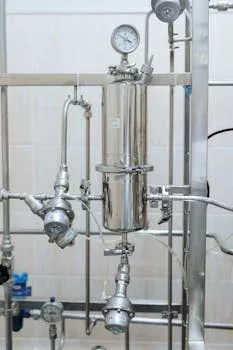
Specify Rotary mechanical bar screens (GX Series) for solids removal ahead of DAF or MBR, or rags will cut real capacity below the nameplate. Pair that duty with Chlorine dioxide generators for disinfection when the permit watches residual and byproducts inside pH 6.5–8.5. A screen opening that is too wide shows up later as membrane patches or DAF nozzle plugs.
Close the solids line with sludge dewatering for Algiers’ wastewater plants on a plate-and-frame press when the landfill accepts only a dry cake. State 316L on every wetted datasheet line that sees saline industrial waste. Backup power at 5–10% of CAPEX is cheaper than a biology restart after a zone outage in summer at 35–45°C.
Who Should Use This Cost Split
Estimators in Algiers should use this capital and operating split when daily flow, influent load, and the outfall are already known. EPC teams can test a vendor total against the DZD band for that flow before a board review. Procurement can check whether the 19% duty and the land price were inside the quote. The bands are a screen, not a tender bill of quantities.
Look elsewhere if the task is a signed environmental authorization, a customs heading, or a commune building permit. Those acts come from the competent Algerian offices and from a licensed declarant. This page does not replace them. It also does not import permit rules from any other country into an Algiers design.
Next step: send flow, influent COD, and the discharge point with the Algiers plant budget request. Ask for the duty basis and the power draw in the same package. One priced pass against the tables above shows whether the job sits in the small, medium, or reuse band.
Frequently Asked Questions
What is the average wastewater treatment plant price in Algeria for 2025?
A standard 1,000 m³/day municipal plant using conventional technology costs approximately DZD 800 million. An MBR plant of the same capacity, designed for water reuse, costs between DZD 1.2 billion and DZD 1.5 billion because membranes and automation cost more. Most plants we size near 1,000 m³/day for a sewer outfall stay near DZD 800 million. Cooling-water reuse pushes the same flow into the MBR band. Pick the band from the outfall, not from the factory name.
How does Law No. 05-12 affect industrial discharge in Algiers?
Industrial plants in this Algiers model are screened at COD <125 mg/L and TSS <35 mg/L, with fines up to DZD 10 million for a miss. Law No. 05-12 is the water statute dated 4 August 2005, which replaces the habit of calling it a 2024 Water Law. Companies reusing >80% of their water are the cases tied here to tax relief. Most plants we review fail the reuse share before they fail COD.
Is MBR or DAF better for food processing plants in Algiers?
DAF is the better first stage for food plants in Algiers when fats, oils, and grease dominate the load. MBR is required when that water must be reused for cleaning or cooling. DAF does not strip dissolved organics or pathogens to a reuse standard. Most food sites we size in Rouiba and Reghaia stop at DAF if the sewer limit is the only target. Add MBR when a reuse contract is already signed.
What are the energy costs for running a treatment plant in Algiers?
Energy cost in this Algiers model is DZD 0.06 to 0.15 per m³ of treated water. That line is 40–60% of the total operating budget, which is why blower and VFD choice moves the yearly bill more than polymer tweaks. Most plants we size for Algiers run at the lower end of that energy band when fine-bubble aeration and a VFD are specified on day one. A coarse bubble grid with constant-speed blowers lands at the high end.
How long does it take to get a wastewater permit in Algiers?
The permitting path in Algiers usually takes between 12 and 18 months from the environmental study to the operational license. The study itself is often 6 to 12 months, and plants above 500 m³/day should budget DZD 2 million to DZD 10 million for that study. Most files we see lose time at the public inquiry, not at the process calculation. Start the study at feasibility, before equipment is ordered.
Can treated wastewater be sold to farmers in Algiers?
Yes, treated wastewater that meets the agricultural reuse standard, TSS <10 mg/L in the table above, can be sold under contract. Current prices for agricultural reuse water in the Mitidja plain near Algiers range from DZD 0.10 to 0.20/m³. National reuse is still small, with 510 hectares irrigated by reclaimed water as of 2010, so price the offtake contract before booking revenue. Most farm deals we see pay near the low end of that band.
Related Equipment
- DAF systems for Algiers’ industrial pretreatment — view specifications, capacity range, and technical data
Need a customized solution? Request a free quote with your specific flow rate and pollutant parameters.