In Alexandria, wastewater treatment plant costs vary dramatically by scale and scope. A 250,000-gallon-per-day (gpd) municipal plant starts at €12–15M (€48–60 per gpd), while the €200M Alexandria West WWTP expansion targets 1.5M m³/day (€133 per m³/day). Industrial plants (50–500 m³/day) range from $800K–$5M, with equipment costs (e.g., MBR membranes at $1,200–$1,800/m²) accounting for 40–60% of total expenses. Local fees—including a $2,500–$5,000 Wastewater Treatment Expansion Fee (WTEF) per connection—add 5–10% to project budgets. Compliance with Egypt’s Decree 44/2000 (effluent limits: BOD < 30 mg/L, TSS < 30 mg/L) and EU-funded projects (e.g., EIB grants up to €400K for feasibility studies) further influence cost structures.
Why Alexandria’s Wastewater Treatment Costs Are Rising in 2025
Regulatory pressure and industrial expansion are the primary drivers of capital expenditure (CAPEX) for wastewater infrastructure in Alexandria. As the 2025 deadline for strict adherence to Egypt’s Decree 44/2000 approaches, facilities must meet rigorous effluent limits for Biological Oxygen Demand (BOD), Total Suspended Solids (TSS), and heavy metals. For many industrial operators in the Borg El Arab and Amreya zones, the cost of non-compliance—ranging from €10,000 to €50,000 in annual fines—now outweighs the investment in advanced pre-treatment systems. Understanding Alexandria’s industrial wastewater treatment requirements is essential for navigating these regulatory hurdles.
The Alexandria West WWTP expansion, a €200M project supported by the European Investment Bank (EIB), exemplifies the scale of municipal investment required to handle the city's growth. The EIB has provided grants up to €400,000 specifically for technical and environmental feasibility studies, highlighting the complexity of modernizing aging infrastructure. Meanwhile, industrial wastewater discharge in Alexandria is increasing at an annual rate of 12% according to 2023 Ministry of Environment data. This surge necessitates specialized equipment, such as Dissolved Air Flotation (DAF) for high-fat food processing waste and Membrane Bioreactors (MBR) for pharmaceutical effluent.
Beyond equipment, the Wastewater Treatment Expansion Fee (WTEF) represents a significant financial burden for new developments. These fees, which range from $2,500 to $5,000 per connection, are designed to fund the expansion of the public sanitary sewer system. For instance, a 100-unit residential project in Smouha can face between $250,000 and $500,000 in WTEF fees alone before breaking ground. Hidden costs further complicate budgets; land acquisition in Alexandria’s industrial zones currently fluctuates between €50 and €150 per square meter, and Environmental Impact Assessments (EIA) can delay projects by 6 to 18 months.
Wastewater Treatment Plant Cost Breakdown: Alexandria-Specific Data
Capital costs for wastewater treatment in Alexandria are heavily influenced by plant capacity and the required level of treatment. Smaller industrial plants (50 m³/day) experience higher costs per unit of volume due to the lack of economies of scale, whereas large-scale municipal projects benefit from lower per-cubic-meter rates. To assist in regional budgeting, it is helpful to review Cairo’s wastewater treatment plant costs for regional comparison, as supply chain similarities often align these two markets.
| Plant Capacity (m³/day) | CAPEX Range (€ per m³/day) | Total Estimated Project Cost | Primary Technology Focus |
|---|---|---|---|
| 50 m³/day | €2,000 – €2,500 | €100,000 – €125,000 | Modular DAF / Package Plants |
| 500 m³/day | €1,200 – €1,500 | €600,000 – €750,000 | MBR / Advanced Oxidation |
| 5,000 m³/day | €600 – €800 | €3M – €4M | Activated Sludge / SBR |
| 1.5M m³/day (Alex West) | €133 | €200M | Tertiary Treatment / Sludge Mgmt |
Equipment procurement accounts for 40% to 60% of these totals. In Egypt, DAF systems for 4–300 m³/h capacities typically range from €80,000 to €300,000, depending on the materials of construction (e.g., SS304 vs. SS316). MBR membranes, crucial for meeting Decree 44/2000 standards in restricted spaces, cost between €1,200 and €1,800 per square meter of membrane area. For detailed pricing on specific components, engineers should consult resources on DAF system costs and suppliers in Egypt.
Labor and installation costs in Alexandria are currently estimated at 20–30% of the total project value. Certified engineering rates, as per the 2025 Alexandria Chamber of Commerce guidelines, range from €150 to €250 per hour for senior project managers and lead process engineers. Operational expenses (OPEX) typically run 3–5% of the initial capital cost annually. This includes chemical dosing (€0.10–€0.30/m³), electricity (€0.08–€0.12/kWh), and periodic membrane replacement every 5 to 7 years.
Turnkey vs. Modular Plants: Cost Comparison for Alexandria Projects
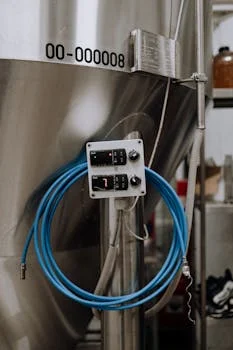
Procurement teams in Alexandria must choose between turnkey solutions and modular plant designs. Turnkey plants involve a single Engineering, Procurement, and Construction (EPC) contractor, such as Orascom or Hassan Allam, who manages the project from design to commissioning. This approach typically carries a 10–15% higher upfront cost—approximately €1.2M to €1.5M for a 500 m³/day facility—but provides the advantage of a single point of accountability and faster deployment (6–12 months).
Modular plants, often utilized by industrial facilities in the Alexandria Free Zone, offer 20–30% lower initial costs (€800K–€1M for 500 m³/day). These systems are pre-fabricated and shipped in containers, allowing for phased expansion as production increases. For instance, MBR systems for Alexandria’s industrial wastewater compliance can be deployed in stages, allowing a factory to manage cash flow while still meeting environmental standards. However, modular systems may incur 5–8% higher annual OPEX due to the decentralized nature of the equipment and smaller motor efficiencies.
| Feature | Turnkey (EPC) Approach | Modular / Package Approach |
|---|---|---|
| Upfront CAPEX | Higher (€1.2M+) | Lower (€800K - €1M) |
| Permitting Complexity | Simplified (Single EIA) | Phased (Multiple Approvals) |
| Installation Time | 9 - 18 Months | 3 - 6 Months |
| Scalability | Limited by footprint | High (Plug-and-play) |
| Technology Focus | Custom Engineering | DAF systems for food/textile |
A 2024 case study of a modular plant in Alexandria’s Free Zone (300 m³/day) demonstrated an upfront saving of €300,000 compared to a traditional build. However, the facility faced €80,000 in additional permitting costs and third-party laboratory fees because the phased expansion required multiple environmental declarations. Procurement teams must weigh the immediate capital savings against these long-term administrative and operational costs.
ROI Calculator: Payback Period for Alexandria Wastewater Projects
Calculating the Return on Investment (ROI) for a wastewater treatment plant in Alexandria requires balancing CAPEX and OPEX against avoided costs and potential revenue. Avoided costs include municipal sewage surcharges, WTEF fees, and environmental fines. Revenue can be generated through water reuse, which is increasingly viable as industrial water tariffs in Alexandria rise to between €0.50 and €1.20 per cubic meter.
The standard payback formula used by Alexandria-based engineers is: (Total Capital Cost + Annual OPEX) / (Annual Savings from Water Reuse + Avoided Fines + Avoided Surcharges). For a mid-sized industrial plant (500 m³/day) with a €1.5M CAPEX and €50K annual OPEX, the savings from reusing 80% of treated water for cooling or process washdown can reach €150,000 per year. When combined with the avoidance of a €50,000 annual non-compliance fine, the payback period is approximately 7.5 years.
| Variable Change | Impact on Payback Period | Engineering Note |
|---|---|---|
| +10% WTEF Fee | Reduces payback by 1.2 years | Increases the "cost of doing nothing" |
| +15% Water Tariff | Reduces payback by 0.8 years | Higher value for recycled water |
| -20% OPEX (via Automation) | Reduces payback by 0.5 years | Achieved through precision dosing |
| Membrane Fouling (+10% Energy) | Increases payback by 0.4 years | Requires better pre-treatment |
Industrial sectors such as textiles and food processing often see faster payback periods (3–5 years) due to the high volume of water used and the high organic load that would otherwise trigger heavy municipal surcharges. Municipal projects, conversely, rely more on grant funding (like EIB) and the collection of WTEF fees from developers to justify the 15-to-20-year infrastructure lifecycle.
Alexandria’s Wastewater Treatment Compliance Checklist: Avoid Hidden Costs
Navigating the regulatory landscape in Alexandria is critical to avoiding project delays that can increase costs by 15% or more. Compliance with Decree 44/2000 is the baseline for all projects. This decree specifies that effluent discharged into public sewers must