Ozone generators deliver 99.9% microbial kill rates in 4–10 minutes of contact time at typical industrial doses of 1–3 mg/L. That contact window is shorter than chlorine (30–60 minutes) and pairs residual-free oxidation with higher redox potential than UV alone. On a 500 m³/h duty, ozone OPEX commonly falls in the $0.15–$0.30 per m³ range while removing chemical storage and cutting sludge mass by 30–50% versus chlorination trains. This page sets out ozone vs alternatives using engineering specs, cost models, and compliance rules so plant and EPC teams can size the right train.
Ozone vs Alternatives: Decision Snapshot
Ozone water treatment reaches 4-log (99.99%) microbial reduction in 4–10 minutes at 1–3 mg/L for many industrial matrices, while chlorine typically needs 30–60 minutes for 2–3 log. UV acts in under 10 seconds at about 40 mJ/cm² but leaves no residual and fails when turbidity is high. RO removes dissolved solids under pressure at 0.5–2.0 kWh/m³. DAF is a solids separator, not a primary disinfectant, and usually runs 20–30 minutes with 10–50 mg/L coagulant.
Ozone (O₃) has an oxidation potential of 2.07 V, above chlorine at 1.36 V and chlorine dioxide at 0.95 V. That potential supports faster cell-wall attack on chlorine-tolerant pathogens when dissolved ozone and hydroxyl radicals (OH•) are present.
Consider a dairy plant fighting E. coli and Listeria in process water. Chlorine dosing needed about 45 minutes of contact and high residuals to reach roughly 90% microbial reduction, then forced dechlorination to protect flavor. After conversion to ozone at 2.5 mg/L with 6 minutes of contact, the plant recorded a 99.99% (4-log) E. coli reduction and dropped chemical storage plus neutralization tanks (HydropureWater field data, 2025).
Chlorine still forms trihalomethanes (THMs) and haloacetic acids (HAAs) when it reacts with natural organic matter under the Stage 2 Disinfectants and Disinfection Byproducts Rule. According to US EPA eCFR (40 CFR 141.64), bromate MCL remains 0.010 mg/L and TTHM/HAA5 MCLs remain 0.080 and 0.060 mg/L. Earlier wording that implied “2024 updates to DBP limits” overstated the change; EPA’s April 2024 Stage 1/2 DBPR briefing still trains to those Stage 2 values and flags possible Microbial and Disinfection Byproducts (MDBP) revisions rather than new MCLs already in force. Ozone decays to oxygen and avoids THM/HAA pathways, though bromide-bearing sources need bromate control. Facilities targeting USP <1231> pharmaceutical water or FDA 21 CFR Part 173.368 food-contact ozone still treat those citations as process design gates. Large municipal plants such as the Los Angeles Aqueduct Filtration Plant use ozone as a primary disinfectant on high flows.
How Does an Ozone Generator Treat Water?
An ozone generator for water treatment makes O₃ on site from oxygen or dry air, then dissolves the gas in a contactor so oxidation and disinfection occur in minutes rather than in bulk chemical storage. Corona-discharge units feed a contact chamber; off-gas goes to a destruct unit that converts residual ozone back to oxygen before venting.
Direct ozone reactions plus OH• radicals inactivate viruses and protozoa such as Cryptosporidium faster than free chlorine under comparable Ct conditions. UV dose delivery is instant but collapses when suspended solids shade the lamps. Ozone holds up better in moderately complex matrices when solids are cut first with DAF systems for pre-treatment before ozone or UV disinfection.
For tank and loop sterilization packages, an Ozone Generator & Water Tank Sterilization System couples generation, contacting, residual monitoring, and destruct in one skid so operators avoid cylinder chlorine handling.
Engineering Specifications Compared
The table below compares ozone against chlorine, UV, reverse osmosis (RO), and dissolved air flotation (DAF) on industrial-scale benchmarks used in equipment selection.
| Parameter | Ozone (O₃) | Chlorine (Cl₂) | UV Light | Reverse Osmosis (RO) | DAF |
|---|---|---|---|---|---|
| Disinfection Efficiency (LRV) | 4-log (99.99%) | 2-3 log | 3-4 log | Physical removal (99%+) | Minimal (Physical) |
| Typical Dosage | 1–3 mg/L | 2–5 mg/L | 40 mJ/cm² | N/A (Pressure-driven) | Coagulant: 10-50 mg/L |
| Contact Time | 4–10 min | 30–60 min | Instant (<10 sec) | Continuous flow | 20–30 min |
| Energy Use (kWh/m³) | 0.1–0.3 | 0.05–0.1 | 0.02–0.05 | 0.5–2.0 | 0.05–0.2 |
| Footprint | Moderate | Small (but storage req.) | Very Compact | Large | Large |
| Residual Effect | None (dissipates) | Yes (0.2–0.5 mg/L) | None | None | None |
| Primary Limitation | High CAPEX | DBP formation | Turbidity sensitivity | Membrane fouling | Sludge handling |
UV remains the lowest energy disinfection option at 0.02–0.05 kWh/m³, yet it offers no distribution residual and loses credit when turbidity rises. Chlorine keeps OPEX low but needs large contact tanks and gas-safety hardware. High-purity trains often add RO water purification systems, which draw 0.5–2.0 kWh/m³ and foul when organics are high. Ozone pre-oxidation can cut that organic load before the high-pressure stage. Where a gaseous oxidant is required without chlorine gas cylinders, plants also shortlist chlorine dioxide generators as a safer alternative to chlorine gas beside ozone.
What Are Typical Ozone Generator Specifications?
Typical industrial ozone generator specifications for water duty cover production rate in kg/h or g/h, feed gas (oxygen or air), concentration in wt% or g/Nm³, specific energy in kWh/kg O₃, cooling method, and turndown. Contactors are sized for 4–10 minutes hydraulic residence time at the design dose of 1–3 mg/L for disinfection, with higher doses when color or COD removal dominates.
Balance-of-plant items that drive plot space include oxygen concentrators or LOX, residual analyzers, ambient leak sensors, and catalytic or thermal destruct units. For a 200 m³/h industrial flow at 2 mg/L transferred ozone, applied ozone mass is about 0.4 kg/h before transfer-efficiency losses, so generator nameplate capacity is set above that duty with spare turndown.
Cost Comparison: Ozone vs Chlorine, UV, and RO for Industrial-Scale Systems
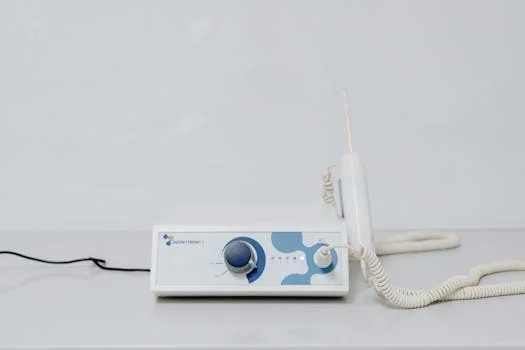
Total cost of ownership for a water treatment train balances CAPEX against multi-year OPEX. Ozone CAPEX is higher because oxygen supply, generators, contactors, and destruct units are required, while OPEX often beats chlorine when chemical purchase, haulage, and hazardous storage fees are counted over several years.
For a standard 200 m³/h industrial application, cost bands typically follow the trajectories below.
| Cost Factor | Ozone System | Chlorine Dosing | UV System | RO System |
|---|---|---|---|---|
| CAPEX (Estimated) | $150,000 – $350,000 | $40,000 – $120,000 | $60,000 – $180,000 | $400,000 – $850,000 |
| OPEX (per m³) | $0.15 – $0.30 | $0.05 – $0.15 | $0.02 – $0.10 | $0.25 – $0.55 |
| Maintenance Cycle | Annual checkups | Monthly chemical refilling | Lamp replacement (12-18mo) | Membrane cleaning (3-6mo) |
| Payback Period | 3–6 Years | 1–2 Years | 2–4 Years | 5–8 Years |
Ozone ROI strengthens where sludge haul fees are high. Oxidizing organic solids can cut sludge production by 30–50%, and ozone removes the need for quench chemicals such as sodium bisulfite used after chlorination before discharge. Volume scaling detail is covered in our detailed cost-per-volume benchmarks for water treatment systems.
Which System Suits Large-Volume Water Treatment?
Large-volume ozone water treatment favors oxygen-fed generators with modular skids, shared destruct capacity, and redundant contactors so a single train outage does not stop a 200–500 m³/h (about 1.3–3.2 MGD) plant. Energy use of 0.1–0.3 kWh/m³ stays below RO at 0.5–2.0 kWh/m³, while contact volume stays far smaller than a 30–60 minute chlorine basin at the same flow.
Municipal and industrial owners often keep a secondary residual with chloramine after ozone primary disinfection when distribution protection is required. UV banks scale well for compact plants but need reliable low-turbidity feed. RO is selected when TDS reduction is the duty, not when disinfection alone drives the project.
Compliance and Safety: How Each System Meets Global Standards
Compliance for surface-water and many industrial drinking-water uses still tracks EPA’s Long Term 2 Enhanced Surface Water Treatment Rule (LT2ESWTR) pathogen framework and Stage 2 DBP MCLs.WHO guidance continues to rank ozone among the stronger barriers against Cryptosporidium and Giardia, which resist free chlorine. Ozone plants on bromide-bearing water must keep bromate at or below the EPA MCL of 0.010 mg/L under 40 CFR 141.64.
Chlorine gas carries an OSHA PEL of 1 ppm and needs scrubbers plus leak response. Ozone’s OSHA PEL is 0.1 ppm, yet on-demand generation avoids bulk cylinder inventories. Modern ozone-based medical wastewater treatment systems add ambient sensors and automatic destruct so off-gas returns to oxygen before leaving the reactor.
UV systems follow the UV Disinfection Guidance Manual (UVDGM) for validated dose and sensor checks. UV forms no halogenated DBPs but cannot stop regrowth in long piping. Many municipal designs therefore use ozone for primary pathogen credit and a small chloramine residual for the network.
Use Case Matching: Which System Fits Your Application?
No single unit process fits every influent. Selection turns on TDS, TOC, turbidity, and the permit or product-water specification. In pre-treatment systems for food processing wastewater, ozone often follows a lamella clarifier when color and odor remain after solids removal that UV cannot fix.
Use the decision framework below to shortlist technologies before detailed design.
| Application | Primary Choice | Alternative/Support | Selection Driver |
|---|---|---|---|
| Municipal Drinking Water | Ozone + Chloramine | UV (for small plants) | DBP control & residual protection |
| Food & Beverage | Ozone | Chlorine Dioxide | FDA compliance & zero taste impact |
| Pharmaceutical / USP Water | Ozone + RO | UV polishing | TOC control & microbial barrier |
| Industrial Process Water | Ozone | UV + filtration | Fast Ct & lower chemical inventory |
| High-TDS Reuse | RO with ozone pre-ox | Chlorine dioxide | Fouling control before membranes |
| Solids-Heavy Effluent | DAF then ozone/UV | Clarifier + chlorine | Turbidity reduction before disinfection |
Selection checklist before you buy
- Define the duty: disinfection only, color/COD, or TDS removal.
- Measure bromide, TOC, turbidity, and temperature at design flow.
- Confirm contact time available on the plot (4–10 min for ozone vs 30–60 min for chlorine).
- Price sludge haul, chemical delivery, and quench chemicals over 5–10 years.
- Check bromate MCL 0.010 mg/L if ozone meets bromide-bearing water.
- Decide whether a distribution residual is mandatory after the contactor.
- Verify oxygen supply, destruct capacity, and ambient monitoring in the HAZOP.
Who this is for: plant engineers and EPC teams comparing oxidants for 50–500 m³/h industrial or municipal trains where DBPs, taste, or sludge fees matter. Who should look elsewhere: projects whose only goal is TDS rejection without organics control may start with RO sizing alone. Next step: share influent analyses and flow so a generator and contactor can be matched to dose and Ct.
If you already know tank or loop sterilization is the bottleneck, request a duty sheet for an Ozone Generator & Water Tank Sterilization System rather than a full plant redesign.
Frequently Asked Questions
Is ozone better than chlorine for industrial water disinfection?
Ozone is better when you need 4-log kill in 4–10 minutes, low THM/HAA formation, and no bulk chlorine storage. Chlorine remains cheaper on CAPEX and supplies a lasting residual of about 0.2–0.5 mg/L in distribution. Choose chlorine when residual protection dominates and contact basins already exist; choose ozone when contact time, taste, or DBP limits drive the design.
How much does an industrial ozone system cost to run?
OPEX for ozone at industrial scale is typically $0.15–$0.30 per m³ on a 200–500 m³/h duty, versus about $0.05–$0.15 per m³ for chlorine dosing and $0.02–$0.10 per m³ for UV. Energy usually sits at 0.1–0.3 kWh/m³. Payback often lands in 3–6 years when sludge disposal and quench chemical costs fall.
Does ozone create regulated byproducts?
Ozone does not form THMs or HAAs the way free chlorine does with natural organic matter. It can form bromate when bromide is present. According to US EPA (40 CFR 141.64), the bromate MCL is 0.010 mg/L, and EU Directive (EU) 2020/2184 keeps the same 10 μg/L parametric value after repealing 98/83/EC.
Can ozone replace UV or RO?
Ozone can replace UV when turbidity varies or a stronger oxidant for color and odor is required, provided contactors fit the plot. It does not replace RO for dissolved-salt removal. Many plants use ozone upstream of RO to cut organic fouling, then keep UV as a final polish where validated dose delivery is easy.
What safety systems does an ozone plant need?
An ozone plant needs ambient monitors alarmed to the OSHA PEL of 0.1 ppm, automatic shutdown interlocks, and a destruct unit for contactor off-gas. Unlike chlorine gas cylinders at a 1 ppm PEL, ozone is made on demand, so bulk leak inventory is lower, but room ventilation and sensor proof-testing remain mandatory.