
Confirm the Malaysian discharge route before choosing equipment
Choose a hospital wastewater treatment and disinfection system in Malaysia by confirming the discharge route, peak flow, organic load and reuse requirement before selecting equipment. Biological treatment can reduce organic load, while MBR or ultrafiltration adds solids separation, and disinfection provides an additional control barrier. Malaysian studies detected resistant bacteria and resistance genes in hospital effluent. The practical output is a route-selection matrix plus an RFQ checklist that identifies missing site inputs, acceptance evidence, delivery scope and pilot requirements.
The first procurement decision is not the reactor type; it is the receiving destination and its approval conditions. The hospital must establish whether treated flow will enter a municipal sewer, discharge under an environmental approval, support a defined reuse application, or follow another route specified by the responsible authority.
Do not infer a universal Malaysian hospital-wastewater limit from the available evidence. The Klang Valley study states that no regulatory authority had established hospital-wastewater limits; however, the hospital and its consultant must still confirm the applicable Malaysian authority and site-specific approval conditions. Project submissions should identify the governing requirement rather than rely on a general equipment claim.
| Discharge route or influent problem | Governing rule or process option | What data settles it |
|---|---|---|
| Municipal sewer connection | Obtain the authority’s connection and pre-treatment conditions before selecting final disinfection or polishing. | Written sewer-entry conditions, required sampling points, discharge schedule and documentation list. |
| Environmental approval for a specified discharge | Use only the approved discharge route and parameters stated in the approval or submission conditions. | Approval copy or authority correspondence identifying sampling frequency, limits, monitoring and reporting. |
| Defined reuse application | Define the end use and its acceptance criteria before deciding whether UF, MBR or another polishing step is necessary. | Reuse-purpose specification, water-quality criteria, user requirements and downstream equipment constraints. |
| Another route specified by the authority | Request the complete route-specific technical and submission requirements from the hospital consultant or authority holder. | Named approving authority, application forms, design review status and required supporting documents. |
Ask the hospital consultant or authority holder for the approval conditions, sampling points, discharge schedule, reuse criteria and required documentation. The hospital wastewater treatment engineering guide can support that document request, but its project-specific figures or requirements should not be transferred into a Malaysian submission without verification.
Match the treatment train to influent risk and reuse goals
Select biological treatment first when the confirmed wastewater characteristics and site constraints support it; add membrane separation only when the treatment objective or reuse requirement justifies the additional equipment and operating burden. A packaged A/O route is a candidate base treatment where organic loading, suspended solids and available footprint support that arrangement. An MBR membrane bioreactor wastewater treatment system becomes more relevant when membrane solids separation and a compact combined biological process are required, but quotation comparison must include membrane maintenance, controls and replacement provisions.
Require representative wastewater analysis rather than relying on generic hospital wastewater assumptions. The pre-order dataset should cover average and peak flow, COD, BOD, suspended solids, turbidity, pH, temperature, oil and grease, and relevant pharmaceutical or antibiotic-residue indicators. Where antimicrobial resistance risk is material, request evidence from resistant-bacteria and antimicrobial resistance monitoring, including organisms and resistance genes relevant to the site rather than a generic percentage.
The Malaysian evidence makes the risk specific. Across Klang Valley hospitals’ wastewater, Enterococcus faecium prevalence was 59% to 96% against six antibiotics but 13% against vancomycin at 30 µg, according to the MDPI study. The same study reported ermB at 69.0%, VanA at 10.3%, and ermB at 46.0% in E. faecium isolates from a suburban hospital’s wastewater. These findings support monitoring and risk-based selection; they do not establish a required reactor type or guarantee that an equipment train will remove a particular resistance gene.
For reuse polishing, resolve the sequence with three documents: the intended reuse application, its acceptance criteria, and the proposed treatment train’s supporting process calculations. UF may satisfy a defined solids-separation objective; MBR combines biological treatment with membrane separation. Neither should be selected solely because it is described as higher quality than the alternative.
A medical wastewater treatment system quotation should state which treatment stages are included, which performance calculations were completed, and which site data remain provisional. If flow or influent data are missing, the supplier should identify the design assumptions and request the missing samples or records before confirming the equipment size.
Select disinfection against the risk it can control
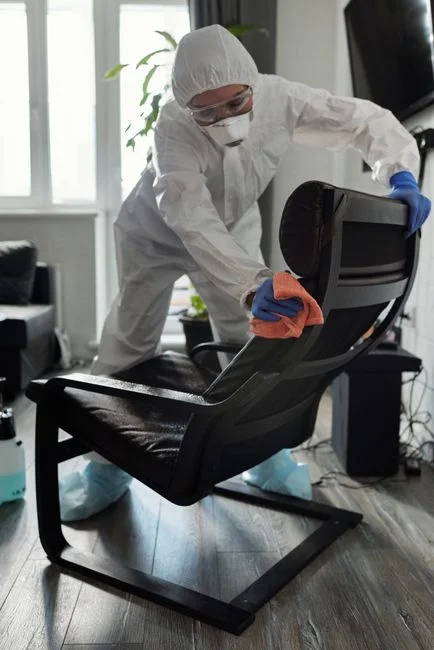
Choose disinfection by matching the barrier to the discharge or reuse objective, then prove the installed operating condition through validation and acceptance testing. UV provides a chemical-free barrier and can be arranged for open-channel applications, but the installed dose must be established from validated transmittance, flow and target-organism requirements. An UV wastewater disinfection system should therefore be quoted with the relevant hydraulic and optical basis, not with an unqualified generic efficacy claim.
Chlorine-based disinfection remains widely used, but it must not be presented as a complete control for resistant bacteria. The Malaysian teaching-hospital study found resistant bacterial species across treatment stages, including after disinfection. The International Journal of Environmental Research and Public Health also notes concern that chlorine-based treatment may contribute to AMR spread. The procurement implication is to monitor resistant bacteria and resistance genes alongside conventional indicators rather than treating a lower general bacterial count as sufficient proof.
Treatment performance also varies by installation. The Malaysian study reports that removal rates for antibiotics and resistance genes ranged from 20.2% to 100% across hospital wastewater treatment plants. Because this range spans different systems and conditions, it does not establish a universal performance guarantee for a Malaysian hospital package. Ask each supplier to identify the treatment configuration, test method, sampling points and basis of its own performance evidence.
Ozone or chlorine dioxide may be considered where an oxidising barrier is required, but suitability must be demonstrated for the actual wastewater and downstream conditions. The International Journal of Environmental Research and Public Health identifies chlorine-based treatment as the most popular hospital-wastewater disinfection method around the world while reporting concern about its contribution to AMR spread.
Specify the disinfection outcome rather than only the equipment name. The acceptance schedule should identify the organism or indicator, sampling point, dose or concentration, contact time, operating envelope, residual requirement, and by-product or reactivation assessment. An ozone generator for water disinfection should remain an application-specific option, supported by control requirements and downstream assessment.
Build an evidence-based RFQ and acceptance plan
Separate confirmed hospital inputs from supplier assumptions before requesting prices. The hospital should provide flow, influent, discharge route, reuse target and site constraints; the supplier should provide process sizing, drawings, equipment data, operating requirements and acceptance methodology. This allocation prevents a provisional assumption from becoming an accepted contractual fact.
- Issue a data request covering average and peak flows, representative influent analysis, discharge approval, reuse criteria, footprint, access, power, noise restrictions and sludge-disposal arrangements.
- Ask each bidder to identify missing inputs, design assumptions, treatment objectives, process calculations, guarantees and exclusions in the same quotation structure.
- Require pre-acceptance and site acceptance protocols that state sampling points, test methods, operating conditions, stabilization, sampling responsibility and pass criteria.
- Make training, manuals, spares, installation supervision, commissioning, warranty and handover deliverables visible as priced line items.
- Confirm which authority or consultant will review the submission and what evidence is required before contract signature; the available research does not establish a complete Malaysian approval checklist.
| Quote line item | Technical scope to specify | Red flags to check before signing |
|---|---|---|
| Design basis and exclusions | Flow, influent, discharge route, reuse target, assumptions, sizing calculations and excluded civil or disposal work. | No named basis, provisional values written as guaranteed inputs, or treatment objectives absent from the offer. |
| Treatment and membrane equipment | Process stages, materials, equipment ratings, control philosophy, membrane configuration and maintenance access. | Generic “high-quality effluent” wording without calculations, membrane replacement terms or verified site conditions. |
| Disinfection system | Validation basis, dose or concentration, contact time, flow range, residual controls and monitoring provisions. | Unqualified efficacy claims, no operating envelope, or no sampling and performance-verification method. |
| Acceptance testing | FAT, site test, sampling protocol, stabilization, laboratory method, responsible party and pass criteria. | Tests limited to clean-water operation, undefined sampling locations or no agreed consequence for failed results. |
| Delivery and handover | Installation supervision, commissioning, operator training, manuals, recommended spares, warranty and authority documentation. | Scope ends at equipment delivery, with civil works, sludge removal, training or approval support left unassigned. |
Use comparable case references as scope questions, not Malaysian design evidence. The 30 m³/day hospital dialysis MBR case study may prompt questions about membrane sizing, while the hospital wastewater treatment and disinfection guide can support review of acceptance and commissioning deliverables. Neither establishes the applicable route or capacity for the Malaysian hospital.
Frequently Asked Questions
What treatment route is suitable for a small Malaysian clinic or hospital?
Select the route only after obtaining representative flow and wastewater analysis, the discharge destination and any reuse requirement. A packaged A/O treatment train may be appropriate when those inputs support biological treatment without a membrane polishing requirement; MBR should be selected when membrane separation and a compact combined process are justified. The hospital wastewater treatment equipment checklist can structure the enquiry, but the supplier must disclose its sizing assumptions.
How do MBR and packaged A/O systems differ in cost, maintenance and scope?
Request a line-by-line quotation because the supplied research provides no comparable Malaysian prices. The quote should separate biological equipment, membrane modules or units, pumping, controls, civil interfaces, pretreatment, sludge removal, installation, commissioning, training, spares, warranty and consumables. Maintenance obligations must also be listed, including who inspects or replaces membranes and how operating losses affect the quoted package.
What performance evidence and acceptance tests should a hospital wastewater quotation include?
Require a written acceptance schedule identifying the target organism or indicator, sampling point, analytical method, operating condition and pass criterion. Include FAT, site performance testing, stabilization, sampling responsibilities and failed-test remedies. Any resistance-monitoring claim must identify the organism or gene, stage, method and sampling scope; a generic bacteria-removal percentage is not enough.
What site data must the hospital provide before equipment can be sized?
Provide average and peak flow, representative COD, BOD, suspended solids, turbidity, pH, temperature and oil and grease data, plus the confirmed discharge route, reuse target, footprint, access, power, noise constraints and sludge-disposal route. Add pharmaceutical and antibiotic-residue screening where antimicrobial resistance risk is material. Without these inputs, a supplier’s flow rate or treatment capacity remains an assumption rather than an accepted design basis.
