Hai Phong’s Industrial Wastewater Landscape: Regulatory and Economic Drivers
Hai Phong’s industrial output reached approximately $12 billion in 2023, representing a 15% year-on-year growth that necessitates a robust infrastructure for managing high-flow wastewater streams from automotive, electronics, and textile sectors. The city’s industrial landscape is dominated by specialized zones such as DEEP C, which manages a centralized wastewater treatment capacity of 6,000 m³/day (expandable to 12,000 m³/day), and standalone mega-factories like Vinfast’s 335-hectare complex. These facilities face mounting pressure from Vietnam’s Decree 36/2022, which tightened enforcement of environmental protection laws effective January 2023. Non-compliance in Hai Phong now carries severe financial risks, with penalties reaching up to 10% of annual revenue or total plant shutdowns for repeat violations of discharge standards.
Economic drivers are shifting from simple compliance to resource recovery. The UNDP’s 2024 circular economy pilot in Hai Phong highlights a transition toward zero-liquid-discharge (ZLD) goals, particularly for high-water-use industries. For instance, the electronics sector in Hai Phong, characterized by high Total Dissolved Solids (TDS), and the food processing sector, which generates high Chemical Oxygen Demand (COD) and Biological Oxygen Demand (BOD) loads, are increasingly adopting choosing between aerobic and anaerobic systems for Hai Phong’s high-COD wastewater to mitigate costs. With Vinfast’s $2 billion expansion and the ongoing development of the 86.43 km² An Duong Water Treatment Plant area, the demand for integrated, high-efficiency treatment systems has peaked.
| Industrial Zone / Facility | Wastewater Model | Primary Contaminants | 2025 Treatment Goal |
|---|---|---|---|
| DEEP C (I, II, III) | Centralized (6,000+ m³/day) | Mixed Industrial, Heavy Metals | 90% Water Reuse (ZLD Pilot) |
| Vinfast Facility | Standalone Turnkey | Oil/Grease, Paint Sludge, COD | Automated MBR Integration |
| An Duong IZ | Decentralized / Pre-treatment | Electronics (TDS), Textiles (Dyes) | QCVN 40:2011 Column A Compliance |
| Nam Cau Kien | Eco-Industrial Park | Organic Waste, Ammonia | Circular Economy Nutrient Recovery |
Compliance Checklist: Meeting Vietnam’s QCVN 40:2011/BTNMT and Hai Phong’s Local Standards
Vietnam’s Decree 36/2022 mandates that industrial facilities in Hai Phong must comply with QCVN 40:2011/BTNMT, which differentiates discharge limits based on the receiving water body’s purpose, specifically Column A for domestic water sources and Column B for other purposes. For factories located within DEEP C, the regulatory burden is split: the tenant must perform on-site pre-treatment to reduce COD to <2,000 mg/L and Total Suspended Solids (TSS) to <500 mg/L before the centralized plant accepts the flow. Failure to meet these internal IZ benchmarks results in immediate surcharges or disconnection from the utility grid. To ensure initial debris removal and protect downstream biological processes, many facilities utilize mechanical bar screens for primary solids separation.
Sampling and monitoring requirements in Hai Phong have become more rigorous in 2025. The Department of Natural Resources and Environment (DONRE) requires daily flow monitoring and weekly composite sampling for COD, BOD, and heavy metals. Facilities discharging over 1,000 m³/day must install an Automatic Monitoring System (AMS) that transmits real-time data directly to DONRE. This includes parameters such as pH (6–9), temperature, and color. For electronics manufacturers, TDS limits are often capped at 1,500 mg/L to prevent scaling in municipal infrastructure, while textile plants must ensure color levels remain below 75 Pt-Co units.
| Parameter | Unit | QCVN 40 (Column A) | QCVN 40 (Column B) | Typical Hai Phong Influent (Food/Electronics) |
|---|---|---|---|---|
| pH | - | 6–9 | 5.5–9 | 4.0–11.0 |
| BOD5 (20°C) | mg/L | <30 | <50 | 300–800 |
| COD | mg/L | <75 | <150 | 1,000–5,000 |
| TSS | mg/L | <50 | <100 | 500–2,000 |
| Oil & Grease | mg/L | <5 | <10 | 50–200 |
| Total Nitrogen | mg/L | <20 | <40 | 60–150 |
Hai Phong Wastewater Treatment Technologies: DAF vs. MBR vs. Chemical Dosing for Industrial Zones
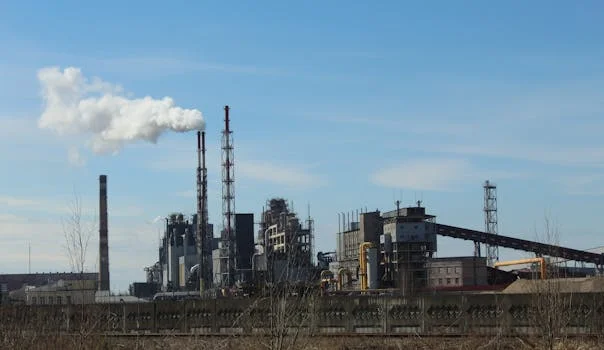
Selecting between Dissolved Air Flotation (DAF) and Membrane Bioreactor (MBR) technologies in Hai Phong depends primarily on whether the objective is pre-treatment for the DEEP C centralized plant or high-grade reuse for automotive manufacturing. For food processing and textile industries, DAF systems for Hai Phong’s high-TSS wastewater are the standard for removing 92–97% of suspended solids and emulsified oils. These systems are particularly effective in Hai Phong’s coastal environment, where high salinity can sometimes interfere with traditional sedimentation, as DAF relies on physical buoyancy rather than sensitive floc density.
In contrast, electronics and automotive plants (e.g., Vinfast) increasingly deploy MBR systems for water reuse in Hai Phong’s electronics and automotive plants. MBR technology combines biological treatment with 0.1 μm pore size membrane filtration, producing effluent that often exceeds QCVN 40 Column A standards. This high-quality water is frequently recycled for cooling towers or landscaping, significantly reducing the factory's municipal water bill. To maintain these systems, PLC-controlled chemical dosing for Hai Phong’s pH adjustment and heavy metal removal is essential, ensuring that PAC (polyaluminum chloride) and NaOH are delivered with precision to prevent membrane fouling and ensure regulatory compliance.
| Technology | Primary Use Case | Footprint | Energy Use (kWh/m³) | Removal Efficiency (TSS) |
|---|---|---|---|---|
| DAF | Pre-treatment (Food, Oil) | Medium | 0.2–0.4 | 95% + |
| MBR (Integrated) | Water Reuse (Electronics) | Low | 0.8–1.5 | 99% + |
| Chemical Dosing | pH/Metal Correction | Very Low | <0.1 | N/A (Chemical) |
| SBR (Aerobic) | Batch Processing | High | 0.5–0.7 | 85–90% |
Cost Benchmarks for Industrial Wastewater Treatment in Hai Phong (2025)
Turnkey industrial wastewater treatment systems in Hai Phong for 2025 require capital expenditure (CAPEX) ranging from $1.2 million for small-scale 100 m³/day facilities to over $15 million for high-capacity 5,000 m³/day plants. A standard breakdown of these costs typically allocates 60% to specialized equipment, 20% to civil works (concrete tanks and piping), and the remaining 20% to installation and commissioning. For factories opting for Vietnam’s 2025 package wastewater treatment plant requirements, costs can be reduced by 15-20% due to modular construction and reduced on-site civil labor.
Operational expenditure (OPEX) in Hai Phong is heavily influenced by electricity rates (averaging $0.10/kWh for industrial users) and chemical consumption. MBR systems carry the highest OPEX at $0.50–$1.50/m³ due to membrane aeration and cleaning requirements, whereas DAF systems operate more economically at $0.20–$0.80/m³. However, the ROI for MBR systems is often realized within 3 to 5 years when factoring in the savings from water reuse (municipal water in Hai Phong costs approximately $0.50–$1.50/m³) and the avoidance of environmental fines. the Vietnam Green Credit Fund offers up to 70% low-interest funding for projects that demonstrate significant water recycling or carbon footprint reduction.
| Capacity (m³/day) | Technology Type | Estimated CAPEX ($ USD) | Estimated OPEX ($/m³) | Typical ROI (Years) |
|---|---|---|---|---|
| 100–500 | DAF + Biological | $1.2M – $3.0M | $0.35 – $0.60 | 4–6 |
| 500–1,500 | MBR (Reuse Grade) | $4.0M – $7.5M | $0.70 – $1.20 | 3–5 |
| 2,000–5,000 | Integrated Turnkey | $8.0M – $15.0M | $0.50 – $0.90 | 2–4 |
Procurement Checklist: Selecting a Wastewater Treatment System for Hai Phong Factories
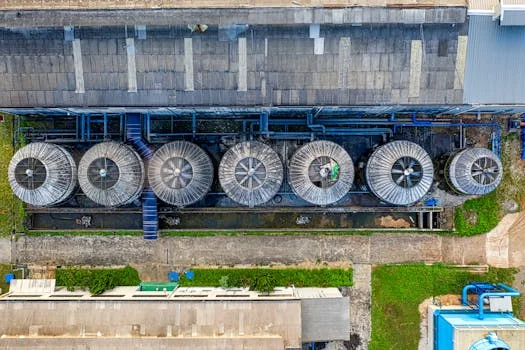
The procurement of wastewater infrastructure in Hai Phong typically follows a five-stage engineering lifecycle, beginning with an influent characterization that accounts for local salinity and COD fluctuations. Engineers must first determine if the facility will discharge to a centralized IZ plant or directly to surface water, as this dictates the required technology sophistication. For those looking for compact, pre-engineered solutions, WSZ integrated underground treatment systems offer a rapid deployment option for domestic-strength wastewater within factory perimeters. If the goal is high-purity process water, JY integrated water purification systems can be used as a tertiary polishing step.
- Needs Assessment: Document peak flow rates and influent concentrations. In Hai Phong food processing, COD often spikes to 5,000 mg/L during cleaning cycles; ensure the system is sized for peaks, not averages.
- Technology Selection: Use a decision matrix. If COD >2,000 mg/L, a DAF pre-treatment stage is mandatory to prevent biological system shock. Compare how how Brazil’s industrial wastewater regulations compare to Vietnam’s to understand global best practices in high-load management.
- Vendor Evaluation: Verify local Hai Phong experience. A vendor should provide case studies from DEEP C or An Duong and demonstrate familiarity with TCVN standards.
- Pilot Testing: For any system over 500 m³/day, insist on a 3-month pilot. Monitor energy consumption and sludge production rates under actual factory load conditions.
- Permitting and EIA: Factor in 3–6 months for the Environmental Impact Assessment (EIA) approval from Hai Phong DONRE. Ensure the vendor provides all technical documentation required for the AMS integration.
Frequently Asked Questions
What are the three types of industrial wastewater treatment?
Industrial treatment is categorized into physical (screening, DAF), chemical (coagulation, pH adjustment), and biological (MBR, activated sludge). In Hai Phong, DAF is commonly used for food processing pre-treatment, while MBR is preferred for electronics water reuse.
Does Vietnam have a sewage system?
Yes, but it is primarily for domestic waste. Industrial facilities in Hai Phong must treat their wastewater to specific standards (e.g., DEEP C’s <2,000 mg/L COD limit) before it can be accepted into the municipal or industrial zone sewer system.
What is the cost of a wastewater treatment plant in Hai Phong?
For 2025, turnkey systems range from $1.2M to $15M. OPEX ranges from $0.20/m³ for basic dosing to $1.50/m³ for advanced MBR systems. Water reuse projects typically see an ROI within 3 to 5 years.
What are the penalties for non-compliance in Hai Phong?
Under Decree 36/2022, fines can reach 10% of annual revenue. DONRE also has the authority to suspend operations or revoke environmental licenses, leading to total plant shutdowns.
Can treated wastewater be reused in Hai Phong factories?
Absolutely. With MBR and RO (Reverse Osmosis) technology, up to 90% of wastewater can be reused for non-potable applications like cooling towers, boiler feed, and irrigation, as demonstrated in recent UNDP pilot projects in DEEP C.
Further Reading
Explore these in-depth articles on related wastewater treatment topics: