
Confirm the Discharge Route Before Choosing Equipment
The best hospital wastewater treatment and disinfection system in Indonesia depends on the discharge route, measured flow and wastewater quality, available footprint, and whether water will be reused. A compact packaged system can suit smaller facilities; an MBR can suit sites requiring membrane solids separation; central sewer treatment may be preferable where sufficient capacity exists. Chlorination is relevant because conventional Indonesian systems may fail microbial quality standards, but dosage and contact time must be verified from site testing. Sizing and disinfection also need to account for fibrous microplastics and hazardous polymers: one hospital study reported 21.13 ± 12.8 particles L-1 in the influent and 1.45 ± 0.89 particles L-1 in the effluent.
Record the intended route before requesting equipment: discharge to a municipal sewer, on-site treatment followed by sewer discharge, direct environmental discharge, or reuse. Each route changes the treatment boundary and the evidence a supplier must provide. A sewer route may require pretreatment at the hospital but leave final treatment to the utility; on-site treatment requires the purchaser to define the complete process through treated effluent, sludge handling and disinfection.
Obtain the Indonesian environmental permit, receiving-water classification and facility-specific effluent requirements from the responsible authority. The research available here does not establish a universal current numerical discharge limit, so an overseas standard or a supplier’s generic “zero-risk” statement cannot substitute for the applicable Indonesian conditions. Use the hospital wastewater treatment engineering and compliance guide as a document-request framework, not as evidence of Indonesian requirements.
Before final process selection, collect average and peak wastewater flows, current wastewater analyses, drainage routes, available footprint and power availability. Confirm whether treated water will be reused and, if so, identify its destination and required quality. These inputs are necessary to determine whether a packaged unit, an MBR hospital wastewater treatment system, or connection to central treatment is technically and contractually appropriate.
Match Hospital Wastewater Risks to the Treatment Process
Size the process from wastewater characteristics and treatment barriers, not from nominal equipment capacity alone. Require analysis covering COD, BOD, suspended solids, turbidity, pH, oil and grease, total coliform, E. coli and chlorine demand. The wastewater laboratory should also state the sampling point, date, sample condition and analytical method so results can be compared with the quoted performance criteria.
Where microplastic risk is relevant, include fine-solids and fiber management in pretreatment and filtration design. The northern Iran hospital study in PLoS One, S1, found that fibrous particles comprised 92-96% of the sampled microplastics, with particles below 250 µm most prevalent. In that sampled hospital treatment plant, mean microplastic concentrations were 21.13 ± 12.8 particles L-1 in influent and 1.45 ± 0.89 particles L-1 in effluent, corresponding to 93.13% removal. These findings support investigating fiber retention; they are neither an Indonesian limit nor proof that a particular screen or filter will achieve the same result.
S1 also reported a Pollution Load Index of 1.86 and a Hazard Index of 1416.45, classified as hazard level IV. Treat these as evidence of potential risk in the sampled system, not as Indonesian compliance thresholds. The study identified polyamide, polyvinyl chloride, polyethylene terephthalate and polyurethane, and called for targeted mitigation and reduced use of hazardous polymers. For procurement, ask the supplier how its pretreatment addresses the relevant particle forms without claiming unsupported removal performance.
| Discharge route or influent problem | Governing rule or process option | What data settles it |
|---|---|---|
| Municipal sewer with accepted downstream capacity | Define hospital pretreatment and the utility connection interface; confirm who owns final treatment and disinfection. | Utility acceptance letter, sewer loading data, connection requirements and the hospital permit. |
| On-site treatment before sewer discharge | Specify the required biological, solids-removal and disinfection performance against the permitted discharge route. | Average and peak flow, wastewater analysis, downstream pretreatment requirements and applicable effluent conditions. |
| Direct environmental discharge or reuse | Define treatment through the point of discharge or reuse, including disinfection, residual control and monitoring. | Permit, receiving-water classification, reuse destination, water-quality requirements and sampling points. |
| Fibrous particles or fine-solids loading | Evaluate dedicated screening, filtration and solids removal as part of the complete treatment train. | Particle characterization, solids analysis, screen loading basis, filtration selection data and retained-solids handling plan. |
| High oil and grease or variable pH | Require upstream protection for biological treatment and disinfection rather than relying on the final disinfection step. | Current oil and grease, pH, flow variation and discharge or sewer acceptance criteria. |
Compare Compact, MBR and Central-Treatment Routes
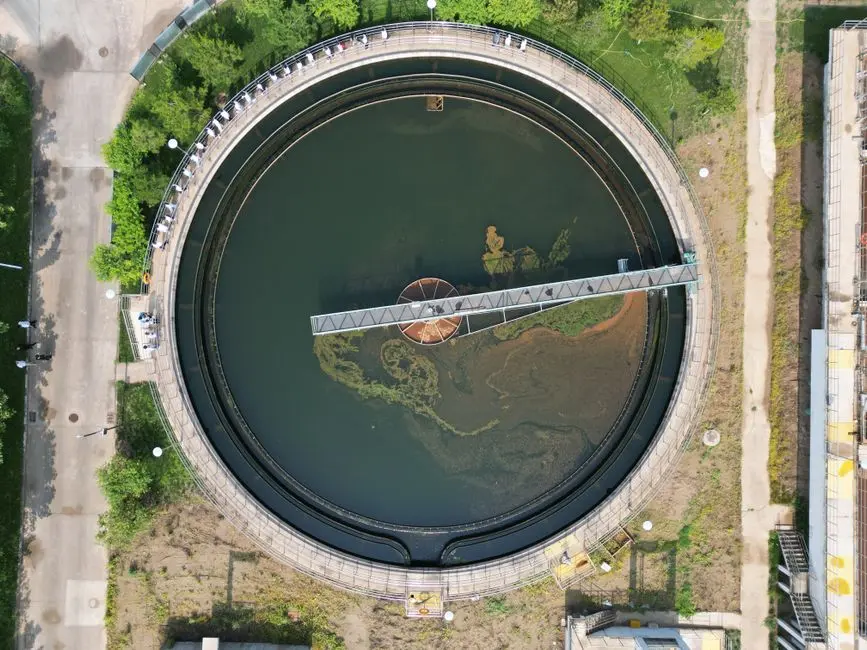
Choose the route whose treatment boundary matches the site data and whose performance can be verified contractually. A packaged unit is appropriate only when confirmed flow, footprint, utilities and pretreatment fit the model’s engineered scope. An MBR is appropriate when membrane solids separation and a smaller treatment footprint justify added process complexity. A sewer or central-treatment route is appropriate when downstream infrastructure is available and accepted, although pretreatment, capacity and final-disinfection responsibility still require confirmation.
| Discharge route or influent problem | Governing rule or process option | What data settles it |
|---|---|---|
| Limited footprint and confirmed flows compatible with the packaged design | Use a compact medical wastewater treatment system only after checking model-specific flow, pretreatment and documentation requirements. | Peak and average flow, footprint, utility connections, wastewater analysis and model performance schedule. |
| Solids separation is critical and the footprint is constrained | Use an MBR route with explicit membrane, aeration, controls, cleaning and replacement responsibilities. | Design flow, solids loading, membrane configuration, cleaning method, power demand and performance test method. |
| Accepted sewer infrastructure with available capacity | Use central treatment while defining any hospital pretreatment required for sewer acceptance. | Utility capacity confirmation, sewer quality limits, sampling requirements and responsibility for final disinfection. |
Compare disinfection methods after reviewing hydraulic and feed conditions, not by product label alone. For chlorine-based systems, request the selected chemical form, dose, contact time and residual-monitoring method; a chlorine dioxide generator should be evaluated alongside chemical feed and safety requirements. A UV sterilizer requires validated intensity or dose, transmittance and maintenance assumptions. The available source material identifies chlorine tablets as a low-cost, context-specific option for Indonesia, but does not provide a universal tablet dosage or contact time.
Specify Disinfection Performance and Verification Tests
Define disinfection acceptance through site-specific feed conditions, contact time, residual monitoring and microbiological testing. S4 identifies chlorine tablets as a low-cost, context-specific option for Indonesia and states that tablet dosage and contact time require optimization. Request the dosage and contact time used in the study, or require validation during commissioning against the hospital’s wastewater characteristics.
Set the test plan around the Indonesian permit and receiving-water requirements. Identify the influent sampling point, tested flow condition, chlorine demand, contact time, residual location and analytical method. Microbiological acceptance should state whether the test is total coliform, E. coli, or another designated organism; the source material does not establish a current Indonesian numerical limit that can be inserted into the RFQ without checking the permit.
Use S3 only as historical comparative context on disinfection by-product formation. It does not establish current Indonesian limits or prove that one disinfectant is superior for a particular hospital installation. Where by-products are relevant, ask the supplier to identify the expected chemistry, control measures and monitoring obligations without treating overseas findings as local law. An ozone generator, for example, should be assessed against the complete treatment train, feed chemistry, contact conditions and downstream requirements rather than accepted as a standalone compliance claim.
Build an RFQ Scope and Catch Pre-Signature Red Flags
Make the RFQ auditable by attaching the site data and defining each contractor’s performance obligation. Include design flow, treatment objectives, wastewater analysis, site drawings, utilities, discharge route, applicable permit, test methods and required training. Require quotations to separate pretreatment, biological treatment, filtration, disinfection, sludge handling, controls, commissioning, consumables, maintenance and warranty scope.
| Quote line item | Technical scope to specify | Red flags to check before signing |
|---|---|---|
| Design basis and process route | Average and peak flow, wastewater analysis, intended discharge route, footprint, power and treatment objectives. | No site data, omitted peak flow, or treatment selected before confirming the discharge route. |
| Pretreatment and solids management | Screen, grit or solids control, filtration, oil and grease protection, retained-sludge handling and cleaning access. | Unsubstantiated microplastic-removal claims or exclusion of sludge and screenings disposal. |
| Biological treatment or MBR | Process duty, aeration, membrane cleaning, controls, replacement provision and model-specific performance evidence. | Nominal capacity without duty data, undefined membrane life or excluded site-specific engineering. |
| Disinfection | Disinfectant, dose or validated intensity, contact time, residual monitoring, microbiological tests and by-product controls. | Undefined acceptance method, generic overseas limit or unsupported “complete removal” claim. |
| Commissioning and training | Site acceptance test, test samples, instruments, operator training, documentation, spares and corrective-action process. | Commissioning excluded, no training deliverable, or acceptance based only on a visual demonstration. |
| Commercial exclusions | Freight, installation, utilities, consumables, maintenance, warranty, taxes and performance obligations. | Key exclusions are unpriced or performance responsibility is shifted to a third party without confirmation. |
Clarify red flags before signature. An overseas or non-Indonesian discharge standard presented as the governing requirement, undefined test methods, omitted duty data and unsupported guarantees do not provide an enforceable Indonesian acceptance basis. The 30 m³/day hospital MBR case study may help identify questions on system scope, while the hospital treatment plant compliance planning guide can support document structure. Neither changes the applicable Indonesian permit.
Frequently Asked Questions
How is hospital wastewater treatment system size calculated?
Start with average and peak flow, then check those flows against the selected process’s influent duty: COD, BOD, suspended solids, turbidity, pH, oil and grease, and chlorine demand. The supplier should document the sizing basis and applicable design flow; hospital bed count alone is insufficient. Also verify footprint, utilities, pretreatment and redundancy against the site’s operating conditions.
Which test proves chlorine or UV disinfection performance?
Require a site-specific commissioning test that records feed condition, dose or validated UV intensity, hydraulic contact time, residual where relevant, and the specified microbiological result using a stated analytical method. Do not accept a generic certificate or overseas compliance claim. The acceptance organism and numerical criterion must come from the Indonesian permit or another document confirmed to apply to the site.
What information does a supplier need for an accurate quotation?
Request the wastewater analysis, average and peak flow, discharge route, applicable permit, reuse intention, site drawings, footprint, power and drainage details. The RFQ should separately define pretreatment, treatment, filtration, disinfection, sludge handling, controls, commissioning, consumables, maintenance, training and warranty. Require the quotation to identify exclusions rather than leaving the treatment boundary implicit.
How should Indonesian discharge compliance be documented?
Document compliance against the hospital’s current Indonesian permit and receiving-water classification using an authority-issued or formally applicable document. Before award, obtain the permit, applicable conditions, designated sampling points and required test methods from the responsible authority. Then tie commissioning results, operating controls and monitoring records to those requirements; overseas evidence can inform risk review but cannot prove local compliance.
