Choose the Treatment Route Before Requesting a Price
Municipal sewer connections are the preferred choice when a suitable sewer, connection approval, and discharge route are available; otherwise, compare a buried A/O package plant with an MBR system for an Estonian hotel. Size all three routes against measured peak-season flow and organic load. Confirm discharge and reuse conditions with the relevant local authority because the available evidence establishes no Estonian permit limit, groundwater rule, or reuse approval.
Start with the sewer. Obtain written confirmation that the receiving network has capacity and that the hotel can obtain the required connection and discharge approval. If central infrastructure is unavailable, the hotel-wastewater source identifies decentralized treatment as a practical reason hotels adopt on-site systems (S2). That source is commercial and discusses Caribbean hotels; it supports the route logic, not an Estonian regulatory requirement.
For an on-site route, treat the underground A/O package sewage treatment plant as a conventional biological option whose suitability depends on load, footprint, pretreatment, sludge handling, and operating arrangements. Compare it with an MBR membrane bioreactor system when compact installation or a defined reuse objective is important. S2 states that MBR systems combine conventional biological treatment with membrane filtration and take up less space than conventional activated-sludge plants because they do not require a clarifying tank. That is a general technology comparison, not a site-specific footprint guarantee.
| Discharge route or influent problem | Governing rule or process option | What data settles it |
|---|---|---|
| Municipal sewer is available | Use the sewer route only after confirming network capacity, connection approval and discharge conditions | Written confirmation from the sewer authority, connection location, available capacity and applicable discharge conditions |
| No suitable central wastewater infrastructure | Compare a decentralized on-site package plant with an MBR system | Measured peak flow, organic loading, footprint, soil, groundwater, access and discharge route |
| Treated water must support a defined reuse purpose | Select MBR only against the required reuse quality, available footprint and operator capability | Reuse destination, locally approved water-quality criteria, reuse demand and treatment and verification methods |
| Seasonal occupancy creates irregular wastewater production | Specify hydraulic and process capacity for peak-season demand rather than average occupancy alone | Monthly occupancy, flow records, laundry and kitchen contributions and the selected peak-flow scenario |
Match Capacity and Treatment Process to Hotel Demand
Plant sizing relies on measured peak-season flow and organic load, rather than the number of guest rooms alone. S2 reports that hotels frequently encounter fluctuating demand because of seasonal tourism and that peak tourist seasons can create wastewater-production spikes. It also recommends systems designed to cope with peaks, added capacity, or modular expansion. For quotation purposes, require the supplier to state the design flow, loading basis, and how the seasonal peak is covered.
Separate hydraulic capacity from treatment performance. Flow records establish the hydraulic load; wastewater sampling establishes the process load. Request the available data for temperature, suspended solids, COD, BOD, fats, oils and grease, and pH. Confirm whether laundry, kitchen, swimming-pool, and other ancillary flows enter the same sewer or require separate handling.
Wastewater surveillance monitors viral presence rather than determining equipment sizing. S1 reports that viruses causing gastroenteritis may be detected in wastewater even when only a few people are infected, because infected people can shed large amounts of virus in feces before and after symptom onset. It does not establish an Estonia-specific design criterion or a discharge limit.
For process comparison, review an packaged treatment comparison for hotels and the packaged MBR selection for hotels for procurement questions, but verify every site assumption against Estonian project data. The hotel sewage treatment route comparison is a useful comparative framework, not proof that any Estonian permit condition applies.
Build the Site-Data Worksheet Before Equipment Selection

A quotation becomes defensible only when each missing input has an identified source, document, or test. Ask the hotel to provide occupancy-based average and peak flow, monthly operating data, laundry and kitchen contributions, expansion plans, and available operating staff. Include pool discharges, seasonal events, and any intended reuse demand in the same request.
- Hotel operations: supply meter records where available, occupancy schedules, water-use data, kitchen and laundry loads, expansion assumptions, and operator qualifications.
- Design team: prepare the preliminary process basis, hydraulic profile, treatment stages, pretreatment, controls, sludge handling, effluent disposal or reuse, commissioning tasks, and proposed performance tests.
- Relevant local authority: confirm the permitted discharge route, applicable permit conditions, groundwater requirements, and the approvals or evidence needed for the proposed reuse destination.
- Site investigation: establish soil conditions, groundwater level, available footprint, burial depth, utilities, construction access, and landscaping constraints. These cannot be inferred from a product description or the phrase hotel sewage treatment plant in Estonia.
Request laboratory analysis from a representative operating period rather than relying only on design assumptions. The sampling plan should define locations, sampling method, timing, and laboratory responsibility. Ask the supplier to identify which values are measured, which are provisional, and which must be confirmed after investigation.
Compare Quotation Scope and Pre-Signature Red Flags
Require every offer to define the same technical boundary so the hotel can compare capital cost, installation responsibility, and operating obligations. An equipment-based sludge filtration option may be relevant if the selected treatment route creates a residual-sludge handling requirement, but its inclusion and performance remain subject to the project process basis.
| Quote line item | Technical scope to specify | Red flags to check before signing |
|---|---|---|
| Design basis and process | Design flow, peak-flow scenario, organic loading, pretreatment, treatment stages, disinfection and discharge or reuse destination | Capacity stated only as guest-room equivalent, with no peak-season basis or wastewater-characteristic data |
| Installation and utilities | Civil works, excavation, foundations, connections, power, controls, access, commissioning and site restoration | “Package plant” price excludes site works without naming a responsible contractor or allowance |
| Process equipment and consumables | Membranes or media, aeration, pumps, chemicals, sludge handling, instrumentation and initial spares | Replacement items and consumables are listed without quantities, service intervals or future availability commitments |
| Performance and acceptance | Stated treatment criteria, guarantee-test method, sampling protocol, test duration, laboratory responsibility and remedy for non-compliance | Effluent claims have no method or pass criterion, or rely on an unverified local limit |
| Operations and handover | Training, manuals, maintenance schedule, spare parts, warranty and remote or on-site support | Operator responsibility is undefined, or training and long-term consumables are omitted |
| Commercial boundary | Freight, taxes, permits, authority submissions, payment milestones, warranty exclusions and validity conditions | Unclear exclusions, no supplier warranty, or no allocation of site-data and regulatory confirmation |
Because no supported Estonian price, permit limit, or reuse standard appears in the evidence available for this decision, request the applicable permit and a quotation based on confirmed site inputs. Do not accept a numerical performance promise whose source, test method, or legal applicability cannot be shown.
Specify Commissioning and Acceptance Before Ordering
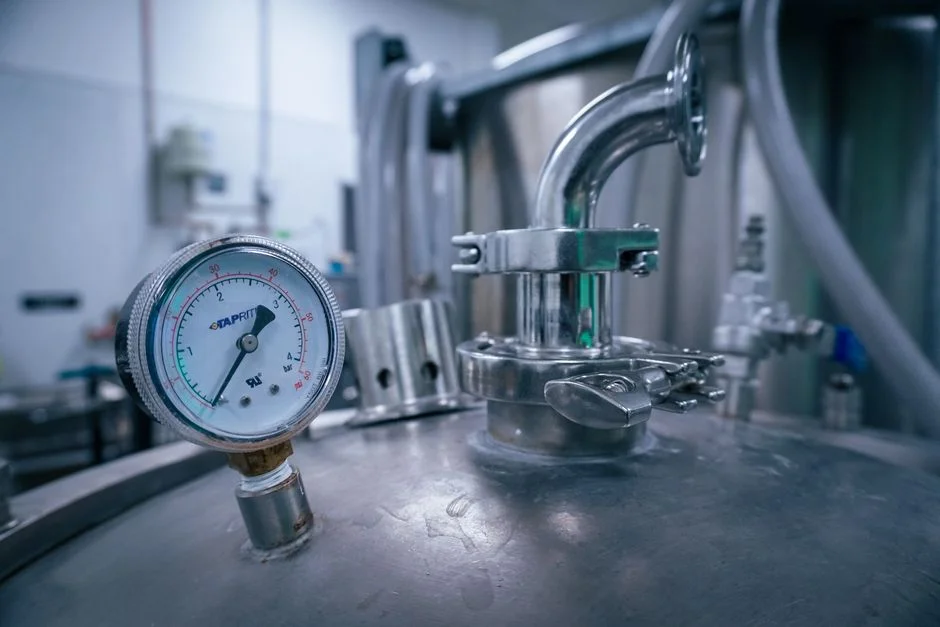
Define acceptance around the contract’s stated capacity, process route, quality requirements, and correction procedure. A sewage plant commissioning plan should demonstrate not only that equipment starts, but that the installed system handles the agreed load and produces results that can be reproduced by the designated sampling method.
Agree factory and site checks for assembly, controls, power, alarms, flow measurement, aeration, membrane or media installation, disinfection, and automatic operation. Before shipment, specify any wet-testing or factory demonstration, including who provides utilities, instruments, and test media. If such testing is not performed, state that limitation in the acceptance record.
For site testing, define the hydraulic test, treatment performance test, sample points, test duration, laboratory responsibilities, and pass criteria. Local authority inspection or sampling should be identified as a separate contractual milestone where applicable. Preserve the laboratory report, calibration records, as-built drawings, settings, operating manual, training record, and maintenance schedule in the handover package.
Attach a deficiencies procedure to final acceptance. It should identify how each defect will be corrected, who bears the cost, what retesting is required, and when final payment becomes due. This is more useful than a general statement that the plant will comply, because it gives both parties an auditable route from failed testing to closure.
Frequently Asked Questions
Should the hotel connect to a municipal sewer or install an on-site A/O or MBR plant?
Choose the municipal sewer if the receiving authority confirms network capacity, connection approval, and an acceptable discharge route. If central infrastructure is unavailable, compare an A/O package plant with MBR. MBR becomes more relevant where compact installation or a defined reuse objective outweighs the additional process, operator, and maintenance implications. Obtain local confirmation for every discharge and reuse assumption.
What flow and wastewater data are needed to size and quote the treatment plant?
Request measured average and peak flow by operating period, occupancy data, laundry and kitchen contributions, wastewater temperature, suspended solids, COD, BOD, fats, oils and grease, and pH. Also provide expansion plans and a representative laboratory sampling plan. S2 supports peak-season variability as a design consideration, but it does not supply an Estonian sizing factor.
What should the quotation include so that installation, commissioning and O&M scope are comparable?
Require the offer to state design flow and loading, process and pretreatment, civil works, connections, power, controls, membranes or media, chemicals, sludge handling, freight, installation, commissioning, training, maintenance, spares, warranty, exclusions, and payment milestones. Ask the supplier to identify which party provides site data, permits, and authority confirmations. No supported Estonian quotation basis is available here, so request a priced scope tied to the confirmed project inputs rather than an unexplained package price.
Which acceptance tests and documents should be required before final payment?
Require agreed hydraulic and treatment tests, defined sampling points and duration, laboratory responsibility, pass criteria, and a defect-correction and retesting procedure. Make final acceptance conditional on the contract-defined capacity, process route, and applicable quality requirements. Hold the signed test records, calibration data, as-built drawings, operating manual, maintenance schedule, and training record in the handover package.