Choose the Discharge Route Before Choosing Equipment
The correct system for a hospital in Honduras depends on the legal discharge route, wastewater characteristics, flow profile, and required pathogen control. A sewer-connection route usually needs pretreatment to protect the receiving system, while an on-site route normally combines biological treatment with verified disinfection. Evidence from a 2007–2008 Nicaraguan study showed norovirus in 46% (13/28) of hospital-wastewater samples and in 32.1% of outgoing treatment-plant samples, supporting a separate disinfection step. The project must obtain site data and confirm the applicable authority before selecting or sizing equipment.
Start with the receiving point, not the equipment configuration. Identify whether wastewater will enter a permitted sewer, leave the hospital through an independently permitted discharge point, or be reused for a defined purpose. Each route creates a different evidence package: sewer acceptance conditions, receiving-water discharge requirements, or reuse criteria. The reviewing authority and the receiving party should confirm the applicable route in writing.
Before requesting a final offer, ask the hospital’s environmental authority, sewer operator, and any relevant water or health authority for the governing permit conditions. Require written responses covering permitted flow, pollutant limits, sampling requirements, disinfection performance, reporting, and whether pretreatment will be accepted. Quoted limits must come from the applicable authority for this site.
The need for explicit pathogen-control evidence does not depend on the discharge route. In the Nicaraguan study, norovirus was detected in 46% (13/28) hospital-wastewater samples, 54% (15/28) treatment-plant inflow samples, and 32.1% of outgoing treatment-plant samples (PLoS ONE). These findings support a dedicated disinfection step, though they are regional surveillance evidence rather than a Honduran limit or guarantee for a particular process.
| Discharge route or influent problem | Governing rule or process option | What data settles it |
|---|---|---|
| Connection to a permitted sewer | Sewer pretreatment designed around the sewer operator’s written acceptance conditions | Receiving sewer identification, authority approval, flow and pollutant acceptance requirements, and any required pretreatment certificate |
| Independent discharge from the hospital | On-site biological treatment followed by site-specific disinfection, with discharge authorization | Discharge point, receiving-water authority requirements, effluent limits, monitoring frequency, and permit-holder responsibilities |
| Water reuse within the hospital | Treatment and disinfection selected for the intended reuse and health requirements | Reuse point, purpose, authority review, treatment objective, and any separate water-quality or health approval |
| Flow or composition does not match the selected route | Revisit pretreatment, equalization, biological capacity, and disinfection controls before ordering | Average and peak flow, flow duration, BOD, COD, suspended solids, pH, and discharge or sewer restrictions |
Comparable authority and compliance decisions for hospital wastewater treatment and compliance in Panama and the hospital wastewater treatment engineering and compliance guide provide useful framing, but their legal requirements are not evidence of Honduran rules. The project-specific authority remains controlling.
Match Treatment to the Hospital Wastewater Profile
Size the treatment train only after the hospital has documented flow, organic loading, solids, and unusual discharge streams. The minimum procurement input is a measured average flow, peak-hour flow, and flow-duration profile, supported by sampling for pH, BOD, COD, suspended solids, and grease. Identify whether clinical laboratories, pharmacies, disinfection units, or other sources contribute wastewater requiring separate management.
Apply this sequence:
- Characterize the combined hospital wastewater flow and composition.
- Separate or intercept streams that could interfere with biological treatment, membrane separation, pumps, or disinfection.
- Select treatment capacity and process from the verified flow and loading data.
- Define the required effluent and reuse performance against the authorized discharge route.
Screen for non-biodegradable solids and assess protective-equipment needs before selecting pumps, membranes, or biological equipment. The hospital should provide access to representative samples, sampling locations, and information about hazardous or controlled waste so the bidder can identify incompatible streams. A bidder that prices only nominal flow without checking these inputs has not established that the equipment will handle the hospital’s actual wastewater.
For a constrained footprint, compare an underground A/O package arrangement with MBR treatment when membrane solids separation is required. An underground A/O hospital sewage treatment plant may be evaluated for compact, automated biological treatment. MBR should be considered where its separation and footprint advantages justify the additional scope to be priced, such as membrane cleaning, replacement, controls, and maintenance support. The 30 m³/day hospital MBR case study is an engineering reference, not a capacity rule for the Honduran hospital.
The Nicaraguan findings do not establish a process-removal rate or sizing standard. They show that pathogens remained relevant through the wastewater-treatment pathway and therefore support explicit disinfection controls. Equipment selection must rest on the hospital’s own wastewater profile and the performance required by the reviewing authority.
Verify Disinfection Performance Instead of Relying on Treatment
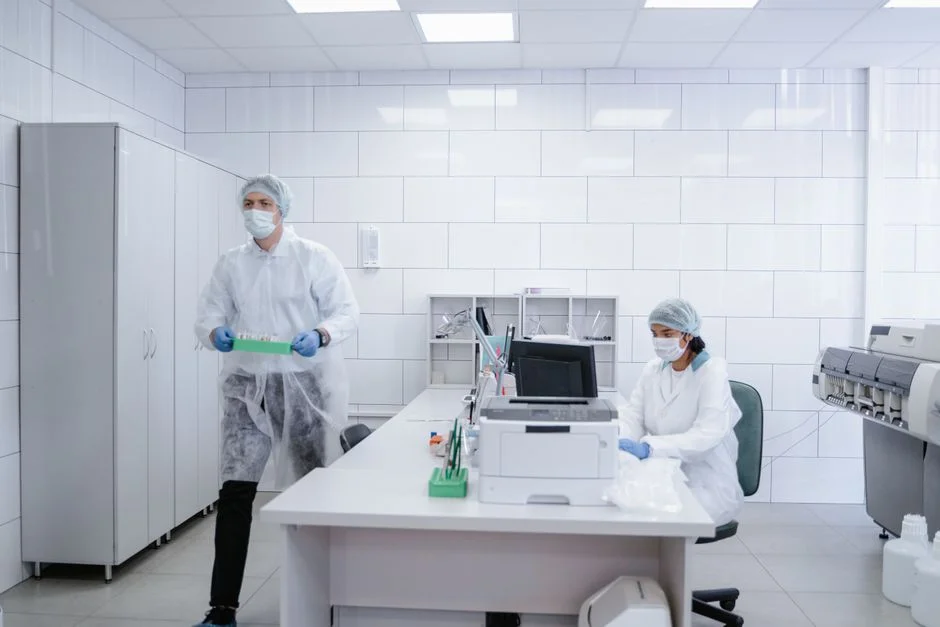
Specify disinfection as a measured performance obligation rather than a general promise that the effluent is “disinfected.” The RFQ must state the required disinfectant or radiation process, dose or intensity, operating conditions, contact or irradiation conditions, monitoring method, sampling protocol, and acceptance criteria.
Choose the barrier according to site conditions and treatment objectives:
- Chlorine dioxide: request evaluation of a chlorine dioxide generator for hospital effluent, including feed-water quality, chemical generation, storage or dosing arrangements, residuals, by-products, safety controls, and monitoring.
- UV-C: request confirmation of the required irradiation conditions, lamp or sleeve condition, fouling controls, sensor calibration, and restrictions caused by wastewater quality.
- Other disinfectants: require the bidder to justify the selected process against the authorized discharge or reuse objective and the site’s chemical-handling, safety, residual-monitoring, and operating constraints.
Require validation with representative wastewater or a commissioning protocol agreed with the reviewing authority. Define sampling points, analytical methods, test frequency, pass criteria, corrective actions, and the party responsible for witnessing or approving results. Effluent-quality monitoring should be tied to the permit or sewer agreement rather than left as an optional commissioning service.
Biological evidence strengthens the case for explicit controls: the study detected norovirus in 46% (13/28) hospital-wastewater samples and in 32.1% of outgoing treatment-plant samples (PLoS ONE). It does not show that one disinfectant method is superior or that a specified product will achieve an undefined limit. The procurement document must connect the selected barrier to measurable, agreed acceptance conditions.
Further treatment comparisons can help define the level of treatment being purchased, as discussed in the secondary-versus-tertiary treatment comparison, but the discharge route and authority communication remain the basis for selecting the required process.
Build a Quote-Ready Equipment and Acceptance Scope
A comparable quotation must include the route, wastewater basis, complete treatment train, utilities, installation, commissioning, validation, documentation, and acceptance remedies. Do not ask bidders to price equipment before the hospital supplies the flow profile, wastewater analysis, receiving point, treatment objective, available footprint, power supply, installation access, operating-staff requirements, and local approval constraints.
Use the quotation data sheet to distinguish supplied scope from exclusions. Each bidder should identify permit support, civil works, utility connections, chemical delivery, waste disposal, local third-party inspections, taxes, freight, and other local costs. Responsibility for obtaining permits and authority acceptance should be named explicitly.
| Quote line item | Technical scope to specify | Red flags to check before signing |
|---|---|---|
| Design basis and process scope | Authorized discharge route, average and peak flow, wastewater analysis, treatment objective, unit duty, bypass provisions, and complete treatment train | Equipment selected without wastewater data; unspecified exclusions; no stated route-dependent performance basis |
| Equipment, controls, and utilities | Screening, equalization, biological treatment, solids separation, disinfection, pumping, power demand, controls, alarms, chemical storage, and remote monitoring | Nominal capacity only; missing peak-flow basis; unclear duty, materials, maintenance access, or utility requirements |
| Installation and local interfaces | Footprint, civil works, access, excavation or underground installation, power, drainage, waste routes, utility approvals, and interface responsibilities | Site works or authority charges excluded without a stated allowance; delivery route and installation access not checked |
| Commissioning and validation | Factory and site tests, representative-wastewater validation, sampling points, disinfection instrumentation, calibration, authority witnessing, and training | “Demonstration” has no protocol; no sample point, method, pass criterion, or remedy for non-performance |
| Documents and support | Manuals, drawings, certificates, spare parts, maintenance plan, remote access, operator training, and technical support | Documents or operator training excluded; critical spares and replacement items left without quantities |
| Commercial and lifecycle terms | Equipment price, freight, installation, commissioning, validation, maintenance, consumables, chemical supply, support, warranty, and payment milestones | Offers omit installation or total operating-cost line items, making them non-comparable |
Pre-order acceptance should require an approved process basis, verified flow and loading inputs, confirmed authority route, final general arrangement, utility confirmation, permit responsibilities, delivery and installation program, and a signed commissioning and validation protocol. For packaged treatment concepts, the scope of an integrated packaged sewage-treatment plant quotation can help expose missing interfaces.
Price should be evaluated as both initial purchase cost and total operating cost. Bidders should separately price biological media or membrane replacement, disinfection consumables, chemicals, energy, laboratory monitoring, operator labor, routine maintenance, and call-out support. The contract should connect any effluent guarantee to the same test method, sampling point, load condition, and acceptance threshold used during commissioning.
Frequently Asked Questions
When is sewer pretreatment preferable to a complete on-site treatment plant?
Sewer pretreatment is preferable when the hospital has a lawful sewer connection and the sewer operator confirms the required pretreatment performance. Obtain the sewer’s written acceptance conditions and identify whether the hospital must remove specified solids or pollutants before discharge. If the receiving sewer will not accept the hospital’s wastewater, or if the objective is reuse rather than sewer discharge, evaluate a complete on-site treatment train instead.
What site data are required before flow or treatment capacity can be specified?
Provide measured average flow, peak-hour flow, flow duration, and wastewater results for pH, BOD, COD, suspended solids, and grease. Also identify clinical-laboratory, pharmaceutical, disinfection, and other unusual streams. These inputs, together with the authorized discharge route and required effluent performance, allow bidders to select capacity and treatment processes without relying on a nominal flow alone.
What should a compliant quotation include beyond the equipment price?
A comparable quotation should itemize the design basis, equipment scope, controls and alarms, civil and utility interfaces, installation, commissioning, validation, operator training, documentation, spares, maintenance, consumables, and energy or chemical costs. It should also state permit responsibilities, local third-party charges, delivery terms, acceptance tests, performance remedies, and exclusions. Request these inputs and quantities from each bidder rather than comparing incomplete headline prices.
How should disinfection acceptance and regulatory verification be documented?
Document the selected disinfection process, operating conditions, monitoring instruments, calibration, sampling points, analytical methods, and pass criteria in the commissioning and validation protocol. Tie acceptance testing to representative wastewater and obtain agreement from the reviewing authority on witnesses and sampling. Maintain discharge monitoring and calibration records under the permit or sewer agreement rather than relying solely on a supplier certificate or an unqualified statement.