Define the Reuse Application and Receiving Route
There is no single standard “wastewater treatment and water reuse system in Guinea.” Select the train by defining the reuse application, applicable receiving route, wastewater characteristics and required water quality before choosing MBR, UF or RO. MBR is a biological treatment option that produces low-turbidity effluent; UF adds membrane solids separation without chemicals; RO addresses dissolved salts and is generally paired with pretreatment and disinfection. Global reuse evidence does not establish Guinea-specific limits, so those must be verified for the project jurisdiction before equipment selection.
Start with the receiving route, not the equipment list. Potential applications identified in the reuse literature include industrial processes, power generation, boiler feed, cooling, beverage bottling and food production, as well as agricultural irrigation, urban cleaning, groundwater recharge and environmental restoration. Each route has a different contamination profile and therefore a different treatment requirement. The MBR, UF and RO wastewater reuse comparison provides a technical reference, but it does not replace a site-specific treatment brief.
Use SUEZ’s distinction between greywater and black water only as a contamination screening concept: greywater excludes toilet waste, while blackwater contains fecal matter and is more heavily contaminated. The decisive input is the actual industrial effluent composition, because industrial streams can also contain process salts, oils, colloids and contaminants not represented by that household-wastewater classification. Treatment methods must therefore be matched to the intended use and the level of contamination.
Before issuing an RFQ, ask the project owner or civil engineer for the applicable Guinea authority, approval route, receiving-water or reuse standard, monitoring duty and contractual responsibility. The available global references do not verify a Guinea-specific reuse requirement. Do not transfer an United States or French requirement into the project basis. Identify the responsible local authority and require the bidder to state which permits, approvals and standards its design assumes.
Match the Wastewater Barriers to the Treatment Train
Assign each identified barrier to one stage only after reviewing representative laboratory data. The objective is not to install MBR, UF and RO automatically; it is to remove contaminants that threaten the receiving route or downstream equipment. This comparison of discharge route or influent problem, governing rule or process option, and what data settles it provides the route-selection worksheet.
| Discharge route or influent problem | Governing rule or process option | What data settles it |
|---|---|---|
| Organic load requiring biological treatment | MBR membrane bioreactor where low-turbidity effluent and membrane solids separation support the intended reuse route | BOD, COD, temperature, flow profile and required treated-water quality |
| Suspended solids, oil and grease, or colloidal material | DAF pretreatment where these fractions could overload biological or membrane stages | Suspended solids, oil and grease, turbidity and settleability results |
| Residual solids before reverse osmosis polishing | UF pretreatment where the feed data and RO design basis require membrane solids separation | Turbidity, suspended solids, particle-size data, salinity and RO feed specification |
| Dissolved salts or minerals limiting boiler, cooling or process reuse | RO polishing, with feed analysis determining pretreatment and post-treatment | Salinity, conductivity and relevant ionic composition compared with the verified reuse criteria |
| Specific health-risk contaminant requiring additional barrier removal | Disinfection and, where justified by the risk assessment, activated carbon, ozonation or another polishing stage | Identified contaminant, pathogen or health-risk assessment and the project treatment objective |
DAF is a candidate pretreatment, not an automatic inclusion. The industrial effluent route reference should be read alongside representative oil, solids and colloid results. If those fractions threaten membrane performance or downstream reuse quality, allocate equalization and DAF responsibility explicitly to the quotation.
Likewise, do not specify RO solely because the project is described as water reuse. SUEZ identifies reverse osmosis among techniques for salinity and mineral removal, while Fluence describes an industrial system combining UF and RO for cooling makeup and additional reverse-osmosis and polishing stages for boiler use. These cases show application-specific combinations, not a universal configuration. An integrated MBR wastewater treatment system may address biological treatment and solids separation, but it does not remove the need to check dissolved salts or other barriers.
Where UF precedes RO, define its purpose as pretreatment: reduce suspended material and protect the downstream membrane train according to the RO designer’s feed criteria. An ultrafiltration system for wastewater pretreatment and reuse should be selected from the actual feed analysis, not from a generic “polishing” label.
Build the Site Data and Capacity Basis
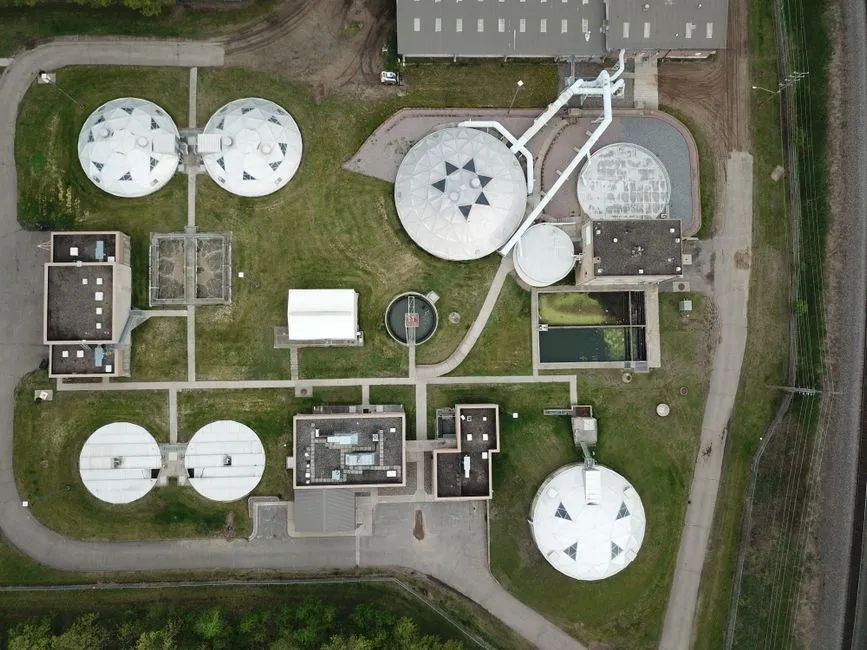
Size the plant from site flows, operating conditions and the verified reuse flow—not from global reuse statistics. Ask the owner or civil engineer for average and peak influent flow, hourly and daily peaks, seasonal variation, operating hours, future expansion and the design horizon. A comparable quotation should state the design flow basis and show which flows drive membrane loading, tanks, pumps and pretreatment equipment.
Request a representative laboratory dataset covering BOD, COD, suspended solids, turbidity, oil and grease, pH, salinity and temperature, plus contaminants relevant to the industrial process. Include sampling dates and operating conditions because a single sample may not represent production peaks. For reuse, request the required reclaimed-water flow, verified quality criteria, storage requirements and pretreatment constraints.
Also obtain available footprint, soil conditions, power supply and installation and maintenance access. Identify sludge generation, dewatering requirements and disposal route before comparing offers, because biological treatment and membrane systems can create a separate solids-handling obligation.
SUEZ reports that total water reuse equals 12% of municipal freshwater withdrawals globally. That figure describes the global relationship between reuse volume and municipal withdrawals; it is not an influent flow, reuse target or capacity factor for a Guinea industrial project.
Set Performance Acceptance and Monitoring Criteria
Define measurable acceptance tests before comparing equipment proposals. Specify treated-water flow, sampling points, test methods, monitoring frequency and consequences of non-compliance. Base reclaimed-water quality on the verified project standard and intended application rather than an unsupported statement such as “potable” or “reusable.”
Include recovery, energy consumption, availability, noise, sludge volume and automatic-control requirements in the performance schedule. Recovery matters when RO is included; energy and availability affect the operating comparison; sludge quantity and condition determine downstream handling. Each guarantee should identify its test period, load condition, sampling method and remedy if the result is not achieved.
Use treatment selection to address the health risks of the particular reuse route. The US EPA states that its Water Reuse Program advances reuse applications across the United States, and on April 16, 2026 it released Water Reuse Action Plan 2.0. Its 2025 report on risk-based microbial treatment targets is planning evidence for determining an appropriate treatment level; it is not a Guinea reuse standard. The project’s local risk assessment and approval route must establish the actual target.
Prepare a Complete Supplier Quotation
Make bidders expose assumptions and exclusions on the same schedule. Each offer should identify treatment assumptions, pretreatment duties, guarantee conditions, utility requirements and owner-provided inputs. Otherwise, two quotations may describe different facilities and appear cheaper only because material scope is missing.
| Quote line item | Technical scope to specify | Red flags to check before signing |
|---|---|---|
| Process treatment and pretreatment | Selected MBR, UF, RO, DAF, disinfection and polishing stages, including capacities, materials and performance boundaries | Stage omitted because it is assumed to belong to another package |
| Equipment and controls | Membranes, pumps, tanks, aeration, valves, instrumentation, PLC or automatic controls and local display requirements | Controls or critical pumps excluded without a defined interface |
| Electrical and civil interfaces | Power, cable routing, foundations, access, drainage, containment and construction responsibilities | Civil works or site utilities left unassigned |
| Sludge handling | Generation estimate, thickening, dewatering, storage, disposal route, odour control and leachate provisions | Sludge volume or disposal cost excluded from comparison |
| Commissioning and handover | Installation supervision, testing, training, documentation, spares, warranty and performance demonstration | Commissioning or training assumed without a written deliverable |
| Local service and monitoring | Service coverage, response arrangements, spare-parts supply, monitoring equipment and ongoing support | Local support described vaguely or excluded after shipment |
| Delivery and commercial exclusions | Delivery scope, customs responsibility, schedule, payment milestones, taxes and stated exclusions | Price excludes duties, works or services shown elsewhere as optional |
Use the wastewater treatment plant cost benchmarks to check whether a proposal’s scope is comparable, but require project-specific pricing rather than a generic rate. The site-specific specification for high-COD industrial wastewater is also a useful RFQ reference. No specific global reuse growth metric or French national target is a Guinea project commitment.
Frequently Asked Questions
When is an MBR preferred over a conventional biological treatment package?
Prefer an MBR when the project needs biological treatment followed by effective membrane solids separation and the resulting low-turbidity effluent is required for the next process step. Confirm that choice against representative BOD, COD, suspended-solids, turbidity, flow and temperature data, and compare land, sludge, controls and maintenance demands with a conventional biological alternative. Do not choose MBR solely because the proposed reuse application is industrial.
Why is UF needed before RO, and what determines UF selection?
UF is a pretreatment barrier where the RO feed requires additional solids separation or membrane protection. Require the RO designer to define the feed specification, then select UF from turbidity, suspended solids, particle characteristics, flow and operating conditions rather than automatically adding it. If RO is unnecessary for the verified water-quality objective, avoid specifying UF as an unpriced contingency.
Which documents and site inputs belong in the RFQ?
Include average and peak flow, operating hours, design horizon, expansion assumptions and representative laboratory results for BOD, COD, suspended solids, turbidity, oil and grease, pH, salinity and temperature. Add the intended reuse flow and verified quality criteria, power, footprint, access, storage, sludge route, applicable Guinea approvals and owner-provided inputs. Request a stage-by-stage mass balance and an exclusions schedule with every quotation.
How should price, performance, delivery and local service be compared?
Ask each bidder to quote the same performance boundaries, utilities, sludge-handling scope, commissioning tests, warranty and training. Require a delivery schedule and named local-service responsibility, while checking how the wastewater treatment plant cost benchmarks were defined. No defensible project price can be stated until the site data, treatment route, guarantee conditions and local scope are issued in the RFQ.