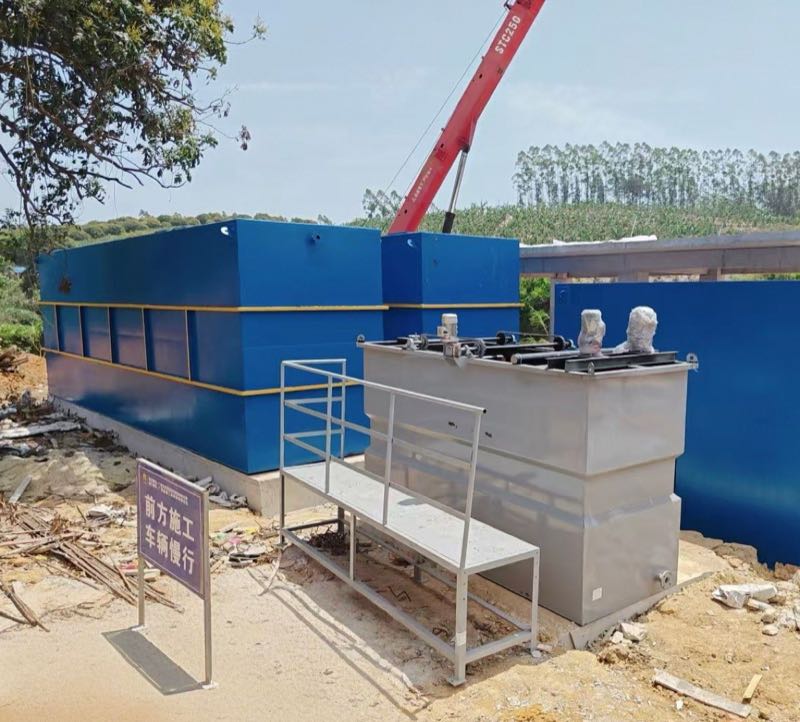
Choose the treatment objective before choosing equipment
A high-COD industrial wastewater treatment system in Gabon should be selected from measured wastewater characteristics and the required discharge or reuse outcome, not from a generic COD range. COD indicates the oxygen demand associated with chemical oxidation of organic material, while BOD indicates biological oxygen demand; the relationship between them must be established experimentally. For a readily biodegradable stream, anaerobic digestion may reduce sludge and generate biogas, while aerobic treatment may be required for further COD and ammonia removal. The available evidence does not establish Gabon discharge limits, so the receiving route, permit criteria and reuse target must be confirmed.
Start by recording whether the project requires pretreatment only, treatment followed by direct discharge, or treatment for effluent reuse. For each route, identify the receiving-water context, applicable pretreatment agreement and required final-effluent parameters. A reuse application also adds requirements that may not appear in a discharge permit, such as the specific process or equipment that will receive the treated water.
Do not substitute COD for BOD or assume that one can be calculated from the other. Hach explains that COD measures the oxygen required for chemical breakdown, whereas BOD measures oxygen required for biological breakdown; their correlation must be experimentally established before either parameter is used to express the other. Request COD and BOD monitoring at the influent and final-effluent points so the design load, process performance and compliance verification can use comparable data.
The industrial wastewater treatment equipment selection guide provides the equipment-selection context, but the project brief should begin with the discharge or reuse decision rather than a process name.
Match the wastewater profile to a treatment route
Each treatment route matches a specific contaminant profile and required outlet quality. Anaerobic digestion is a candidate for high-organic-load streams that are readily biodegradable because it can reduce sludge production and generate biogas, but the composition, operating stability and gas-use conditions still require confirmation. Aerobic biological treatment is relevant where further COD or ammonia removal is required. An MBR adds membrane solids separation to activated-sludge treatment and becomes more relevant when low suspended solids and a compact installation are priorities.
| Discharge route or influent problem | Governing rule or process option | What data settles it |
|---|---|---|
| Readily biodegradable stream with an organics-recovery objective | Consider anaerobic digestion, followed by aerobic treatment if the outlet still requires COD or ammonia removal. | Influent COD and BOD, flow variability, biodegradability evidence, nutrients, pH, temperature and the required biogas-use or venting arrangement. |
| High-COD stream requiring aerobic COD and ammonia removal | Consider an aerobic biological route; the three-phase fluidized-bed study is evidence for its studied conditions, not a universal sizing rule. | The study treated 1,500 L/day containing 5,000 mg/L COD and 230 mg/L ammonia at 8 h hydraulic retention time and reported 91.7% COD removal and 56.7% ammonia removal under those designed conditions, as reported by the Ryerson University Library and Archives. |
| Suspended solids, oil and grease, FOG or colloidal material present | Use an industrial DAF pretreatment system where these constituents could interfere with downstream biological treatment. | Measured suspended solids, oil and grease, FOG, particle characteristics, flow and batch-discharge information. |
| Reuse application requiring a controlled solids barrier | Consider an integrated MBR wastewater treatment system when biological treatment and low suspended-solids separation are required within a compact footprint. | Measured flow, COD, BOD, ammonia, suspended solids, nutrients, pH and temperature, plus reuse-specific quality requirements. |
Use source-specific performance figures narrowly. The Ryerson University Library and Archives study reports 91.7% COD removal and 56.7% ammonia removal at 8 h hydraulic retention time for a 1,500 L/day wastewater containing 5,000 mg/L COD and 230 mg/L ammonia. Those values must not be transferred into a Gabon guarantee without demonstrating that the project influent and operating conditions match the study basis.
Build the pretreatment and biological treatment boundary
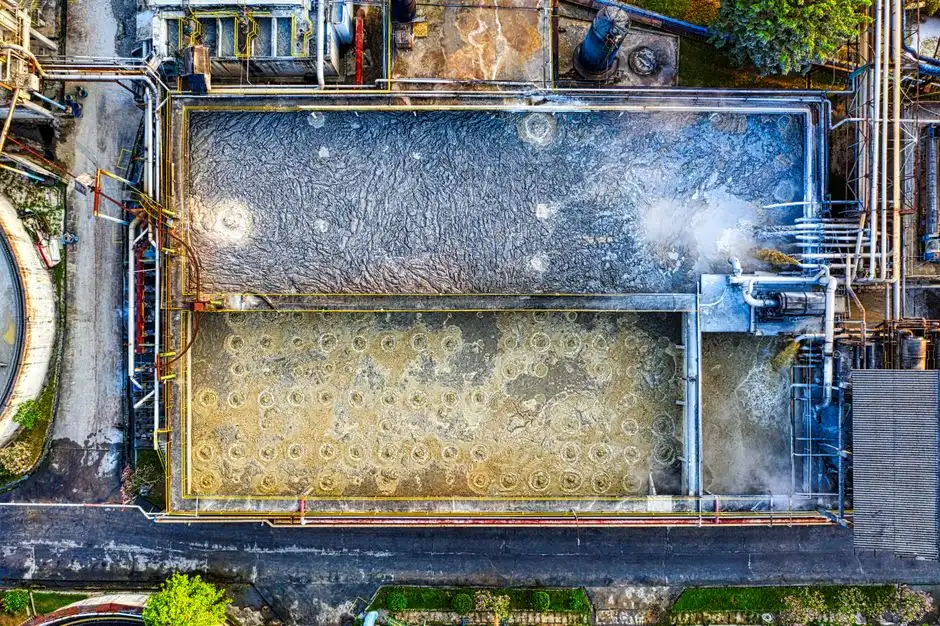
Defining the treatment boundary requires identifying measured contaminants that can upset biological processes. COD alone does not show whether suspended solids will foul equipment, oil and grease will inhibit microorganisms, or nutrients are sufficient for biological operation. Request suspended solids, oil and grease, pH, temperature, nutrients and flow variability, including production shifts, batch discharges, seasonal changes and rainfall effects.
Use dissolved air flotation where suspended solids, oil and grease, FOG or colloidal matter could interfere with downstream biological treatment. The equipment boundary should then state what enters the biological stage, what solids or oil are removed beforehand, and which stream receives the DAF or clarifier residuals. For a specific comparison of physical separation duties, review how to compare DAF and clarifier pretreatment against the actual wastewater profile.
Do not select an MBR from nominal flow alone. Its hydraulic and biological capacity must be supported by measured flow and organic loading, while the pretreatment boundary must prevent excessive solids, oil and grease or other constituents from reaching the membrane system. Where the outlet requires additional solids separation, polishing and reuse requirements must also be stated.
The three-phase fluidized-bed study demonstrates why COD and ammonia must be considered together. Under its designed condition, the reported COD-to-ammonia removal balance changed as influent COD rose, so the equipment brief should not promise performance using COD alone.
Turn the process decision into a site-specific RFQ
A successful quotation request assigns every missing input to an owner. Ask the site operator for production and discharge records, the laboratory for analytical results and test methods, the environmental consultant for discharge and permit criteria, and the treatment supplier for equipment sizing, guarantees and acceptance procedures. Each analytical deliverable should identify the sampling point, method, date, sampling conditions and reporting party.
| Quote line item | Technical scope to specify | Red flags to check before signing |
|---|---|---|
| Influent and effluent analytical basis | Require COD, BOD, ammonia, suspended solids, oil and grease, pH, temperature and flow data, with sampling points and laboratory methods identified. | A quotation based only on COD, unreferenced “typical” values, or incompatible laboratory methods. |
| Equipment sizing and process guarantee | State design flow, influent basis, organic and hydraulic loading, treatment route, equipment dimensions, expected outlet parameters and the basis of every performance figure. | No flow basis, no peak or batch-load assessment, or source-specific performance presented as a project guarantee. |
| Pretreatment and polishing boundary | Define which unit removes solids, oil and grease, FOG or colloids; identify biological treatment, clarification, membrane filtration and final reuse or discharge treatment. | Excluded DAF, sludge removal, polishing or membrane replacement costs hidden behind a “complete plant” description. |
| Utilities and automatic control | List electrical demand, water, air, chemicals, control philosophy, alarms, automatic operation and required operator interface. | Utility consumption omitted, manual operation assumed, or site utility availability not reconciled with the design. |
| Sludge, residuals and mass balance | Require a water and mass balance covering waste streams, sludge generation, thickening, dewatering, odor control and the final disposal route. | No disposal route, no odor-control boundary, or sludge quantities expressed without the stated influent basis. |
| Commissioning and acceptance | Define installation prerequisites, commissioning, validation period, performance testing, operator training, documentation, spare parts, warranty and post-commissioning support. | Acceptance deferred to undefined “satisfactory operation,” with no sampling method, test duration or remedy for failure. |
Require bidders to submit the same structure: design flow, influent basis, treatment route, sizing calculations, expected outlet parameters, utilities, control philosophy, included commissioning scope and exclusions. A complete mass and water balance should reconcile liquid discharge, sludge, concentrated waste and odor-management requirements. This turns an equipment list into a defensible process brief and exposes scope gaps before price comparison.
Verify Gabon compliance and delivery readiness
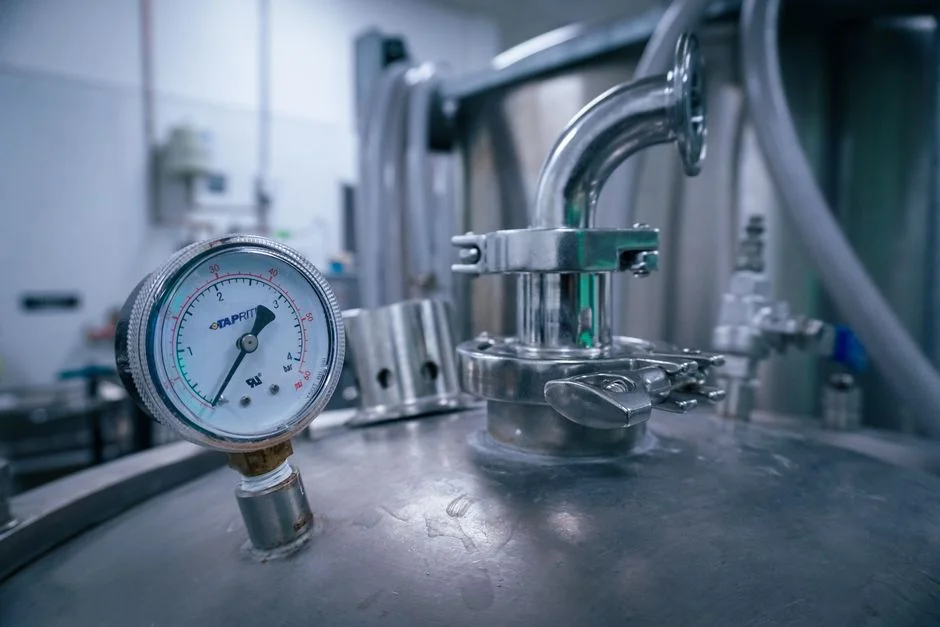
Confirm the discharge point, applicable Gabon authority, permit conditions, pretreatment agreement and receiving-water context before making the equipment order the compliance plan. The available excerpts do not state Gabon-specific discharge limits or an approval pathway, so request the controlling requirements from the environmental authority or the project’s environmental consultant rather than assuming that a general treatment target is sufficient.
Define acceptance tests for hydraulic capacity, treatment performance, controls, alarms, automatic operation, utilities, operator training and documentation. Require COD, BOD, ammonia, suspended solids, oil and grease, pH and flow test methods so bidder results and site results can be compared on the same basis. The acceptance record should identify sampling locations, operating conditions, test duration and the consequence of an unsuccessful test.
Clarify delivery scope, installation prerequisites, commissioning, validation, spare parts, warranty, operator training and post-commissioning support. The contract should also address site conditions that can interrupt delivery or performance, including footprint, soil, utilities, operator availability and installation access. These are project inputs, not facts that can be inferred from the wastewater COD.
Use the domestic sewage treatment engineering guide as a reference for the structure of a project specification and acceptance schedule, while relying on the applicable Gabon requirements—not another jurisdiction’s limits—for compliance.
Frequently Asked Questions
When should anaerobic digestion, aerobic treatment or an MBR be the leading route?
Consider anaerobic digestion for a high-organic-load stream that is readily biodegradable and where reduced sludge generation or biogas recovery has a defined purpose. Consider aerobic treatment when the outlet requires further COD or ammonia removal. Consider an MBR when biological treatment and low suspended-solids separation are required with a compact footprint. Confirm the choice using COD and BOD, biodegradability, ammonia, suspended solids, oil and grease, pH, temperature, nutrients and flow variability.
Why is COD alone insufficient for sizing a high-COD industrial wastewater treatment system in Gabon?
COD indicates organic oxygen demand but does not establish hydraulic capacity, biological loading, pretreatment demand or final polishing requirements. Request daily average and peak flow, batch-discharge information, COD and BOD, ammonia, suspended solids, oil and grease, pH, temperature and nutrients. Have the supplier state which measured inputs control each sizing calculation rather than accepting a system selected only from concentration.
What should a complete industrial wastewater quotation include beyond equipment price?
Request itemized pricing for pretreatment, biological treatment, clarification or membrane separation, final polishing, piping, controls, utilities, foundations or installation interfaces, sludge handling, odor control, waste disposal, commissioning, validation, training, documentation, spare parts and warranty. Ask for the mass and water balance, stated exclusions and all buyer-provided inputs. The buyer should request a priced bill of quantities against the completed site brief.
Which acceptance criteria and delivery terms should be settled before signature?
Set performance criteria against the agreed COD, BOD, ammonia, suspended solids, oil and grease, pH and flow requirements, using named test methods and defined sampling and operating conditions. Also settle hydraulic-capacity tests, control and alarm demonstrations, automatic-operation tests, utility verification, operator training, commissioning boundaries, validation duration, spare parts, warranty responsibility and the remedy for failed acceptance. Do not convert the reported 91.7% COD removal from the three-phase fluidized-bed study into a guarantee until the project influent basis and operating conditions have been demonstrated to support it.