Define the duty before selecting the RO system
An industrial reverse osmosis water treatment system in The Bahamas should be selected from a measured source-water profile and a defined product-water duty, not from nominal capacity alone. RO is one stage in an integrated sequence comprising intake, pretreatment, RO and post-treatment. The buyer must establish average and peak demand, operating hours, required recovery, source-water characteristics, product-water quality and the concentrate-disposal route before comparing an PLC-controlled industrial reverse osmosis system against alternatives.
The intended use of the permeate dictates the required product-water specification and the necessary post-treatment train. Start by identifying whether the permeate is intended for potable supply, process water, boiler feed, cooling make-up, wastewater reuse or another application. Municipal and industrial water treatment may also involve public-health or reuse requirements that must be confirmed for the specific installation rather than inferred from general RO practice.
- Request a source-water analysis covering salinity or total dissolved solids, turbidity, SDI, hardness, organics and other site-specific fouling risks.
- Record average and peak daily flow, operating hours, required system recovery rate and expected feed-water range.
- Obtain the process-water specification, including acceptance targets for permeate quality and any application-specific treatment requirements.
- Document footprint, skid or building arrangement, electrical supply, backup power, drainage and concentrate-disposal constraints.
- Identify applicable Bahamian discharge, reuse and public-health requirements from the responsible authorities before finalizing the route.
Only after these inputs are assembled should the buyer request a fixed-price proposal. This prevents a supplier from optimizing the quote around an assumed source water or an undefined product-water specification, both of which can leave the site with unsuitable pretreatment, inadequate recovery or unresolved concentrate management.
Match source-water risks to the treatment route
The source-water analysis determines which treatment functions are justified, and equipment selection should follow that evidence. Assess salinity or TDS, turbidity, SDI, hardness, organics and possible fouling before confirming the RO design. Membrane fouling risk is addressed through the appropriate pretreatment and cleaning strategy, while the intended use of the permeate determines whether post-treatment or disinfection is required.
| Discharge route or influent problem | Governing rule or process option | What data settles it |
|---|---|---|
| Suspended solids or identified particulate fouling risk | Evaluate an ultrafiltration system for RO pretreatment against other particle-removal options. | Provide turbidity, SDI and relevant source-water results; also provide the proposed cartridge-filter or other upstream barrier. |
| Hardness requiring correction before RO | Request an industrial water softener proposal where hardness analysis justifies resin softening. | Provide hardness, competing ions, feed-water range and the anticipated scaling tendency. Confirm brine disposal and regeneration requirements. |
| Salinity or TDS requiring desalination | Use RO as the separation stage, with feed-water and recovery assumptions explicitly defined in the proposal. | Provide the source-water analysis, required permeate quality, average and peak flow, and an acceptable concentrate-disposal route. |
| Organics, biological activity or application-specific microbial risk | Select pretreatment and any final disinfection step according to the intended use and regulatory route. | Provide organics results, source-water history, intended use and the applicable Bahamian public-health or reuse requirements. |
The treatment train should remain visible in the quotation to ensure transparency. A softener, UF stage, RO membranes, storage and post-treatment are separate process functions even when supplied as one skid. This separation prevents a general pretreatment allowance from concealing the actual equipment or operating obligations.
Compare industrial RO equipment proposals
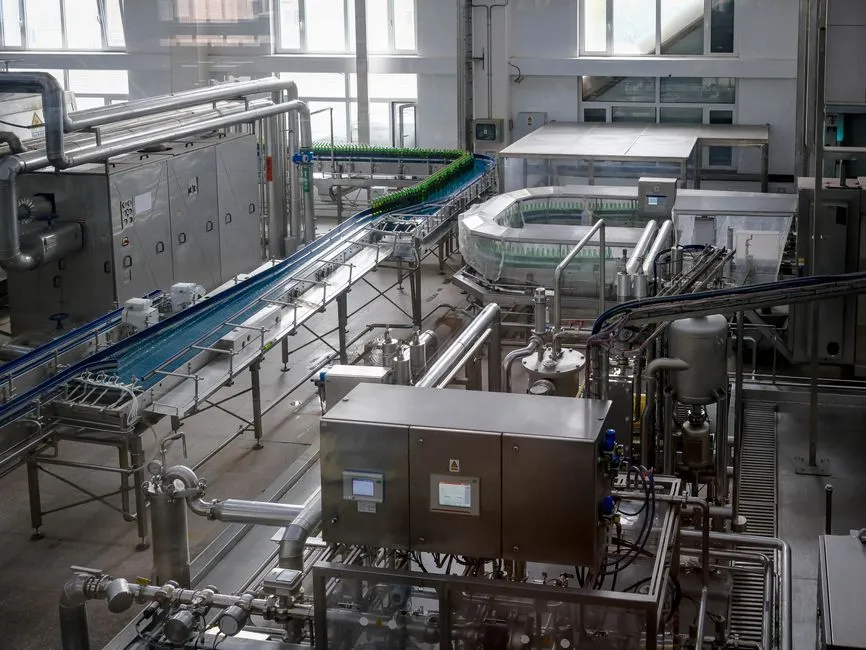
Compare proposals on the same process and commercial scope, not on headline permeate flow or purchase price. Require each supplier to state feed flow, product flow, recovery basis, duty cycle, membrane configuration, materials, controls, pretreatment, post-treatment, utilities and included installation work.
Ask how the controls present normalized permeate conductivity, pressure, flow and recovery information, and whether remote operating features are included. These functions matter because a supplier may describe industrial reverse osmosis equipment with remote operating features for offshore environments, but the presence of a feature in a brochure does not establish that the proposed system includes it or that it satisfies site requirements.
Separate membrane supply, replacement intervals, compatible spares and technical support from the initial skid price. Request documentation for the membrane elements, replacement plan, recommended spares and local or visiting technical support. A supplier that identifies its remote monitoring and service functions but leaves membrane replacement logistics undefined has not completed the lifecycle scope.
The offer should also propose factory acceptance testing and site acceptance testing. At minimum, define the test duration, feed-water conditions, sampling points, measuring instruments, calibration responsibility, acceptance limits and corrective-action procedure. The buyer should also request clarification of membrane replacement intervals and compatible spares before signing. The main commercial comparison should therefore cover these evidence-led items:
- Design feed-water range and product flow
- Recovery basis and operating duty
- Membrane type and configuration
- Pretreatment and post-treatment scope
- Control, monitoring and data functions
- Factory and site acceptance tests
- Freight, installation, commissioning and training
- Membrane supply, spares and service support
Build a quotation scope with acceptance criteria
A comparable RFQ must convert the selected process route into measurable obligations. Require the supplier to state the design feed-water range, product flow, recovery, duty cycle, membrane type, pretreatment, controls and post-treatment. Attach the source-water analysis and the required permeate-quality specification to the RFQ so that every bidder prices the same duty.
| Quote line item | Technical scope to specify | Red flags to check before signing |
|---|---|---|
| RO skid and pretreatment | Feed flow, permeate flow, recovery basis, membrane configuration, pretreatment units, controls and post-treatment. | Nominal capacity without feed-water range; unspecified membranes; pretreatment omitted or described only as “suitable.” |
| Freight and island delivery | Delivery point, packaging, unloading responsibility, site access constraints and schedule. | Freight, customs, handling or installation excluded without a stated allowance or responsibility. |
| Installation and commissioning | Mechanical installation, electrical work, foundations, utilities, start-up, performance testing and training. | Commissioning is limited to supply checks, with no site performance test or operator handover. |
| Performance acceptance | Guarantee conditions, test duration, sampling points, instruments, calibration responsibility and remedy for failure. | No acceptance limits, no documented permeate results, or no defined process when the test fails. |
| Concentrate and waste streams | Identification, containment, handling and disposal route for concentrate and other treatment wastes. | The route is left “to site” or “to owner” without design information or confirmation that the proposed route is acceptable. |
| Spares and service | Recommended spares, membrane replacement procedure, response arrangements, annual service and technical support. | Critical spares are excluded and future membrane or service costs are undefined. |
For island execution, ask separately how delivery, installation and maintenance will be covered. One Bahamas-based provider may offer specific delivery, installation and maintenance services, but this does not establish that every supplier or project requires the same arrangement; define your requirements clearly in the RFQ.
Make the concentrate route a quotation deliverable rather than an afterthought. The supplier should identify the expected concentrate and other waste streams, and the site must provide its discharge, reuse or public-health information. A proposal is incomplete until the buyer can connect each generated stream to a stated route.
Before signature, attach the final process schematic, equipment schedule, electrical and utility requirements, delivery and installation responsibility matrix, FAT and site acceptance schedules, control narratives, membrane and spares list, training plan, warranty and service terms. Acceptance should be tied to the stated feed-water conditions and permeate-quality targets, with a documented remedy for non-conforming results.
Further Reading
- industrial effluent treatment and RO plant decision framework
- RO versus pretreatment-RO decision guide
- cooling tower blowdown RO sizing and concentrate guide
Frequently Asked Questions
Should a buyer specify an RO system before obtaining source-water and required permeate-quality data?
No. Ask the site team for the source-water analysis, process-water specification, flow profile, operating hours, recovery requirement and concentrate-disposal constraints before selecting a supplier or requesting a firm price. Those documents determine whether RO alone is appropriate or whether pretreatment and post-treatment must be included.
How much pretreatment should be included, and what evidence determines it?
Do not use a fixed pretreatment allowance without evidence. Request turbidity, SDI, hardness, organics and the full source-water analysis, then assess the risks and the proposed upstream barriers. UF, softening or other functions should appear in the RFQ only when the analysis and process design justify them.
What should a Bahamian industrial RO RFQ include for delivery, installation and service?
List each service and responsibility separately: freight, customs, unloading, installation, electrical work, foundations, commissioning, performance testing, training, recommended spares, membrane replacement and ongoing technical support. Ask the supplier to state how island delivery, site access and maintenance will be covered rather than assuming these costs or services are included.
Which performance and commercial terms should become pre-signature acceptance criteria?
Define the guarantee conditions, test duration, sampling points, instruments, calibration responsibility and acceptance limits before signature, including the remedy for failed permeate-quality results. Cross-check the commercial exclusions: equipment, freight, customs, foundations, installation, commissioning, training, spares, annual service, warranty and concentrate-disposal responsibilities should be priced or expressly assigned.