Define the Effluent and Destination
Industrial wastewater treatment in Palau requires a project decision between permitted discharge and water reuse. Reverse osmosis removes dissolved salts and many contaminants, but it should not be selected before the effluent is characterized and pretreatment requirements are defined. General technical guidance from Kurita America states that most industrial RO membranes reject 95 to 99% of dissolved solids, depending on system design and water source. A practical project must compare discharge pretreatment with an MBR–RO or UF–RO reuse train, obtain written Palau-specific criteria, and define testing and concentrate responsibilities in the RFQ.
Request average and peak effluent flow, operating hours, wastewater temperature, pH, COD, BOD, TSS, oil and grease, conductivity, TDS, hardness, chloride, sulfate, relevant metals, and process-specific contaminants. These parameters determine whether biological treatment, physical separation, dissolved-solids removal, or contaminant-specific treatment is required.
Record the destination separately as permitted discharge, cooling or process reuse, boiler feed, washing, or another application. Ask the facility owner or permitting adviser to identify the applicable Palau requirements and provide written discharge or reuse criteria; available technical references do not establish those local obligations.
RO creates two output streams: permeate and concentrate. The permeate may serve reuse or discharge, while the concentrate requires a documented destination. This distinction prevents a proposal from pricing only the reusable water and leaving reject-water disposal unresolved.
Select the Treatment Route
RO is the final step only when the reuse or discharge objective requires dissolved-solids removal or a water-quality improvement that biological and physical treatment cannot provide independently. For discharge-only duties, test whether physical, biological, and targeted contaminant treatment can meet the written limit before adding RO capacity.
For reuse duties, evaluate UF or MBR ahead of RO when suspended solids, colloids, biological solids, or high turbidity would otherwise increase membrane fouling. Ultrafiltration removes larger particles but does not remove dissolved salts; it protects the RO stage rather than replacing it. An MBR-integrated treatment system may suit a reuse train requiring biological treatment and membrane separation.
The supplied technical references support the physical separation of duties: RO produces permeate and concentrate, and UF reduces suspended material before RO. Kurita America reports that most industrial RO membranes reject 95 to 99% of dissolved solids, depending on system design and source water. This is general guidance, not a Palau performance guarantee or a substitute for site testing.
| Discharge route or influent problem | Governing rule or process option | What data settles it |
|---|---|---|
| Permitted discharge with no dissolved-solids limit requiring desalination | Test physical, biological and targeted contaminant treatment before adding RO | Written discharge criteria, complete effluent analysis and a side-by-side process mass balance |
| Cooling, washing or process reuse with a dissolved-solids requirement | Evaluate RO as the final polishing step, with UF or MBR upstream where solids or colloids are present | Reuse target water quality, suspended-solids profile and membrane-fouling risk |
| High turbidity, biological solids or colloid loading | Use UF pretreatment or an MBR–RO reuse train rather than feeding raw effluent directly to RO | TSS, turbidity, particle-size data and documented pretreatment performance |
| Industrial effluent containing oil, grease, scale-forming ions, oxidants or process-specific contaminants | Assign each contaminant to a dedicated pretreatment step before the sensitive membrane stage | Oil and grease, hardness, chloride, sulfate, metals, oxidant data and site-specific chemical compatibility information |
| Proposed industrial reverse osmosis system as a standalone treatment | Do not accept it until the source stream, pretreatment sequence and concentrate route are documented | Flow profile, source-water analysis, target quality, recovery assumptions and concentrate disposal method |
Control Fouling and Concentrate
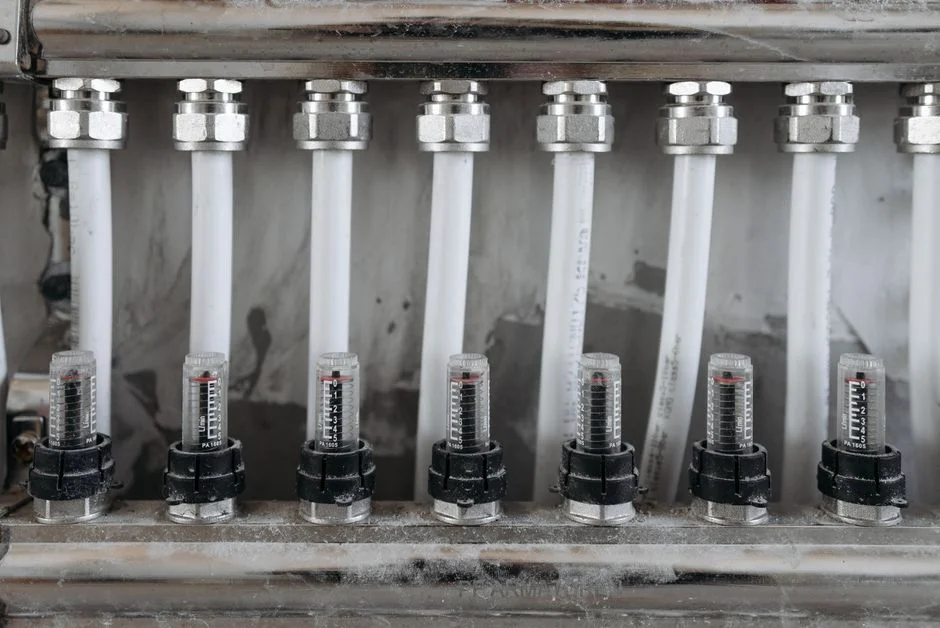
Define the concentrate destination and available hydraulic capacity before selecting a recovery rate. Kurita America identifies sediment filtration, carbon filtration, scale control, and softening as possible pretreatment steps and warns that inadequate pretreatment causes membrane fouling and shortens membrane life. The same reference states that RO reject water must be managed or discharged appropriately; no Palau-specific concentrate disposal rule is established here.
Assign removal duties explicitly. Reduce suspended solids and colloids before UF or MBR; address oil, grease, oxidants, and relevant metals before they reach sensitive membranes; and consider scaling chemistry before setting recovery. The available academic reference on high-recovery RO treatment of anaerobic wastewater effluent identifies vivianite precipitation as a scaling concern, reinforcing the need to evaluate actual chemistry rather than assuming high recovery is suitable.
Require each bidder to state pretreatment objectives, cleaning strategy, chemical compatibility, monitoring instruments, and operating limits. For a reuse train, assess UF pretreatment for the RO plant against measured solids and turbidity conditions. Ask the designer to identify which conditions trigger cleaning or shutdown and how membrane replacement or restoration is priced.
The concentrate assessment must cover flow and quality at the agreed operating condition, permitted destination, available capacity, and consequences of upset or shutdown. If the destination is not confirmed, keep the recovery rate and total installed scope open rather than presenting an unverified reuse solution as complete.
Prepare the RFQ and Acceptance Scope
A comparable RFQ must distinguish confirmed requirements from supplier assumptions. Attach the wastewater analysis, flow profile, target water quality, operating schedule, utilities, footprint, and concentrate route. Also attach written discharge or reuse criteria, or identify the permitting adviser who will confirm them.
Ask each bidder to state design flow, pretreatment sequence, membrane type and quantity, recovery approach, permeate-quality basis, controls, utilities, installation boundaries, and routine maintenance requirements. An equipment scope covering treatment parts, valves, and media should be itemized so bidders can identify exclusions rather than use a generic packaged-plant description.
| Quote line item | Technical scope to specify | Red flags to check before signing |
|---|---|---|
| Design basis and process guarantees | Average and peak flow, operating hours, complete analysis, target water quality and agreed test conditions | Guarantee stated only as a generic RO rejection percentage without source-water and system-design scope |
| Industrial effluent pretreatment | Process sequence, duty of each unit, feed pumps, controls, chemical dosing, cleaning provisions and performance targets | Equipment selected without an influent analysis or without responsibility for upstream fouling |
| MBR–RO reuse train or UF–RO treatment | Membrane type, quantity, design basis, recovery approach, permeate quality basis and cleaning or replacement access | MBR or UF presented as removing dissolved salts, or no membrane-protection duty assigned |
| RO permeate and concentrate handling | Piping, pumping, monitoring, storage, sampling, destination and operating response for both streams | Permeate included but concentrate disposal, hydraulic capacity or upset response omitted |
| Controls, alarms and utilities | Automatic controls, alarm list, power demand, backup-power provisions, chemicals and remote or local monitoring | Equipment excluded from the utility connection or operating philosophy remains undefined |
| Shipping, installation and commissioning in Palau | Supply boundary, freight, customs responsibilities, unloading, foundations, electrical installation, utilities connection, commissioning and operator training | “Delivered” price excludes site works, freight, installation, spares, training or commissioning support |
| Acceptance testing and documentation | Throughput, permeate quality, automatic controls, alarms, leak testing, stability demonstration, manuals, drawings and training records | Acceptance uses an undefined sample period, feed condition or undocumented test method |
| Maintenance and consumables | Routine maintenance, membrane cleaning, spare-parts list, recommended staffing, chemical costs and support arrangements | No clear owner for membrane restoration, consumables or troubleshooting after commissioning |
Further Reading
Frequently Asked Questions
What should the cost estimate for an industrial effluent treatment and reverse osmosis plant in Palau include?
Request a line-item price for the selected treatment train, pretreatment, feed pumping, controls, permeate handling, concentrate handling, utilities, commissioning, documentation, training, freight to Palau, installation scope, initial spares, and maintenance. Request the same scope boundaries from every bidder, and require exclusions to be priced as options rather than omitted from the comparison.
How should an industrial reverse osmosis plant be sized?
Final sizing depends on average and peak flow, operating hours, the complete effluent analysis, target water quality, recovery assumptions, available footprint, utilities, and concentrate capacity. Give bidders the same flow profile and water-quality basis, then require each to state design flow, membrane quantity, and recovery approach so the proposals can be compared on a common basis.
What acceptance tests should be included in the RFQ?
Define tests for throughput, permeate quality, automatic controls, alarms, leak testing, stability, and documentation under agreed feed and operating conditions. Specify the sampling point, test duration, and responsible party. Do not accept a rejection-percentage claim without the source-water composition and system-design conditions attached.
How should a supplier be selected for an industrial wastewater treatment project in Palau?
Assess demonstrated process-design experience, relevant project references, membrane and controls support, commissioning capability, maintenance access, and clarity about shipping to Palau, installation responsibility, and local support. Ask each bidder to identify its design assumptions, exclusions, and proposed acceptance procedure; use a comparable water-treatment equipment RFQ as a structure, while adapting it to the effluent, destination, and local regulatory evidence provided for the project.