Define the wastewater and compliance route first
For high-strength industrial effluent in Albania, the equipment decision begins with a site-specific wastewater profile and the required discharge or reuse route—not with a generic COD removal rate. Use preliminary testing to identify suspended solids, oil and grease, pH, nutrients, salinity, temperature, inhibitory compounds and the BOD/COD ratio, then establish flow and organic loads through an industrial-process mass balance.
Obtain the applicable permit conditions from the relevant Albanian environmental and water authorities and confirm whether the wastewater will enter a sewer, discharge directly to a receiving water or be reused. The 2017 academic study Characteristics of Raw Wastewater from Albanian Dairy Processing Plants and Some Treatment Options, published by the International Journal of Current Research and Academic Review, describes Albanian dairy effluent as carrying high chemical oxygen demand, biological oxygen demand, nutrients, organic matter and inorganic matter. It also states that Albania has moved toward stricter effluent-discharge rules, but that general observation is not a substitute for the permit applicable to your plant.
Use at least one representative composite sample to characterize the wastewater, supported by production records and an industrial-process mass balance. The sample establishes what the treatment system must receive; the mass balance explains where the flow and loads originate and whether clean streams should be segregated before treatment.
| Procurement input | Evidence required | Decision affected |
|---|---|---|
| Flow and load envelope | Average and peak flow; COD and BOD concentrations; production schedule; sample dates | Equalization, reactor sizing and hydraulic peak capacity |
| Biodegradability | BOD/COD ratio and results from a controlled biological treatability assessment | Whether anaerobic treatment should precede aerobic polishing |
| Physical contaminants | Suspended solids, oil and grease, colloids and temperature | Industrial wastewater pretreatment and equalization duty |
| Process risks | pH, salinity, nutrients, inhibitory or refractory compounds | Feed conditioning, biological protection and performance guarantees |
| Compliance or reuse objective | Written permit, sewer acceptance conditions or reuse specification | Required outlet quality and need for final polishing |
Compare the treatment routes by controlling step
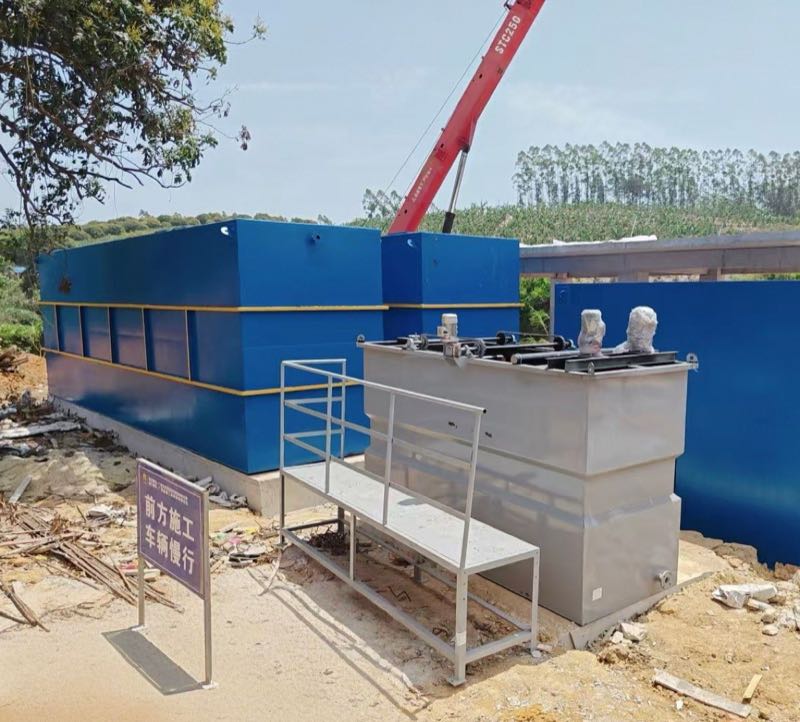
Each stage should be selected for the pollutant or operating condition it controls; an anaerobic reactor cannot be treated as a substitute for solids or oil removal. DAF, equalization and coagulation–flocculation are relevant when suspended solids, colloidal material, oil and grease or shock loads must be controlled before biological treatment. The supplier documentation for HydropureWater’s industrial DAF wastewater pretreatment system states a catalog capacity range of 4–300 m³/h and identifies suspended solids, FOG, oil and grease and colloidal matter as treatment targets. That range is a selection screen, not proof that a unit will meet the plant’s removal duty; the bidder must demonstrate that duty against the measured wastewater.
Anaerobic treatment is a candidate for biodegradable high-strength effluent. GL Environment’s commercial technical article High COD Wastewater Treatment identifies UASB, IC and EGSB reactors as anaerobic options, with selection governed by COD load, BOD/COD ratio, inhibitory compounds, temperature, pH, salinity, hydraulics, biogas objectives and required effluent quality. A/O, SBR and MBR are identified as aerobic follow-up options. MBR can be relevant where a compact installation and higher-quality effluent are required, as discussed in the high-COD biological treatment guide, but it still requires an appropriate feed and a settled or filtered upstream stream.
| Route or stage | Controlling design condition | Evidence the bidder must provide |
|---|---|---|
| Equalization | Flow or quality variation exceeds the biological stage’s operating envelope | Mass balance, equalization calculation and mixing strategy |
| DAF or coagulation–flocculation | Suspended solids, colloids, oil and grease or FOG must be removed first | Feed-dependent removal duty, hydraulic capacity, chemical demand and sludge estimate |
| UASB, IC or EGSB | Organic load is sufficiently biodegradable and the project values anaerobic treatment | Treatability results, reactor-loading basis, alkalinity and biogas assumptions |
| A/O, SBR or MBR | Residual biodegradable COD, nutrients or solids must be stabilized | Influent envelope, sludge production, aeration demand and outlet guarantees |
| Activated carbon, UF, NF or RO | Discharge or wastewater reuse requires additional contaminant removal | Target water quality, membrane or adsorbent duty, concentrate disposal and lifecycle cost |
Selecting the right sequence depends on site-specific verification of these modeled stages. The 2026 Simulation study for the Albanian oil refinery effluent wastewater management and treatment plant design in ScientificDirect modeled API–DAF–activated-sludge–ozonation at 100–1,000 m³/d. It reported COD and BOD removal above 90% across the modeled flow rates, with peaks of 98% COD and 97% BOD at low hydraulic loads. These are simulated results, not guaranteed performance for another refinery or industrial site. The sequence is a useful reference for comparison, while site characterization, treatability testing and permit verification remain necessary. For petroleum-type feeds, the API, CPI and DAF pretreatment selection provides a more focused route-selection framework.
Confirm performance with treatability and shock-loading tests
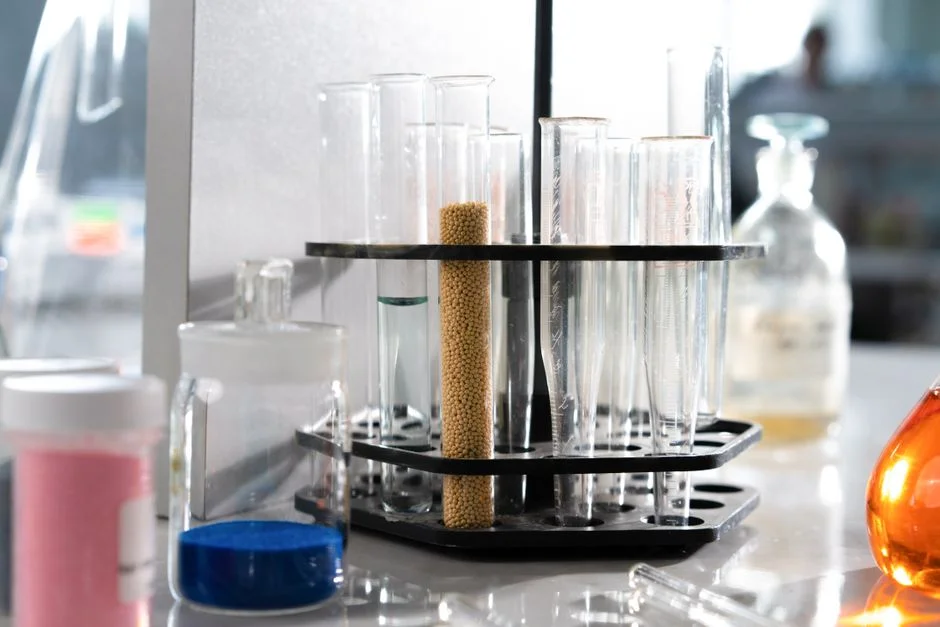
Laboratory or pilot evidence must connect the tested feed to the proposed operating conditions and outlet result. The three-phase fluidized-bed study by Ryerson University Library and Archives, Simultaneous removal of COD and ammonia from high-strength wastewater in a three-phase fluidized bed reactor, is a useful reporting format because it states the feed, reactor scale, hydraulic residence time and removal outcomes. The study tested a 1,500 L/day reactor with 5,000 mg/L COD and 230 mg/L ammonia at an 8-hour hydraulic residence time. It achieved 91.7% COD removal and 56.7% ammonia removal. When influent COD was increased to 6,000 mg/L, COD removal fell to 84.5% while ammonia removal rose to 75%. These results describe that reactor and feed; they do not establish the performance of the route being procured.
For the proposed high COD industrial wastewater treatment system in Albania, require the laboratory or supplier to document:
- Feed COD, BOD/COD ratio, flow condition and hydraulic retention time;
- Organic loading applied during each test condition;
- Temperature, pH, nutrients, salinity and identified inhibitors;
- Outlet COD, BOD, ammonia, suspended solids and relevant oil-and-grease results;
- Sludge production and any observed operational limitation.
Test seasonal and production-peak wastewaters. High-strength treatment can face extreme organic loading, rapid quality changes and inhibitory compounds; direct biological loading without those tests risks treating an atypical sample as the design basis. Write acceptance criteria into the procurement specification. They should identify the guaranteed influent envelope, guaranteed outlet parameters, test duration, sampling method, calibration requirements, remedy for failed acceptance testing and responsibility for correction or replacement.
Build the equipment and supplier-selection brief
A comparable proposal must expose the design assumptions, not just the equipment list and price. The 2026 Ballsh simulation can be included as a reference case, provided every bidder identifies it as modeled evidence rather than a performance guarantee. Its API–DAF–activated-sludge–ozonation sequence, 100–1,000 m³/d modeled range and reported removal figures should be treated as comparison material; the selected bidder must still substantiate performance for the buyer’s measured effluent.
Request a process flow diagram, equipment list, duty calculations, material specifications, control philosophy, utility requirements, sludge estimate, installation footprint and commissioning plan. Require each bidder to state which stages are guaranteed, which results are projected and which assumptions depend on site verification. For DAF, compare bidders on the stated 4–300 m³/h catalog range and their proposed removal duty, but require project-specific evidence rather than treating catalog capacity as an outcome.
| Fillable supplier brief | Response required from bidder |
|---|---|
| Measured wastewater basis | Flow range, average and peak loads, COD range, BOD, BOD/COD ratio, oil and grease, suspended solids, pH, temperature and identified inhibitors |
| Proposed process route | Stage-by-stage process purpose, selected equipment, duty calculations and treatment-train mass balance |
| Technical deliverables | Process flow diagram, equipment list, material specifications, control philosophy and utility requirements |
| Residuals and site works | Sludge estimate, sludge handling route, installation footprint, civil interfaces and concentrate disposal |
| Performance basis | Tested feed, operating conditions, outlet results, guarantee envelope, acceptance test and remedy for non-compliance |
| Project execution | Commissioning plan, training, local engineering support, maintenance scope and spare-parts strategy |
| Commercial boundaries | Separate prices for equipment, civil work, installation, chemicals, utilities, sludge handling, commissioning and long-term operation |
Frequently Asked Questions
How should equipment capacity be sized for high-COD industrial wastewater in Albania?
Do not fix equipment capacity from COD concentration alone. Require the wastewater characterization, average and peak flow, COD and BOD load envelope, treatment objective and applicable permit before sizing equalization, biological or polishing equipment. Ask bidders to show how their duty calculations respond to the stated flow and load range.
Which supplier qualifications should be checked before awarding the contract?
Compare guaranteed process performance, understanding of Albanian regulatory requirements, engineering support, commissioning evidence, acceptance-test remedies and maintenance scope. Require every bidder to identify which results are measured, which are projected and which depend on assumptions that remain unverified at the site.
How should bidders compare cost and budget for this treatment system?
Request itemized pricing for equipment, civil work, installation, chemicals, sludge handling, utilities, commissioning and long-term operation. No supported project quotation was provided for an Albania-specific system, so a defensible price cannot be stated without those inputs and site-specific scope.
What compliance evidence should be obtained before treating a discharge route as permissible?
Obtain the written permit or sewer acceptance conditions from the applicable Albanian authority and confirm the receiving-water or reuse requirements. Treat general technical guidance and the Ballsh simulation’s modeled discharge performance as context, not as verified compliance evidence for the buyer’s plant.
Related Equipment
- MBR wastewater treatment system — specifications, capacity range, and technical data