Confirm the Available Sewer and Discharge Route
For municipal and commercial sewage projects in Comoros, confirm whether a municipal sewer is genuinely available at the site. If it is not, compare a decentralized treatment route with conventional septic-tank-and-soakaway practice. The WSZ package plant handles 1–80 m³/h using anoxic/aerobic biological contact oxidation, sedimentation, and disinfection in a buried unit. For larger or reuse-oriented projects, the MBR option covers 10–2,000 m³/day and provides sub-1 μm filtration, but requires more detailed process, footprint, and maintenance planning.
The first check is a confirmed connection, not an assumed one. The Comoros drainage guidance published in 2026 states that a municipal sewer is not generally available in Comoros and directs project teams to establish what is genuinely available at the plot boundary. If a public connection is confirmed, the authority should define the connection point, required works, discharge conditions, ownership, and applicable charges. The supplied research does not establish network coverage or connection terms for any individual municipality.
Where no public sewer exists, the same 2026 guidance identifies an on-site septic tank and soakaway as the conventional route. Do not treat that route as automatically suitable: capacity depends on soil percolation, which must be tested rather than assumed. The guidance warns that clay soils may not percolate at all and can require a different disposal method. A package treatment plant should therefore be compared with the full septic-tank-and-soakaway system, not treated as a simple equipment substitution.
Resolve the drainage concept before designing foundations. The 2026 Comoros guidance states that drainage runs on gravity, so floor levels, pipe invert levels, and the outfall must be established before foundations are designed. It also requires foul drainage to be separated from roof and paving runoff: roof water should go to a soakaway or storm drain, while foul water goes to the sewer or treatment system. Combining storm and foul flows is identified as prohibited.
For the project file, record the city, site address, evidence of available sewer infrastructure, receiving-water context, and the authority consulted. This information is more useful than a generic statement that “sewerage is unavailable.” It preserves the boundary between confirmed facts and unresolved local conditions.
Build the Site-Screening Dataset
The equipment decision follows from a verified demand-and-site dataset, not from treatment capacity alone. Build the dataset through the following sequence:
- Document average and peak daily sewage flow, current occupancy, forecast occupancy, and any process wastewater.
- Identify seasonal rainfall effects and keep foul sewage separate from roof and paving runoff.
- Define the required effluent destination: sewer discharge, soakaway, receiving water, or treated wastewater reuse.
- Complete a soil percolation test rather than inferring disposal capacity from soil type.
- Map the available footprint, burial depth, access for inspection and maintenance, power supply, sludge-removal route, and distance to the receiving point.
- Record the local authority consulted and the unresolved sewer, discharge, and construction-approval questions.
The package plant versus sewer decision method provides the broader separation of connection availability, treatment requirements, and disposal constraints. In Comoros, the 2026 Comoros drainage guidance adds a decisive local condition: clay ground may not support the soakaway assumed by conventional practice. That makes the soil investigation a screening step, not a detail to be completed after equipment selection.
Land and access data should be expressed in terms that suppliers can price and construct. Record usable dimensions, required working clearances, anticipated cover depth, vehicle and lifting access, maintenance access, and the route for removing solids. For buried equipment, excavation, dewatering, backfill, and surface restoration affect feasibility as well as cost. None of these project-specific quantities can be inferred from the supplied equipment data.
For reuse, define the final application before selecting the process. The Ion Exchange municipal sewage reuse guidance states that cooling, boilers, and production processes require different water qualities. The same source notes that the final treatment stage depends on intended use and that regular monitoring and dependable pretreatment may be necessary.
| Project input | Evidence needed before route selection | Decision affected |
|---|---|---|
| Sewer availability | Confirmed connection point, authority confirmation, connection conditions, and relevant charge information | Sewer versus on-site route |
| Demand | Average flow, peak daily flow, forecast occupancy, and process wastewater | WSZ or MBR capacity and redundancy |
| Ground | Soil percolation test and disposal route | Soakaway versus alternative disposal or treatment |
| Land and access | Dimensions, burial depth, inspection access, power, and sludge-removal route | Package configuration and maintainability |
| Effort destination | Discharge point or named reuse application with required water quality | Treatment level and reuse arrangements |
| Approvals | Local authority requirements and review by a professional registered in Comoros | Permit, construction, and compliance pathway |
Compare WSZ, MBR, and Conventional Sewer Routes
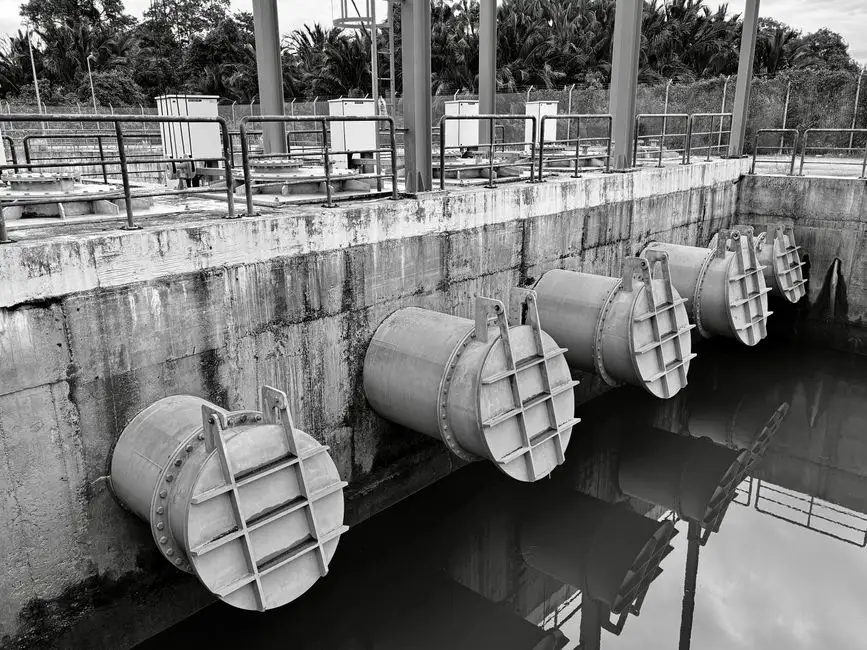
The WSZ, MBR, and sewer routes become distinguishable once flow, land, disposal, reuse, and maintenance constraints are verified. A public sewer remains the simplest operational route where it genuinely exists, but neither the Comoros guidance nor the supplied equipment material establishes city-specific network coverage, tariffs, connection works, or discharge rules.
| Decision factor | WSZ package route | MBR route | Conventional sewer or septic route |
|---|---|---|---|
| Supplied capacity | 1–80 m³/h | 10–2,000 m³/day | No equipment capacity established by the supplied Comoros source |
| Supplied treatment configuration | Anoxic/aerobic A/O biological contact oxidation, sedimentation, and disinfection in one buried unit | Activated sludge with submerged PVDF membrane filtration | On-site septic tank and soakaway identified as conventional practice where no sewer is available |
| Filtration statement | No membrane-filtration claim supplied | Filtration below 1 μm stated in the supplied catalogue | Not established by the supplied source |
| Installation and footprint | Can be installed below grade with landscaping above or mounted on a trailer | Supplied catalogue states a 60% smaller footprint than conventional systems | Requires verified sewer connection or a tested soakaway; project-specific land and excavation constraints apply |
| Operational attention | Fully automated and described as operating without a dedicated operator | Requires process, footprint, power, and maintenance planning; detailed support requirements must be specified | Septic tank and soakaway must be designed, built, and maintained |
| Reuse suitability | Requires a project-specific effluent-quality and reuse assessment | Potentially relevant where the final use needs a more advanced treatment train; the application must define the required quality | Sewer route may facilitate central reuse if a downstream reuse network exists, but no Comoros coverage is supplied |
The WSZ option is suited to a verified decentralized flow basis and sites where a buried unit, limited surface works, and automated operation are practical priorities. Its supplied capacity of 1–80 m³/h comes from the HydropureWater verified product catalog. The package combines anoxic/aerobic A/O biological contact oxidation, sedimentation, and disinfection in a single buried unit. It can be installed below grade with landscaping above or mounted on a trailer for mobile deployment.
The MBR route is more relevant when the verified design flow falls within its supplied 10–2,000 m³/day range or when the final application demands the membrane separation described by the catalogue. The system combines activated sludge with submerged PVDF membrane filtration, is stated to provide filtration below 1 μm, and is stated to have a 60% smaller footprint than conventional systems. Those are catalogue claims, not project-specific performance guarantees. A buyer must still verify hydraulic loading, process control, membrane maintenance, power demand, solids handling, and the final reuse specification.
The sewer and package-plant route comparison and the related residential wastewater route assessment reinforce the same screening logic: connection availability and disposal conditions determine the route before equipment is compared. For the WSZ underground package sewage treatment plant, the practical question is whether the verified flow, land, access, power, and disposal conditions fit a buried package unit. For the MBR membrane bioreactor wastewater system, the decisive questions are process complexity, reuse requirements, footprint, and long-term maintenance support.
Convert the Selection into Procurement Criteria
The selected route should become a written design basis before quotations are requested. Issue the verified flow range and peak-load basis, hydraulic profile, available land, burial or access constraints, power supply, effluent destination, reuse target, local approval route, and monitoring requirements. Keep confirmed site data separate from assumptions. This prevents a supplier from optimising a package around an unverified average flow or an assumed sewer connection.
Require each bidder to state the design flow and operating mode, treatment guarantees, power and chemical requirements, installation and commissioning boundaries, maintenance access, spare-parts support, and sludge-disposal responsibilities. For a buried WSZ unit, specify excavation, dewatering, backfill, surface restoration, and how the installation will be inspected. For an MBR system, require membrane cleaning, replacement, control-system support, solids handling, and the operating skill level expected on site.
Use the wastewater plant commissioning planning guide to align acceptance tests, training, handover documents, and operational readiness with the selected route. Commissioning boundaries should identify who supplies power, chemicals, water for testing, effluent disposal, and attendance during proving. Responsibility gaps between equipment supply, civil works, operation, and local maintenance support should be resolved in the contract rather than left to site practice.
Where treated wastewater reuse is part of the project, allocate responsibilities among the municipality, treatment partner, and industrial water user. The Ion Exchange guidance identifies volume, quality, payment, minimum offtake, interruption responsibility, and treatment or polishing requirements as issues that should be settled before construction. A reuse scheme should also establish whether treatment capacity is adequate for confirmed demand rather than relying on treatment capacity alone.
Do not request a fixed equipment price until the site survey, flow data, authority consultation, soil investigation, and receiving or disposal route are confirmed. The supplied evidence contains no Comoros treatment-plant equipment price, city-specific discharge limit, city-specific treatment capacity, or complete permit rule. Those are inputs to obtain, not values a supplier should be allowed to assume.
Frequently Asked Questions
How should a WSZ or MBR system be sized for a project in Comoros?
Size from the verified flow range and peak-load basis, not average flow alone. Match that basis to the supplied WSZ range of 1–80 m³/h or MBR range of 10–2,000 m³/day, then check land, power, access, effluent destination, reuse quality, and maintenance constraints. The wastewater plant commissioning planning guidance supports treating sizing, operating conditions, and commissioning as linked decisions.
How much should a municipal and commercial sewage treatment plant in Comoros cost?
The supplied evidence does not provide a Comoros treatment-plant equipment price, so a defensible fixed price cannot be stated. The only supplied cost allowance is that a septic tank and soakaway commonly represents 3–6% of house construction cost, according to the 2026 Comoros drainage guidance. Request itemised quotations for equipment, excavation, power, installation, commissioning, controls, civil works, sludge removal, maintenance, and reuse or disposal infrastructure.
What should a buyer check when selecting a treatment supplier?
Require a flow-based design, treatment guarantees, installation boundaries, operating inputs, commissioning plan, maintenance access, spare-parts support, and local service arrangements. Check each claim against the project design basis