What Phnom Penh's Expansion Changes for Project Buyers
For a Phnom Penh site, the immediate decision is whether to rely on the expanding public sewer or install decentralized sewage treatment. Phnom Penh's first public plant opened in December 2023, and Choeung Ek has a stated capacity of 5,000 m³/day; additional capacity of 282,000 m³/day is planned for 2031–2040 (Mekong Eye, 2025-08-11). Those figures do not confirm that a specific property can connect. Obtain the connection point, available capacity, invert level, discharge approval and programme date in writing, then compare that route with a WSZ A/O package plant or MBR using measured flow, wastewater quality, land, flood exposure and reuse requirements.
Phnom Penh's sewage treatment plant expansion is a citywide capacity programme, not an assurance of service to an individual address. Choeung Ek opened in December 2023 and was reported at 5,000 m³/day on 2025-08-11, while the planned addition of 282,000 m³/day falls within 2031–2040 (Mekong Eye, 2025-08-11). The published programme does not establish when a hotel, factory or residential development can connect.
A buyer should ask the responsible authority to confirm, in writing:
- the connection point and whether it is inside the confirmed collection-service area;
- flow direction and available network and treatment capacity;
- the sewer invert level, required pumping pressure and who will provide them;
- ownership boundaries for the connection, meter, pump station and maintenance;
- the connection programme, design handover conditions and applicable approval path; and
- whether an interim local treatment system must remain compatible with the eventual public connection.
Published plant capacity alone is not a usable public sewer connection. The Phnom Penh domestic sewage treatment guide sets out the same property-level checks and explains why a developer should not base completion on the expansion headline alone.
Treat Historical City Modeling as Context, Not a Design Basis
A historical PCSWMM study modeled 25.83 km² of southern Phnom Penh as 55 subcatchments and estimated that approximately 10% of city effluent entered the Mekong River untreated (Computational Hydraulics International, “Application of PCSWMM to Assess Wastewater Treatment and Urban Flooding Scenarios in Phnom Penh, Cambodia,” historical study context). That finding provides historical context; it is not a current calculation of an individual site's flow, discharge or compliance position.
The same study found that treatment could remain effective under wetland-area reductions of up to approximately 22%, while documenting pressure from wetland infill and the flood-storage value of wetlands (Computational Hydraulics International, historical study context). It supports two planning questions: whether a proposed site has adequate land, and whether receiving drainage or flood-storage arrangements could be affected. It does not establish present-day treatment performance at a property.
Do not transfer the historical model's wastewater concentrations, peak-flow assumptions or city-scale cost estimates directly into a current design. Obtain current metered flow records or documented occupancy and operating hours, conduct site sampling, record wet-weather observations, identify the receiving water and establish current flood levels and groundwater conditions.
This separation is particularly important for a combined sewer. Rainfall can dilute sewage, change screening requirements and hydraulic loading, and expose capacity weaknesses in pipes, channels or pumping stations. A generic unit-per-person calculation cannot represent a site's wet-weather hydraulic condition, discharge timing or pretreatment burden.
Choose the Route Against Measurable Site Conditions
The public-sewer route is viable only when the authority confirms a usable collection interface, adequate network capacity and project-specific approval; a treatment-plant capacity announcement does not establish any of those conditions (HydropureWater, 2026 guide).
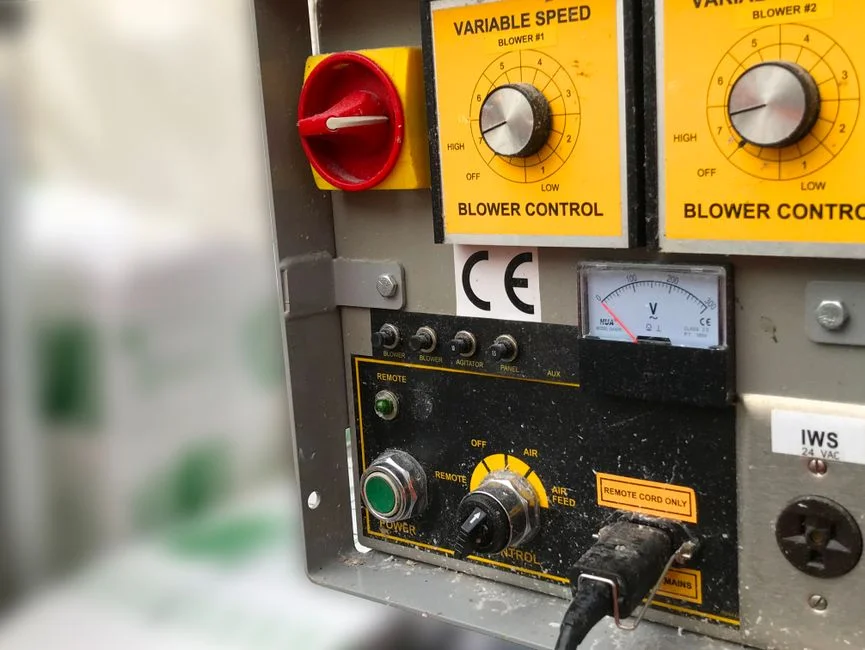
The WSZ underground A/O package sewage treatment plant combines anoxic/aerobic biological contact oxidation, sedimentation and disinfection in one buried package unit. Its stated capacity is 1–80 m³/h, with automatic operation without an operator (HydropureWater verified product catalog, 2026). It should be screened where measured flow falls within its duty range, the footprint is constrained and a compact installation is required.
The integrated MBR wastewater treatment system uses activated sludge with submerged PVDF membrane filtration below 1 μm. Its stated footprint is 60% smaller than conventional systems, and its capacity range is 10–2,000 m³/day (HydropureWater, 2026 guide). Screen MBR where tighter solids separation or potential reuse justifies the additional membrane, aeration, testing and replacement obligations.
Complete one matrix for the same site rather than comparing nominal equipment capacities:
| Decision input | Public sewer | WSZ A/O package plant | Integrated MBR |
|---|---|---|---|
| Measured average and peak flow | Confirm network and treatment capacity at the connection duty | Select from the stated 1–80 m³/h equipment range | Select from the stated 10–2,000 m³/day equipment range |
| Connection and discharge route | Confirm point, invert, pressure, flow direction and ownership | Define collection, treated-effluent outlet and approved discharge route | Define collection, treated-effluent outlet and reuse or discharge basis |
| Land and installation | Account for connection works and off-site network responsibility | Confirm below-grade or trailer installation, access and landscaping | Confirm footprint, access, lifting and service clearances |
| Wastewater and pretreatment | Confirm whether the public network will accept the proposed wastewater | Test biological loading and assess screening, grease, grit and solids | Test biological loading and membrane protection requirements |
| Reuse objective | Confirm whether public sewage is intended for the required reuse | Define the required effluent or reuse performance basis | Review tighter solids separation and reuse potential |
| Flood and groundwater exposure | Confirm network and pumping-system flood resilience | Confirm unit elevation, buoyancy, access and power protection | Confirm equipment elevation, aeration, controls and membrane-service access |
| Operations | Confirm authority operation, tariff and owner responsibilities | Confirm automatic operation, sludge removal and service visits | Include membrane cleaning, aeration, testing and replacement planning |
| Approvals | Obtain connection and discharge approval | Confirm construction and discharge requirements for the site | Confirm construction, discharge and any reuse requirements |
Apply the matrix as conditional logic. Choose public sewer when the connection interface and programme are confirmed for the required opening date. Screen WSZ when flow, footprint and access fit its package configuration. Screen MBR when the performance objective, maintenance capability and lifecycle budget support membrane operation. For protected land with an opportunity to preserve natural treatment and flood-storage functions, evaluate wetland-based sewage treatment separately; it is a land and infrastructure commitment, not simply an equipment purchase.
Build the Project Data and Approval Package
A procurement decision should begin with a common data and approval package, because the public-sewer route requires network evidence while an on-site route requires equipment, civil-work and discharge evidence (HydropureWater, 2026 guide).
Assign these inputs before requesting a route recommendation:
- Submit metered flow records or documented occupancy and operating hours.
- Obtain wastewater sampling covering the parameters relevant to biological loading and pretreatment.
- Identify the receiving water or intended reuse application.
- Record flood level, groundwater condition, access, power supply, lifting route and sludge-removal arrangement.
- For public sewer, obtain written confirmation of the connection point, invert, pressure, available capacity, ownership and programme.
- For on-site treatment, confirm the 2026 construction, discharge and reuse requirements with the relevant authority or a qualified local environmental consultant.
Cambodia adopted its first Wastewater Systems Law in December 2024, but supporting guidelines, sub-decrees and technical standards were still under development with JICA in the 2025 report (Mekong Eye, 2025-08-11). Buyers should confirm current 2026 requirements rather than treat that 2025 record as the final approval framework.
Require quotations to use the same scope:
| Quotation component | Information required |
|---|---|
| Supply | Treatment unit, selected duty point, trains, redundancy and equipment scope |
| Civil works | Foundations, enclosure, access, lifting, collection and discharge connections |
| Mechanical and electrical | Pumps, controls, aeration, disinfection, instrumentation, power and standby arrangements |
| Installation | Transport, positioning, connection, testing and site requirements |
| Commissioning | Training, operating documents, performance demonstration and acceptance method |
| Lifecycle services | Sludge removal, consumables, membrane maintenance, parts, service visits and responsibilities |
| Exclusions and risks | Electrical supply, civil works, permits, flood protection, access and third-party charges |
Keep historical city-scale costs separate from current property quotations. Computational Hydraulics International estimated approximately USD 49.1 million in construction cost and USD 0.82 million in annual O&M for an activated-sludge plant serving the combined Trabek and Meanchey sewersheds. That estimate belongs to the historical PCSWMM study context; it is neither a current package-plant quotation nor a unit price for decentralized sewage treatment.
The WSZ versus MBR hotel wastewater decision illustrates how to structure hotel-specific flows and reuse questions. The hotel wastewater equipment selection example provides a separate maintenance and comparison reference; neither replaces Phnom Penh site measurements or current approvals.
Frequently Asked Questions
How much does a Phnom Penh sewage treatment package plant cost?
There is no defensible package-plant price in the supplied research. Request a written quotation that separately prices the treatment unit, civil works, pumps, controls, installation, commissioning, power, training, sludge removal, consumables and maintenance. Do not use the historical USD 49.1 million construction estimate or USD 0.82 million annual O&M as a property quotation; both relate to a city-scale activated-sludge plant for the Trabek and Meanchey sewersheds (Computational Hydraulics International, historical study context).
Should a hotel or factory choose a WSZ A/O plant or an MBR system?
Choose WSZ for a compact installation where measured flow fits its stated 1–80 m³/h range and automatic package operation is the priority. Review MBR where tighter solids separation or potential reuse matters and the owner accepts membrane cleaning, aeration, testing and replacement obligations. Both selections still require site-specific influent data, pretreatment assessment and an approved discharge route.
Can a property connect to Phnom Penh's expanding public sewer?
Only after the responsible authority confirms the address-specific connection point, flow direction, available capacity, invert level, required pressure, ownership boundaries and connection programme. Phnom Penh's planned 282,000 m³/day addition for 2031–2040 does not itself prove that a property can connect during its construction schedule (Mekong Eye, 2025-08-11).
What should a wastewater supplier document before quotation?
Require the supplier to work from verified average and peak flow, occupancy and operating hours, wastewater-quality data, pretreatment needs and the proposed duty point. The quotation should state the influent basis, performance test protocol, reference conditions, warranty boundaries and acceptance responsibility, while separately identifying civil works, power, commissioning and lifecycle services.
How are flows and equipment capacity sized for a Phnom Penh development?
Start with current metered flow records or documented occupancy and operating hours, then add wet-weather observations and wastewater sampling. Apply the resulting hydraulic and biological basis to the selected treatment route. A capacity statement alone is equipment selection, not completed wastewater capacity planning; connection timing, reuse objectives and approvals must also be resolved.