Separate collection, pumping and treatment problems
A toll station sewage treatment upgrade should begin by locating the failure in the service chain, not by selecting a treatment package. Overflows, odour and unreliable discharge may originate in an undersized gravity sewer, inadequate pump head, blocked pumps or insufficient treatment capacity. The appropriate route is therefore a collection-and-pumping correction when conveyance is deficient, a biological treatment package when discharge quality is deficient, or a combined civil-and-equipment project when both layers require work.
The Wood Drive sewage pump station study, published by Elsevier BV, defines wastewater pumping-station design around incoming flow in m³/time and pump head in m. Those two inputs help determine whether the station can move the required flow without exceeding equipment or site constraints. They do not, by themselves, establish biological treatment capacity or permit compliance.
The Town of Tyngsborough demonstrates why projects should not be separated too early. Its official project page describes a Phalanx Street pump-station upgrade combined with approximately 1,200 linear feet of gravity sewer installation. That example pairs conveyance and pumping because improving one layer alone would not complete the connection to municipal sewer.
| Screening question | Evidence to obtain | Likely upgrade route |
|---|---|---|
| Is the problem caused by blockage, inadequate gravity capacity or insufficient pump head? | Wastewater flow in m³/time, pump head in m, wet-well levels, pipe condition and overflow records | Gravity sewer installation or sewage lift station improvement |
| Is pumping failing because of ragging, repeated starts, controls failures or lack of standby capacity? | Pump run hours, trip history, clog records, power records and maintenance log | VFD, PLC, anti-clogging, standby-pump and SCADA upgrades |
| Does the receiving authority identify a treatment or discharge-quality failure? | Effluent test results, permit conditions, receiving-sewer acceptance criteria and flow records | Package biological treatment or MBR evaluation |
| Is surface land unavailable for treatment equipment? | Surveyed footprint, burial depth, access routes and underground utilities | Buried package plant, subject to installation review |
| Is a toilet, food-service or maintenance expansion planned? | Approved facility plan and forecast flows | Capacity reservation or staged upgrade |
Build the design-input and site-constraint brief
Verified flow, wastewater, site and ownership data are required for a comparable supplier proposal; nominal treatment capacity is not a design basis. Request average and peak flows, the design horizon, daily and seasonal variation, and planned changes to toilets, food service or maintenance facilities. Where metered data are unavailable, state that fact and require the bidder to identify its assumptions. The supplied research provides no universal flow multiplier, so no design-flow factor should be inserted into the brief without project-specific engineering support.
Wastewater characterization should cover pH, suspended solids, oil and grease, nutrients and contaminants relevant to the receiving sewer or discharge permit. No universal acceptance limit is established in the supplied sources. Identify the receiving authority, permitted discharge point and applicable permit, then ask each bidder to demonstrate compliance with those project-specific requirements.
The site record must establish available footprint, burial depth, tanker and maintenance access, soil and groundwater conditions, utility locations, electrical supply, odor-control requirements and the route for treated effluent. Also document who provides flow records, land constraints, permit conditions, utility data and sludge-disposal arrangements. A treatment proposal that leaves these inputs undefined is not sufficiently developed for comparison.
The University of Regina study on biological nutrient removal is site-specific rather than a universal toll-plaza design rule. It examined an upgrade from tertiary treatment to BNR in phosphorous-rich northern Great Plains streams. Its findings may inform nutrient-removal discussions where relevant, but they do not establish that every toll station requires BNR or that the same receiving-water effects apply at another site.
| Information package | Required entries | Responsible authority or supplier |
|---|---|---|
| Flow basis | Average flow, peak flow, design horizon, seasonal variation, expansion plans and measured-data period | Authority supplies records; bidder states assumptions and calculations |
| Wastewater and discharge | pH, suspended solids, oil and grease, nutrients, other relevant contaminants, receiving sewer, permit and discharge point | Authority supplies samples and permit; bidder proposes compliance method |
| Physical site | Footprint, burial depth, access, soil, groundwater, utilities, electrical supply and odor constraints | Authority supplies survey and utility data; bidder confirms layout |
| Operations | Staffing, remote monitoring, maintenance access, training, residual-sludge quantity and disposal route | Authority and bidder document responsibilities |
| Commercial boundary | Equipment, civil works, installation, controls, commissioning, energy, maintenance and disposal exclusions | Bidder provides itemized proposal |
Compare the treatment options against site requirements
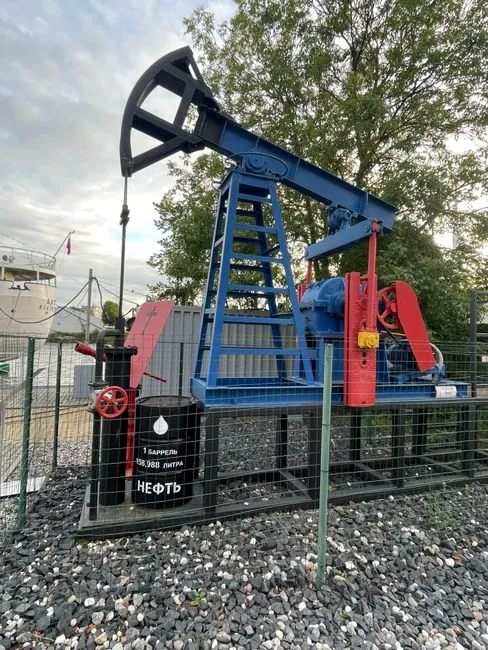
The WSZ series integrates anoxic/aerobic biological contact oxidation, sedimentation and disinfection in one buried package unit. HydropureWater’s verified product catalog states that it handles 1–80 m³/h and can be installed below grade with landscaping above or mounted on a trailer for mobile deployment. Its relevant screening advantage is a constrained above-ground footprint; its project suitability depends on verified flow, wastewater characteristics, treatment targets, burial conditions and installation responsibilities.
HydropureWater’s MBR membrane bioreactor system combines activated sludge with submerged PVDF membrane filtration. The product catalogue states a capacity range of 10–2,000 m³/day, near-reuse-quality effluent and filtration below 1 μm. It also states that the MBR has a 60% smaller footprint than conventional systems. That percentage depends on the supplier’s defined conventional design basis, so a buyer should require the comparison drawings, process assumptions and land take used to derive it before treating it as a project benefit.
Neither technology should be selected to correct a pumping reliability failure. A station lacking variable frequency drives, programmable logic controllers, anti-clogging capability or standby pumping may need a lift-station-focused upgrade even if treatment capacity is adequate. Conversely, a buried package plant does not repair an undersized sewer or insufficient pump head. Review the buried WSZ package sewage treatment plant and package sewage plant versus MBR selection only against verified project constraints.
| Decision factor | Buried WSZ package plant | MBR membrane bioreactor | Lift-station and sewer focus |
|---|---|---|---|
| Primary function | Integrated biological treatment, sedimentation and disinfection | Activated sludge with submerged membrane filtration | Correct conveyance, pump head, blockage or control reliability |
| Stated capacity evidence | 1–80 m³/h, according to the verified product catalogue | 10–2,000 m³/day, according to the product catalogue | Must be established from incoming flow and pump head |
| Site screening | Buried installation is relevant where surface space is limited | Footprint advantage requires verification against the defined conventional baseline | Prioritize wet-well, pipe, pump and electrical access |
| Effluent question | Confirm process suitability and project-specific permit target | Assess whether the stated filtration quality is required by the receiving authority or reuse plan | Not a substitute for treatment assessment |
| Key due-diligence item | Burial, groundwater, floatation and commissioning constraints | Membrane cleaning, replacement, monitoring and flow-basis consistency | Duty point, standby arrangement, controls and anti-clogging requirements |
Evaluate pumping, reliability and operating costs
Lift-station controls are a material operating-cost issue because pumping occurs continuously within the wastewater service chain. Mitsubishi Electric reports that lift stations account for an estimated 10–30% of a wastewater district’s energy consumption and that VFD-driven pumps can save 20%–40% energy when pump speed is matched to demand. These figures come from Mitsubishi Electric’s commercial article, “Wastewater Lift Station Upgrades for Better Reliability,” rather than from toll-station field measurements; they are screening references, not guaranteed project savings.
For a continuously operated toll plaza, request anti-clogging functions, PLC-based lead/lag sequencing, standby-pump availability, alarms and SCADA integration where required. Mitsubishi Electric describes dual-drive operation with PLC-controlled lead/lag sequencing so that the alternate pump can take over when one unit requires attention. The procurement specification should identify whether anti-clogging is a drive function, a pump-selection feature or both, and should define the required alarm and communications points.
The same Mitsubishi Electric article cites average annual maintenance costs of $236,000 across systems driven solely by clogs. Use this as an indicator of potential maintenance burden, not as a quote for a toll-station lift station. Compare lifecycle items separately: energy, planned maintenance, emergency call-outs, spare pumps, controls, odor control and residual-sludge disposal.
| Cost or reliability element | Information to request | Evaluation treatment |
|---|---|---|
| Energy | Pump control method, design duty point, operating schedule and utility tariff | Compare modeled consumption; do not apply generic savings as a guarantee |
| Planned maintenance | Inspection intervals, consumables, staffing and preventive-maintenance tasks | Price over the agreed evaluation period |
| Failures | Clog history, alarm response, standby availability and emergency call-out terms | Include outage consequence and response obligations |
| Controls | VFD, PLC, HMI, SCADA integration and cybersecurity boundaries | Separate equipment from integration and configuration work |
| Residuals and odor | Sludge generation, dewatering or disposal, odor-control requirements and maintenance access | Include in the total operating scope |
Issue a supplier brief and verify acceptance criteria
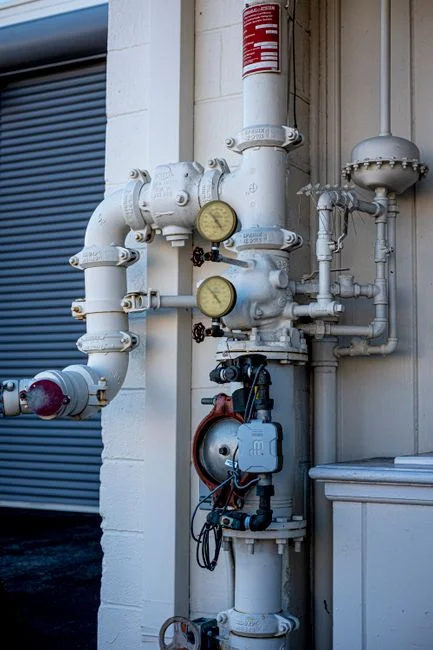
Comparable proposals must state the same engineering basis. Require each supplier to identify design flow, peak-flow treatment approach, pump duty point, treatment process, effluent target, footprint, utilities, control philosophy, civil-work assumptions and installation boundary. Where treatment and pumping are combined, state where each responsibility starts and ends so that a buried tank, pipework, controls and power supplies are not priced as overlapping allowances.
Use one commercial structure for startup, performance testing, training, maintenance, spare parts, warranty and remote support. Require an initial schedule tied to site access, approvals and utility connections. No general manufacturing or delivery lead time is provided in the supplied research, so each bidder should submit its own dated schedule.
For the WSZ route, ask how the integrated A/O contact-oxidation, sedimentation and disinfection stages will be commissioned and how the buried installation will be protected against floatation and groundwater intrusion. The product catalogue confirms the buried configuration and integrated process, but those site-specific installation protections require engineering detail. For the MBR route, ask how membranes will be cleaned, replaced and monitored, and how the stated 10–2,000 m³/day range relates to the station’s verified flows. The supplier should also provide the basis for the claimed footprint comparison.
Make final selection conditional on permit acceptance, verified site data and witnessed performance tests. Define test influent, sampling points, operating periods, analytical methods and acceptance values before award. Nominal capacity, catalogue claims and delivered-price comparisons alone do not demonstrate that the toll-station upgrade will perform as required.
Frequently Asked Questions
What flow should be used to size a toll station sewage treatment upgrade?
Use verified average and peak flows, together with the selected equipment’s stated capacity range. Compare the peak-flow treatment approach separately because a daily capacity statement does not establish how the system responds to short peaks. The supplied research provides no universal design-flow multiplier, so require the supplier’s flow calculation and operating assumptions.
How should an authority select a supplier for the upgrade?
Require a process basis, design-flow calculation, guaranteed pump duty point, site drawing, utilities demand, controls scope, installation boundary and proposed acceptance test. Check whether each price includes civil works, commissioning, training, sludge handling and remote support. A low equipment price is not comparable unless the installation and operating boundaries are aligned.
Which treatment option should be selected for a constrained toll plaza site?
Evaluate a buried package plant when biological treatment, sedimentation and disinfection can be integrated within the available underground space and site conditions permit installation. Evaluate an MBR when the verified process objective requires its membrane separation or stated effluent quality and the proposed flow falls