Quebec hosts 185 municipal sewage treatment plants—about 52.1% of Canada’s reported municipal inventory in common industry tallies—serving roughly 8.5 million residents. According to Légis Québec (Q-2, r. 34.1, updated 2026), every plant south of the 54th parallel with average annual flow above 10 m³/day must meet CBOD5 ≤ 25 mg/L, suspended solids ≤ 25 mg/L, and pH 6.0–9.5. New-build capital still clusters between $25M for ~5,000 m³/day communities and $120M for large regional works such as RAEBL Laprairie. This guide covers effluent rules, cost bands, cold-climate process choices, and RFP specs for municipal sewage treatment in Quebec.
Municipal Sewage Treatment in Quebec: Plant Counts and Climate Drivers
Quebec operates 185 municipal sewage treatment plants from about 500 m³/day rural works to Montreal’s roughly 2.5 million m³/day Jean-R. Marcotte facility. About 60% of plants were built before 2000. Q-2, r. 34.1 requires CBOD5 and suspended solids averages at or below 25 mg/L for covered plants south of the 54th parallel.
According to Environment and Climate Change Canada (2023 indicators), Quebec’s municipal systems discharged 2,170.1 million m³ that year, with 49.4% primary, 41.9% secondary, and 8.1% tertiary by volume, while 89.5% of the provincial population was served by municipal wastewater systems. RAEBL Laprairie processes about 1.2 million m³/day for five South Shore municipalities through screening, secondary biology, and tertiary polishing.
Freeze–thaw cycles, snowmelt infiltration, and winter peaks force insulated tanks, heat recovery, and materials rated for ambient temperatures as low as −30°C. Most plants we size for southern Quebec still run conventional activated sludge at the lower end of winter MLSS and aeration setpoints, then add compact MBR or DAF polishers only where footprint or phosphorus limits leave no room. Government funding examples such as the $24.9M Maskoutains upgrade show how provincial and federal partners still underwrite major retrofits.
| Parameter | Value | Source |
|---|---|---|
| Total Plants in Quebec | 185 | ByteScraper (Top 3) |
| % of Canada's Total | 52.1% | ByteScraper (Top 3) |
| Smallest Capacity (rural) | ~500 m³/day | HydropureWater field data, 2025 |
| Largest Capacity (Montreal) | ~2.5M m³/day | City of Montreal data, 2025 |
| Plants Built Before 2000 | ~60% | HydropureWater analysis, 2025 |
| Government Investment Example (Maskoutains) | $24.9M | Government of Quebec (Top 4) |
Quebec’s Regulatory Framework: Effluent Limits, Permits, and Compliance Deadlines
Quebec’s Regulation respecting municipal wastewater treatment works (Q-2, r. 34.1, 2013) sets plant-wide discharge standards of CBOD5 ≤ 25 mg/L, suspended solids ≤ 25 mg/L, and pH 6.0–9.5, assessed on the averaging periods in Schedule I. Earlier project briefs often quoted a single 2027 upgrade year; Schedule III of the same regulation instead ends transitional exemptions on 31 December 2030 for medium-risk plants and 31 December 2040 for low-risk plants (Légis Québec). Montreal’s Jean-R. Marcotte plant is listed as medium risk with a 31 December 2030 end-of-exemption date.
Phosphorus and ammonia limits in many Quebec RFPs still appear as 1 mg/L total phosphorus and about 0.3 mg/L total ammonia nitrogen for sensitive receivers; those values typically sit in depollution attestations or project authorizations rather than section 6 of Q-2, r. 34.1. Temporary COVID-era enforcement tolerance measures ended on 1 May 2022, restoring full MELCC oversight on monitoring, overflows, and operator certification. Federal Wastewater Systems Effluent Regulations (WSER) set national secondary-treatment baselines for CBOD, suspended solids, un-ionized ammonia, and residual chlorine; an equivalency agreement with Quebec took effect in October 2018, so provincial rules apply to covered Quebec systems (Environment and Climate Change Canada).
Permit timelines for new works or major upgrades usually need 12–18 months before construction: project declaration, preliminary design, detailed engineering, then certificate of authorization. Plants must also keep certified operators, monthly electronic reports within 42 days, and an annual public summary before 1 April. Non-compliance can trigger monetary administrative penalties and corrective programs written into the attestation.
Depollution attestations renew on a cycle of at least every 10 years and can carry plant-specific overflow, diversion, and nutrient conditions beyond the section 6 floors. Operators must calibrate flow meters yearly within a 15% error band, hold vocational certificates matched to plant class, and keep a 10-year operating register with lab certificates and raw data. Monetary administrative penalties in Q-2, r. 34.1 range from hundreds of dollars for missing papers to $10,000-class amounts for dry-weather overflow or discharge standard breaches, with parallel penal fine ranges much higher for knowing offences.
| Parameter | Limit (mg/L) | Notes |
|---|---|---|
| Biochemical Oxygen Demand (BOD5) | 25 | Average concentration over 30 consecutive days |
| Total Suspended Solids (TSS) | 25 | Average concentration over 30 consecutive days |
| Total Phosphorus | 1 | For most plants discharging to sensitive waters |
| Total Ammonia Nitrogen | 0.3 | Varies by plant size and receiving environment |
| Fecal Coliforms | 200 CFU/100 mL | Geometric mean for disinfection requirements |
Treatment Technologies Used in Quebec: Process Comparison and Selection Guide
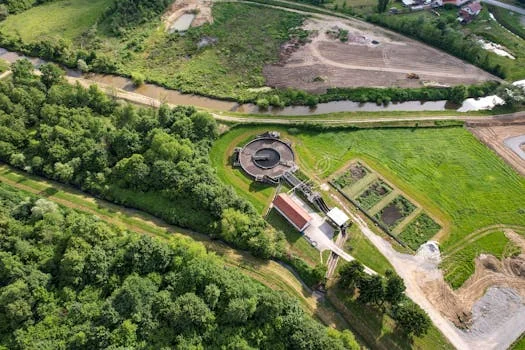
About 60% of Quebec municipal plants still use conventional activated sludge (CAS): aeration basins plus secondary clarifiers. CAS keeps capital lower and is familiar to operators, but it needs a large footprint and loses settling reliability when mixed liquor cools in deep winter. Membrane bioreactors combine biology with ~0.1 μm membranes and routinely deliver BOD and TSS below 10 mg/L when space is tight or receivers are sensitive. HydropureWater offers advanced MBR systems for municipal sewage treatment in cold climates with insulated tanks and scour air sized for −30°C ambient conditions.
Dissolved air flotation removes FOG, solids, and chemically precipitated phosphorus at 92–97% efficiency on the target fraction, which is why many upgrade packages pair chemical dosing with DAF for the 1 mg/L phosphorus target. High-efficiency DAF systems for phosphorus removal in Quebec plants fit both industrial pretreatment and municipal tertiary polishing. Larger works such as RAEBL recover 20–30% of operating cost when anaerobic digestion converts sludge to usable biogas. Cold-weather packages should include heat exchangers, heat tracing, and antifreeze dosing on exposed lines—not as options, but as baseline scope.
For small communities and satellite sewersheds, compact package plants reduce civil volume. An Underground Package Sewage Treatment Plant (WSZ Series) is often shortlisted when a village needs secondary treatment near 500–2,500 m³/day without a large above-grade footprint. Very small plants under Q-2, r. 34.1 are those at or below 500 m³/day with industrial input under 5% of total flow, which matches many rural Quebec package applications.
| Technology | Description | Pros (Quebec Context) | Cons (Quebec Context) | Typical Effluent Quality (BOD/TSS) |
|---|---|---|---|---|
| Conventional Activated Sludge (CAS) | Aeration basin + secondary clarifier | Lower capital cost, proven technology | Large footprint, cold sensitive, moderate effluent quality | 20-30 mg/L |
| Membrane Bioreactor (MBR) | Biological treatment + membrane filtration (0.1 μm) | Small footprint, high effluent quality, robust for cold | Higher capital cost, membrane fouling potential | <10 mg/L |
| Dissolved Air Flotation (DAF) | Micro-bubble separation for FOG/SS/P removal | Effective for pre-treatment/tertiary P removal, compact | Higher operational cost (energy/chemicals), typically not standalone | 92-97% removal efficiency (for target contaminants) |
| Anaerobic Digestion (Sludge) | Biological process for sludge stabilization, biogas production | Energy recovery (20-30% op cost reduction), reduces sludge volume | High capital cost, requires skilled operation, gas handling | N/A (sludge treatment) |
Cost Benchmarks for Municipal Sewage Treatment Plants in Quebec
New municipal plant construction in Quebec typically runs $25M–$40M at about 5,000 m³/day and $80M–$120M near 500,000 m³/day when advanced treatment and complex civil works are included. Compliance upgrades for phosphorus removal or disinfection usually fall between $5M and $30M on existing sites. Operating cost commonly sits at $0.50–$1.20 per m³ treated for energy, chemicals, labor, and maintenance under Quebec climate and labor rates.
MBR packages can cut labor demand by up to 40% versus conventional trains through automation, even though scour blowers raise power use. Federal–provincial infrastructure programs have co-funded up to 80% of eligible municipal upgrade costs in recent cycles; municipalities should track 2025–2027 application windows. A simple payback check remains: Payback Period (Years) = [Upgrade Cost] / [Annual Savings from Energy Recovery + Reduced Fines + Avoided Maintenance]. For more detailed cost benchmarks for North American plants, compare unit rates by capacity class before locking a Class A estimate.
When we benchmark Quebec bids, civil winterization and deep foundations often move a “$25M” small plant toward the upper half of the $25M–$40M band before process equipment is even priced. Energy recovery from digestion is real only when digesters stay warm; without heat reuse, the 20–30% operating-cost reduction claimed for biogas rarely materializes in mid-size towns. Track chemical unit costs for alum or ferric separately from power, because phosphorus polishing can dominate OPEX once secondary BOD is already under 25 mg/L.
| Category | Cost Range | Notes |
|---|---|---|
| New Plant Construction (Small: 5,000 m³/day) | $25M - $40M | Includes civil works, equipment, engineering |
| New Plant Construction (Large: 500,000 m³/day) | $80M - $120M | Complex facilities, advanced treatment |
| Compliance Upgrades (e.g., P removal, disinfection) | $5M - $30M | Retrofits for existing infrastructure |
| Operational Costs | $0.50 - $1.20/m³ treated | Includes energy, chemicals, labor, maintenance |
| MBR Labor Cost Reduction | Up to 40% | Compared to conventional activated sludge |
| Government Funding (Federal/Provincial) | Up to 80% of eligible costs | Requires application, specific funding cycles |
Equipment Checklist for Quebec Municipalities: What to Specify in RFPs
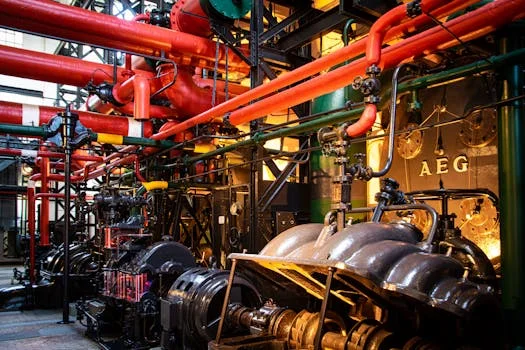
RFP packages for Quebec municipal works should name cold-weather durability beside process performance. Primary headworks need stainless cold-weather rotary bar screens for Quebec headworks with self-cleaning brushes so rags do not freeze into the channel. Secondary scope must state CAS versus MBR, membrane pore size (for example 0.1 μm), and aeration duty for both biology and membrane scour. Tertiary phosphorus control often specifies high-efficiency DAF systems sized to the 1 mg/L total phosphorus target after chemical precipitation.
Disinfection RFPs increasingly call for on-site chlorine dioxide generators to limit bulk hypochlorite handling. Sludge lines should state plate-and-frame press area (1–500 m²) and automation level (manual, semi-automatic, or PLC). For more information on sludge dewatering options for Quebec plants, compare cake solids, polymer dose, and winter building heat load. Every mechanical package should list insulated tanks, heat tracing, and antifreeze provisions as mandatory, not alternates.
Write acceptance tests into the RFP: winter start-up at a stated influent temperature, guaranteed CBOD5/SS averages over the Schedule I window, and a phosphorus grab/composite protocol aligned with the attestation. Require bilingual O&M manuals and a spare-parts list with Canadian warehouse locations. Most plants we size for the South Shore and Laurentians run at the lower end of aeration turndown in January, so blowers need stable control at 40–60% of summer air, not only at nameplate.
Selection checklist for Quebec RFPs:
- Design average and peak flows for winter infiltration and snowmelt, not only dry-weather averages
- Documented CBOD5/SS path to ≤25 mg/L averages under Q-2, r. 34.1 Schedule I sampling
- Phosphorus and ammonia limits taken from the site attestation, not assumed from a national template
- Cold-climate package: insulation, heat recovery, heat tracing, and materials rated to −30°C ambient
- Operator certification class matched to plant size (very small through very large under Q-2, r. 34.1)
- Sludge path with digester gas use or reliable dewatering cake handling in freezing weather
- Spare-parts lead times and local service coverage stated in the bid form
How should Canadian municipalities select wastewater equipment suppliers?
Canadian municipalities should select wastewater equipment suppliers that can prove cold-climate references, attestation-aligned effluent guarantees, and local commissioning support—not catalogue price alone. A British Columbia equipment representative and a Quebec integrator both need the same evidence set: performance data at winter temperatures, spare-parts logistics across provinces, and written compliance with the stricter of provincial attestation limits and federal WSER baselines where they apply. Ask for factory acceptance tests, membrane or DAF pilot results on your water, and a named field service radius before award.
For compact satellite plants, shortlist vendors that already supply package secondary trains such as the Underground Package Sewage Treatment Plant (WSZ Series), then score them on winter start-up procedure and bilingual O&M documentation. Prefer suppliers who will attend MELCC or municipal design reviews with process engineers, not only sales staff.
Case Study: RAEBL’s Laprairie Plant—Quebec’s Largest Sewage Treatment Facility
RAEBL Laprairie treats about 1.2 million m³/day for five Montreal South Shore towns. The train starts with rotary bar screens, then conventional activated sludge, then tertiary DAF for phosphorus control toward Quebec’s common 1 mg/L project limit. Anaerobic digestion stabilizes sludge and supplies biogas that offsets plant energy use. Insulated tanks and heat recovery keep biology active through high winter flows and cold influent.
Reported removal performance reaches about 98% BOD, 99% TSS, and 95% phosphorus under normal operation, which exceeds the CBOD5/SS floors in Q-2, r. 34.1 section 6. Modular phasing cut initial capital by an estimated 15% versus a single full-build package and left room for later capacity blocks—useful when funding arrives in stages. The same modular lesson applies to mid-size towns that cannot fund a full tertiary train in one capital year.
Who this is for and next step
This guide is for Quebec municipal engineers, EPC leads, and procurement managers sizing new plants or Schedule III upgrades. Look elsewhere if you need only industrial pretreatment without a municipal attestation, or if your site sits north of the 54th parallel where Q-2, r. 34.1 does not apply. When you are ready to match screens, MBR, DAF, or package plants to a Quebec RFP, request a technical quote with your flow, attestation limits, and winter design temperature.
Frequently Asked Questions
Where does Montreal’s sewer water go?
Montreal’s wastewater is treated mainly at the Jean-R. Marcotte plant, Canada’s largest municipal wastewater facility. The plant serves about 1.8 million residents and handles roughly 2.5 million m³/day before discharge to the St. Lawrence River. Under Q-2, r. 34.1 Schedule III it is classed medium risk, with a transitional exemption ending 31 December 2030 for the CBOD5 and SS standards in section 6.
Does Montreal dump sewage into the St. Lawrence?
Montreal does not routinely discharge untreated sewage as normal plant operation. Combined sewer overflows can still release mixed stormwater and wastewater during heavy rain. City infrastructure planning has cited about $5 billion of investment aimed at cutting CSO volumes by roughly 85% by 2030, while dry-weather overflows remain prohibited under Q-2, r. 34.1 section 8.
How many municipal sewage treatment plants are in Quebec?
Quebec operates 185 municipal sewage treatment plants in the inventory used for this guide, about 52.1% of the comparable Canadian municipal plant count. Capacity ranges from roughly 500 m³/day in rural systems to about 2.5 million m³/day in Montreal. Environment and Climate Change Canada (2023) separately reports that 89.5% of Quebec’s population is served by municipal wastewater systems.
What are Quebec’s effluent limits for municipal plants?
Q-2, r. 34.1 section 6 requires CBOD5 ≤ 25 mg/L, suspended solids ≤ 25 mg/L, and pH 6.0–9.5 on the Schedule I averaging periods. Many attestations still add about 1 mg/L total phosphorus and roughly 0.3 mg/L ammonia nitrogen where receivers are sensitive. Plants must also avoid acute toxicity to rainbow trout or Daphnia magna under section 7.
How much does a municipal sewage treatment plant cost in Quebec?
New Quebec municipal plants typically cost $25M–$40M near 5,000 m³/day and $80M–$120M near 500,000 m³/day. Compliance upgrades for phosphorus or disinfection usually run $5M–$30M. Operating cost commonly falls between $0.50 and $1.20 per m³ treated, depending on energy, chemicals, labor, and winter maintenance load.