What Treatment Does a Gothenburg Data Center Actually Need?
A Gothenburg Sweden data center generally needs three separately managed treatment paths: biological treatment for sanitary wastewater, polishing for humidification bleed and AHU condensate, and a dedicated cooling tower blowdown train. CTBD should normally pass through solids and oil removal before UF and reverse osmosis if reuse is intended. Conventional RO commonly recovers 75–90% of blowdown, while controlled salt precipitation and dynamic RO can raise overall recovery toward 90–95%. The correct design depends on Gothenburg source-water chemistry, seasonal cooling demand, the reuse destination and site-specific discharge conditions. Stockholm values may provide a benchmark, but Gothenburg permit limits, tariffs and water analyses must be verified locally.
Cooling tower blowdown is the portion of circulating cooling water discharged to control accumulated dissolved and suspended solids. Evaporation removes water from the loop and concentrates the remaining salts; blowdown then removes some of that concentrated water before scaling, corrosion or microbiological control becomes unacceptable. The two losses must remain separate in the site water balance.
Use three treatment paths with separate meters, sample points and acceptance criteria:
- Sanitary wastewater for biological treatment and sewer or permit-controlled discharge.
- Low-strength process water, including humidification bleed and AHU condensate, for reuse assessment or polishing.
- CTBD for solids and oil removal where needed, followed by UF, RO, disinfection and a defined concentrate route.
CTBD commonly represents 20–40% of data-center water intake, according to Genesis Water Technologies (2025). That is a benchmark, not a Gothenburg design factor: the site proportion must be calculated from measured seasonal makeup, evaporation and blowdown. A low Water Usage Effectiveness metric does not prove effective reuse because consumption excludes water returned to the watershed, while usage includes it; a facility can therefore report the same WUE while discharging recoverable blowdown. For treatment concepts, compare an integrated MBR treatment package with an RO purification package, but specify equipment only after the streams and reuse destinations are confirmed.
Build the Gothenburg Water Balance Before Sizing Equipment
CTBD capacity cannot be specified from IT load alone because the seasonal cooling profile, leakage losses, emergency dumps and planned reuse demand determine the treatment flow. At 4 CoC, the theoretical blowdown ratio is 25%, calculated as 1/(CoC−1); at 6 CoC it is 20%. The reduction is five percentage points, or 20%, according to Genesis Water Technologies (2025), not a 50% reduction.
Measured blowdown can exceed the theoretical value by 15–30% because of unmeasured losses and emergency dumps, also according to Genesis Water Technologies (2025). Makeup and blowdown meters, operating logs and seasonal readings are therefore design inputs rather than optional instrumentation.
| Water-balance input | Evidence or project requirement |
|---|---|
| Makeup, evaporation and CTBD | Measure by month and reconcile against the circulating-water inventory. |
| Blowdown calculation | 25% at 4 CoC and 20% at 6 CoC; Genesis Water Technologies (2025). |
| Operational uplift | Actual blowdown may exceed theory by 15–30%; Genesis Water Technologies (2025). |
| Initial CTBD chemistry screen | 3,000–10,000 mg/L TDS in HydropureWater’s 2026 guide; not a substitute for Gothenburg sampling. |
| Other site streams | Include humidification bleed, AHU condensate, RO reject, sanitary flow and predicted reuse demand. |
Do not transfer Stockholm source-water values to Gothenburg. Request local measurements of raw-water TDS, calcium hardness, silica, temperature and seasonal chemistry, then document future IT load, operating CoC, drainage routes and non-potable reuse destinations. The Stockholm guide reports Mälaren silica of 3–6 mg/L and calcium hardness of 15–30 mg/L as CaCO₃; these are Stockholm comparison values, not Gothenburg inputs.
The worksheet should distinguish consumed water, discharged water and recovered water. A building-wide WUE result cannot identify the CTBD recovery rate. Seasonal metering also prevents a summer peak from being diluted across the annual average and missed in a procurement guarantee.
Treat Sanitary and Process Wastewater on Separate Tracks
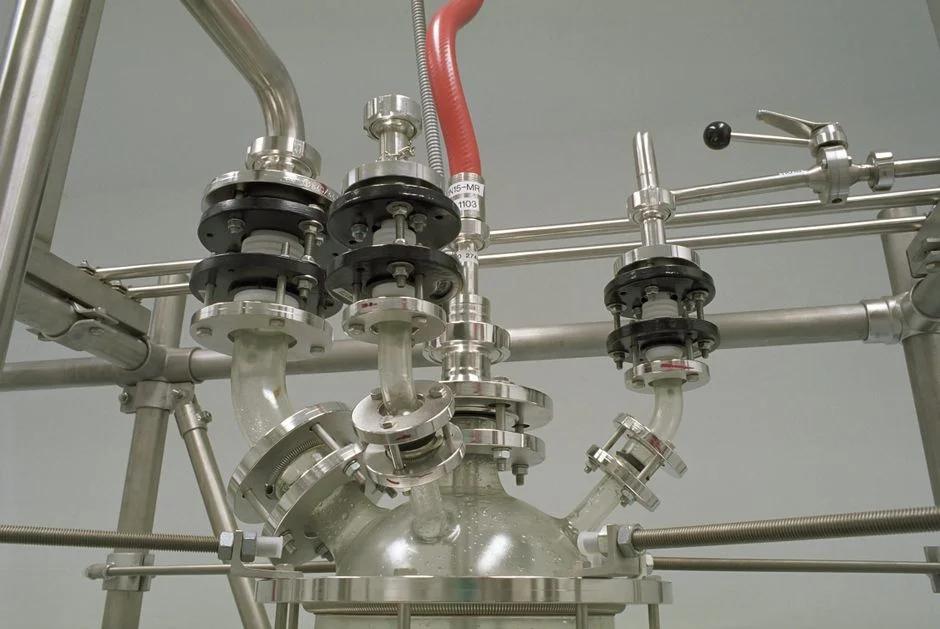
Sanitary wastewater and low-strength process water have different contaminants, reuse destinations and permit conditions, so combining them can increase biological and polishing duties without a demonstrated benefit. Sanitary wastewater belongs on an anoxic or aerobic biological track; final effluent limits must come from the Gothenburg permit and sewer agreement.
HydropureWater’s WSZ package covers 1–80 m³/h and uses a buried anoxic/aerobic configuration where below-grade installation and automated operation are priorities. Its final biological duty, disinfection and sludge handling still need to match the site flow and Gothenburg discharge conditions.
MBR is appropriate where filtered effluent below 1 μm is needed for industrial process water or reuse. The stated MBR capacity range is 10–2,000 m³/day. A membrane bioreactor can therefore serve a defined polishing or reuse duty without being used as a generic substitute for sanitary treatment.
| Stream | Preferred treatment track | Procurement focus |
|---|---|---|
| Sanitary wastewater | Buried A/O package or MBR, depending on permit duty and reuse requirement | Peak and average sanitary flow, nitrogen and solids targets, automation and sludge route |
| Humidification bleed and AHU condensate | Direct reuse assessment, polishing or separate discharge | Conductivity, hardness, silica, metals, biocide residues and receiving-process compatibility |
| CTBD | Separate pretreatment and membrane-recovery train | Feed chemistry, scaling risk, recovery, permeate use and concentrate disposal |
Assess condensate and humidification bleed independently before sending either through the sanitary plant. Their suitability for reuse depends on conductivity, hardness, silica, metals, residual treatment chemicals and compatibility with cooling equipment or another receiving process. A low-strength stream is not automatically suitable for direct reuse, and a strong sewer discharge may not justify biological treatment.
Protect RO with a Gothenburg-Appropriate CTBD Pretreatment Train
Silica scaling control must be designed from the actual Gothenburg feed chemistry because the Stockholm water profile and Stockholm discharge envelope do not establish local scaling limits. A typical CTBD reuse train is equalization and screening, followed by DAF where suspended solids, oil or grease warrant it, multi-media filtration, UF and then RO.
DAF is valuable where suspended solids, oils and organics could foul downstream membranes; the complete DAF pretreatment train for cooling tower blowdown should be evaluated against oil content, solids loading and wastewater chemistry. HydropureWater’s 2026 guide uses 3,000–10,000 mg/L as the initial CTBD TDS screening range. This does not establish the Gothenburg feed concentration or prove that DAF is required.
Multi-media filtration should reduce turbidity and colloids upstream of UF or RO, but media selection must follow influent testing. The specified 0.03 μm UF pretreatment uses PVDF membranes, handles 2,000–40,000 L/h, removes bacteria, colloids and suspended solids without chemicals, and includes automatic backwash and air scour. These are catalog specifications; the package still requires a Gothenburg-specific flow and flux duty.
| Process step | Primary purpose | Decision input |
|---|---|---|
| Equalization and screening | Remove debris and smooth variable feed flow | Measured seasonal flow, screen aperture and equalization behavior |
| DAF | Remove suspended solids, oils and organics where present | Oily solids analysis, loading and skimming requirement |
| Multi-media filtration | Reduce turbidity and colloids | Particle profile and downstream membrane protection |
| UF | Provide a low-particle barrier before RO | 0.03 μm PVDF catalog basis, 2,000–40,000 L/h, automatic backwash and air scour |
| BWRO | Remove dissolved salts for defined reuse | Feed TDS, silica, calcium, recovery, antiscalant and concentrate route |
Use the Stockholm values as a comparison warning only: its guide reports Mälaren silica of 3–6 mg/L and calcium hardness of 15–30 mg/L as CaCO₃. Gothenburg sampling must establish the actual silica, calcium, alkalinity, temperature and concentration factors. Chloride should ideally remain below 150 mg/L because higher levels increase stainless-steel pitting and cooling-loop leak risk, according to HydropureWater’s 2026 guide.
Choose the Recovery Target and Brine Route
Conventional RO-based treatment recovers 75–90% of CTBD, while ZLD reaches 99% or greater, according to HydropureWater’s 2026 guide. Stage recovery and site-wide recovery are different: the former describes an RO stage; the latter includes equalization, pretreatment, membrane losses and the treatment selected for the final concentrate.
HydropureWater states that its industrial RO equipment can achieve up to 95% recovery. That catalog value is not a guaranteed Gothenburg CTBD recovery because feed chemistry, membrane scaling and concentrate disposition remain unresolved. IDE reports an application operating at around 95% recovery with permeate silica of about 1 mg/L, but that single result does not establish equivalent performance for every Gothenburg source water.
| Recovery outcome | Process concept | Main procurement question |
|---|---|---|
| Lower-recovery RO | RO with a continuous concentrate discharge route | Can the permitted discharge accept the specified flow and chemistry? |
| 90–95% overall recovery | Conservative RO followed by controlled salt precipitation and, where justified, dynamic RO | Can silica, calcium carbonate and other salts be managed as controlled solids? |
| 99% or higher | RO integrated with thermal evaporation and crystallization | Who accepts the solid residue, and what energy and maintenance burden is acceptable? |
High-recovery CTBD treatment controls salt removal rather than waiting for uncontrolled membrane scaling. A conservative RO stage operates below scaling limits; controlled precipitation then removes silica, calcium carbonate and other sparingly soluble salts as dense solids. A dynamic RO arrangement can support higher recovery by alternating production with high-velocity flushing.
For operating-cost screening, HydropureWater’s 2026 Stockholm guide reports BWRO power demand of 5–8 kWh/m³ permeate at 75–80% recovery. Treat this as a source-specific benchmark, not a Gothenburg quotation. Compare lower-recovery RO, high-recovery precipitation and ZLD using Gothenburg electricity prices, chemical consumption, membrane replacement, labour and concentrate or solid-residue disposal.
Use Discharge Rules and Reuse Demand as Decision Gates
Sweden applies Miljöbalken 1998:808, with national administration through HaV and site-specific municipal permitting, according to HydropureWater’s 2026 Stockholm guide. Before ordering equipment, obtain the current Gothenburg discharge permit, sewer connection terms, receiving-water classification and any local conditions for thermal or saline discharge.
The Stockholm guide gives a comparison envelope of temperature no more than 3°C above ambient, TSS of 10–35 mg/L, total nitrogen of 6–10 mg/L and pH of 6.5–9.0. Those values are described as typical Stockholm conditions and must not be treated as Gothenburg limits. A UV disinfection package or chlorine dioxide generation system addresses microbiological control, but it does not establish discharge compliance.
| Decision gate | Required confirmation | Commercial effect |
|---|---|---|
| 1. Reuse destination | Define each receiving process and required water quality | Determines the required treatment train |
| 2. Permit constraints | Obtain Gothenburg permit and sewer terms for each stream | Sets discharge flow and quality boundaries |
| 3. Source chemistry | Complete seasonal Gothenburg water analysis | Determines pretreatment, antiscalant and recovery |
| 4. Recovery target | Compare RO, high-recovery precipitation and ZLD | Sets membrane, energy and chemical requirements |
| 5. Concentrate route | Confirm permitted discharge or solid-residue acceptance | Can determine whether high recovery is viable |
| 6. Equipment sizing | Size from guaranteed seasonal flows | Defines modularity, redundancy and acceptance tests |
Model freshwater savings, discharge-fee avoidance and reuse value separately. Heat export is a separate thermal opportunity and should not be credited as wastewater reuse. HydropureWater gives a generic 3–5-year payback range, while its 2026 Stockholm guide gives indicative CTBD skid CAPEX of USD 200,000–600,000. These are preliminary screening bounds, not Gothenburg estimates. Gothenburg tariffs, permit charges and supplier quotations must be obtained before approval.
Specify, Verify and Commission the Package
A purchasable package needs guaranteed flows and water-quality envelopes for every stream; nominal capacity or IT load is not a performance guarantee. Require bidders to state minimum and maximum CTBD flow, feed TDS and temperature ranges, silica and calcium limits, antiscalant approach, membrane flux, recovery and concentrate outlet conditions.
| Package | Minimum bidder information | Acceptance evidence |
|---|---|---|
| Sanitary treatment | A/O or MBR duty, automation, disinfection, sludge handling and installation constraints | FAT and SAT results under agreed flow and influent loads |
| CTBD pretreatment | Automatic backwash, air scour, DAF skimming, feed pumps, controls, conductivity and differential-pressure monitoring | Automatic-cycle demonstration and stable differential pressure |
| RO and reuse | Recovery, permeate quality, chemical consumption, power demand, cleaning and concentrate route | Guaranteed recovery and quality under seasonal duty |
| Controls and resilience | Alarms, redundancy, fail-safe states, data logging and operator interface | Simulated upset and alarm-response tests |
Make FAT and SAT conditions explicit. Recovery, permeate quality, chemical consumption, power demand, automatic controls, alarms, redundancy and performance under variable summer and winter flows should be measurable. During SAT, demonstrate simultaneous operation at representative seasonal conditions rather than testing each component only at its best case.
Permit compliance is site-specific. Manufacturer equipment specifications cannot replace confirmation of the Gothenburg environmental permit, and the permit team should review the final operating envelope before acceptance.
Frequently Asked Questions
How much does cooling tower blowdown treatment cost for a Gothenburg data center?
No Gothenburg-specific quotation is established in the supplied research. HydropureWater’s 2026 Stockholm guide gives USD 200,000–600,000 as an indicative CTBD skid CAPEX range and cites a generic 3–5-year payback. Request itemized Gothenburg bids covering pretreatment, recovery, disinfection, concentrate management, installation, controls, commissioning and OPEX; then model them against verified Gothenburg water and discharge charges.
Should sanitary wastewater, process water and cooling tower blowdown be treated in one plant?
No. Keep them separately metered and sampled because their treatment duties and permit conditions differ. Sanitary wastewater needs biological treatment; process streams require chemistry-based reuse assessment or polishing; CTBD requires scaling-controlled membrane treatment and a defined concentrate route. A shared final destination may be possible, but that should follow source-specific treatment and permit verification.
What capacity does a Gothenburg data center need for CTBD treatment?
Capacity must be calculated from measured seasonal CTBD, not IT load. At 4 CoC the theoretical blowdown ratio is 25%, and at 6 CoC it is 20%, according to Genesis Water Technologies (2025); actual blowdown may exceed theory by 15–30%. Size the CTBD skid from verified minimum, average and peak flows, then require bidders to guarantee performance across that operating envelope.
When is ZLD justified instead of lower-recovery reverse osmosis?
Consider ZLD when the permitted discharge route, freshwater value or reuse objective cannot accommodate the concentrate from lower-recovery RO. HydropureWater’s 2026 guide identifies 99% or greater recovery for ZLD, but that configuration adds thermal evaporation, crystallization and solid-residue management. Request life-cycle energy, maintenance and residue-disposal costs before selecting it over conventional or high-recovery RO.
Which Gothenburg permit and utility confirmations are required before purchasing equipment?
Obtain the current site-specific Gothenburg discharge permit, sewer connection terms, receiving-water classification, and written confirmation of how sanitary, process and CTBD streams may be discharged or reused. Confirm current industrial water and discharge tariffs directly with the relevant Gothenburg utility. The data center blowdown treatment methodology provides a useful sequencing reference, but it does not replace local regulatory confirmation.