Choose a Sewer Route or a Decentralized Treatment Plant
Domestic sewage treatment in Ipoh should start with the discharge route, wastewater characteristics and available footprint. Where a suitable public sewer is available, connection may avoid operating a private plant; otherwise, a decentralized system can be considered. The WSZ package plant combines A/O biological contact oxidation, sedimentation and disinfection in one buried unit and handles 1–80 m³/h, while an MBR system combines activated sludge with submerged PVDF membranes and is specified from 10–2,000 m³/day. Final selection requires a wastewater flow survey and confirmation of the applicable Ipoh discharge and sewer requirements.
Begin by defining the wastewater stream. Residential, staff, visitor, hotel and hospital flows may have different occupancy patterns and discharge characteristics, while mixed domestic loads require confirmation that trade waste or other contaminants will not enter the proposed system.
Next, establish whether a public sewer is technically and commercially available. Proximity to a sewer does not prove that connection capacity, pretreatment requirements, connection conditions or charges are acceptable. Obtain confirmation from the receiving authority and document the applicable sewer acceptance, pretreatment, sampling and discharge requirements. The supplied research contains no Ipoh-specific sewer tariffs, acceptance limits or discharge limits, so these must be obtained for the specific receiving point.
Decentralized treatment becomes the appropriate route when no practical sewer connection exists or when the project requires controlled treatment before discharge, reuse or land application. Compare the treatment scope, available land, operating ownership and ultimate disposal or reuse route before selecting equipment. This pathway should also address who will operate the plant, maintain it, handle sludge, conduct monitoring, pay utilities and fund eventual replacement. For broader context on rural sewage treatment options in Malaysia, assess decentralized systems against the receiving-authority route rather than selecting equipment first.
Map the Wastewater and Design Conditions
A treatment plant should be sized from verified site data, not from a headline flow rate. Collect the average daily flow, peak-hour flow, seasonal variation, expected occupancy and contributing-user information; for non-residential developments, also record the relevant fixture and operating schedules.
Separate sanitary sewage from stormwater, cooling water, washdown water and industrial trade waste. The US EPA distinguishes separate sanitary sewers, which collect wastewater only, from combined sewers that also receive stormwater runoff. It also reports that infiltration and inflow entering non-watertight sanitary sewers during wet weather can cause sanitary sewer overflows and operational problems at treatment facilities, while significant wet-weather flow increases can adversely affect treatment efficiency, reliability and unit-process control.
Record inlet characteristics, the required process functions, available footprint, excavation or burial depth, maintenance access, power availability and the intended effluent destination. Determine whether the measured peak is caused by occupancy or by storm-derived inflow. Do not order equipment until the discharge point, reuse objective and applicable regulatory route have been confirmed.
| Design input | Information to obtain | Why it affects selection |
|---|---|---|
| Wastewater flow | Average daily flow, peak-hour flow, seasonal variation and operating schedule | Establishes the treatment duty and whether peak capacity governs equipment selection. |
| Wastewater origin | Residential, staff, visitor, hotel, hospital or mixed domestic load | Defines the expected hydraulic and contaminant profile. |
| Separate inflows | Stormwater, cooling water, washdown water and trade waste | Prevents an unsuitable stream from being included in the sewage design basis. |
| Site conditions | Footprint, burial depth, access, power and effluent destination | Determines installation feasibility, utility needs and compliance route. |
| Regulatory route | Applicable sewer, discharge, sampling and reuse requirements | Sets the required treatment performance and monitoring scope. |
Use the domestic sewage treatment guide for Malaysia as a broader reference, but resolve every Ipoh input through the project survey and receiving authority.
Understand the Treatment Train
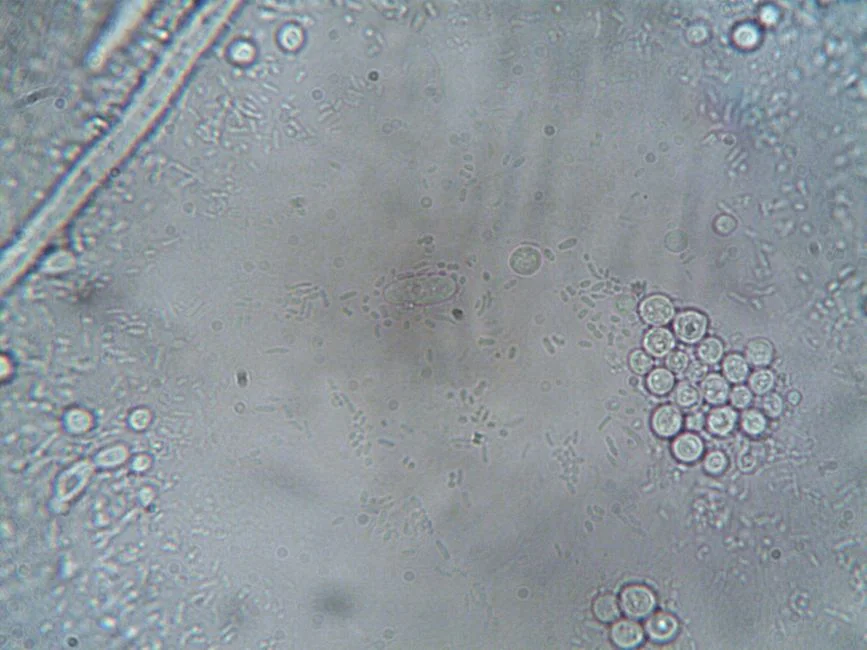
Screening and inlet protection are the first barriers against rags, plastics and fibrous debris entering pumps, valves and biological treatment stages. A quotation that begins only with biological treatment should be checked to establish whether pretreatment, solids removal and final solids handling are included.
The WSZ treatment train combines anoxic/aerobic biological contact oxidation, sedimentation and disinfection in a single buried package unit. HydropureWater’s verified product catalog describes it as fully automated, requiring no resident operator, with a treatment capacity of 1–80 m³/h. It can be installed below grade with landscaping above or mounted on a trailer for mobile deployment. An integrated A/O sewage treatment plant may therefore suit a site requiring a compact treatment train, subject to confirmed flow, soil, access and discharge conditions.
An MBR sewage treatment system combines activated sludge treatment with submerged PVDF membrane filtration. HydropureWater specifies the MBR system from 10–2,000 m³/day and states that the membranes provide filtration below 1 μm. These are product specifications, not confirmation that either system meets a particular Ipoh discharge or reuse requirement.
Disinfection and solids management remain part of the treatment scope. A combined activated-sludge bioreactor study in Case Studies in Chemical and Environmental Engineering (2022) emphasizes effective treatment before discharge and proper sludge handling. Constructed wetlands and vermifiltration are documented domestic treatment approaches, but the supplied sources do not establish either as the preferred route for a specific Ipoh site. Where a mechanical screen forms part of the proposed inlet works, review its operating and maintenance requirements rather than treating it as an isolated accessory.
Compare Package A/O, MBR and Central Sewer Options
The three routes differ in ownership, treatment scope and operating obligations. A public sewer transfers collection and treatment responsibility to the receiving authority, while package A/O and MBR systems retain more process, maintenance, sludge and compliance responsibility with the site owner.
| Selection factor | WSZ package A/O | MBR system | Central sewer connection |
|---|---|---|---|
| Published capacity | 1–80 m³/h, according to HydropureWater’s verified product catalog | 10–2,000 m³/day, according to HydropureWater’s verified product catalog | Depends on the receiving authority’s available capacity and connection conditions |
| Treatment train | A/O biological contact oxidation, sedimentation and disinfection in one package unit | Activated sludge with submerged PVDF membrane filtration below 1 μm | Collection and treatment by the receiving sewer system |
| Footprint and installation | Single buried unit; alternatively trailer-mounted for mobile deployment | HydropureWater states a 60% smaller footprint than conventional systems | Requires connection infrastructure and confirmation of connection conditions |
| Process priorities | Compact integration and straightforward package treatment | Membrane-level solids separation and potential fit for reuse-oriented projects, subject to verification | Use where a compliant receiving route is available |
| Owner obligations | Operation, maintenance, sludge, monitoring, utilities and replacement remain relevant even with full automation | Operation, membrane and ancillary maintenance, sludge, monitoring and utilities require clear allocation | Confirm pretreatment obligations, sampling, charges and other continuing conditions |
| Key commercial gap | No supplied source provides Ipoh purchase prices, installation costs or energy consumption for these systems. | No supplied source provides Ipoh sewer tariffs or connection costs. | |
The capacity figures use different reporting bases and must not be matched directly. Express the project demand in the same units as each proposed system, then test both average and peak conditions. A package A/O plant may be appropriate where a compact, integrated installation is the priority. An MBR system may be more suitable where fine solids separation or reuse potential drives the specification, but the receiving authority’s requirements and the intended reuse standard must still be confirmed.
Before choosing a central sewer, obtain written confirmation of available capacity, connection conditions, pretreatment obligations, sampling arrangements and ongoing charges. Before accepting either private-system offer, require itemized pricing and explicit utility and performance assumptions. A review of Malaysian municipal sewage treatment requirements can help identify the questions to raise, although it does not replace Ipoh-specific confirmation.
Match Capacity to Peak Demand and Future Growth

A defensible sizing request states the design basis before asking for a model. Identify the daily wastewater volume, peak-hour flow, contributing population, operating days and hours, treatment stages and the supplier’s stated capacity basis. The relevant containerized MBR sizing guide provides a useful framework for requiring clear assumptions, but its site-specific inputs cannot be transferred to an Ipoh project without local data.
For WSZ options, compare demand with the published 1–80 m³/h range while keeping hourly treatment capacity distinct from daily load. For MBR options, compare demand with the published 10–2,000 m³/day range and separately review peak-flow behavior, membrane sizing and the duration of the stated duty. The supplier should explain how average and peak cases affect equipment selection and controls.
Include storm-derived inflow, unexpected occupancy, holiday peaks and future expansion only where the wastewater survey or development plan supports them. A headline capacity cannot substitute for a load profile or operating schedule.
Require each bidder to disclose design assumptions, duty and standby provisions, performance guarantees and test conditions. Do not infer a redundancy ratio, recovery rate or effluent limit from the supplied research because these are not provided. Instead, ask the supplier to identify the values used in its design and explain their technical basis. Any guarantee should be tied to an agreed influent basis, operating condition and measurable acceptance test.
Control Installation, Commissioning and Operating Risk
A complete proposal allocates every interface and operational responsibility. The civil, mechanical, electrical, piping, controls, power supply, effluent discharge, sludge route and monitoring scope should be shown in the offer. Undefined interfaces are where installation changes and compliance uncertainty often enter.
For a buried WSZ installation, confirm excavation, bedding, access covers, lifting points, odor control, waterproofing and reinstatement above the unit. For a trailer-mounted system, define transport, temporary connection, lifting, site access and return-to-service arrangements. These are scope requirements, not confirmation that the supplier’s standard package includes every civil work.
Agree the commissioning sequence before purchase. It should cover pre-start inspection, utilities, equipment checks, controls, process stabilization, sampling, operator training, documentation and handover. Define the maintenance schedule, recommended spare parts, sludge handling method, monitoring frequency, laboratory or field testing, and whether control is local, remote or both.
HydropureWater’s verified product catalog describes the WSZ as fully automated and requiring no operator. That statement addresses continuous attendance, not maintenance ownership. Inspections, testing, biological-system upkeep, solids removal, corrective action and instrument calibration still require a named responsible party. Include those duties in the contract rather than treating automation as removal of the operator.
A buyer’s guide to effluent treatment plant commissioning and handover can support checklist development, but the acceptance criteria still need to match the approved Ipoh project scope.
Questions to Ask Before Approving a Supplier
Ask bidders to state the exact treatment duty, process stages, flow basis, selected model, dimensions, civil interface and utility requirements. The response should connect the proposed capacity to the buyer’s verified average and peak flows rather than simply list a model range.
Request an itemized quotation covering equipment, installation, commissioning, training, spares, sludge handling, monitoring and warranty. Also ask for the basis of power consumption, chemical use, inspection frequency and other operating assumptions. The supplied research provides no verified Ipoh price range, so the buyer should obtain comparable quotations using one defined scope rather than accept an unexplained lump sum.
Ask which authority or client standard governs sewer connection and final discharge, and request the evidence used to demonstrate compliance. Require the supplier to identify the applicable requirement and responsible approving party without assuming that product claims satisfy a site-specific permit or reuse standard.
Clarify lead time, shipping, customs, site mobilization, payment milestones, acceptance tests, performance guarantees and contractual remedies for non-performance. Confirm the support arrangements for wet-weather peak flow, power loss, blocked screens, biological upset, solids accumulation and membrane or system faults.
Finally, ask what monitoring will demonstrate operation and compliance, how alarms will be communicated, who responds after handover and which spare parts must remain on site. The Malaysian municipal wastewater procurement framework can help structure these questions, but only verified project and supplier information should enter the contract.
Frequently Asked Questions
How much does domestic sewage treatment cost in Ipoh?
The supplied research provides no verified Ipoh purchase-price range. Cost depends on treatment duty, civil work, installation, controls, power, sludge handling and the chosen treatment route. Request itemized quotations for equipment, site works, commissioning, training, spares, monitoring and warranty under the same design basis so that alternatives can be compared fairly.
Should an Ipoh property connect to the public sewer or install a package plant?
Use a sewer connection where the receiving authority confirms that a compliant route is technically and commercially available. Otherwise, compare the WSZ package plant with an MBR system using verified flow, land, reuse, maintenance and compliance requirements. Proximity to a sewer alone is not enough to select that route.
What size domestic sewage treatment system does an Ipoh development need?
Determine wastewater generation, average daily flow, peak-hour flow and future demand from the site survey. Then express the basis consistently and compare it with the WSZ range of 1–80 m³/h or the MBR range of 10–2,000 m³/day, as stated in HydropureWater’s verified product catalog. The selected duty must also satisfy the confirmed discharge or reuse requirement.
How do I select a sewage treatment supplier in Malaysia?
Check process suitability, verified capacity, civil and utility interfaces, commissioning evidence, ownership of sludge and monitoring, warranty, lead time and contractual performance remedies. Ask each supplier to identify its design assumptions and demonstrate how the proposed system handles the project’s peak-flow and compliance conditions.
Which treatment system is better for water reuse: WSZ or MBR?
MBR’s submerged membrane and filtration below 1 μm provide a stronger fit for projects prioritizing fine solids separation, while WSZ is a compact integrated option combining A/O biological contact oxidation, sedimentation and disinfection. Both product claims come from HydropureWater’s verified product catalog. The reuse objective still requires project-specific effluent and regulatory verification before either route is approved.
Related Equipment
- integrated A/O sewage treatment plant — specifications, capacity range, and technical data