Start with the transaction, permit holder and receiving point
Wastewater ownership does not automatically change when an EV plant changes hands. The buyer must first establish the transaction structure, the legal permit holder and the receiving point for every stream; then it can assign permit actions and size treatment equipment. According to the HydropureWater Ford Texas plant acquisition guide, an asset purchase requires the existing TPDES permit to be re-issued to the new entity, while a stock purchase generally leaves the corporate permittee unchanged but may still require updated operator certification and signatory information.
Inventory every existing authorization, including any TPDES individual permit or general-permit coverage, the TXR050000 stormwater NOI, POTW pretreatment approval, reuse authorization under 30 TAC Chapter 210 and applicable injection-well authorizations. Do not assume that every wastewater activity is regulated by TCEQ. The guide identifies a potential split among TCEQ, the Railroad Commission of Texas and local groundwater conservation districts.
For each stream, document whether it enters a municipal sewer, a TCEQ-authorized surface-water outfall, an on-site reuse circuit or an approved subsurface-disposal route. The endpoint determines the treatment objective and therefore the equipment scope. This sequence follows the same owner-and-obligation logic described for wastewater requirements for a manufacturing-plant acquisition.
| Decision | What the buyer must establish | Owner or filing path |
|---|---|---|
| Transaction structure | Whether legal ownership of the operating entity changes at close | Transaction counsel and the wastewater compliance lead |
| Wastewater authorization | TPDES individual permit or general-permit coverage and current permittee | TCEQ Water Quality Division |
| Stormwater authorization | TXR050000 NOI, sector classification and SWPPP | TCEQ stormwater team through STEERS |
| Municipal sewer discharge | POTW pretreatment permit, local limits and operating change | Local POTW pretreatment coordinator |
| On-site reuse | Chapter 210 authorization, end use and quality data | TCEQ and the responsible reuse coordinator |
| Subsurface disposal or wells | Injection activity, production wells and applicable authority | RRC, TCEQ and relevant groundwater conservation district |
Assign a named owner to every authorization and calendar the legal close date. The HydropureWater guide identifies the TPDES amendment and separate stormwater NOI update as actions due within 30 days of legal close. A separate owner should maintain the POTW and reuse records, while the engineering team treats stream characterization and endpoint selection as prerequisites to sizing.
Complete the Texas wastewater permit transition
The 30-day closing requirement covers two separate TCEQ actions and does not replace POTW or reuse obligations. The HydropureWater guide states that the acquiring entity must file a TPDES permit amendment package with TCEQ’s Water Quality Division within 30 days of legal close, including updated Signatory Authority forms under 30 TAC § 305.44 and current operator certification.
The TXR050000 stormwater NOI is a distinct filing through TCEQ STEERS. It must also be transferred or re-certified within 30 days of closing, with the sector classification and SWPPP references updated; the guide identifies Sector M as typical for an automotive facility. POTW notification remains separate. For a municipal sewer endpoint, the buyer should update the pretreatment permit or other control mechanism and evaluate 40 CFR Part 433 metal-finishing standards, 40 CFR Part 467 automotive point-source standards and local limits.
Any existing reuse authorization should be validated under 30 TAC Chapter 210. The guide identifies cooling-tower makeup, boiler feed after RO polishing, dust suppression and landscape irrigation on industrial property as typical Chapter 210 reuse applications. These are possible end uses, not automatic approvals. Oil/water separators, shallow injection wells and production wells require separate authority checks.
| Action | Deadline or dependency | Agency or recipient | Required package |
|---|---|---|---|
| TPDES amendment or transfer | Within 30 days of legal close | TCEQ Water Quality Division | Permit amendment package, Signatory Authority under 30 TAC § 305.44 and current operator certification |
| Stormwater NOI transfer or re-certification | Within 30 days of legal close | TCEQ stormwater team through STEERS | NOI, sector classification and site-specific SWPPP references |
| POTW ownership or operating notification | After close; local timetable controls | Local POTW | Written notice, pretreatment permit or control-mechanism update and applicable local forms |
| Reuse authorization validation | Before continued reuse or changed use | TCEQ and reuse coordinator | Site-use confirmation and reclaimed-water quality data |
| Injection and production-well review | Before relying on the route | RRC, TCEQ and relevant groundwater conservation district | Site-specific activity and authority determination |
The guide warns that late filing under 30 TAC § 305.72 can trigger enforcement even when the underlying discharge complies. Transaction counsel should therefore treat these filings as closing deliverables, not deferred integration work. The broader framework is detailed in wastewater requirements for a manufacturing-plant acquisition.
Characterize each manufacturing wastewater stream
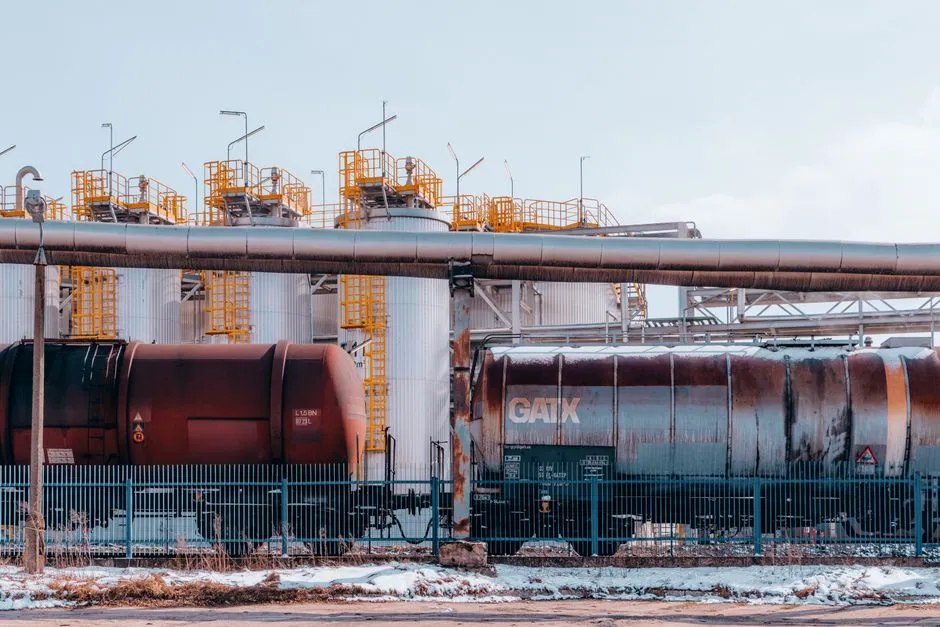
EV production does not create one uniform wastewater profile. Stamping, paint, parts washing, assembly, battery or component manufacturing, cooling, sanitary flow and stormwater must be sampled separately because each stream has different pollutants and regulatory paths. Production nameplate capacity is not a substitute for current influent data. The buyer should request representative sampling covering minimum, average, peak and batch flows, including slug loads and future production changes.
For stamping, parts washing and lubricated assembly areas, the HydropureWater guide identifies tramp oils and lubricant emulsions as characteristic contaminants. Test oil and grease, TSS, pH and flow variability. For e-coat, pretreatment, phosphating and rinse operations, request zinc, nickel, total chromium, pH, TSS and flow-pattern data. The guide reports pH swings between 4 and 11 within one shift and identifies zinc, nickel and total chromium as often binding pretreatment constraints.
For EV battery or component operations, request site-specific information on process chemistry, solvents, additives, cleaning agents, metals and production changes. The supplied research does not provide a universal EV-battery wastewater profile, so battery data cannot be inferred from conventional paint or stamping data. Battery process descriptions also require greater diligence than production names alone provide; EV gigafactory wastewater capacity planning is useful for structuring that data request.
| Stream | Site data required | Primary compliance path | Equipment input |
|---|---|---|---|
| Stamping, parts washing and lubricated assembly | Oil and grease, TSS, pH, minimum/average/peak and batch flows | POTW pretreatment if sewered; otherwise selected TPDES or reuse route | Primary oil and solids removal; equalization |
| E-coat, pretreatment, phosphating and rinse | Zinc, nickel, total chromium, pH, TSS and flow pattern | POTW limits and categorical standards; TPDES or reuse route if applicable | Equalization, pH control and regulated-metal removal |
| Battery or component manufacturing | Process chemistry, solvents, additives, cleaning agents, metals and production changes | Endpoint-specific review; no assumed categorical profile | Treatment selected only after representative sampling |
| Cooling, sanitary and stormwater | Flow, chemistry and destination; segregation controls | Separate authorization and monitoring path | Segregation, metering and endpoint-specific treatment |
Also establish the usable capacity at the selected endpoint: sewer or outfall capacity, permitted reuse demand, and the treatment plant’s ability to accept variable batch discharges. These inputs determine equalization retention and whether each stream can be combined.
Choose the treatment train from the discharge endpoint
The receiving point determines the treatment objective. A POTW discharge should control regulated metals, oil and grease, TSS and pH excursions that could disrupt the receiving works, subject to local limits and applicable categorical standards. A surface-water discharge must meet the site’s TPDES limitations and receiving-water conditions. The supplied research contains no site-specific effluent limits, so the final design cannot be based on a universal numerical discharge target.
For on-site industrial reclaimed water, define quality and end use first. The HydropureWater guide recommends DAF for oil and TSS, equalization and chemical dosing for pH control, MBR for BOD and COD reduction, and optional RO polishing for demanding reuse such as boiler feed. An industrial dissolved air flotation system can precede biological treatment, while an MBR wastewater treatment system addresses soluble organics after the stream is conditioned.
The guide reports 90–95% oil-and-grease removal and 70–85% TSS removal for the DAF stage. It identifies effluent below 10 mg/L TSS and below 50 mg/L COD for the MBR stage and recommends equalization retention of not less than 24 hours at average flow for the described automotive flows. These are design guidance from that guide, not site acceptance limits.
| Treatment need | Potential equipment | Evidence from the HydropureWater guide | Decision still required |
|---|---|---|---|
| Oil and suspended solids | DAF | 90–95% oil-and-grease removal; 70–85% TSS removal | Confirm influent loads, chemical demand and required outlet performance |
| pH control and equalization | Equalization and an automatic pH and coagulant dosing system | Not less than 24 hours of retention at average flow for the described automotive flows | Verify batch-flow peaks and chemical compatibility |
| Biological treatment | MBR | Effluent below 10 mg/L TSS and below 50 mg/L COD | Confirm applicable permit or reuse target and pretreatment adequacy |
| Dissolved-salt polishing | Optional RO | Greater than 99% dissolved-salt rejection and permeate TDS below 50 mg/L | Justify by reuse quality; evaluate softening and UF pretreatment |
If RO is selected, softening and UF should be evaluated as pretreatment rather than assumed inclusions. An industrial reverse osmosis system may use an industrial water softener for RO pretreatment and compatible RO and UF replacement elements. Equipment selection should follow the endpoint, representative influent data and reuse specifications—not the EV label alone.
Build a 30-day closing and 90-day implementation plan
The closing package should contain the TPDES permit, stormwater NOI and SWPPP, POTW permit and local limits, reuse authorization, monitoring reports, chemical inventories, discharge records and equipment as-built information. Assign an accountable filer for each submission and record the legal close date, due date, submission method, agency correspondence and any outstanding information request.
- Before close: collect the authorization record, establish the baseline sampling plan and identify the legal permit holder.
- Within 30 days of close: complete the TPDES amendment, signatory and operator updates, and the separate TXR050000 NOI transfer or re-certification through STEERS.
- During the first 90 days: confirm POTW paperwork and Chapter 210 reuse status; complete baseline sampling; validate equalization and chemical control; and reconcile treatment capacity with the confirmed production and discharge plan.
Preserve the previous operator’s monitoring records, sampling frequency and corrective-action history. The HydropureWater guide notes that late filing can trigger enforcement even when the underlying discharge is compliant, so compliance continuity should be a close-date deliverable rather than a post-close administrative task.
Ask these questions before approving treatment capital
A purchase order should rest on a documented design basis, not a generic automotive or EV profile. Require the supplier to state the applicable permit or reuse standard, assumed influent characteristics, guaranteed outlet parameters, test protocol, control philosophy and exclusions in writing.
Require current site data or a representative sampling campaign covering flow, pH, oil and grease, TSS, BOD, COD, metals, hardness, silica and reuse-critical ions. Confirm whether the quoted price includes equalization, chemical storage and dosing, pretreatment, primary treatment, biological treatment, polishing, residual handling, controls, installation and commissioning.
Ask how the supplier will maintain performance under variable automotive production and how DAF, MBR or RO will integrate with the acquired plant’s controls. Require a defined design flow range, chemical consumption basis, alarm response and commissioning acceptance test. For reuse equipment, also identify replacement-element compatibility and the pretreatment responsibility boundary. These checks convert capital approval into a defensible, permit-linked scope.
Frequently Asked Questions
What must the buyer file within 30 days after acquiring a Texas automotive plant?
The HydropureWater guide identifies two required actions within 30 days of legal close: the TPDES permit amendment package with TCEQ’s Water Quality Division and the separate TXR050000 stormwater NOI transfer or re-certification through STEERS. The TPDES package includes updated Signatory Authority forms under 30 TAC § 305.44 and current operator certification. POTW and reuse actions remain separate.
Does an asset purchase require a new wastewater permit?
According to the guide, an asset purchase requires the existing TPDES permit to be re-issued to the new entity rather than merely relying on the old permittee’s name. A stock purchase generally leaves the corporate permittee unchanged, but updated operator certification and signatory information may still be required. The final determination should be confirmed against the permit and transaction documents.
What wastewater treatment equipment does an EV plant need in Texas?
No universal EV treatment train can be specified from the research supplied. A plant discharging to a POTW may need oil, solids, pH and regulated-metal controls. Surface-water discharge must follow the site’s TPDES limits. Chapter 210 reuse may justify DAF, equalization, chemical dosing and MBR, with RO only where the required reuse quality justifies it. Battery and component streams require their own sampling.
How large should equalization and treatment equipment be for automotive wastewater?
Sizing requires minimum, average, peak and batch flows, slug loads, production changes and usable endpoint capacity. The guide recommends not less than 24 hours of equalization retention at average flow for the automotive flows it describes, but the buyer should verify that recommendation against site data. For a supplier budget request, provide the flow dataset, stream inventory and required outlet parameters rather than asking for a generic package size.
How should an engineering supplier be evaluated for wastewater treatment equipment?
Check the proposed design basis, applicable permit or reuse standard, influent assumptions, guaranteed outlet parameters, test protocol, control philosophy, exclusions, installation scope and commissioning plan. Give each bidder the same endpoint and sampling package for comparison. Verify variable-load performance and integration with existing controls before awarding the capital package.