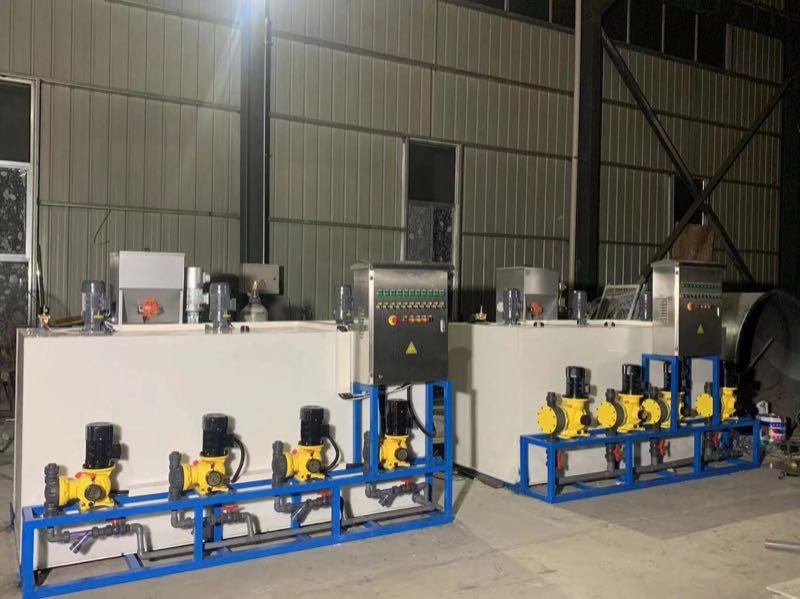
Choose Between Public Sewer Connection and Onsite Treatment
Domestic sewage treatment in Johor Bahru normally begins with two project paths: connect the property to Malaysia’s public sewerage network or install a decentralized sewage treatment system. Public plants are regulated nationally, with SPAN as regulator and IWK as the sewerage concessionaire; decentralized systems require the project owner to plan treatment, sewage sludge management, monitoring and operation. For sites without a viable public sewer connection, the WSZ underground package sewage treatment plant combines A/O contact oxidation, sedimentation and disinfection, handles 1–80 m³/h and can be buried below ground. Larger or reuse-oriented projects may justify an MBR system, available from 10–2,000 m³/day.
Start with a site-specific network enquiry rather than an equipment selection. Malaysia’s June 2019 inventory included 6,839 public sewage treatment plants, 1,213 network pumping stations and 19,755 km of sewerage pipe networks, alongside 1,329,411 individual septic tanks and 3,482 communal septic tanks, according to the Ministry of Water, Land and Natural Resources presentation Domestic Wastewater Treatment in Malaysia. These assets show why treatment capacity alone does not establish connection feasibility: the route, receiving sewer, pumping and ownership arrangement also matter.
The supplied research does not establish which Johor Bahru properties have public sewer access. Request confirmation of network availability, connection point, connection requirements, ownership boundaries, tariff or service arrangements and the treatment standard applying to the discharge. If connection is not viable, assign responsibility for operation and maintenance, sludge handling, effluent routing and monitoring evidence before approving the onsite concept.
| Decision item | Public sewer connection | Decentralized sewage treatment |
|---|---|---|
| First confirmation | Network availability and connection point | Feasible site, effluent route and receiving environment |
| Governance | SPAN regulation and IWK concession arrangement | Owner-defined treatment, sludge, monitoring and operating responsibilities |
| Key risk | Connection feasibility, contribution and ownership boundaries | Performance, maintenance, sludge disposal and compliance evidence |
| Project decision | Approve only after written network confirmation | Approve only with a complete lifecycle operating plan |
For wider context on Malaysian decentralized systems, see Malaysian decentralized sewage treatment options. The process, footprint and ownership comparisons in a comparison of package plants, MBR systems and sewer connections can then be applied to the confirmed Johor Bahru site conditions.
Understand the Treatment Process Before Comparing Equipment
Domestic wastewater treatment normally follows three functional stages: biological treatment, solids separation and disinfection, although the equipment used for each stage differs between installations. The process sequence for a package plant begins with pretreatment where needed, followed by biological treatment, clarification or membrane separation, and finally disinfection before the effluent is monitored and discharged or reused.
An A/O biological treatment process combines anoxic and aerobic conditions within a biological reactor. The WSZ series is specified as an anoxic/aerobic contact-oxidation process followed by sedimentation and disinfection in one buried package. This configuration integrates several treatment functions but does not remove the need to confirm inlet characteristics, discharge route and operating responsibilities.
MBR means membrane bioreactor: activated-sludge biological treatment combined with submerged membrane filtration. HydropureWater specifies submerged PVDF membranes and filtration below 1 μm for its MBR membrane bioreactor system. Membrane solids separation can support compact installations and projects considering effluent reuse, but reuse quality and acceptance criteria must be validated for the project rather than inferred from membrane specification alone.
Pretreatment remains a separate engineering decision. Wastewater containing screenings, rags, plastics, fibrous debris, oil and grease can overload pumps or biological stages. Where those materials are present, the treatment train should include the appropriate removal stage before the selected biological process. A comparison of Malaysian treatment routes helps frame this distinction.
Local contaminants also require explicit attention. The Malaysian Journal of Civil Engineering study Identification of Pharmaceutical Residues in Treated Sewage Effluents in Johor, Malaysia confirms that pharmaceutical residues are relevant to treated sewage in Johor. The supplied extract does not provide numerical removal rates, so it cannot support a universal pretreatment configuration or performance guarantee. Any pharmaceutical assessment should instead use site-specific wastewater characterization and the applicable discharge or reuse requirements.
Size the Plant from Verified Project Inputs

Plant sizing should begin with verified average daily wastewater flow and separately documented peak demand; the published equipment range is not a substitute for hydraulic and wastewater-loading calculations. Record current occupancy, design occupancy and planned expansion before selecting a model, because a unit selected only for average flow may be inadequate during concentrated morning or evening discharge periods.
Request domestic sewage flow records, water-demand data, catchment population or occupancy, process discharges, kitchen and laundry flows, and information on rainwater or groundwater ingress. Each input should be traceable to a dated source and identified as measured, calculated or provisional. Incomplete peak-flow data should remain an open design item rather than being filled with an assumed factor.
HydropureWater’s product catalog gives the WSZ underground package sewage treatment plant a capacity of 1–80 m³/h. It gives the MBR membrane bioreactor system a range of 10–2,000 m³/day. These figures cannot be converted into a universal sizing rule because their units, boundaries and treatment arrangements differ. The final model still requires verified hydraulic, pollutant-loading and operating-envelope calculations.
| Sizing worksheet | Required input | Why it affects selection |
|---|---|---|
| Hydraulic basis | Average daily flow, peak-hour flow and peak-day demand | Determines whether the selected treatment train remains within its verified operating range |
| Wastewater basis | Occupancy, wastewater characteristics and process discharges | Supports biological and membrane loading calculations |
| Non-domestic inputs | Kitchen, laundry, rainfall and groundwater ingress | Prevents omission of flows that can change hydraulic and organic loading |
| Physical constraints | Footprint, excavation depth, groundwater, access, power and odour controls | Determines whether the equipment arrangement is installable and operable |
| Future demand | Planned occupancy and expansion | Identifies whether additional modules or capacity will be required |
Site constraints belong in the same worksheet as flow. Record available footprint, excavation depth, groundwater conditions, delivery and maintenance access, power supply, odour-control requirements and the method for future expansion. The Ministry presentation’s June 2019 inventory of 1,213 network pumping stations and 19,755 km of sewerage pipe networks provides scale context: sewerage performance depends on conveyance infrastructure as well as the treatment plant.
Match Package A/O and MBR to the Application
The WSZ series is positioned for decentralized domestic sewage applications where a compact buried unit, automatic operation and limited routine operator involvement are priorities. The MBR architecture is the stronger candidate when membrane solids separation, a compact equipment footprint or a project-specific water-reuse case is central to the brief. Neither published capability establishes an automatic discharge-quality outcome; both require project-specific acceptance criteria.
| Procurement criterion | WSZ package A/O | MBR |
|---|---|---|
| Treatment process | A/O contact oxidation, sedimentation and disinfection in one buried package | Activated-sludge treatment with submerged PVDF membrane filtration |
| Published capacity range | 1–80 m³/h | 10–2,000 m³/day |
| Separation method | Sedimentation | Membrane filtration below 1 μm |
| Automation and staffing | Automatic operation; catalog states no operator required | Confirm model-specific automation and attended-operation requirements |
| Installation | Below-grade installation with landscaping above; trailer mounting for mobile deployment | Confirm arrangement, footprint and tank or building requirements |
| Footprint statement | Buried package arrangement | Catalog states 60% smaller footprint than conventional systems |
| Sludge | Define collection, dewatering, transport and disposal | Define excess-sludge removal and membrane cleaning or replacement responsibilities |
| Best fit | Distributed domestic treatment where automatic package operation is sufficient | Projects requiring membrane separation, compact installation or validated reuse potential |
The WSZ configuration facts come directly from the verified catalog: A/O biological contact oxidation, sedimentation and disinfection in a single buried package; 1–80 m³/h capacity; automatic operation; no operator required; below-grade installation with landscaping above; and trailer mounting for mobile deployment. The WSZ underground package sewage treatment plant therefore merits consideration where the site and operating model support that package arrangement.
The MBR catalog specifies a 10–2,000 m³/day operating range, submerged PVDF membranes, activated-sludge treatment, filtration below 1 μm and a 60% smaller footprint than conventional systems. These are catalog attributes, not a blanket guarantee for every configuration. The Chemical Engineering Transactions study of Malaysian urban treatment plants compared treated effluent with Malaysian Standard A and Standard B, but the supplied extract contains no numerical comparison results. Ask for model-specific evidence, acceptance tests and the project’s governing discharge or reuse criteria.
Plan Operation, Sludge and Emergency Response

Accepting a treatment unit does not complete the operating model. The Johor Bahru service-page scope identified in the research provides a practical maintenance checklist: pump and blower maintenance, electrical troubleshooting, mechanical cleaning, desludging coordination, effluent quality monitoring and emergency breakdown response. Translate each item into a named responsibility, planned frequency and retained record.
Although the WSZ catalog states automatic operation with no operator required, confirm whether routine attendance is still necessary. Define who inspects the plant, takes samples, responds to alarms, isolates failed equipment, arranges spare parts and records results. A compact package does not remove the need for access, power, process knowledge and escalation.
| Lifecycle workstream | Decision to document before acceptance |
|---|---|
| Sludge management | Generation estimate, storage point, collection method, transport, receiving facility, disposal route and records |
| Monitoring | Sampling points, parameters, frequency, laboratory or instrument method, reporting responsibility and data retention |
| Preventive maintenance | Pumps, blowers, electrical systems, mechanical parts, membrane or process equipment, and schedule |
| Emergency response | Failure scenarios, isolation, overflow containment, standby arrangements, notifications and restoration sequence |
| Ownership | Owner, operator, service contractor, landowner, authority contact and contractual boundaries |
Plan sewage sludge collection, transport and disposal as a separate workstream; it is not an automatic by-product of treatment. The Ministry presentation distinguishes owner-initiative operation and maintenance for individual and private decentralized systems from regional public plants operated through the concession arrangement. A plate-and-frame filter press may support sludge-volume reduction, but it does not establish the final disposal route or eliminate transport responsibility.
The WHO’s account of the September 2024 Tebrau River chemical-pollution response is an operational warning, not evidence that sewage treatment caused the incident. The World Health Organization reported that 484 people were exposed and 334 developed symptoms related to chemical exposure, and identified coordination, environmental-data access and real-time information sharing as response weaknesses. Apply that lesson to incident communication, monitoring and authority coordination. Remote monitoring for automated wastewater plants may improve oversight, but it should complement assigned response duties rather than replace them.
Use a Supplier Due-Diligence Checklist
A defensible quotation maps each proposed process stage to confirmed flow, peak demand, wastewater characteristics and the permitted discharge route. Ask each supplier to show that calculation rather than present a model based only on average daily flow. The quotation should also identify assumptions that remain unresolved before the design can be frozen.
Request model-specific information covering verified capacity, footprint, power requirements, automation, installation method, commissioning tests, operator training, spare parts and maintenance support. Ask for the exact scope of every guarantee and the supporting documents behind it. A general compliance statement is not useful when site data, sampling methods and acceptance criteria remain undefined.
Give particular attention to chemical and pharmaceutical inputs because the Malaysian Journal of Civil Engineering study confirms that pharmaceutical residues are relevant to treated sewage in Johor. Request the supplier’s approach to influent characterization, monitoring, pretreatment limits and the consequences for biological or membrane operation. The supplied study excerpt provides no removal-rate data, so do not accept a universal contaminant-removal claim from it.
Compare proposals over the complete ownership model: treatment, sludge removal, effluent testing, reporting, breakdown response, energy use and future capacity expansion. Confirm delivery and installation lead time only after technical clarification. The supplied sources provide no manufacturing or delivery lead time for Johor Bahru, so no generic timeframe should be assumed. This approach also supports a more useful comparison of package plants, MBR systems and sewer connections than headline purchase price alone.
Frequently Asked Questions
What is the difference between a package treatment plant and an MBR system in Johor Bahru?
A package A/O plant combines biological contact oxidation, sedimentation and disinfection, with the WSZ series published from 1–80 m³/h and arranged for below-grade installation. An MBR combines activated sludge with submerged PVDF membrane filtration below 1 μm and is published from 10–2,000 m³/day. The MBR catalog states a 60% smaller footprint than conventional systems. Select against confirmed flow, peak demand, footprint, reuse route and operating responsibilities; no supplied evidence supports a universal relative-cost claim.
How much does domestic sewage treatment cost in Johor Bahru?
The supplied research contains no quotation for package, MBR, installation, sludge removal or public-sewer connection costs, so a reliable price cannot be stated. Request a written price breakdown covering the selected model, civil works, power, commissioning, effluent testing, preventive maintenance, sludge collection and disposal, emergency response and optional future expansion. Also request the tariff or service arrangements for any public sewer connection before comparing the two project paths.
Can an MBR plant be used for water reuse in Johor Bahru?
MBR is suitable for consideration where membrane solids separation and validated reuse are project requirements, but the catalogue’s filtration specification is not itself a reuse approval. The buyer must confirm the intended reuse route, project-specific effluent quality, sampling and acceptance criteria, public-health controls and any applicable regulatory requirements. Public-sewer availability and the responsible discharge route must also be confirmed for the individual site.
How should pharmaceuticals in sewage influence plant selection?
Pharmaceutical residues are relevant because the Malaysian Journal of Civil Engineering study identified them in treated sewage effluent in Johor. Their presence may alter influent characterization and operating expectations, but the supplied extract gives no numerical removal rates and cannot justify one pretreatment configuration for every site. Require source-specific sampling, a defined analytical method, supplier treatment assumptions and project-specific acceptance criteria before final selection.
How should a buyer select and size a Johor Bahru sewage treatment supplier?
Require the supplier to map the proposed process to verified average flow, peak-hour and peak-day demand, wastewater characteristics, available footprint, effluent route and sludge plan. Check model-specific capacity, installation method, automation, commissioning tests, training, spare parts, support scope and guarantee criteria. Confirm delivery and installation lead time only after clarification because the supplied research gives no Johor Bahru manufacturing or delivery timeframe.
Who should operate and maintain an onsite domestic wastewater treatment plant?
Assign the responsibility before purchase, including inspections, sampling, alarms, preventive maintenance, sludge removal, reporting and emergency breakdown response. The Ministry presentation identifies owner-initiative operation and maintenance for individual and private decentralized systems, while public regional plants operate through the concession arrangement. Also agree how owner, operator, contractor, landowner and authorities exchange records and manage access to remote monitoring for automated wastewater plants.