Choose the treatment system from the hotel’s wastewater profile
A Colombo hotel or resort generally needs a CEPA-aligned, fully packaged wastewater treatment plant sized from wastewater generation, peak flow, kitchen loading and reuse requirements—not occupancy alone. The 2026 HydropureWater guide identifies a buried WSZ-series A/O plant as the default for boutique and mid-scale properties within 1–80 m³/day, while an MBR is appropriate for larger hotels requiring compactness or near-reuse-quality effluent. DAF pretreatment should be added for grease-heavy kitchens. The supplier should hold a CEA-approved treatment process certificate, and the design must address Colombo’s coastal outfall and bathing-water risks.
Three inputs should drive the selection: average daily flow, peak instantaneous flow and the required effluent or reuse quality. The first establishes the biological loading, the second checks equalization and hydraulic resilience, and the third determines whether disinfection alone is sufficient or membrane separation and further polishing are justified.
The 2026 HydropureWater guide uses 150–400 L per guest per day and identifies the buried WSZ-series A/O plant as the default for properties within 1–80 m³/day. The supplied catalogue describes WSZ as combining anoxic and aerobic contact oxidation, sedimentation and disinfection in one buried, fully automated package, with no daily operator required. See the buried WSZ-series A/O package plant for the preliminary equipment comparison.
MBR becomes relevant when compactness, rigorous solids separation or reuse is central. The supplied catalogue covers 10–2,000 m³/day and describes the integrated MBR membrane bioreactor as having a 60% smaller footprint than conventional systems. DAF is a pretreatment option for central kitchens, banqueting or multiple food-and-beverage outlets; it removes floatables and grease before biological treatment rather than replacing it.
Calculate average and peak wastewater flow
The guide’s sizing equation is rooms × guests × L/g/d × 0.75 ÷ 1000 for average daily flow, while the documented peak factor is 2.0–2.5 times average daily flow. These are preliminary design rules, not substitutes for measured flows or the current approval requirements.
The 2026 HydropureWater guide identifies a wastewater-return range of 0.70–0.80 and a design basis of 150–400 L per guest per day, depending on property class and operating conditions. A 60-key boutique at 180 L/g/d with 1.8 guests per room produces approximately 16 m³/day average daily flow and 40 m³/h at the stated peak basis. The calculation should then be repeated for the occupancy scenarios used in the purchase decision.
| Hotel scenario | Documented design basis | Preliminary flow result |
|---|---|---|
| 60-key boutique | 180 L/g/d; 1.8 guests per room; 0.75 wastewater-return factor | Approximately 16 m³/day average daily flow; 40 m³/h at the stated peak basis |
| 250-key five-star hotel with laundry and spa | Higher flows than the boutique case because of auxiliary facilities | Approximately 80–110 m³/day average daily flow |
| Occupancy checks | 60%, 80% and 100% occupancy, as recommended in the 2026 guide | Check each scenario; do not size from peak occupancy alone |
Before issuing a request for proposal, identify guest-room flow, staff quarters, restaurants and banqueting, laundry, pools and backwash, irrigation bleed-off and kitchen wastewater. A 250-key five-star property with laundry and spa illustrates the scale shift: the guide gives approximately 80–110 m³/day average daily flow, placing it in a different procurement category from the 60-key example.
Use the 2.0–2.5× average daily flow factor for equalization and instantaneous hydraulic checks, but ask the engineer to establish the peak from actual fixture and operating data where available. Room count is a starting point; a pool backwash, laundry batch or banquet turnover can change the hydraulic profile without increasing daily wastewater volume by the same amount.
Compare A/O package plants, MBR and DAF-assisted treatment
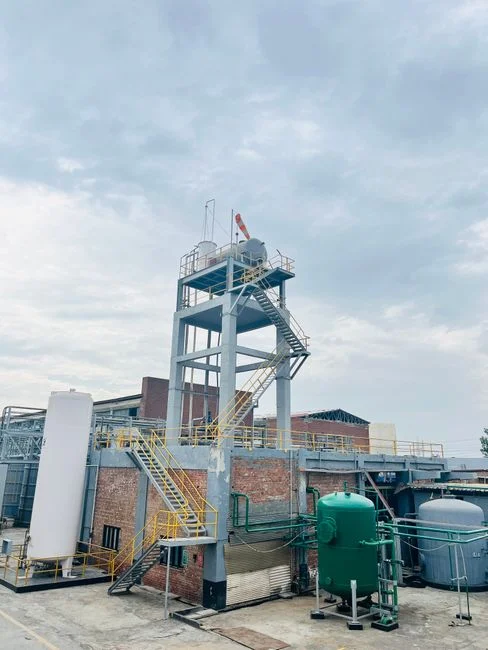
WSZ A/O, MBR and DAF-assisted treatment solve different parts of the hotel wastewater problem: the first is a compact biological package, the second separates solids more rigorously for reuse or constrained sites, and the third protects biological treatment from grease and solids shock loads.
WSZ is the low-visual-impact option for the documented 1–80 m³/day range. Its buried configuration can sit under landscaping, driveways or parking areas, reducing the visible industrial equipment footprint. MBR is appropriate where the site is constrained or effluent quality must support reuse. The supplied values are below 1 µm filtration, BOD below 5 mg/L, TSS below 1 mg/L and turbidity below 1 NTU in typical applications. These are catalogue performance values, not a substitute for a project-specific effluent guarantee.
The footprint and sludge trade-offs are material. MBR occupies roughly 60% of a conventional activated-sludge footprint and generates about 0.2–0.3 kg TSS per kg BOD removed, while requiring membrane air scour and periodic chemical cleaning. The footprint advantage is most valuable where land cannot accommodate a conventional plant or open clarifier.
DAF should be selected for high-FOG kitchens. The guide documents 60–90% FOG removal and 40–70% TSS removal at a hydraulic residence time of 20–40 minutes. It must be sized around peak kitchen flow, not average domestic flow. For a hotel with a central kitchen, banqueting or several food-and-beverage outlets, the DAF pretreatment equipment should therefore precede the biological stage.
| Architecture | Documented product range or performance | Appropriate decision basis |
|---|---|---|
| Buried WSZ A/O | 1–80 m³/h product range | Lower visual footprint and standard biological treatment; the project design, not the catalogue range, sets capacity |
| MBR | 10–2,000 m³/day product range; typically below 1 µm filtration, BOD <5 mg/L, TSS <1 mg/L and turbidity <1 NTU | Constrained site, rigorous solids separation or reuse requirements |
| DAF-assisted treatment | 4–300 m³/h product range; 60–90% FOG and 40–70% TSS removal at 20–40 minutes HRT | Grease-heavy kitchen or F&B loading; DAF is pretreatment, not final biological treatment |
For reuse, MBR permeate with disinfection can support landscape irrigation and toilet flushing. The guide states that RO polishing is needed only for more demanding guest-contact reuse. The architectural decision is therefore: select A/O for a conventional buried installation when its effluent target is adequate; select MBR when reuse, solids separation or site constraints justify it; add DAF when the kitchen load requires it.
Protect the Colombo site, outfall and receiving water
Colombo’s coastal and near-shore conditions must be treated as design inputs, because saline intrusion, sand-laden wash water and outfall constraints can affect biological treatment and final discharge.
The 2026 guide states that salinity above roughly 3,000 mg/L Cl⁻ begins to suppress nitrification. Where saline intrusion is credible, the design should include robust equalization and confirm the biology’s salinity tolerance. Fine screening should precede membranes: sand and fibrous debris can damage downstream equipment, and the catalogue’s GX rotary mechanical bar screen is the relevant pretreatment category to evaluate for coastal sites.
Receiving-water exposure matters as much as the permit. Alahakoon et al. (2015), as cited in the HydropureWater 2026 guide, recorded total and fecal coliform counts exceeding WHO recreational-water guidelines at multiple west-coast bathing sites during the south-west monsoon peak. A discharge entering the same water column therefore creates a public-health question that cannot be answered only by compliance with an on-site effluent limit.
Require the project design to assess the outfall against the applicable Sri Lankan discharge schedule and WHO recreational-water fecal-indicator guidance where the receiving water supports bathing. Do not assume that a package catalogue value is a universal legal limit. The final numerical effluent requirements must be confirmed with the relevant authority and current permit conditions.
The outfall review should also examine dilution, public access, tidal transport and the risk that a wet-weather or overflow event sends untreated or inadequately treated flow into a bathing area. Those items need a site-specific engineering response, not a generic statement that the plant is “CEPA compliant.”
Design disinfection, sludge handling and reuse as one system
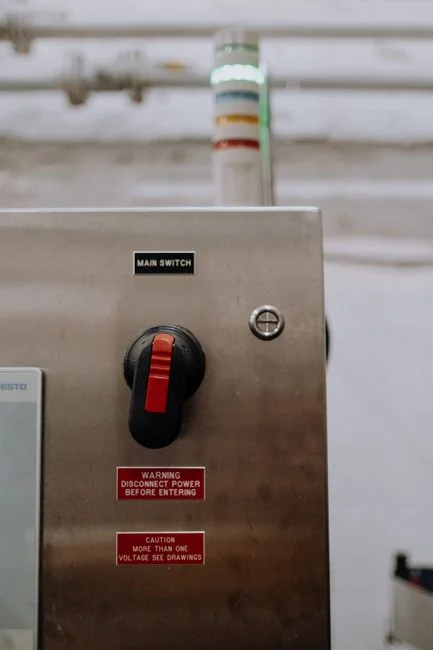
Disinfection, sludge handling and reuse should be priced and designed with the biological reactor, because each affects site area, chemical demand, odour control and operating labour.
The guide prefers on-site chlorine dioxide generation for remote resorts where chlorine-cylinder logistics are unreliable. The supplied chlorine dioxide generator range is 50–20,000 g/h. The guide states that chlorine dioxide is effective across biological effluent at approximately pH 6–8 and does not form trihalomethanes at the stated fecal-coliform-control doses. Capacity must still be matched to peak flow and residual-disinfection requirements.
Where on-site sludge dewatering is required, the guide includes a plate-and-frame press. The supplied plate-and-frame filter press produces 25–35% dry-solids cake, with catalogue filtration areas from 1 m² to 500 m². A cake that can be removed in sealed containers and transferred by a licensed hauler is operationally preferable to a sludge lagoon beside guest lawns.
MBR and well-designed A/O systems can reduce sludge volume and dewatering campaigns through longer sludge age. Lower sludge generation is an operating benefit, not a reason to omit cake storage, collection access or disposal pricing from the quotation.
Link reuse back to the treatment objective. The guide identifies landscape irrigation and toilet flushing as the main resort applications, while guest-contact reuse requires additional polishing. For irrigation and flushing, confirm the actual reuse flow, seasonal demand, storage and distribution constraints. For showers, laundry or pool make-up, define the additional treatment required rather than assuming MBR permeate alone is suitable.
On-site chlorine dioxide availability must be assessed through the supplier’s safety, chemical-delivery and maintenance documentation rather than assumed from the equipment specification. A generator without reliable reagent supply, operator competence or a safe maintenance arrangement is not a complete disinfection solution.
Turn the technical selection into a low-risk procurement
The first vendor gate should be a CEA-approved treatment process certificate, as recommended in the 2026 guide, followed by review of the final design against the current SLSI parameter schedule and permit conditions.
Require a fixed technical scope covering process type, design flow, peak flow, pretreatment, effluent targets, reuse, sludge handling, controls, commissioning and O&M. Without that scope, quotations may describe different plants and will not be commercially comparable.
Ask for an operating-cost projection at 60%, 80% and 100% occupancy, and include membrane cleaning, aeration, chemicals and sludge disposal. This is a comparison framework, not a price estimate: the supplier should apply its own equipment data and the property’s actual flow assumptions.
The documented Kynrock Hotels & Resorts installation in Kataragama, completed in August 2025, provides a market reference for packaged plants with CEA-approved processes and a stated 25-year process warranty, according to the HydropureWater 2026 guide. Do not treat that warranty as transferable without written confirmation from the selected supplier.
| Procurement sequence | Buyer action | Evidence to request |
|---|---|---|
| 1. Pre-qualify | Screen for process approval before detailed commercial comparison | CEA-approved treatment process certificate |
| 2. Freeze the design basis | Issue one common flow, peak, effluent, reuse and sludge scope | Occupancy scenarios, measured auxiliary flows and site constraints |
| 3. Compare complete trains | Evaluate pretreatment, treatment, disinfection, sludge and reuse together | GA drawings, guarantees, controls, commissioning and O&M scope |
| 4. Review compliance | Check the final design against current requirements | Current SLSI parameter schedule, permit conditions and authority review |
| 5. Validate commercial terms | Compare total delivery and operating commitments | Delivery scope, civil works, commissioning time, operator requirements, spares, local service capability and exclusions |
| 6. Order site-specific design | Replace catalogue assumptions with measured project data | Influent testing, geotechnical inputs, outfall assessment and final equipment proposal |
Use published equipment guides as preliminary comparators, then require site-specific influent testing and a final equipment proposal before purchase. The Christchurch hotel wastewater treatment selection provides a parallel decision framework for another coastal property market.
Frequently Asked Questions
What wastewater treatment system should a typical small Colombo hotel procure?
A small or boutique hotel can normally begin with the buried WSZ A/O architecture, whose documented application range is 1–80 m³/day. The final capacity must include peak flow and auxiliary uses such as kitchens, laundry, pools and staff quarters; the 60-key boutique example in the 2026 guide has approximately 16 m³/day average daily flow and 40 m³/h at the stated peak basis.
When should a hotel choose MBR instead of a buried A/O package?
Choose MBR when a constrained plot, rigorous solids separation or reuse requires the additional treatment provided by the membrane process. The catalogue gives an MBR range of 10–2,000 m³/day, a footprint about 60% smaller than conventional systems, and typical values of BOD below 5 mg/L and TSS below 1 mg/L. A larger hotel does not automatically require MBR; the site and reuse objectives determine the architecture.
What should a buyer request to reduce approval and compliance risk?
Request the CEA-approved treatment process certificate, a current design review against the applicable SLSI parameter schedule and permit conditions, and complete drawings and guarantees covering pretreatment, treatment, disinfection and sludge handling. The authority must confirm the final numerical effluent requirements; do not rely on a catalogue value as a legal discharge limit.
How should operating cost be compared?
Require each supplier to price the same occupancy scenarios: 60%, 80% and 100%. Ask for energy, membrane cleaning, aeration, chemicals, sludge handling or disposal, routine maintenance and operator requirements. Because no comparable quotation is supplied here, request a project-specific cost projection rather than accepting a generic equipment price.
How much capacity should be reserved for pools, laundry and kitchens?
Do not reserve a generic percentage. Measure or estimate each flow separately, then include it in the average daily flow, the 2.0–2.5× peak check and the relevant pretreatment unit. Kitchen DAF must be sized around peak kitchen flow, while pool backwash, laundry discharge and irrigation bleed-off must be identified before the biological plant is selected.