What wastewater profile should drive the equipment choice?
Food and beverage factories in Guymon should choose DAF when wastewater contains significant oil, grease, FOG, buoyant solids or flocculated organic material that must be skimmed from the surface. Conventional clarifiers are generally more appropriate when the primary objective is removing heavy, settleable solids. DAF uses 30–50 micron microbubbles to lift conditioned particles, which are removed by skimming, while heavier solids settle into a bottom collection zone. Because food-processing streams vary by plant and production schedule, the final choice should follow wastewater characterization, jar testing and confirmation of downstream treatment and discharge requirements—not flow rate alone.
Map each production stream before comparing an industrial DAF system with a lamella clarifier. Production washing and equipment cleanup may contribute TSS, buoyant food particles, oil and grease, detergents and variable pH. Batch dumps may add concentrated solids or cleaners, while cooling, boiler and floor-wash streams can change both flow and chemistry. A single representative sample will not describe these operating conditions reliably.
Clearwater Industries defines DAF as a clarification process that separates solids, oils, greases and other impurities using microbubbles. The bubbles measure 30–50 microns, attach to impurities and flocculated particles, and carry them upward (Clearwater Industries, “Dissolved Air Flotation for Industrial Wastewater Treatment,” undated). A gravity clarifier instead separates primarily by settling, so it is the more natural starting point when heavy, settleable solids are the principal target and flotation is not required.
Ask the plant for production schedules, average and peak-hour flow, batch-discharge records, clean-in-place discharge descriptions and analytical results covering TSS, FOG, BOD, COD, pH and temperature. Clearwater Industries recommends consulting an application engineer with flow rates, plant operations and production goals before equipment selection. Do not transfer a generic food-and-beverage profile to Guymon without site data; the final pilot should reproduce the plant’s relevant contaminants and operating sequence.
How DAF and a conventional clarifier separate solids
DAF uses bubble attachment and surface skimming to recover floatable material, while a conventional clarifier separates suspended solids by gravity and bottom sludge withdrawal. The difference is therefore in the mechanism and the sludge streams that the receiving plant must handle.
For DAF, clean water fills the unit during startup. A recirculation pump sends clarified water through pressurization and air saturation; pressure release in the clarification tank forms microbubbles. Conditioned wastewater enters the tank, the bubbles attach to particles, and a floating sludge blanket forms. A skimming system removes that blanket into a collection trough. Clarified water is withdrawn below the floating sludge and above settled sludge (Clearwater Industries, “Dissolved Air Flotation for Industrial Wastewater Treatment,” undated).
Not every particle floats. Most DAF arrangements include a sediment compartment or basin with sludge extraction, as Clearwater Industries notes in the same source. Heavier solids can therefore leave through the bottom collection system, while oils, greases and buoyant material leave through skimming. Partial recirculation is also possible when clarified water is returned to the process.
A conventional clarifier does not add the bubble-attachment and surface-skimming step. It relies on settling and withdrawal of accumulated bottom sludge. That arrangement can suit wastewater dominated by heavy solids, but it does not inherently target the floatable fraction that is central to a FOG-removal objective.
Chemical conditioning is a separate design requirement. Clearwater Industries states that coagulants and flocculants are regularly used before DAF, while acids and bases may adjust pH. Conditioning equipment may include flocculation tubes or chemical mix tanks, often integrated with an automatic chemical dosing system. The correct chemical sequence, mixing intensity and contact time must come from wastewater-specific testing.
DAF versus clarifier for food and beverage wastewater
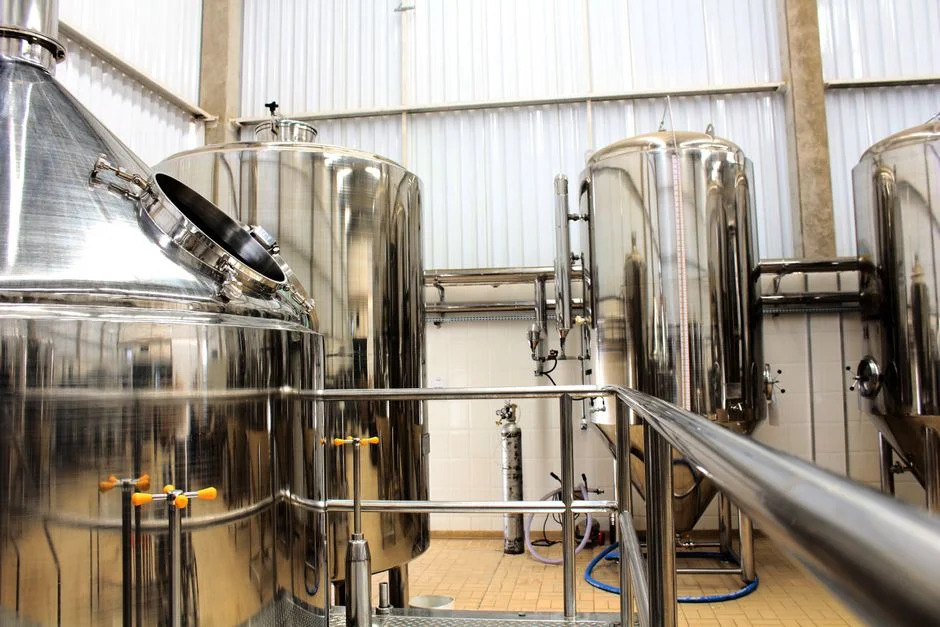
DAF has the clearer process advantage when floatable oils, grease and buoyant solids must be recovered; a gravity clarifier is more closely aligned with a heavy-solids settling objective. Neither advantage establishes a removal percentage, smaller footprint or lower operating cost because the supplied research does not provide comparable, verified food-processing data for those measures.
| Decision factor | DAF | Conventional clarifier |
|---|---|---|
| Separation mechanism | Microbubbles attach to conditioned particles; the floating blanket is skimmed | Suspended solids settle under gravity and are withdrawn as bottom sludge |
| Primary contaminant fit | Oil, grease, FOG, buoyant food particles and conditioned floc | Heavy and naturally settleable solids |
| Chemical conditioning | Typically requires coagulation and flocculation to improve particle contact and flotation | Depends on the wastewater and selected solids-removal objective |
| Sludge streams | Surface-skimmed material plus settled solids from a bottom zone | Predominantly bottom-collected sludge |
| Startup requirement | Clean water must be available for filling and recirculation | Startup sequence should be confirmed with the supplier |
| Controls and integration | Requires coordination of recycle flow, air saturation, chemical feed, skimming and sludge withdrawal | Requires coordination of settling zone, sludge withdrawal and downstream transfer |
| Principal question for the pilot | Can the plant recover and manage the skimmed fraction? | Can gravity settling meet the defined solids objective? |
Clearwater Industries identifies DAF as suitable for wastewater containing solids that float or have low specific gravity, including oils and grease (Clearwater Industries, “Dissolved Air Flotation for Industrial Wastewater Treatment,” undated). Its April 27, 2026 equipment page also describes DAF systems as removing suspended solids and oils and fats, with chemical coagulation and flocculation used to enlarge particles and improve bubble contact (Clearwater Industries, “Dissolved Air Flotation (DAF) Systems for Wastewater Treatment,” 2026-04-27).
DAF has a specific operating constraint: clean water must be available at startup. Clearwater Industries warns that filling the unit with wastewater can discharge dirty, non-clarified water for an extended period and may damage the recirculation pump and air-saturation system (Clearwater Industries, “Dissolved Air Flotation for Industrial Wastewater Treatment,” undated). That requirement belongs in the plant proposal and operating procedure.
Evaluate the entire material-handling route. If recovered sludge will be dewatered, ask whether a plate and frame filter press can accept the expected sludge characteristics. Review footprint and utility requirements against the available plant area, but do not rank either system on an unverified comparison. For a broader treatment-train perspective, DAF versus clarifier selection provides a mechanism-based comparison that still requires food-processing wastewater data before use.
How to size the selected clarification system
A defensible size is based on measured hydraulic and contaminant conditions, including batch and clean-in-place discharges, rather than average production flow alone. Clearwater Industries identifies flow rates, contaminant loads and plant operations as inputs for application-engineering review (Clearwater Industries, “Dissolved Air Flotation for Industrial Wastewater Treatment,” undated).
Collect average flow, peak flow, batch-discharge profile, operating hours, TSS, FOG, BOD, COD, pH and temperature. Separate continuous production wastewater from cleaning discharges so the vendor can identify the governing hydraulic event. Also document production variability: a food plant’s schedule, clean-in-place sequence and product changeovers can matter more than the annual wastewater volume.
| Input or configuration | Evidence-based selection guidance |
|---|---|
| FPAC DAF | Described by Clearwater Industries as suitable for small-to-medium flows with very high contaminant loads, including TSS and FOG (2026-04-27) |
| FPBC DAF | Described as a lamella-plate system for low-to-medium contaminant loads, including low-buoyancy particles (Clearwater Industries, 2026-04-27) |
| FPHF DAF | Described as suitable for high flows with low-to-large contaminant loads (Clearwater Industries, 2026-04-27) |
| COMPACT DAF | Single-skid design handles 66 GPM or less; larger flows use a modular two-skid arrangement (Clearwater Industries, 2026-04-27) |
| Conventional clarifier | Specify only against measured settling behavior, hydraulic peak, sludge collection and the required solids-removal objective |
| Chemical conditioning | Define coagulant, flocculant, pH adjustment, mixing sequence and contact time through jar testing |
Those model descriptions are configuration guidance, not a universal sizing equation. The supplied research does not provide a defensible universal surface-area, overflow or solids-loading rule for the proposed Guymon stream. Require each vendor to state its design flow, wastewater assumptions, operating schedule, contaminant basis and chemical-use assumptions in the quotation.
Use jar tests to establish the required chemistry before finalizing the DAF specification. Clearwater Industries states that contact time varies with the chemicals used and that jar testing is needed to determine proper mixing time. Testing should also establish whether the recovered sludge has the consistency the plant can collect, pump and dewater. This work defines the automatic chemical dosing system scope and prevents a supplier from assuming that one generic food-processing recipe will fit every production stream.
What to verify before requesting a Guymon factory proposal
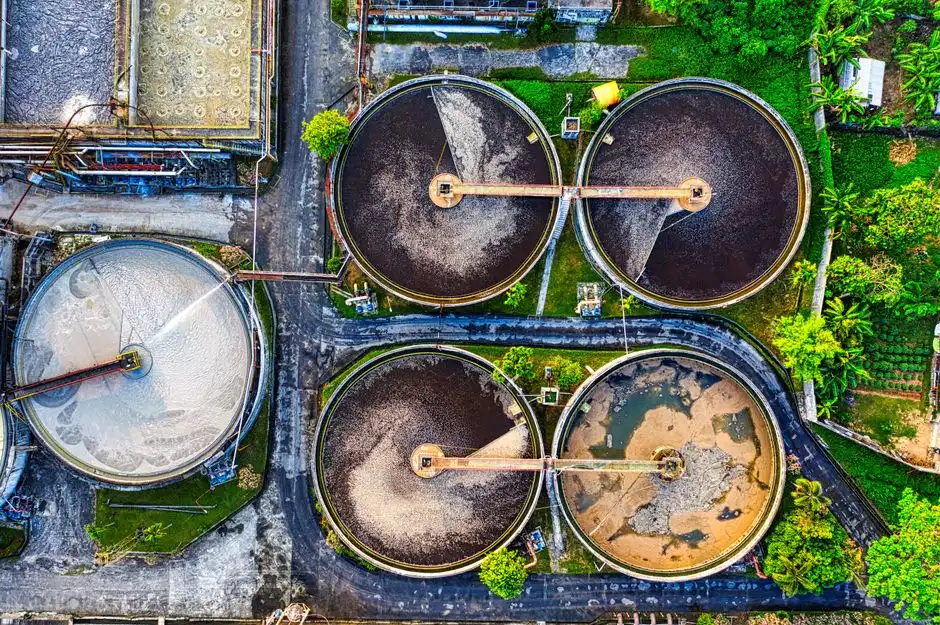
A Guymon proposal should define the treatment objective, design basis, complete equipment scope and receiving-authority requirements before comparing commercial terms. A clarification-unit price alone does not establish the cost or compliance risk of the project.
State whether the equipment will provide equalization, clarification, biological treatment, filtration, disinfection, reuse or discharge. If biological treatment follows, assess the clarified stream and the recovered sludge together. Elsevier’s paper titled “Combining Dissolved Air Flotation (DAF) and Modified Moving Bed Biofilm Reactors (MMBBR) for Synthetic Oily Wastewater Treatment” identifies DAF combined with MMBBR as a treatment concept, but the supplied excerpt does not expose enough methodological or performance detail for a quantified food-processing claim.
Ask every supplier to identify the assumed wastewater characterization, design flow, operating schedule, treatment objective, chemical system, controls, utilities, startup procedure and sludge route. Review automatic skimming, sludge withdrawal, sensors, instruments, operator controls and training requirements. DAF-specific items should include the clean-water startup sequence, recycle pump, air-saturation system, scum collection and bottom-sludge extraction.
Materials also require confirmation. Clearwater Industries states that its standard DAF systems use 304SS, with 316SS, polypropylene and other materials available on request (Clearwater Industries, “Dissolved Air Flotation (DAF) Systems for Wastewater Treatment,” 2026-04-27). The selected material should reflect the actual wastewater chemistry, cleaning regime, temperature and operational environment—not simply a default construction standard.
Confirm discharge, sewer or reuse requirements directly with the applicable Guymon authority. The supplied research contains no verified Guymon numerical permit limits or pretreatment thresholds, so the proposal should identify the applicable authority and require the supplier to treat the confirmed requirements as the basis of compliance. For a broader treatment path, evaluate an integrated MBR wastewater treatment system only after the clarification and sludge objectives are defined.
Use this decision framework before choosing equipment
Choose the process from the contaminant and sludge objectives, then confirm the preference with characterization, jar testing, hydraulic review and application engineering. The following framework converts the comparison into an engineering decision.
| Observed plant condition | Equipment to evaluate next | Required verification |
|---|---|---|
| FOG, oil, grease or buoyant solids are primary treatment objectives | DAF with chemical conditioning | Test flotation performance, recovered-sludge properties and compatibility with plant handling |
| The objective is mainly heavy, naturally settleable solids and gravity performance is adequate | Conventional clarifier | Run settling tests and confirm hydraulic and sludge-withdrawal performance |
| Both floatable and heavy solids are present | DAF arrangement with flotation and bottom-solids collection | Verify both skimmed and settled sludge streams |
| Biological treatment follows clarification | Clarifier selected by clarified-water and sludge requirements | Assess the clarified stream and sludge characteristics together |
The decision should follow this sequence:
- Characterize continuous production, batch and cleaning discharges.
- Define whether the primary objective is floatable-material recovery, heavy-solids separation or both.
- Run jar tests for chemistry, mixing and contact time.
- Review peak hydraulics and available plant utilities.
- Compare the recovered sludge with collection, storage and dewatering methods.
- Obtain an application-engineered proposal stating all assumptions and the confirmed compliance basis.
For an initial equipment review, compare the operating envelopes of an industrial DAF system and a lamella clarifier, but do not release an order until the pilot results and local requirements agree with the selected treatment objective.
Frequently Asked Questions
Is DAF better for food-processing FOG?
DAF is generally the more suitable process to evaluate when floatable oils, greases, FOG and buoyant particles are the main treatment objective. Clearwater Industries describes DAF as separating solids, oils and greases with 30–50 micron microbubbles and surface skimming (undated), while its 2026-04-27 equipment page identifies TSS and FOG as application areas for its FPAC configuration. The selection still depends on characterization and jar testing.
How should a Guymon factory size a DAF or clarifier?
Provide measured average and peak flow, batch and clean-in-place discharge profiles, operating hours, TSS, FOG, BOD, COD, pH and temperature. Require the supplier to show the design flow, load basis, operating schedule and chemical assumptions. Use jar testing to establish the coagulant, flocculant, pH adjustment, mixing sequence and contact time rather than adopting a generic food-processing recipe.
How should suppliers be selected for a complete food-processing clarification package?
Require quotations that state the treatment objective, wastewater assumptions, flow and load basis, materials, controls, skid arrangement, chemical system, startup procedure, sludge handling, utilities, documentation, training and local service scope. Confirm that the proposed system handles both floatable and heavy solids when both are present, and obtain a signed performance basis tied to the plant’s measured wastewater.
What should the budget and operating-cost comparison include?
Request itemized equipment, chemical-conditioning, installation, controls, maintenance, energy and sludge-disposal costs. The supplied research establishes no comparable equipment prices or operating-cost savings, so any comparison should use vendor quotations and the plant’s measured chemical and sludge quantities rather than generic cost claims.
What compliance checks are needed before purchasing?
Verify the applicable Guymon discharge, sewer or reuse requirements and the receiving authority’s pretreatment limits. No verified local numerical limits were included in the supplied research. Require the selected treatment train to be specified against the confirmed requirements, and do not rely on generic DAF performance statements as proof of compliance.