
What Changes When DAF Treats Airport Wastewater
A DAF system for airport wastewater design should begin with source separation, not a blended peak flow or a generic treatment guarantee. Airport streams can include ethylene glycol wastewater from spent deicing fluid, stormwater runoff, catering and equipment-washing water, and firefighting or other operational discharges; each requires different monitoring, equalization and pretreatment decisions. The 2026 academic analysis in the Problems of Collection, Preparation and Transport of Oil and Petroleum Products identifies glycol toxicity and high biological oxygen demand as central reasons to control spent deicing fluid before discharge. By contrast, KLM catering operations at Schiphol generated dishwashing wastewater containing fats, food residues and other organic matter that could not enter the sewer directly, according to Nijhuis Saur Industries’ project account. DAF therefore fits as a separation step for suspended solids, FOG and colloidal material, not as proof that the whole stream is compliant after flotation.
That distinction changes the design sequence. Deicing runoff needs attention to dissolved glycol, toxicity and oxygen demand, while catering wastewater needs a fats-and-food-solids removal route. Blending them can obscure both the contaminant load and the appropriate operating duty. A defensible DAF system engineering specification should identify which stream enters each unit, what pretreatment precedes flotation and where the treated water goes next.
Separate the Waste Streams Before Sizing the DAF
The supplied research does not contain enough airport project data to assign a numerical DAF capacity, so the correct design flow cannot yet be calculated. Build the hydraulic basis from verified average and peak flows, stormwater conditions, operational storage and the intended bypass philosophy. Characterize each source separately: a composite airport sample may conceal a short glycol slug, intermittent wash-water peak or variable FOG load.
For glycol-bearing deicing runoff, request glycol-specific results or a justified surrogate alongside COD, BOD, TSS, pH and temperature. The 2026 academic analysis supports this distinction because glycol toxicity and biological oxygen demand cannot be represented reliably by suspended solids alone. For catering and equipment washing, include oil and grease, FOG, food solids, COD and TSS, consistent with the constituents identified in the Schiphol case.
| Design basis | Airport stream | Evidence or project input required | Decision supported |
|---|---|---|---|
| Deicing-runoff quality | Spent deicing fluid and diluted runoff | Glycol or accepted surrogate, COD, BOD, TSS, pH, temperature and additive information | Equalization, biological pretreatment, coagulation and downstream treatment route |
| Support-area quality | Catering and equipment washing | Oil and grease, FOG, food solids, COD, TSS, pH and temperature | FOG segregation, chemical pretreatment and flotation duty |
| Hydraulic duty | Each source before blending | Average flow, peak flow, event profile, storage and bypass basis | Selected DAF model and equalization arrangement |
| Receiving route | Treated stream | Permit, sewer agreement or receiving-plant acceptance criteria | Whether DAF effluent requires further biological treatment |
HydropureWater’s verified 2026 catalog lists 13 standard micro-bubble DAF system for airport wastewater models covering 4–300 m³/h. Treat that as an equipment-selection range, not a project capacity. Select a model only after reconciling verified flow and pollutant data with the equipment geometry; the broader industrial DAF selection and cost framework explains why headline flow alone is insufficient.
Choose the Pretreatment Route for Glycol, Solids and FOG
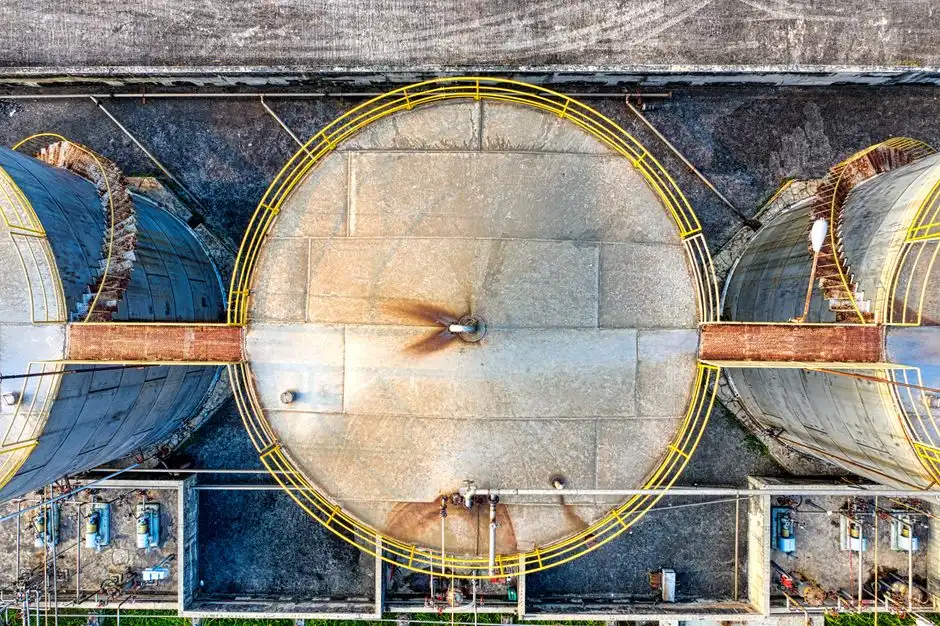
The 2026 academic analysis identifies physicochemical pretreatment as a central treatment route for airport wastewater containing ethylene glycol and specifically discusses coagulation with aluminum. Aluminum should therefore be treated as a candidate coagulant for bench and pilot testing, not specified by assumption. Confirm dosage, pH response, residual chemistry and sludge generation against the actual spent deicing fluid.
Oslo Airport provides a different, test-backed precedent. The 2007 SAE Aircraft and Engine Icing International Conference paper reports that low-strength spent deicing fluid was pretreated in an aerobic biofilm reactor, followed by coagulation and DAF; laboratory and pilot testing then confirmed that the resulting water was suitable for the biological stage of a municipal wastewater treatment plant. This sequence shows why DAF should not be assumed to remove dissolved glycol or resolve its associated biological oxygen demand.
For FOG-rich catering wastewater, coordinate equipment washing and food-residue control with an automatic chemical dosing package for DAF pretreatment. The Schiphol project account identifies fats, food residues and other organic matter in the dishwashing stream and reports that a temporary DAF was used before a permanent automated installation was selected.
Spent-fluid additives also require separate evaluation. The 2007 Oslo paper reports that some additives were hardly or not biodegradable; laboratory findings were confirmed at full scale before those additives were substituted. That remains relevant to any glycol route because the base glycol does not describe the behavior of the complete formulation.
| Route | Evidence-based sequence | Key test questions | DAF role |
|---|---|---|---|
| Glycol-bearing deicing runoff | Aerobic pretreatment where selected, followed by coagulation and DAF | Glycol response, additive biodegradability, pH, chemical demand and oxygen demand | Separate floated solids and support downstream biological treatment |
| Catering and washing wastewater | Food-residue control, FOG pretreatment, coagulation and DAF | Oil and grease, FOG, TSS, COD, foam stability and sludge characteristics | Recover floatable fats and oil-and-grease while removing suspended solids |
| Blended stream | Only after source behavior and compatibility are established | Potential chemical interference, foam loading and settling or separation behavior | Treat only as a defined duty with confirmed upstream controls |
Size the DAF from Duty Scenarios and Confirmed Parameters
DAF sizing must reconcile two hydraulic duties: the verified normal operating flow and the specified peak or event flow. The model must provide adequate flotation area, contact time and internal recycle for the expected solids, FOG and colloidal load without treating the catalog’s maximum flow as the airport’s design flow. Overflow, bypass and equalization conditions should be explicit in the duty scenarios rather than left to the supplier’s interpretation.
| Parameter | Confirmed value | Source and date | Design use |
|---|---|---|---|
| Saturation pressure | 3–6 bar | HydropureWater, 2026 engineering guide | Confirm compressor and recycle-system capability |
| Bubble size | 20–100 μm | HydropureWater, 2026 engineering guide | Define the flotation mechanism in the vendor scope |
| Flotation time | 20–60 minutes | HydropureWater, 2026 engineering guide | Check contact geometry against verified duty and pilot results |
| Catalog capacity | 4–300 m³/h across 13 standard models | HydropureWater verified product catalog, 2026 | Screen the available range; it does not determine final selection |
| Removal scope | Suspended solids, FOG, oil and grease, and colloidal matter | HydropureWater verified product catalog, 2026 | Define the physical treatment objective and exclusions |
Do not substitute these operating parameters for project calculations. Require the supplier to demonstrate the selected surface area and flotation geometry against verified average and peak duties. Request the solids-loading basis, chemical demand, flotation residence time, recycle ratio, surface overflow rate and expected sludge production for the selected wastewater and operating scenarios. The supplied airport research provides none of those project-specific values, so a valid calculation is not yet possible.
The final check must connect the wastewater data to the selected equipment. A flow that falls within a catalog range can still overload the flotation path if solids loading, foam behavior or FOG capture is unsuitable. Review the DAF system engineering specifications and the micro-bubble DAF system for airport wastewater as equipment references, then require project-specific calculations from the supplier.
Design Sludge, Automation and Downstream Treatment
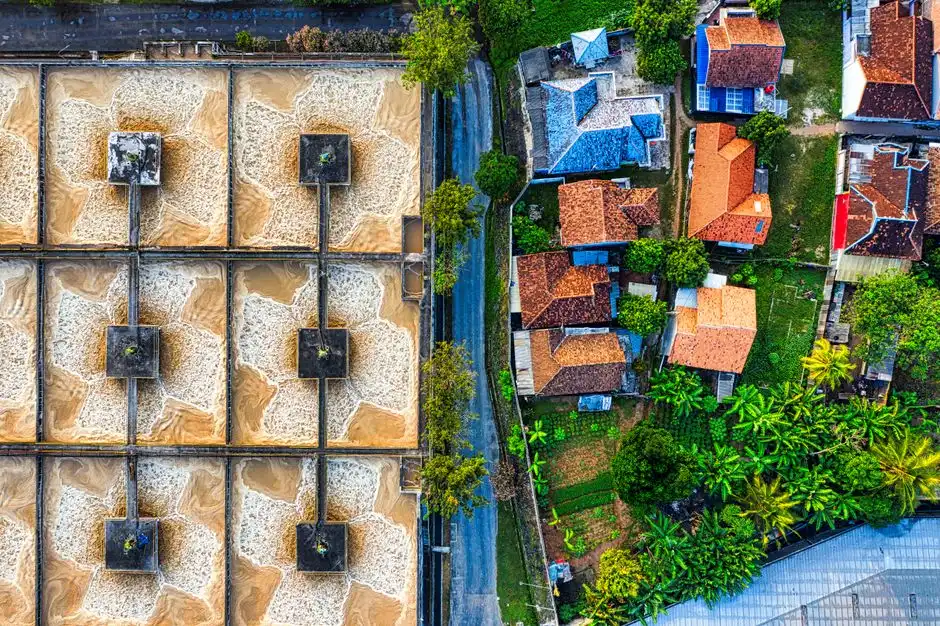
DAF creates a concentrated float and underflow stream, so sludge handling belongs in the process design rather than the accessory list. Specify collection, thickening, storage, dewatering and the final disposal route. The required performance depends on the chemicals, pH corrections and captured material; without project data, the supplier should identify the expected solids-production calculation and the equipment needed to handle it.
Oslo Airport demonstrates why downstream biological treatment may remain necessary. The 2007 SAE paper reports that aerobic pretreatment followed by coagulation and DAF produced water suitable for the biological stage of a municipal plant. DAF removes material that can interfere with subsequent biological treatment, but it does not automatically remove the dissolved glycol load or its biological oxygen demand.
Automation should protect the operating envelope identified during design and pilot work. Require automatic skimming, chemical-feed control, level and flow instrumentation, and operating-data logging as applicable to the selected scope. Nijhuis Saur Industries’ Schiphol account describes the permanent installation as customized and automated and identifies chemical supply, maintenance and technical service as continuing responsibilities. Put those boundaries into the procurement schedule and service agreement.
Evaluate an MBR-integrated wastewater treatment option only after the DAF duty, effluent objectives and receiving route are defined. Solids dewatering can be addressed through a plate-and-frame filter press, subject to sludge characteristics and disposal logistics. Neither item should be added solely because a treatment objective contains the word “reuse.”
Validate the Design Through Pilot Testing and Performance Acceptance
The Schiphol sequence provides a direct precedent for treating temporary operation as a design instrument. Nijhuis Saur Industries reports that KCS first used a temporary rental DAF, monitored and optimized it for two years, and then selected a permanent tailor-made system incorporating the lessons learned. That approach can expose chemical-consumption, foam, flow-stability and downstream-treatment problems before a permanent skid is fabricated.
Define pilot objectives around the actual airport mix. For deicing flow, measure glycol or the selected surrogate, COD, BOD, TSS, pH, temperature, chemical consumption and sludge production. For catering flow, include oil and grease, FOG, food solids, COD, TSS and float recovery. Observe foam behavior and stability because uncontrolled carryover can obstruct downstream equipment or storage.
Test representative operating states rather than one nominal condition: diluted runoff, concentrated spent deicing fluid, concentrated wash water and mixed operation if the proposed train permits blending. The supplied research does not support a universal airport removal percentage, so acceptance criteria must come from the project permit, sewer agreement or receiving-plant requirements. Those numerical limits were not provided and must be obtained before defining performance guarantees.
Carry pilot results into final DAF geometry, chemical-system capacity, controls, materials, sludge handling and downstream biological treatment. Where temporary operation is used, define sampling frequency, data ownership, operator responsibilities and the transition criteria for permanent equipment. This prevents a successful rental trial from becoming an indefinite operating arrangement.
Compare Procurement Options and Supplier Questions
The Schiphol precedent distinguishes two procurement stages: a pilot or rental installation for characterization and operating-risk reduction, followed by a permanent custom system if the trial supports investment. The supplier’s offer should therefore identify which scope is being priced and what evidence is required before final purchase.
| Procurement route | Best decision use | Supplier information required | Commercial caution |
|---|---|---|---|
| Pilot or rental DAF | Characterization, seasonal testing and operating validation | Test plan, sampling method, data reports, chemical supply, operator support and change-control process | Confirm ownership of data and the cost of conversion or removal |
| Standard catalog model | A project whose verified duty fits the offered geometry and loading | Selected surface area, modeled duty, recycle ratio, flotation time, chemical package, controls and utilities | Catalog flow range is not a project sizing calculation |
| Custom permanent DAF | Long-term operation after pilot evidence or a well-defined design basis | Design basis, performance guarantees, materials, skid boundaries, controls, training, spares and service response | List civil, electrical, chemical-storage, sludge and downstream exclusions |
| Integrated treatment train | Projects requiring DAF, sludge treatment and biological treatment | Process interfaces, hydraulic reserves, control philosophy and responsibility for each unit | Do not let downstream equipment obscure the DAF duty |
Require relevant reference evidence, while distinguishing catering FOG treatment from glycol-bearing deicing treatment. Ask each supplier to identify the modeled duty, selected surface area, bubble system, saturation pressure, flotation time, chemical package, automation, materials, skid boundaries, controls and exclusions. Evaluate chemical use, compressed-air demand, sludge handling, maintenance, spares, training and monitoring support rather than comparing purchase price alone. The industrial DAF selection and cost framework provides a useful structure for obtaining comparable, scope-aligned offers.
Frequently Asked Questions
What data are needed to size a DAF system for airport wastewater?
Request stream-specific average and peak flows, glycol or an accepted surrogate, COD, BOD, TSS, oil and grease, FOG, pH, temperature, storage conditions and receiving requirements. HydropureWater’s catalog covers 4–300 m³/h across 13 models, but the correct model depends on verified wastewater data, selected DAF geometry and the complete solids and FOG loading.
Should a pilot test precede purchase of a permanent airport DAF?
Yes, when uncertainty remains in chemical demand, foam behavior, solids loading, seasonal flow or downstream biological response. Nijhuis Saur Industries reports that the Schiphol catering project operated a temporary rental DAF for two years of monitoring and optimization before selecting the permanent installation. Define sampling, seasonal scenarios, acceptance criteria and conversion criteria before the trial begins.
How should suppliers be compared for an airport wastewater DAF?
Compare identical scopes and require each supplier to show the modeled duty, selected flotation area, recycle ratio, flotation time, saturation pressure, chemical package, controls, utilities, materials and exclusions. Request reference projects relevant to the actual stream: catering FOG experience does not demonstrate glycol treatment. The offer should also identify sludge handling, training, spares, maintenance and service responsibilities.
What airport-specific compliance risks matter during procurement?
The main risk is assuming that DAF alone makes the stream compliant. Glycol toxicity and biological oxygen demand may require pretreatment and downstream biological treatment, while FOG may require dedicated segregation and float management. Obtain the applicable permit, sewer agreement and receiving-plant criteria; the supplied research provides no numerical discharge limits, so request those documents and set acceptance tests against them rather than relying on generic removal claims.
What additional equipment may be needed beyond the DAF?
Depending on the treatment route, specify equalization, chemical preparation and dosing, aeration or biological pretreatment, flow and level instrumentation, automatic skimming, sludge thickening and dewatering, and downstream biological treatment. For Oslo Airport, the 2007 SAE paper documents aerobic biofilm pretreatment before coagulation and DAF and subsequent routing to a municipal biological stage. The airport must establish each need from stream testing and the receiving route rather than specify a generic package.