
Identify the Requirements That Control Saukville Sewer Discharges
Fabricated metals plants near Saukville meet pretreatment limits by controlling wastewater where it enters the public sewer, demonstrating that the selected process removes permit-identified pollutants, and retaining records that show compliance. Under 40 CFR 403, EPA explains that POTW local limits are site-specific and may be numeric or narrative limits imposed at the industrial user’s connection to the collection system. Obtain the applicable industrial user permit, sewer-use ordinance, pollutant definitions, sampling frequency, reporting forms, and approved sampling point before selecting treatment equipment such as DAF or lamella clarification.
The controlling documents apply to the exact discharge connection, not automatically to every process drain inside the plant. EPA defines pretreatment standards as pollutant discharge limits applicable to industrial users under 40 CFR 403.3(j). Its pretreatment guidance also explains that local limits address the needs of the POTW, its sludge processes, and receiving waters under 40 CFR 403.3(k) and 403.3(p).
Local limits may be numeric or narrative and may include best management practices. Most prohibited-discharge provisions in 40 CFR Part 403.5 are not specific pollutant limitations, according to EPA. That distinction matters during equipment selection: a general prohibition on a discharge is not a substitute for the concentration, mass, monitoring, or operating requirements written into the applicable permit and sewer-use requirements.
The available research does not establish numerical Saukville limits, sampling intervals, or record-retention periods. Those items must be obtained in writing from the receiving authority. The Milwaukee fabricated metals pretreatment compliance guide describes the document set that should be collected before an engineer commits to a treatment train.
| Requirement to confirm | Decision supported | Evidence to retain |
|---|---|---|
| Industrial user permit and sewer-use ordinance | Applicable pollutants, prohibitions, and approval conditions | Current permit and incorporated requirements |
| POTW local limits | Numeric or narrative discharge conditions | Authority-issued limits and definitions |
| Approved sampling point | Where compliance is represented | Approved monitoring plan or drawing |
| Monitoring and reporting schedule | Sample frequency, forms, and reporting route | Written authority response |
| Record-retention requirement | Duration and form of retained evidence | Permit language or written clarification |
| Change and upset procedures | Notification and approval obligations | Permit, procedure, and correspondence |
Map Every Wastewater Source Before Choosing Equipment
Machining, cutting, grinding, deburring, welding, surface preparation, cleaning, painting, coating, and metal finishing can introduce different contaminants, so each operation must be represented in the drain map and sampling plan. The Milwaukee fabricated metals pretreatment compliance guide identifies those fabrication activities as distinct potential wastewater sources rather than treating them as one homogeneous stream.
For every source, record the upstream equipment, production area, chemicals used, flow pattern, discharge destination, and whether another flow can enter the same drain. Mark continuous streams separately from batch discharges and identify cleaning solutions, cutting fluids, coolants, wash water, coating residues, and washdown water associated with each area. A production change can alter the contaminant profile even when the building layout and connection remain unchanged.
The source map should be paired with representative analytical results. Review every pollutant named in the applicable permit or sewer-use requirements; depending on plant operations, the program may address pH, oil and grease, suspended solids, metals, and process-specific constituents. Request the pollutant definitions used by the authority so a laboratory result can be compared with the permit language. A permit parameter may not have the same analytical meaning as a general industrial term.
Do not select a universal treatment train because fabricated metals wastewater profiles vary by plant. Confirm whether dedicated treatment is required for a source or whether combined discharge is authorized. Shared treatment cannot be assumed to have enough hydraulic or pollutant capacity merely because another flow reaches the same discharge point.
| Source-map field | Why it matters | Information needed |
|---|---|---|
| Fabrication operation and equipment | Connects process changes to wastewater quality | Current equipment list and production area |
| Batch chemicals | Identifies pH, oil, metals, and process-specific risks | Chemical inventory and usage records |
| Flow behavior | Establishes continuous and peak hydraulic conditions | Flow records and production schedule |
| Discharge route | Defines whether streams can be segregated or combined | Marked-up drain and process diagram |
| Representative analysis | Converts the source inventory into a design basis | Samples tied to specific operations and dates |
| Regulatory coverage | Tests whether treatment and monitoring address every regulated constituent | Permit, local limits, and pollutant definitions |
Select a Treatment Train from the Wastewater Profile
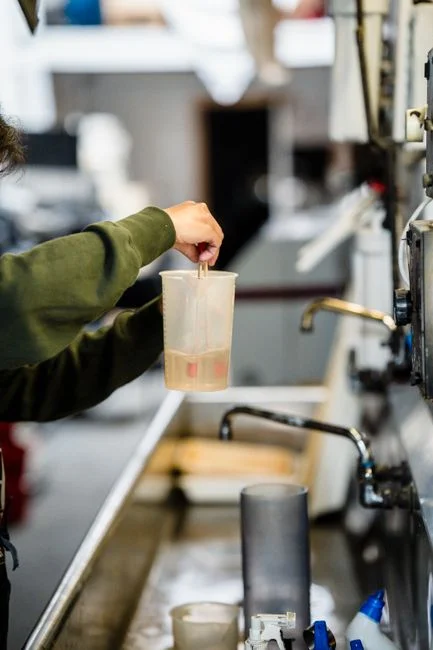
DAF is the stronger candidate when representative analysis identifies suspended solids, oil and grease, free or emulsified oil, or colloidal material. The supplied 2026 equipment source specifies 4–300 m³/h across 13 standard models with automatic skimming for a dissolved air flotation system for metalworking wastewater. Those catalog values establish the stated model range, not the required capacity for a Saukville installation.
Lamella clarification becomes the stronger candidate when compact solids separation is the main objective and the wastewater and sludge properties support the selected surface loading rate. The supplied 2026 specification lists 20–40 m/h and potential chemical-consumption reduction of up to 30% for a lamella clarifier for compact solids separation. The final choice still depends on the characterized pollutants, hydraulic variability, footprint, and recovered-solids handling requirements.
Chemical control is determined by the wastewater rather than added by default. Where treatment requires coagulants, flocculants, pH adjustment, or specialty chemicals, the operating concept should include automatic dosing, PLC-based controls, skid-mounted equipment, and factory testing. The chemical program must be compatible with the selected solids-separation process and the permit-defined treatment objective.
Recovered solids are part of the treatment train, not a disposal detail. A plate and frame filter press can dewater treatment sludge where the operating requirement calls for it, but the selected solids stream must be sampled, dewatered, stored, and disposed of under confirmed requirements. Do not size clarification capacity without checking the solids-handling consequence of the selected surface loading rate.
Final sizing should combine documented flow, pollutant concentrations, production variability, batch discharges, required effluent quality, and the controlling local limits after they are obtained. A nominal catalog capacity cannot substitute for the site design basis.
| Selection condition | Preferred unit operation | Design checks still required |
|---|---|---|
| Suspended solids, oil and grease, free or emulsified oil, or colloidal material | DAF | Flow range, batch response, skimming, downstream solids handling |
| Compact solids separation is the priority | Lamella clarification | Supported surface loading rate, solids characteristics, chemical demand, footprint |
| pH, coagulation, flocculation, or specialty chemical control is required | Automatic chemical dosing | Chemical compatibility, controls, inventory, alarms |
| Recovered solids require dewatering | Plate and frame filter press or another verified solids-dewatering step | Sludge volume, cake handling, storage, disposal route |
| Combined treatment is proposed | Shared train only after authorization | Authorized connection, peak load, pollutant loading, upstream segregation |
Build Monitoring and Compliance Evidence into Operations
Compliance monitoring must occur at the location and frequency required by the controlling permit. The supplied research does not establish a Saukville sampling interval, so the plant must obtain it from the receiving authority rather than adopt an interval from a generic pretreatment program.
Track treatment performance against each permit-defined pollutant instead of treating equipment operating data as proof of compliance. Flow information, laboratory results, chemical-use records, operating logs, and corrective-action evidence should form a continuous record connecting the selected process to the required discharge condition. Maintain evidence from the approved sampling point because treatment performance at another location may not represent the permitted discharge.
If an upset reaches the sewer, preserve the corresponding monitoring evidence and follow the permit’s notification procedure. The operating response should identify what is measured, who reviews the result, what decision follows, and how the event is documented. That sequence matters when evidence must be available for a regulator.
Define operating responses for high flow, high solids, oil carryover, abnormal pH, chemical-inventory changes, and treatment-equipment faults. Specific trigger values must come from site data and permit requirements; they should not be invented from catalog descriptions. An automatic chemical dosing system with operating controls can support dosing consistency, but it does not replace permit-based monitoring or an upset procedure.
| Operating condition | Evidence to capture | Action basis |
|---|---|---|
| Routine discharge | Permit-required sample, flow, analysis, operating log, and chemical record | Controlling permit and approved monitoring plan |
| High flow or batch discharge | Source, timing, flow, and treatment response | Documented hydraulic and production conditions |
| Oil carryover or high solids | Sample result, equipment condition, and corrective action | Site-derived trigger values and permit limits |
| Abnormal pH or chemical change | Alarm, dose adjustment, affected discharge, and release record | Chemical-control procedure and permit notification requirements |
| Equipment fault or sewer upset | Preserved sample, maintenance record, flow evidence, and correspondence | Permit upset procedure and authority requirements |
Manage Changes, Solids, and Approval Risk
Obtain authority acceptance or an approved plan before adding a production process, changing treatment performance, modifying chemical use, or altering the discharge route. The plant’s compliance basis depends on the connection, production profile, treatment performance, and monitoring arrangement remaining aligned; a production change can invalidate one or more of those elements even if the discharge point has not moved.
Define how treatment sludge is sampled, dewatered, stored, and disposed of. The supplied research does not establish Saukville solids-disposal requirements, so confirm them with the receiving authority and applicable waste requirements. If dewatering is required, evaluate a plate and frame filter press for treatment-sludge dewatering as part of the operating train rather than as an isolated purchase.
Give equipment suppliers the industrial user permit, applicable sewer-use requirements, flow records, production schedules, representative analytical results, source map, chemical inventory, utility constraints, recovered-solids handling needs, and installation-space information. Ask each supplier to identify the design assumptions behind its proposed equipment, controls, utilities, and operating requirements. Comparable bids should then rest on the same verified inputs.
Develop the project budget from those site inputs and project-specific quotations. The supplied research contains no capital-cost figures for fabricated metals pretreatment systems, so a generic price range would not provide a defensible estimate.
Compare DAF and Lamella Clarifiers for the Installation
DAF and lamella clarification should be compared against the characterized wastewater profile, not selected from catalog capacity alone. DAF is especially relevant when suspended solids, oil and grease, free or emulsified oil, or colloidal material are present. Lamella clarification emphasizes compact solids separation. The DAF versus clarifier comparison for fabricated metals wastewater provides a useful structure for that decision, but the Saukville permit and site data remain controlling.
Compare hydraulic fit using documented average flow, peak flow, batch discharges, and production variability. DAF’s stated 4–300 m³/h range across 13 standard models, with automatic skimming, describes available equipment in the supplied 2026 source; it does not establish which model fits a particular plant. Batch loading, peak treatment response, and downstream solids capacity must be evaluated from the site record.
Compare physical and operating implications. DAF includes automatic skimming in the supplied specification. The lamella-clarifier specification states surface loading rates of 20–40 m/h and potential chemical-consumption reduction of up to 30%. Those are equipment-specification claims with stated scope, not guaranteed site outcomes or Saukville permit limits.
Then compare recovered-solids handling, available footprint, chemical demand, utilities, controls, maintenance access, and any need for downstream treatment. A lamella clarifier may be attractive where compact solids separation and available space drive the decision; DAF may be more directly aligned with an oil-and-solids profile. Neither conclusion can be reached before representative wastewater results and the authority’s written requirements are available.
The supplied research does not establish one universal treatment train for fabricated metals wastewater. The permit limits and characterized site data remain the controlling inputs, as discussed in this comparison framework for wastewater clarification in a metals-related application.
| Decision factor | DAF | Lamella clarification |
|---|---|---|
| Wastewater profile | Suspended solids, oil and grease, free or emulsified oil, or colloidal material | Compact solids separation when solids characteristics support the selected loading rate |
| Hydraulic basis | Check documented average, peak, and batch flows against the selected model and skimming duty | Check documented average, peak, and batch flows against the supported surface loading rate |
| Supplied specification | 4–300 m³/h across 13 standard models with automatic skimming | 20–40 m/h surface loading rate and potential chemical-consumption reduction of up to 30% |
| Chemical demand | Evaluate chemicals needed for flotation performance and the characteristics of recovered float | Evaluate coagulant or flocculant use against the potential consumption reduction |
| Physical and operating issues | Confirm footprint, utilities, controls, maintenance access, skimming, and recovered-float handling | Confirm footprint, utilities, controls, maintenance access, sludge concentration, and dewatering |
| Approval basis | Must demonstrate the characterized profile and permit-defined performance | Must demonstrate the characterized profile and permit-defined performance |
Frequently Asked Questions
What numerical pretreatment limits apply to a fabricated metals plant near Saukville?
The supplied research does not provide numerical Saukville limits. Obtain the applicable industrial user permit, sewer-use ordinance, and written local-limit information from the receiving authority. Confirm the pollutant definitions, concentration or mass limits, narrative requirements, monitoring frequency, reporting forms, and approved sampling point for the exact connection.
Is DAF or a lamella clarifier better for fabricated metals wastewater?
DAF is favored by the supplied source when representative analysis identifies suspended solids, oil and grease, free or emulsified oil, or colloidal material. Lamella clarification is relevant when compact solids separation is the priority. Flow pattern, footprint, chemical demand, recovered solids, utilities, maintenance access, and required effluent quality determine the final choice.
How should pretreatment equipment be sized when production flow varies?
Use documented flow records, pollutant concentrations, production variability, batch discharges, required effluent quality, and the applicable local limits. Nominal catalog capacity alone is not a sufficient design basis. Show how peak and batch conditions affect treatment performance, skimming or sludge loading, controls, and downstream solids handling.
What should a wastewater equipment supplier receive before quoting a project?
Provide the permit, sewer-use requirements, flow records, production schedules, representative analytical results, source map, chemical inventory, utility constraints, recovered-solids handling needs, and installation-space information. Require the quotation to identify design assumptions, included equipment, controls, utilities, installation requirements, and excluded civil or site work.
How much does a fabricated metals pretreatment system cost?
The supplied research contains no capital-cost figures for fabricated metals pretreatment systems. A defensible budget therefore requires site data and project-specific quotations. Request itemized pricing for treatment equipment, controls, chemical dosing, sludge dewatering, installation, commissioning, utility connections, and owner-provided civil work rather than relying on a generic system price.