What Changes When Hyundai Commissions a Texas Auto Plant?
Wastewater should be handled through verified source segregation, lawful routing, site-specific treatment and documented commissioning controls before production begins. A Hyundai auto plant in Texas may generate metal-finishing, car-wash, paint-shop, boiler, cooling-tower, reverse-osmosis reject, compressor-condensate and sanitary streams, each with different reuse and disposal constraints. The Georgia operation provides a warning case: The Current GA reported that Hyundai expanded permitted wastewater output by about half a million gallons per day, while the plant could draw more than 6 million gallons per day from four wells. Neither figure is a Texas design basis; Georgia’s reported potential production of 800,000 vehicles is also a Georgia operating fact. The commissioning owner must instead establish an auditable chain from each source to its authorized treatment and discharge point, covering permit route, equipment, sampling, sludge disposal and every off-site hauler.
Choose the Legal Discharge Route Before Buying Treatment Equipment
A direct discharge to surface water and a discharge to a publicly owned treatment works are legally distinct routes that require different authorizations and evidence.
A TPDES industrial wastewater permit applies to a direct discharge to surface water. An industrial user permit issued by a local POTW under 30 TAC Chapter 305 applies when industrial wastewater enters a sewer. A change of ownership does not automatically transfer a TPDES permit: the new operator may need to file TCEQ Form 10311 under the Chapter 305 transfer-by-amendment process. A POTW industrial user permit must be reissued in the new operator’s name. If the acquired facility will generate no industrial wastewater, HydropureWater’s 2026 Texas acquisition guide says the operator can investigate permit cancellation with TCEQ rather than unnecessary transfer.
For direct discharges, 30 TAC Chapter 307 combines technology-based and water-quality-based requirements, with site-specific limits shaped by receiving-stream uses and designated effluent criteria. For a POTW route, the due-diligence file should contain the sewer use ordinance, industrial user permit, local limits and written acceptance by the receiving POTW.
The same guide gives a transfer-review range of approximately 90 to 180 days and warns buyers not to assume that permit coverage remains unchanged during review. TCEQ’s wastewater application channel says individual applications are submitted electronically through its file transfer protocol server; applicants should use that channel for current filing instructions.
| Decision condition | Authorization route | Evidence to place in the commissioning file |
|---|---|---|
| Direct discharge to surface water | TPDES industrial wastewater permit; Chapter 307 provisions | Current permit, application history, discharge configuration, monitoring records and required reports |
| Industrial wastewater sent to a POTW | POTW industrial user permit under 30 TAC Chapter 305 | Reissued permit, sewer use ordinance, local limits, monitoring conditions and POTW acceptance |
| No industrial wastewater generated | Possible permit cancellation | Documented source inventory and TCEQ confirmation |
| Ownership or process change after issuance | Transfer-by-amendment may be required | TCEQ Form 10311 and confirmation that the existing permit covers the actual routes |
The owner should also review how facility sewer limits affect discharge-route decisions without treating another industry’s permit or process as applicable here.
Segregate the Waste Streams Before They Reach a Treatment Train
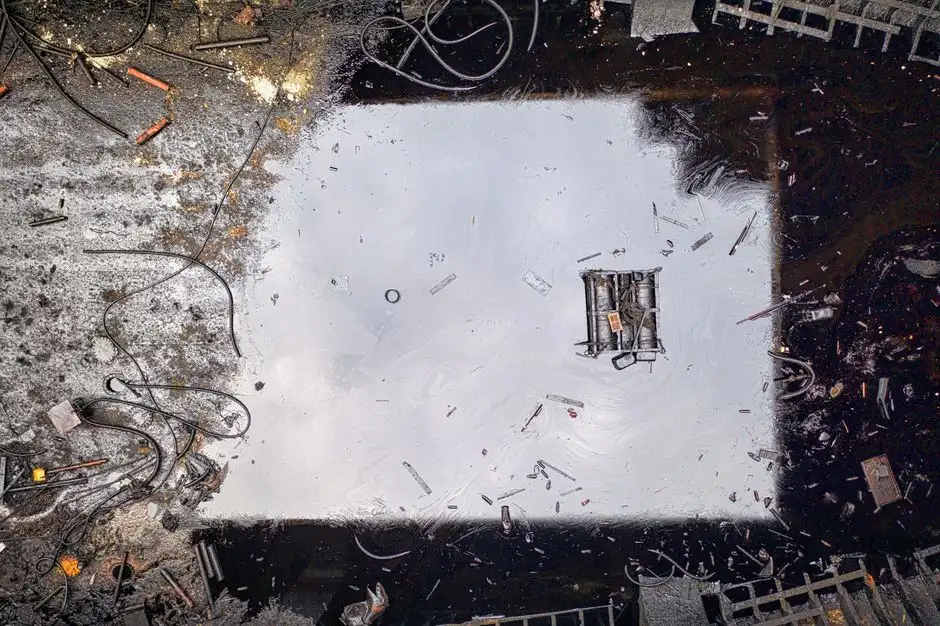
An automotive wastewater mass balance is valid only when every source remains identifiable from collection point to treatment, reuse or disposal.
Create a register covering metal finishing and pretreatment rinses, car wash, paint-shop and body-shop wastewater, boiler and cooling-tower blowdown, reverse-osmosis reject, compressor condensate, domestic sewage, stormwater and production off-spec waste. HydropureWater’s Hyundai acquisition guide identifies car-wash and metal-finishing wastewater as characteristic regulated streams and warns against unauthorized commingling.
Do not assign one plant-wide composition to the finishing area. Due-diligence sampling should distinguish phosphate and nickel rinse water, acid or alkaline cleaning rinses, detackification-booth overflow, e-coat rinse water and solvent-bearing wash water. The automotive paint shop pretreatment before DAF guide can support process development, but its design assumptions do not replace source sampling.
Boiler blowdown, cooling-tower blowdown, reverse-osmosis reject and compressor condensate require separate decisions based on their chemistry, permit conditions and reuse opportunities. Sanitary sewage should remain separately identifiable. Stormwater must not become an uncontrolled industrial collection system.
Each sampling plan should state the source, sampling point, parameter, frequency, responsible party, laboratory and disposal decision. HydropureWater’s Georgia article reports that pretreatment monitoring intervals ranged from annual to daily depending on the parameter. For Texas, the applicable permit or local self-monitoring requirements must establish the actual frequency.
Assign ownership of every off-site destination. Require documentation showing that the receiving facility is authorized for the specific industrial stream; permission to accept domestic sewage is not evidence of industrial-wastewater acceptance.
| Waste stream | Commissioning question | Required evidence |
|---|---|---|
| Metal finishing, pretreatment rinses and e-coat rinses | Which metals, pH, oils and solids are actually present? | Representative source samples, stream diagram, chemical inventory and authorized route |
| Car wash and body-shop wash water | What are the solids, oil and carryover levels? | Source-specific sampling, proposed pretreatment and separation from other wastewater |
| Paint-shop wastewater | Which constituents require recovery or dedicated pretreatment? | Batch chemistry, production-stage description and disposal decision |
| Boiler, cooling tower, RO reject and compressor condensate | Can the stream be reused or treated independently? | Flow, chemistry, corrosion and scaling assessment plus permit/reuse approval |
| Domestic sewage | Is it physically and administratively separated? | Domestic load, sanitary route and POTW authorization |
| Off-spec production waste | Who receives it under what permit? | Waste profile, destination authorization and chain-of-custody procedure |
For the car-wash stream specifically, assess UF treatment for automotive car-wash wastewater against verified feed chemistry rather than selecting it by analogy with the metal-finishing train.
Build a Treatment Train That Matches the Contaminants
Metal-finishing treatment must remove the verified contaminant classes in sequence; a general-purpose skid cannot substitute for source characterization and enforceable limits.
A defensible starting sequence is equalization, pH adjustment and chemical precipitation, lamella clarification or DAF, multimedia filtration, carbon polishing and sludge dewatering where sampling and permit limits justify each stage. Hydroxide precipitation at pH 9–10 and co-precipitation with iron floc are treatment approaches identified in HydropureWater’s 2026 reference, not a site-specific prescription.
Use DAF where suspended solids, oil and grease or colloidal material are the dominant removal targets. The supplied catalog covers 4–300 m³/h across 13 standard models. Compare that catalog range with the DAF-versus-clarifier selection factors, then size the actual unit from verified flow and loading.
Automatic chemical dosing can control pH, coagulant, flocculant and precipitant, but chemical selection depends on influent testing and the metals present. HydropureWater’s automatic chemical dosing system for pH and metal precipitation is skid-mounted and PLC-controlled; those design attributes do not establish the required dose or treatment sequence.
Use a lamella clarifier where sludge recirculation, flocculation and inclined-plate solids separation fit the design. The supplied product reference states surface loading rates of 20–40 m/h. Use an MBR where biological treatment and membrane polishing are required for combined effluent or reuse; the supplied catalog covers 10–2,000 m³/day and provides filtration below 1 μm.
| Equipment or process | Applicable duty | Supplied capacity evidence | Selection evidence still required |
|---|---|---|---|
| DAF system for automotive wastewater pretreatment | Suspended solids, oil and grease or colloidal separation | 4–300 m³/h across 13 standard models | Verified flow, loading, chemical demand and required separation performance |
| Automatic chemical dosing system | pH, coagulant, flocculant or precipitant control | Skid-mounted and PLC-controlled | Influent chemistry, chemical selection, storage and containment |
| Lamella clarification | Flocculated solids separation and chemical-sludge concentration | 20–40 m/h stated surface loading | Hydraulic loading, sludge characteristics and downstream handling |
| MBR | Biological treatment and membrane polishing for combined effluent or reuse | 10–2,000 m³/day; filtration below 1 μm | Combined BOD and TSS load, membrane fouling risk and reuse criteria |
| Filter-press dewatering | Chemical-treatment sludge dewatering | No catalog range supplied in the research | Sludge chemistry, solids generation, dewatering results and final disposal route |
Apply 40 CFR Part 433 as a categorical pretreatment check for lead, cadmium, total chromium, hexavalent chromium, copper, nickel, zinc and total toxic organics. The Texas permit or local sewer limits establish the enforceable site-specific basis. For source control and chemical selection, use chemical precipitation for nickel removal as a technical reference, not a substitute for influent testing.
Evaluate reuse using verified feed chemistry, flow, salinity and recovery targets. Confirm that the receiving process and approval cover the proposed reuse before counting it in the water balance.
Use Hyundai’s Georgia Lessons as Commissioning Warnings
Georgia enforcement establishes control requirements for the Texas team; Georgia permits, production figures and site conditions do not establish Texas compliance.
First, control metals at their source and verify pipe materials before startup. WJCL reported that original pipes contributed to elevated metals in domestic and industrial streams and that Hyundai expected replacement work to finish by September 2025.
Second, do not rely on a POTW route until the discharge profile is demonstrated. Hyundai reported that its discharge to Savannah’s Travis Field facility exceeded limits for zinc, copper and total conductivity. The company stopped discharging and used off-site arrangements.
Third, audit every hauler and receiving facility. Hyundai acknowledged that a contractor sent wastewater to a treatment plant lacking the required industrial-wastewater permit but permitted to accept domestic wastewater. Temporary hauling does not remove destination-specific permitting, chain-of-custody or liability requirements.
Fourth, treat equipment procurement as readiness evidence, not proof of compliance. Hyundai procured a DAF system to address permit levels, but source control, pipe replacement, characterization and verified operation remain separate controls.
HydropureWater’s Georgia guide reports a $30,000 consent order dated April 25, 2025. It also reports a $7.15 million statutory maximum for a 143-day unauthorized-discharge period, calculated at $50,000 per day under Georgia law. These figures describe Georgia exposure; the Texas commissioning plan should instead prevent unauthorized routing through release gates and documented authorizations.
Commission, Ramp Up and Prove Compliance
Permit coverage confirms legal authorization, but it does not prove that a newly commissioned treatment system is ready to accept production waste.
Create commissioning gates for source characterization, permit confirmation, equipment installation, dry-run verification, water balance, sampling, operator training and regulator or POTW documentation. At each gate, require an owner, acceptance evidence and a documented release decision.
Verify the actual discharge configuration against the permit. If the routed streams, treatment process or final discharge point differs from the permitted configuration, determine whether an amendment is required. Calibrate pH, chemical feed, flow, dissolved-solids and metals monitoring before accepting production wastewater.
Run a controlled production ramp-up with increased sampling intensity and formal hold points for copper, zinc, conductivity, suspended solids and other permit-specific parameters. A sample result that exceeds a limit should trigger the approved hold, investigation and corrective-action procedure rather than an informal decision to keep discharging.
Maintain chain-of-custody procedures for every sample, bypass, off-site disposal shipment and destination authorization. Keep permits, monitoring reports, notices of violation, corrective-action plans, correspondence and operating records current through the transition from construction to steady production.
| Commissioning gate | Required proof before release |
|---|---|
| Source characterization | Representative samples, stream register, mass balance and sampling plan approved |
| Permit confirmation | Correct permit route, effective authorization and matching discharge configuration documented |
| Equipment installation | Installation records, inspection results, calibrated instruments and verified waste routing |
| Dry run | Mechanical, control, alarm, power-failure and emergency-response checks completed |
| Water balance | Measured streams reconcile with treatment, reuse, disposal and storage routes |
| Initial sampling | Results reviewed against permit or local limits, with corrective actions closed |
| Production ramp-up | Increased monitoring completed at agreed hold points before stable production |
| Regulator or POTW documentation | Notifications, reports and acceptance records complete |
Do not use Georgia’s reported half-million-gallon-per-day permitted increase or more-than-6-million-gallon-per-day withdrawal as Texas design inputs. Base capacity on verified Texas flows, compositions, operating conditions and permit requirements. The industrial wastewater outlook on circular water use can frame reuse options, but each destination still requires process and authorization verification.
Frequently Asked Questions
How long should a Texas permit transfer take before startup?
HydropureWater’s 2026 acquisition guide gives a review range of approximately 90 to 180 days, depending on complexity, public notice and a contested hearing. The buyer should not assume that existing coverage remains unchanged during review. Confirm the actual filing with TCEQ, use its official electronic wastewater application channel and include the permit-status risk in the commissioning schedule.
Should an automotive plant use DAF or a lamella clarifier?
Use DAF where suspended solids, oil and grease or colloidal material drive the separation duty; the supplied catalog range is 4–300 m³/h. Use a lamella clarifier where flocculation, sludge recirculation and inclined-plate solids separation fit the treatment train; the supplied reference states 20–40 m/h surface loading. Select from verified flow, loading, chemistry and sludge characteristics, not from a generic comparison.
What should a buyer request before sizing treatment equipment?
Request source-by-source flow and chemistry, operating records, permit and local-limit conditions, receiving-facility acceptance, sludge-generation estimates and the intended reuse or disposal route. For reuse, also request feed salinity, recovery targets and confirmation that the receiving process and approvals permit the proposed use. Catalog capacities are screening limits; the final skid must be engineered from project data.
How should suppliers be evaluated for an automotive wastewater project?
Evaluate the proposed duty, supplied equipment evidence, controls, chemical handling, sludge strategy, installation records, commissioning support and compliance documentation. Ask how the supplier will support calibration, operator training, production-ramp testing and sampling. A PLC-controlled skid or a stated catalog range is not evidence that the system will meet the site’s enforceable limits.
What is the compliance risk of using an unauthorized disposal destination?
Do not send industrial wastewater to a facility authorized only for domestic sewage. Require written authorization matching the industrial stream and retain the destination approval, shipment record and chain of custody. The Georgia case reported by WJCL shows that an incorrect contractor destination can become an enforcement issue; it does not establish the penalty applicable to a Texas violation.
Related Equipment
- DAF system for automotive wastewater pretreatment — specifications, capacity range, and technical data