Chemical precipitation nickel removal converts soluble Ni²⁺ into insoluble solids—usually nickel hydroxide (Ni(OH)₂) or nickel sulfide (NiS). At pH 5 for sulfide and pH 9–11 for hydroxide, plants commonly reach 94–99% removal when free Ni²⁺ dominates. Complexing agents such as ammonia or EDTA can cut that efficiency by 30–50%. This article covers engineering specs, reagent ratios, sludge handling, CAPEX/OPEX ranges, and compliance steps for electroplating, semiconductor, and battery wastewater.
Chemical Precipitation Nickel Removal: Direct Engineering Answer
Chemical precipitation converts free Ni²⁺ into settleable Ni(OH)₂ or NiS solids. Hydroxide trains target pH 9–11; sulfide trains often run near pH 5. With stable ±0.2 pH control and limited complexation, residuals commonly fall to 0.1–0.5 mg/L. Limits below about 0.05 mg/L usually need ion exchange or RO polishing after clarification.
A semiconductor fab in Taiwan spent about $1.2 million on retrofit work after nickel exceeded 0.1 mg/L because ammonia in alkaline plating baths kept Ni²⁺ soluble (HydropureWater field data, 2025). That pattern shows up whenever EDTA, ammonia, or citrates stabilize nickel complexes. Electroplating wastewater often carries 50–200 mg/L Ni; battery plants typically see 10–50 mg/L Ni; semiconductor lines more often sit at 1–10 mg/L Ni.
Uncontrolled pH drift is the other common failure mode. If a hydroxide train set for pH 10 drops to pH 7 after an acid spill or weak buffering, Ni(OH)₂ can resolubilize and push the plant out of compliance without an obvious equipment fault. Cost models must include that operational risk, not only stoichiometric reagent mass.
Nickel Precipitation Mechanisms: Hydroxide vs. Sulfide vs. Carbonate
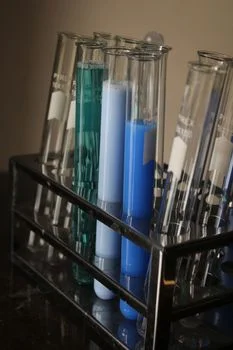
Hydroxide precipitation follows Ni²⁺ + 2OH⁻ → Ni(OH)₂↓ and remains the default for non-complexed industrial nickel. Optimal removal sits in the pH 9–11 window. Ammonia interference is the main constraint: [Ni(NH₃)₆]²⁺ keeps nickel dissolved, and co-precipitation of iron or chromium can inflate sludge volume. Most plants we size for plating rinse water still start with hydroxide unless ammonia or EDTA shows up in the jar-test series.
Sulfide precipitation uses Ni²⁺ + S²⁻ → NiS↓. Nickel sulfide’s lower solubility product supports deeper residuals, and many plants still see useful performance when mild complexation is present. Optimal pH is often near 5, which also limits co-precipitation of other metal hydroxides. Reagents such as Na₂S or H₂S demand strict H₂S gas controls because excess sulfide can evolve toxic gas.
Carbonate precipitation (Ni²⁺ + CO₃²⁻ → NiCO₃↓) fits low-nickel streams in the 1–5 mg/L Ni range at pH 8–9. It can produce dense sludge that dewaters well, but the higher Ksp limits use on high-strength feeds. Comparative Ksp values explain the ranking: Ni(OH)₂ at 5.48×10⁻¹⁶, NiCO₃ at 1.3×10⁻⁷, and NiS at 3×10⁻²¹.
| Precipitation Method | Chemical Reaction | Optimal pH Range | Solubility Product (Ksp) | Key Advantages | Key Limitations | Typical Use Case |
|---|---|---|---|---|---|---|
| Hydroxide | Ni²⁺ + 2OH⁻ → Ni(OH)₂↓ | 9–11 | 5.48 × 10⁻¹⁶ | Simple, widely understood, common reagents | Ammonia interference, co-precipitation of other metals, higher residual Ni than sulfide | General industrial wastewater, non-complexed Ni |
| Sulfide | Ni²⁺ + S²⁻ → NiS↓ | 5–8 (often optimized at 5) | 3 × 10⁻²¹ | Lower residual Ni, effective with some complexing agents, higher removal efficiency | H₂S gas generation risk, reagent handling safety, higher reagent cost | Electroplating, battery manufacturing, complexed Ni wastewater |
| Carbonate | Ni²⁺ + CO₃²⁻ → NiCO₃↓ | 8–9 | 1.3 × 10⁻⁷ | Dense sludge, simple process | Less effective for high Ni concentrations, higher Ksp than hydroxide/sulfide | Low-nickel wastewater (1–5 mg/L), polishing step |
After precipitation, most plants we size still need solid-liquid separation. A Dissolved Air Flotation (DAF) System is often paired with hydroxide or sulfide reactors when floc is light and settling alone is slow.
Reagent Dosing and pH Control Specifications
Hydroxide precipitation with NaOH typically needs 1.2–1.5 times the stoichiometric Ni²⁺:OH⁻ ratio so buffering and incomplete mixing do not leave free nickel. Sulfide dosing with Na₂S or H₂S is usually held near a 1:1 Ni²⁺:S²⁻ molar ratio to limit excess sulfide toxicity. Because sulfide trains often target pH near 5, HCl or H₂SO₄ is commonly used for pH trim before or during sulfide addition.
Inline pH probes with PID control can hold ±0.2 pH units when pumps, probe cleaning, and fail-safe alarms are maintained. Most plants we size for electroplating run toward the lower end of the hydroxide window only when ammonia is absent; complexed baths force a different recipe. HydropureWater offers advanced PLC-controlled chemical dosing for precise nickel precipitation, tying probe feedback to reagent pumps.
| Reagent | Typical Dosing Ratio (Molar) | Optimal pH Range | Unit Cost (Approx.) | Typical Consumption (per m³ wastewater, 50 mg/L Ni) |
|---|---|---|---|---|
| Sodium Hydroxide (NaOH) | 1.2–1.5x Ni²⁺:OH⁻ | 9–11 | $0.30/kg | 1.2–1.8 kg |
| Sodium Sulfide (Na₂S) | 1:1 Ni²⁺:S²⁻ | 5–8 | $1.20/kg | 0.8–1.0 kg |
| Hydrogen Sulfide (H₂S) | 1:1 Ni²⁺:S²⁻ | 5–8 | $2.50/kg (as gas) | 0.3–0.4 kg |
| Hydrochloric Acid (HCl) | Adjust to target pH | N/A | $0.20/kg | 0.5–1.5 kg (variable) |
| Sulfuric Acid (H₂SO₄) | Adjust to target pH | N/A | $0.15/kg | 0.6–1.8 kg (variable) |
Why does wrong pH cause precipitation failures?
Wrong pH causes precipitation failures because nickel solids only stay insoluble inside a narrow window. Excess caustic can also drive carbonate or other scale on pumps, probes, and downstream fans when CO₂ is present, leaving white chalky deposits during maintenance. Undershoot the setpoint and Ni(OH)₂ redissolves; overshoot it and you waste reagent while creating new solids problems.
Sludge Characterization and Hazardous Waste Compliance
Nickel precipitation sludge typically forms at 0.5–1.2 kg per m³ of treated wastewater, with 70–85% moisture after thickening. Volume tracks influent nickel, co-precipitated metals, and the chosen reagent. Ni(OH)₂ sludge is often managed as non-hazardous under EPA D004 when TCLP leachable nickel stays below 0.1 mg/L. NiS sludge can raise EPA D006 sulfide concerns if free sulfide remains or if acid conditions liberate H₂S, so TCLP and gas-risk checks are mandatory before disposal classification.
Plate-and-frame filter presses can reach about 90% solids; centrifuges more often land near 85% solids. High-efficiency sludge dewatering for nickel hydroxide/sulfide sludge cuts haulage mass. Dewatering itself may cost $50–$150 per ton, while disposal ranges about $200–$500 per ton for hazardous cake versus $50–$150 per ton for non-hazardous cake.
What drives chemical-based wastewater treatment cost?
Chemical-based wastewater treatment cost for nickel trains is driven first by reagent price, sludge classification, and labor, not by pump energy alone. For a 10 m³/h (about 44 GPM) precipitation system, CAPEX commonly falls between $80,000 and $150,000 for reactors, dosing pumps, pH control, and sludge handling. OPEX usually sits at $2–$5 per m³ treated when nickel is near 50 mg/L and the sludge pathway is clear.
Five-year TCO comparisons against ion exchange and reverse osmosis still favor precipitation for high nickel (>50 mg/L Ni) when discharge limits are moderate. Ion exchange competes below about 10 mg/L Ni when recovery matters. RO is usually reserved for polishing or limits below 0.1 mg/L Ni because of higher CAPEX, energy use, and concentrate handling. Clarified solids from a Dissolved Air Flotation (DAF) System can reduce thickener load and stabilize that OPEX band.
| Cost Category | Nickel Precipitation (10 m³/h system) | Ion Exchange (10 m³/h system) | Reverse Osmosis (10 m³/h system) |
|---|---|---|---|
| CAPEX (Total System) | $80,000 – $150,000 | $120,000 – $250,000 | $200,000 – $400,000 |
| OPEX (per m³ treated) | $2 – $5 | $3 – $7 | $5 – $10 |
| Key OPEX Drivers | Reagents, sludge disposal, labor | Regeneration chemicals, resin replacement, labor, energy | Energy, membrane replacement, concentrate disposal, labor |
| 5-Year TCO (Approx. for 50 mg/L Ni) | $1.0M – $2.0M | $1.5M – $3.5M | $2.5M – $5.0M |
| Best Use Case | High Ni (>50 mg/L), moderate discharge limits | Low Ni (<10 mg/L), Ni recovery, moderate discharge limits | Very low Ni (<1 mg/L), stringent discharge limits, ZLD |
Compliance Strategies for EPA, ISO, and Local Discharge Limits
EPA discharge benchmarks cited for nickel include 0.1 mg/L for electroplating under 40 CFR Part 464 and 0.5 mg/L for battery manufacturing under 40 CFR Part 461. Local sewer authorities often set tighter numbers, so design to the strictest applicable limit. Plants comparing nickel removal strategies for electroplating wastewater in Turkey still need the same pH, sludge, and documentation discipline even when national codes differ.
ISO 14001 programs expect logged precipitation efficiency, sludge manifests, and corrective actions for pH excursions. Semiconductor streams at 1–10 mg/L Ni with limits below 0.05 mg/L usually need post-precipitation ion exchange or RO. Work on nickel recovery from semiconductor wastewater often combines precipitation for bulk removal with polishing for both compliance and metal recovery.
Selection checklist before you freeze the process package:
- Confirm free vs. complexed nickel with bath chemistry and EDTA/ammonia screening.
- Choose hydroxide, sulfide, or hybrid precipitation from residual Ni and H₂S risk tolerance.
- Specify continuous pH monitoring with alarms at ±0.2 pH from setpoint.
- Budget TCLP testing and hazardous vs. non-hazardous disposal paths.
- Size dewatering to ≥85% solids before off-site haul.
- Decide whether IX/RO polishing is required for limits below about 0.1 mg/L Ni.
- Document reagent logs, quarterly lab checks, and spill contingency steps.
Main cost drivers to lock in the design basis are reagent unit price at your site, expected hazardous-waste fraction after TCLP, labor coverage for nights and weekends, and whether polishing chemicals or membrane replacements enter the OPEX envelope. Plants that skip complexation testing usually undersize pretreatment and overspend on polishing later.
Who This Is For / Who Should Look Elsewhere / Next Step
This guide is for plant engineers and EPC teams treating electroplating, battery, or semiconductor nickel wastewater where bulk Ni is high enough for precipitation to carry most of the load. Look elsewhere first if your feed is already below about 1 mg/L Ni and the only goal is ultrapure recycle—ion exchange or RO may be the primary unit instead of a precipitation reactor. To size reagent dose, sludge path, and polishing needs for your matrix, send influent data through our nickel precipitation design inquiry and we will return a duty-point recommendation.
Frequently Asked Questions
How do ammonia or EDTA stop nickel from precipitating?
Complexing agents form stable soluble nickel species such as [Ni(NH₃)₆]²⁺, so free Ni²⁺ never reaches the hydroxide or sulfide reaction. Removal efficiency can fall by 30–50% even when pH looks correct on the chart. Break the complex with pH shifts outside the stability window, oxidize organics, or add a polishing step after bulk precipitation. Jar tests on the real bath beat textbook stoichiometry here.
What pH should sulfide nickel precipitation use?
Sulfide nickel precipitation is typically optimized near pH 5, inside a broader 5–8 operating band. NiS (Ksp 3×10⁻²¹) supports lower residuals than Ni(OH)₂ (Ksp 5.48×10⁻¹⁶), which is why sulfide is chosen for high Ni or partially complexed streams. Removal near 94% is common when free sulfide and gas controls are managed. Excess sulfide raises H₂S risk, so molar dosing stays close to 1:1 Ni²⁺:S²⁻.
Is nickel hydroxide sludge always non-hazardous?
No. Ni(OH)₂ cake is often non-hazardous under EPA D004 only when TCLP leachable nickel stays below 0.1 mg/L. Co-precipitated metals or unusual bath chemistries can change that result. NiS solids may also trigger sulfide-related concerns under EPA D006 if free sulfide remains. Always run TCLP on production sludge, not on a clean lab precipitate.
What mainly drives OPEX for a nickel precipitation system?
Reagent cost, sludge disposal class, and operator labor dominate OPEX for nickel precipitation. At roughly 50 mg/L Ni, many plants land between $2 and $5 per m³ treated. Hazardous disposal at $200–$500 per ton can erase reagent savings from a cheaper chemistry. Energy for mixers and pumps matters, but it rarely outranks chemicals and cake haulage.
Can precipitation alone hit nickel below 0.05 mg/L?
Chemical precipitation alone usually delivers 94–99% removal and residuals near 0.1–0.5 mg/L under stable pH control. Limits below about 0.05 mg/L almost always need ion exchange or reverse osmosis after the clarifier or DAF. Semiconductor and ultrapure reuse projects should budget that polishing train from day one. Precipitation still carries bulk nickel cost-effectively before those final stages.