What Makes Malaysian Domestic Sewage Projects Different?
Domestic sewage treatment in Malaysia is a site-specific engineering decision, not simply an equipment-capacity purchase. The treatment train must respond to sanitary wastewater flow and loading, wet-weather peak risk, available footprint, discharge route, reuse objectives and the receiving authority’s applicable effluent category. The Chemical Engineering Transactions study, “Characteristics of the Effluent Wastewater in Sewage Treatment Plants of Malaysian Urban Areas,” sampled final treated wastewater from plants in Johor, Kuala Lumpur and Penang and compared the results with Malaysian Standard A and B discharge requirements. Those three locations provide local context, but they do not establish a universal design basis for every Malaysian project. Mixed-use or industrial sites also require a pretreatment review before domestic treatment is selected.
The buyer should document the daily flow and peak-hour factor, incoming wastewater characteristics, land constraints, intended reuse, receiving-water conditions and available operating skills before comparing bids. These inputs distinguish a treatment package from a complete project design. They also prevent a quoted treatment capacity from masking peak-flow, civil-work or compliance gaps. For housing and similar developments, the relationship between site conditions and packaged sewage treatment options for Kuala Lumpur housing must be assessed against the receiving requirement, not inferred from population alone.
Sanitary wastewater treatment means treating wastewater from household or equivalent sanitary activities. Where a site also discharges industrial process water, leachate or other non-sanitary streams, the designer should define treatment boundaries, equalisation requirements and upstream pretreatment. The applicable Standard A or B category must be confirmed with the relevant authority for the intended discharge route; the Malaysian urban study is evidence of a comparison method, not a site-specific permit determination.
The Treatment Process from Inlet to Compliant Effluent
A domestic treatment train progresses from screening and flow equalisation through biological treatment, solids separation, disinfection and controlled discharge or reuse preparation. The US EPA explains that sanitary sewers collect wastewater from homes and are not intended for widespread drainage of rainfall; however, their design may accommodate some additional flow when excess water enters during storm events. Cracks, faulty seals and improper connections can admit infiltration and inflow, while blockages, equipment failures, broken pipes or vandalism can cause sanitary sewer overflows. These are US collection-system findings and should be used as engineering warnings, not as evidence that Malaysian sewer conditions are identical.
Upstream screening protects downstream reliability by removing material before it reaches pumps, valves and biological processes. The GX rotary mechanical bar screen removes suspended solids, rags, plastics and fibrous debris, reducing the risk that these materials will foul or obstruct subsequent treatment stages.
| Process stage | Primary function | Buyer’s verification point |
|---|---|---|
| Screening | Remove rags, plastics and fibrous debris | Confirm upstream screen duty, cleaning access and discharge-handling method |
| Flow equalisation | Moderate flow and loading variation | Request the peak-flow assumptions and equalisation calculation |
| Biological treatment | Remove biodegradable organics | Check the loading basis and process-control requirements |
| Solids separation | Separate biomass or suspended solids | Confirm the separation method and sludge-removal route |
| Disinfection | Reduce remaining pathogens | Define the required dose, monitoring and residual-disinfectant controls |
| Discharge or reuse preparation | Control final flow and quality | Match the treatment result to the receiving route and reuse plan |
Peak flow changes the operating question. The US EPA states that significant wet-weather flow increases can create operational challenges and adversely affect treatment efficiency, reliability and control of unit processes. The final treatment stage depends on the required effluent quality and reuse application; biological treatment alone should not be presented as sufficient for every reuse purpose.
Packaged A/O, MBR and Decentralised Options Compared
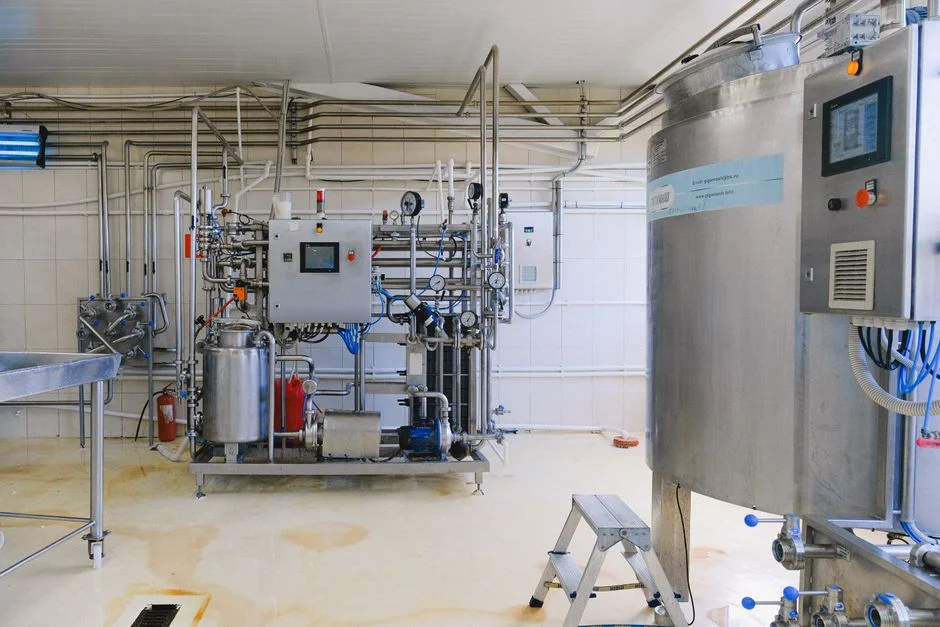
Technology selection begins with the receiving requirement, then tests process fit, footprint, peak-flow resilience, automation and lifecycle support. The following comparison uses the verified capacities and process attributes in the supplied product catalogue and research; it does not imply that every configuration is suitable for every site.
| Decision field | Packaged A/O | MBR | Decentralised treatment |
|---|---|---|---|
| Process configuration | Anoxic/aerobic biological contact oxidation, sedimentation and disinfection in one package | Activated sludge with submerged PVDF membrane filtration | Vermifiltration combines filtration with earthworms for domestic septic-tank sewage |
| Verified capacity | 1–80 m³/h | 10–2,000 m³/day | No Malaysian capacity range supplied |
| Footprint and installation | Single buried package; landscaping may be installed above | Reported footprint is 60% smaller than conventional systems | Potentially suitable for decentralised deployment; project footprint must be established |
| Filtration or reuse relevance | Treatment stage depends on the specified package and discharge requirement | Filtration below 1 μm | Not established as a universal high-grade reuse solution by the supplied research |
| Maintenance and operating implications | Automated package operation; biological, sedimentation and disinfection checks remain necessary | Requires membrane-module management, aeration and control-system support | InTechOpen describes vermifiltration as decentralised, viable and requiring less expertise |
The WSZ underground package sewage treatment plant combines anoxic/aerobic biological contact oxidation with sedimentation and disinfection in a single buried unit. The HydropureWater verified product catalogue gives a handling range of 1–80 m³/h and states that it can be installed below grade or mounted on a trailer for mobile deployment.
The integrated MBR wastewater treatment system combines activated sludge treatment with submerged PVDF membrane filtration. Its listed project range is 10–2,000 m³/day, filtration is stated as below 1 μm, and the catalogue reports a footprint 60% smaller than conventional systems. These are supplier-catalog attributes, not independent Malaysian project-performance data.
For remote or dispersed applications, InTechOpen’s “Application of Vermifiltration for Domestic Sewage Treatment” describes vermifiltration as decentralised, viable and requiring less expertise. It also reports treatment of domestic septic-tank sewage, but the supplied excerpt does not provide a defensible Malaysian capacity range. Constructed wetlands with microbial fuel cells should remain a research-led integrated treatment and electricity-production concept, not a default packaged procurement option: the supplied InTechOpen page returned an internal server error, so no quantitative performance claim is justified. Selection follows the same sequence for all three routes—receiving requirement first, then fit and lifecycle evidence. Further process selection can be informed by domestic sewage COD removal methods.
How to Size and Specify a Treatment Plant
A quotation becomes comparable only when the supplier states its design basis, process calculation and operating assumptions. Request the design flow, peak flow, retention assumptions, process calculations, number of units, redundancy philosophy and installed footprint. Actual wastewater characteristics—not population estimates alone—should define biological loading, clarification and disinfection requirements.
For a packaged A/O proposal, compare the stated duty with the verified 1–80 m³/h range of the WSZ underground package sewage treatment plant. Confirm whether multiple units, separation between stages or a mobile configuration is required; these are different project scopes and should not be compared at headline price alone.
For an MBR proposal, compare the duty with the verified 10–2,000 m³/day range. Identify the membrane format, aeration arrangement, control architecture and module-replacement strategy. The available design evidence for the DF module specifies configurations of 80–225 m² of membrane area and production of 32–135 m³/day, using 0.1 μm PVDF membranes. The proposal should identify which membrane area and production rate applies to the project rather than rely on a generic “MBR system” description. Detailed comparisons should follow MBR membrane bioreactor design criteria.
| Mandatory submission item | Information the buyer should receive |
|---|---|
| Design basis | Average and peak wastewater flow, characteristics, reuse objective and applicable effluent category |
| Process design | Loading and retention calculations, treatment stages, hydraulic assumptions and disinfection basis |
| Equipment configuration | Unit count, capacity, redundancy, membranes or media, controls and installed footprint |
| Resilience | Response to peak flow, power interruption, equipment failure, bypass conditions and maintenance outages |
| Performance evidence | Commissioning tests, monitoring method and clear process for demonstrating the specified duty and effluent requirement |
Ask how treatment continues during peak events, planned maintenance and failures. A claim of continuous operation is not enough without an operating response, capacity basis and recovery procedure.
Comparing Quotes for Cost, Compliance and Supplier Support
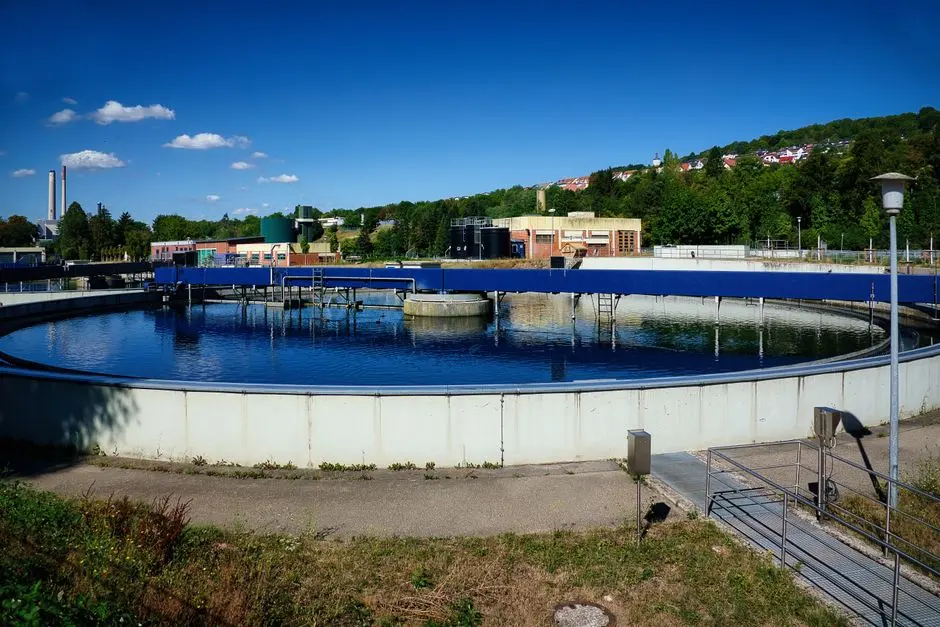
Headline prices are not comparable until equipment and project scope are separated. The offer should identify the equipment, civil works, installation, commissioning, utilities, controls, access covers, odour control, sludge removal, training, warranty and maintenance. A price that excludes civil works, external power or routine service cannot be compared directly with a full installed quotation.
Every offer should state the wastewater basis, design flow, guaranteed duty, process stages and proposed Standard A or B category. The buyer must reconcile these inputs before accepting the lowest price. Where the discharge route or reuse requirement changes the final treatment stage, the treatment scope must change with it.
Peak-flow treatment and failure response belong in the commercial offer. The US EPA warns that wet-weather peaks can affect treatment efficiency, reliability and unit-process control, while equipment failures and other sewer problems can produce overflows. The supplier should explain how power loss, high inflow, unit outage, bypass conditions and maintenance affect continuity, including whether storage or standby capacity is included.
For automated plants, request the control philosophy, alarm response, remote-monitoring options, local service availability, spare-parts strategy and preventive-maintenance schedule. A project-specific quotation is necessary because the supplied research contains no reliable Malaysian project-price dataset. Engineering comparisons can support the technical review, but the purchasing decision requires the MBR versus activated-sludge engineering comparison to be tied to a defined scope and receiving requirement.
Commissioning, Monitoring and Maintenance Plan
Commissioning should verify the installed treatment chain rather than only prove that the package powers up. The plan should cover incoming-flow confirmation, control-system tests, biological process start-up, clarification, disinfection, sampling and operator training. Each result should be linked to the design duty and the applicable Malaysian effluent requirement.
Agree in advance which parameters the operator will monitor, how samples will be taken and what evidence demonstrates compliance. The maintenance schedule should assign responsibility for sludge removal, screen cleaning, membrane or media maintenance, disinfectant checks, access arrangements and odour control.
Peak-event checks belong in the operating plan because the US EPA reports that wet-weather peaks can adversely affect treatment efficiency, reliability and process control. The operating procedure should state how the facility responds when flow approaches the design condition and when recovery is required after an upset. This US evidence identifies the engineering risk; local hydraulic data must establish the Malaysian design condition.
Handover should include test records, equipment documentation, control settings, operator training and a measurable support arrangement. Automation should be described through its alarm, service and maintenance obligations, not used as a substitute for those records.
Frequently Asked Questions
Which treatment capacity is suitable for a Malaysian domestic sewage project?
The verified WSZ capacity range is 1–80 m³/h, while the listed MBR project range is 10–2,000 m³/day. Actual selection requires the wastewater flow, peak-flow condition, characteristics, effluent requirement, footprint and reuse objective; these ranges alone do not establish the required configuration.
How much does domestic sewage treatment cost in Malaysia?
The supplied research contains no reliable Malaysian project-price figures. Request a scope-defined quotation covering equipment, civil works, installation, commissioning and maintenance. Confirm separately whether utilities, access structures, odour control, sludge removal, training, warranty and service support are included.
Which Malaysian effluent standard applies: Standard A or Standard B?
The Chemical Engineering Transactions study compared treated wastewater from plants in Johor, Kuala Lumpur and Penang with Malaysian Standard A and B requirements, but it did not determine the category for every project. Confirm the applicable category with the receiving authority by reference