Map the Kermanshah data center's water and wastewater streams
A Kermanshah data center generally needs separate treatment pathways for cooling tower blowdown, cooling-loop water, equipment washwater, domestic sewage, and any direct-liquid or immersion-cooling effluent. Cooling blowdown usually contains concentrated salts, treatment chemicals, suspended solids, and potentially metals, so pretreatment may be needed before reverse osmosis. Reuse should be sized against measured blowdown, makeup-water chemistry, cycles of concentration, and permeate quality—not a generic facility-water-use estimate. In Iran, the final route must be based on the selected discharge destination and applicable Iranian environmental and water requirements.
Begin with a site water balance rather than a treatment-skid list. Draw each source, use, return stream, purge, and final destination. The Congressional Research Service identifies thermal regulation as a primary direct use of data-center water and notes that liquid-cooled systems can create stream-specific waste-management requirements. The exact cooling topology matters because air-cooled, evaporative, direct-liquid, immersion, and hybrid systems produce different wastewater compositions and volumes.
Keep cooling-tower blowdown separate from other drains. Evaporation leaves salts and treatment chemicals in the circulating water; Commercial Water Lab’s 2026 summary lists salts and minerals, biocides, corrosion inhibitors, and heavy metals among possible constituents. Direct-liquid and immersion-cooling effluent is a separate high-concern stream because Commercial Water Lab notes that coolant fluids may contain refrigerants or PFAS compounds and require specialized handling.
| Stream | Design question | Data required |
|---|---|---|
| Evaporative cooling | Which flow becomes blowdown? | Makeup, evaporation, purge, cycles of concentration, chemical dosing |
| Chilled-water and cooling loops | Is there leakage, drain-down, or contamination? | Pressure records, chemistry, temperature, destination |
| Equipment washdown | Does it contain oil, cleaners, or metals? | Flow, pH, suspended solids, oil and grease, metals |
| Domestic sewage | Can it enter a biological treatment train? | Flow, load, treatment capacity, sewer terms |
| Laboratory drains | Are reagents present? | Waste characterization and prohibited-substance review |
| Direct-liquid or immersion cooling | What coolant is used and can it leak? | Fluid safety data, concentration, incident response requirements |
For Kermanshah, obtain source-water analyses, monthly water and energy demand, cooling-system configuration, chemical dosing, current cycles of concentration, expected IT-load changes, and the proposed destination for every residual stream. The Bhilai data center blowdown treatment guide provides a comparable stream-mapping framework, while the data center wastewater treatment in a water-stressed region highlights why local supply conditions belong in the engineering basis.
Set the treatment objectives before choosing equipment
Three distinct acceptance criteria should govern the project: freshwater reduction, lawful residual discharge, and reliable reuse-water quality. Combining them into one generic “reuse specification” obscures whether equipment is being selected for water savings, environmental compliance, cooling reliability, or all three.
Define the cooling make-up requirement from the actual cooling system. Genesis Water Technologies states that many cooling-tower systems use a 500–1,500 mg/L TDS range and typically specify 10–25 mg/L suspended solids, while emphasizing that actual limits vary with system design. These values are design guidance, not Kermanshah discharge standards. Confirm them against the selected chillers, tower metallurgy, heat exchangers, water-treatment program, cycles of concentration, and expected future load.
Use water use effectiveness, or WUE, as a site performance measure rather than a treatment-sizing parameter. The Congressional Research Service defines WUE as total data-center water consumption divided by IT-equipment electricity demand. It separates direct facility consumption from indirect off-site power-generation use, so the project should state which boundary it reports.
| Objective | Acceptance basis | Information required |
|---|---|---|
| Freshwater reduction | Permeate returned to make-up and net withdrawal avoided | Measured flows, recovery, storage, WUE boundary |
| Residual discharge | Destination-specific quality and quantity | Applicable permit, sewer agreement, heat and chemical limits |
| Reliable reuse | Cooling design accepts product water | TDS, suspended solids, hardness, alkalinity, silica, biology |
Decide whether the project seeks reduced discharge, higher cooling-tower cycles of concentration, partial reuse, or a high-recovery residual-minimization scheme. Each objective creates a different process train. No Kermanshah discharge limit should be inferred from U.S. examples: the applicable environmental permit, sewer agreement, water authority requirements, and receiving-water conditions must be verified locally before equipment is specified.
Choose a treatment train for cooling tower blowdown
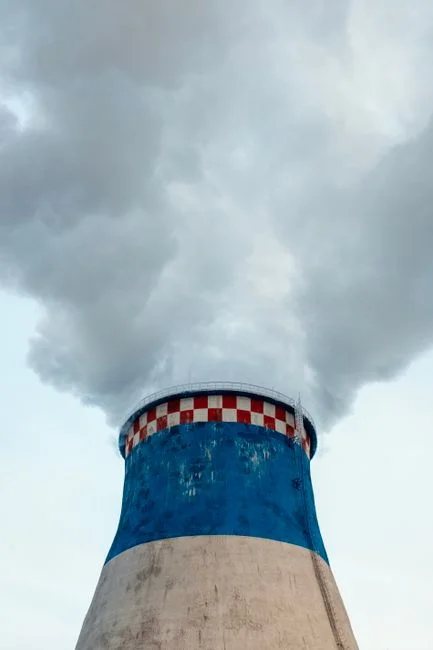
Cooling-tower blowdown should pass through a chemistry-led sequence: equalization and sampling, solids removal where necessary, membrane pretreatment, desalination, stabilization, disinfection where required, and a defined residual route. The sequence should be confirmed by representative samples rather than inferred from one operating day.
- Characterize the feed. Sample across representative loads and chemical conditions. Measure pH, conductivity or TDS, total hardness, calcium, alkalinity, silica, sulfate, chloride, suspended solids, organics, biocides, corrosion inhibitors, and relevant metals. The supplied sources do not establish acceptable concentrations for Kermanshah.
- Protect the membranes. Use filtration and, where justified by jar or pilot testing, coagulation and clarification. The UF pretreatment for cooling tower blowdown is specified by HydropureWater as removing bacteria, colloids, and suspended solids without chemicals, with 0.03 μm PVDF membranes, automatic backwash, and air scour. Its stated capacity is 2,000–40,000 L/h; this catalog range is not a Kermanshah design flow.
- Desalinate to the reuse specification. An industrial RO system for blowdown reuse is a candidate when lower dissolved solids are required. HydropureWater specifies recovery rates up to 95%, but the project guarantee must reflect actual feed chemistry, temperature, scaling tendency, energy use, cleaning frequency, and concentrate disposal.
- Control scale deliberately. IDE Technologies reports that conventional brackish-water RO commonly reaches 75–80% recovery before scaling becomes limiting. Its cited high-recovery case used controlled precipitation and dynamic RO operation to reach around 95% recovery while reducing permeate silica to about 1 mg/L.
- Stabilize and disinfect against the final loop. Select corrosion control and disinfection after identifying the reuse destination and microbial-control design. The chlorine dioxide generator for industrial cooling loops may be relevant, while UV is an alternative final barrier without chemical by-products. Neither should be assumed acceptable until the cooling designer confirms compatibility.
- Manage every residual. Define where RO concentrate or controlled salt precipitate goes, how it will be stored and transferred, and whether the destination accepts its chemistry. Headline recovery has little value if the remaining brine has no lawful, technically viable route.
| Stage | Purpose | Key acceptance information |
|---|---|---|
| Equalization and sampling | Stabilize and characterize feed | Measured flow range and complete analysis |
| Filtration or clarification | Reduce suspended solids and colloids | Filtrate quality, cleaning method, recovery loss |
| RO | Remove dissolved salts | Feed-dependent recovery, product quality, energy, concentrate |
| Stabilization and disinfection | Protect cooling equipment and control biology | Cooling-system compatibility and monitoring |
| Residual management | Handle concentrate or precipitate | Quantity, composition, destination and contingency |
Treat non-blowdown wastewater without compromising reuse
Non-blowdown streams should remain segregated because their treatment objectives and achievable product-water qualities differ. Combining domestic sewage with concentrated cooling blowdown can increase biological load, solids, and treatment complexity while providing no useful dilution benefit for reuse.
Assess equipment washwater for suspended solids, oil and grease, cleaning chemicals, and heavy metals. Equalization is usually needed before treatment. Dissolved air flotation can remove oily or buoyant material, and other coagulants may be required where gravity clarification is inadequate. The relevant process should follow characterization and jar testing rather than a generic “washwater” assumption.
Route domestic sewage to a dedicated biological process. The MBR integrated wastewater treatment system described by HydropureWater combines activated sludge with submerged PVDF membrane filtration, provides near-reuse-quality effluent with filtration below 1 μm, and has a stated capacity range of 10–2,000 m³/day. That range identifies equipment capability only; the project flow and organic load still require measurement.
Isolate any suspected refrigerant, PFAS, or manufacturer-specific coolant leak. The material identity, concentration, and compatible destruction or separation technology must be confirmed before it enters a biological, UF, or RO train. Conventional membrane treatment should not be presented as removing these hazards without supporting test data.
| Stream | Potential process | Selection trigger |
|---|---|---|
| Equipment washwater | Equalization, DAF, filtration, targeted chemical treatment | Oil, solids, cleaning chemistry, or metals in samples |
| Domestic sewage | Biological treatment followed by membrane separation | Confirmed flow, load, and reuse or discharge objective |
| Coolant-contaminated water | Segregated specialist treatment | Fluid identification and manufacturer requirements |
| General chemical adjustment | Automatic dosing | Jar or pilot result establishes dose and control limits |
Automatic chemical dosing should follow treatment testing. HydropureWater’s PLC-controlled chemical dosing skid can inject coagulants, flocculants, pH adjusters, and specialty chemicals, but equipment selection does not establish the required chemical, dose point, residual, or control logic.
Compare discharge, partial reuse, and high-recovery reuse
The practical reuse decision is a comparison of water recovered, freshwater displaced, concentrate generated, and compliance exposure—not a choice based on maximum membrane recovery alone.
| Option | Treatment concept | Principal advantage | Principal constraint |
|---|---|---|---|
| Conventional discharge | Meet confirmed destination requirements with the minimum treatment needed | Simplest operating concept | Lowest water resilience and continued residual discharge |
| Partial reuse | Pretreat blowdown, produce qualified permeate, and blend it into cooling make-up | Reduces freshwater demand while retaining a residual-discharge route | Requires verified product-water quality and careful blending |
| High-recovery reuse | Combine membrane treatment, active scale control, and concentrate or salt handling | Maximizes recovered water and can reduce freshwater withdrawal | Highest control, maintenance, energy, and residual-management demands |
Compare each option using measured daily blowdown, recoverable permeate, freshwater displaced, concentrate volume, chemical and energy demand, cleaning frequency, redundancy, and permit compatibility. Include storage, blending, downtime, operator workload, and the consequence of a failed product-water specification. A partial-reuse train may offer a better balance if its concentrate can be lawfully and reliably discharged; a high-recovery train becomes harder to justify if precipitate handling has no destination.
Do not use the Congressional Research Service’s household-equivalent estimate as a design flow. It describes a 100 MW U.S. facility estimate averaged across cooling strategies, while Kermanshah sizing must use site measurements and the selected cooling configuration. The Golfe data center treatment options provides a useful comparison structure, but its geography does not replace Kermanshah data.
Build the procurement brief and verify supplier performance
The procurement package should allow bidders to design and guarantee the same thing: measured flows, defined feed chemistry, an explicit reuse target, a specified residual destination, and testable commissioning criteria.
Include source-water analyses, measured flow records, cooling chemistry, reuse objectives, site climate, electrical supply, residual-disposal constraints, operating availability, and product-water specifications. Require guarantees tied to actual feed conditions. A stated 95% recovery should not be accepted without feed chemistry, concentrate quality, energy use, cleaning frequency, and redundancy commitments.
| Bid package item | Information to request | Reason for inclusion |
|---|---|---|
| Design basis | Measured peak and daily flows, water balance, current chemistry | Prevents generic capacity selection |
| Performance guarantee | Flow, recovery, product quality, energy and chemical use | Makes the offer verifiable |
| Residual route | Concentrate quantity, composition, storage and destination | Tests whether reuse is technically complete |
| Operations | Cleaning intervals, bypass, fail-safe behavior, redundancy | Addresses availability and operator burden |
| Delivery | Warranty, schedule, training, spares, local service support | Defines implementation responsibilities |
Check proposed equipment ranges against measured demand. HydropureWater’s stated UF range is 2,000–40,000 L/h, while its MBR range is 10–2,000 m³/day. Neither can be assigned to the project without flow data. Also require chemical compatibility, remote-monitoring scope, operator training, a spare-parts strategy, and a guaranteed delivery and commissioning schedule.
Require a pilot or engineering trial when scaling, silica, biological growth, or new coolant chemistry is uncertain. The purchase contract should define test conditions, sampling points, acceptance criteria, rejection remedies, warranty boundaries, training deliverables, and performance tests after stabilization.
Frequently Asked Questions
What wastewater treatment does a Kermanshah data center need?
It needs enough pretreatment, desalination, disinfection where required, and residual management to meet measured cooling-water and discharge requirements. Generic consumption estimates cannot size the plant; the water balance, source chemistry, cooling configuration, and destination-specific requirements must define the treatment train.
How should bidders be selected for blowdown reuse?
Ask every bidder to guarantee flow and recovery at the actual feed chemistry, along with product-water limits, concentrate destination, energy and chemical use, cleaning intervals, redundancy, and local service support. Compare the same contractual guarantees rather than ranking headline recovery rates.
Is UF plus RO sufficient for cooling tower blowdown reuse?
UF plus RO is a strong candidate because it addresses suspended material and dissolved salts. It is sufficient only if scaling control, stabilization, disinfection, blending, and residual handling are designed for the measured Kermanshah feed and final cooling loop.
What should the project budget include?
Request itemized quotations covering pretreatment, membranes, controls, pre- and post-treatment chemicals, residual management, commissioning, spares, training, and service. Do not compare bids against the main skid alone. Also request payment milestones tied to delivery, installation, acceptance testing, and guaranteed performance.
Which Iranian authorities must confirm the discharge route?
Confirm the route with the relevant Iranian environmental and water authorities and, where applicable, the receiving sewer utility or industrial pretreatment operator. Direct discharge and sewer or industrial pretreatment obligations are destination-specific; U.S. permit examples cannot be used as Kermanshah limits.
Related Equipment
- industrial RO system for blowdown reuse — specifications, capacity range, and technical data