
What DAF Should—and Should Not—Remove From Hotel Wastewater
Dissolved air flotation (DAF) is a physico-chemical separation process in which microbubbles attach to flocculated floatable material, which rises to the surface and is skimmed. For hotel wastewater, it is strongest where free or emulsified oil, FOG, food particles, fibers, and suspended solids require physical separation. It is not a substitute for biological treatment of soluble, biodegradable COD. The design question is therefore not “Can DAF treat the hotel?” but “Which contaminants need flotation, and which require biological or other polishing before discharge or reuse?” The DAF system engineering specifications should be used to define this separation duty.
The restaurant-waste context reinforces why kitchen streams require source control. In the United States in 2012, 36 million tons of food waste was generated, 1.7 million tons was recycled, approximately 20% of prepared food ended up as waste, and food represented over 50% of restaurant waste, according to the academic chapter “Dissolved Air Flotation (DAF) for Wastewater Treatment” published in Advances in Industrial and Hazardous Wastes Treatment. Those figures describe waste generation, not DAF performance, but they show why kitchens can create concentrated particulate and FOG loads that should not be diluted into the general hotel sewer.
ClearFox’s commercial guidance supports a similar process distinction: DAF can perform strongly when COD is linked to FOG, proteins, or fine particles, while remaining less effective as a stand-alone step when COD is mainly dissolved and biodegradable. Its dairy-wastewater application entry states that fats and suspended organics still usually require biological polishing. Similarly, the academic study “Trickling Filter for High Efficiency Treatment of Dairy Sewage,” published by the Journal of Ecological Engineering, evaluated dairy wastewater after DAF with a laboratory-scale trickling filter, providing a direct example of DAF being used ahead of biological polishing.
For a hotel design brief, split the assessment into two treatment objectives. First, identify floatable material that could foul a biological process, interfere with sewer entry, or require controlled removal. Second, quantify soluble biodegradable COD that remains after physical separation. A DAF claim must therefore be tied to actual FOG, oil-and-grease, and suspended-solids duties; it cannot be treated as proof of complete wastewater compliance.
Map the Hotel Wastewater Sources Before Sizing the DAF
Hotel wastewater must be mapped by stream, operating condition, and destination before any DAF flow is assigned. Kitchen pot sinks, floor drains, grease-trap effluent, dishwashers, and food-preparation areas can contribute concentrated FOG and food solids. Laundry flows can contribute fibers, suspended solids, and variable detergent-bearing loads. Guest accommodation produces mainly domestic sewage, while pools, cooling or boiler blowdown, cleaning operations, and stormwater ingress may have distinct chemistry and flow characteristics that make direct inclusion inappropriate.
Request representative samples rather than deriving hydraulic and pollutant duties from occupancy or room count alone. Sampling should cover normal and peak operating periods and record flow, TSS, oil and grease, COD, pH, temperature, and soluble COD where relevant. The design basis must also state average flow, peak flow, maximum-hour flow, batch or continuous discharge behavior, the required treatment duty, and the intended discharge or reuse route. Those are distinct inputs: a unit selected only for average daily flow can be overwhelmed by breakfast, banquet, laundry, or event-driven peaks.
| Hotel stream | Design information to establish | DFA/DAF scope decision |
|---|---|---|
| Kitchen, food preparation, pot sinks and floor drains | Representative flow, FOG, food solids, COD, pH and temperature | Usually a candidate for source segregation and DAF pretreatment where floatable loading is material |
| Grease-trap effluent | Actual discharge profile, retained grease condition, slug frequency and downstream destination | Include only after confirming hydraulic and contaminant loads; upstream grease control remains necessary |
| Dishwasher discharge | Flow timing, detergents, temperature and COD character | Assess separately because cleaners and hot discharges may affect equalization and chemistry |
| Laundry wastewater | Flow, fibers, TSS, pH, detergents and batch discharge pattern | Screen first; include in DAF only if testing shows that floatable or suspended material warrants it |
| Guest accommodation and staff areas | Domestic sewage flow, COD, TSS and discharge peaks | Normally route to biological treatment, with DAF used only where testing demonstrates a separate physical-separation duty |
| Pools, cooling or boiler blowdown, cleaning and stormwater | Composition, temperature, chemicals and isolation requirements | Exclude incompatible or uncontaminated streams by design rather than allowing uncontrolled dilution |
Hydraulic equalization is not a substitute for source segregation. Breakfast and banquet service, laundry cycles, kitchen turnover, cleaning, weekend occupancy, and hotel events can create surges and slug loads. Equalization should be evaluated where these patterns would impair chemical dosing or flotation stability. Provide accessible bypasses and cleanouts for screenings, grit, hair, fibrous material, and excessive grease loads. A rotary mechanical bar screen is one upstream physical-control option for solids that should not reach the flotation circuit. The tender document should identify which streams enter the DAF, which are excluded, and where overflow or bypass flows go.
Build a Pretreatment and Equalization Train
Upstream controls determine whether DAF operates consistently. Screening and physical segregation should remove rags, plastics, food scraps, and fibrous laundry material before flotation. These materials can consume coagulant, disrupt float stability, or create sludge-handling problems. Physical removal does not remove the need for adequate kitchen drainage practice: FOG should be controlled at source through appropriate grease management rather than assumed to disappear in the DAF unit.
Provide equalization where variable hotel flows or concentrated kitchen discharges would otherwise produce hydraulic surges. A slug of kitchen wastewater can dilute or overwhelm the chemical dose, while a rapid flow increase can reduce flotation residence time. The equalization assessment should compare incoming flow patterns with the selected DAF treatment capacity and identify whether tank turnover, mixing, aeration, or diversion is required. A level-based control sequence should also define how excess or noncompliant flows are handled.
Confirm pH adjustment and coagulant or flocculant requirements through representative wastewater jar testing or pilot work. ClearFox identifies pH regulation and polymer preparation as functions within its DAF process and states that performance where COD is linked to FOG depends on stable pH and coagulant control. These are supplier-reported process descriptions, not independent guarantees for hotel wastewater. Trial work must establish chemical dose, contact sequence, floatability, sludge characteristics, and sensitivity to wastewater variation.
Specify automatic control only after establishing the operating philosophy. PLC-controlled dosing can coordinate pH adjustment, coagulant, flocculant, and specialty-chemical feed, but the control narrative should define measurements, alarms, duty/standby arrangements, calibration checks, and manual fallback. The automatic chemical dosing system for pH correction and DAF flocculation should therefore be evaluated as part of the complete control package, not as an accessory detached from the wastewater tests.
- Remove screenings, grit, rags, fibrous material, and excessive solids.
- Control kitchen FOG and food solids at source.
- Equalize expected surges and batch kitchen discharges.
- Set pH and chemical doses through testing.
- Validate control, alarms, and bypass arrangements before commissioning.
Select DAF Hydraulic and Equipment Parameters
The verified HydropureWater product catalog specifies a DAF envelope of 4–300 m³/h across 13 standard models. That range is a manufacturer-reported product limit, not evidence that every model will meet a hotel’s treatment duty. The selected model must accommodate the verified average and peak hydraulic duty after considering equalization, redundancy, recycle flow, and downstream constraints.
The supplier should develop the design from representative wastewater rather than select a model from flow alone. HydropureWater design guidance cited in the brief gives 3–6 bar saturation pressure, 20–100 μm bubble size, and 20–60 minutes retention time as reference values. These parameters should be challenged against the wastewater test results, treatment objective, vessel configuration, and supplier’s calculations. They are not guaranteed performance ranges for hotel wastewater.
| Parameter or function | Verified information | Information the buyer must obtain |
|---|---|---|
| DAF capacity | HydropureWater verified product catalog: 4–300 m³/h across 13 standard models | Selected model duty at verified average and peak flow, including equalization and redundancy assumptions |
| Saturation pressure | HydropureWater design guidance cited in the brief: 3–6 bar | Supplier calculation, compressor duty and control setpoint for the actual wastewater |
| Bubble size | HydropureWater design guidance cited in the brief: 20–100 μm | Expected bubble distribution and performance at the selected saturation and recycle conditions |
| Retention time | HydropureWater design guidance cited in the brief: 20–60 minutes | Model-specific hydraulic calculation based on actual flow, recycle ratio and treatment objective |
| Process functions | Recycle, saturation, flocculation, flotation and skimming are required functions | Recycle basis, treated-flow basis, flotation-area loading, solids loading, surface overflow rate and skimming arrangement |
| Supplier alternative | ClearFox reports capacities of 1–250 m³/h, modular or containerized installation, corrosion-resistant construction, automatic operation and optional remote monitoring | Project-specific performance evidence, materials, controls, maintenance scope and treatment guarantees |
Specify the recycle, saturation, flocculation, flotation, and skimming functions as one hydraulic system. Recirculated flow affects total hydraulic loading even when the forward wastewater flow is unchanged, so treated-flow and total-flow bases must be explicit. Request flotation-area loading, solids loading, surface overflow rate, sludge collection method, and the selected recycle ratio. The supplied research does not provide one universal value for these parameters, and inventing a nominal loading would weaken rather than strengthen the tender.
Compare architectures without converting supplier claims into independent evidence. ClearFox reports capacities from 1–250 m³/h, modular or containerized installation, polypropylene or polyethylene construction, automatic operation, and optional remote monitoring. Those features may affect site planning and maintenance, but they do not prove FOG or TSS removal from a specific hotel wastewater. Request a performance guarantee or test protocol tied to the characterized FOG and TSS duty. The HydropureWater DAF system for hotel wastewater pretreatment should be compared through the industrial DAF unit selection framework, with wastewater-specific calculations taking priority over generic application claims.
Integrate DAF With Biological Polishing and Sludge Handling
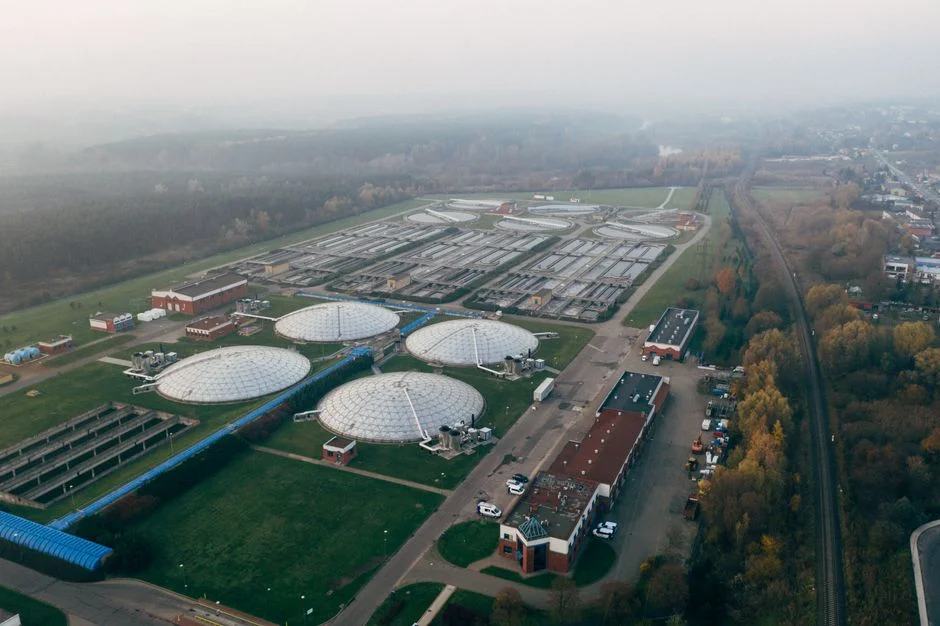
DAF effluent should proceed to biological treatment when testing shows that soluble biodegradable COD remains material. DAF removes floatable material and some associated COD; biological treatment addresses the dissolved biodegradable fraction that does not float. The academic dairy-wastewater study by the Journal of Ecological Engineering provides supporting process evidence by evaluating dairy wastewater after DAF with a laboratory-scale trickling filter. That study supports the configuration; it does not establish hotel-specific performance.
The biological stage must be sized for the expected DAF effluent and operating load, not the original hotel wastewater. The design should address flow equalization, nutrients, pH, temperature, soluble COD, and the effect of DAF chemicals on downstream biological activity. If DAF is intended as the sole treatment before a permitted discharge or reuse point, the project still needs a defensible compliance basis showing that soluble constituents are acceptable; DAF removal claims alone do not establish that basis.
Assess the separated float and sludge against the selected chemical program and disposal route. Site design should include sludge storage, odor control, dewatering, container access, and a safe cleaning arrangement. A plate-and-frame press may be appropriate where recovered DAF solids require further dewatering before disposal. The decision should follow a solids mass balance rather than a generic assumption that flotation sludge behaves like ordinary sewage sludge.
Evaluate claimed sludge-volume reductions cautiously. ClearFox states that its system can produce up to twice the dry-solids content of conventional flotation sludge and may permit a smaller downstream press or elimination of a separate thickener. This is a supplier claim, and it must be tested against project-specific chemical dosing, recovered oil and solids, waste characteristics, and dewatering performance. A DAF plant operating cost breakdown should include chemical consumption and downstream sludge handling rather than excluding them from a comparison.
Use a Hotel-Specific Go or No-Go Decision Framework
The go/no-go decision should follow the measured wastewater fractions, not the presence of a grease trap or a general expectation that DAF is necessary. DAF is justified where significant floatable FOG, oil, food solids, or fibrous material would interfere with downstream biological treatment or sewer entry. Direct biological treatment is preferable where the principal load is soluble domestic sewage, FOG is limited, and no physical-separation duty has been demonstrated. DAF plus biological treatment is appropriate where both floatable FOG and soluble biodegradable COD are material.
| Measured wastewater condition | Preferred treatment route | Go or no-go check |
|---|---|---|
| Material floatable FOG, oil, food solids or fibers; downstream biological protection required | Source control, pretreatment, equalization, DAF, then biological polishing as required | Go only with representative samples, peak-flow sizing, chemical controls and a sludge route |
| Soluble domestic-sewage load with limited FOG and no demonstrated solids-interference problem | Direct biological treatment | No-go for DAF unless testing identifies a separate physical-separation duty |
| Material floatable FOG and soluble biodegradable COD | DAF followed by biological treatment | Go when the full train, not DAF alone, is designed for the discharge or reuse requirement |
| Proposal omits wastewater testing, peak sizing, chemical control, downstream treatment or sludge handling | Do not award or approve the DAF scope | No-go until the missing design inputs and process interfaces are documented |
For hotels needing a broader treatment solution, compare the DAF front end against a packaged anoxic/aerobic route rather than treating the two as identical products. The HydropureWater verified catalog states that its WSZ system handles 1–80 m³/h and is designed for applications including hotels. A packaged sewage train may be appropriate where the dominant duty is domestic biological treatment and no defensible flotation duty exists. If both approaches remain technically credible, compare effluent quality obligations, footprint, controls, sludge handling, operator competence, and the complete treatment train—not headline flow rates.
Reject any proposal that treats a generic DAF removal percentage as a hotel guarantee. The tender should require the design basis, representative test data, hydraulic calculations, treatment duties, downstream integration, and disposal assumptions. Compliance review must examine the entire proposed train against the applicable local sewer, discharge, or reuse requirements.
Commission, Monitor, and Verify the Installed DAF
Commissioning should prove operation under hotel conditions, not merely confirm that the equipment starts. Begin with clean-water checks of recycle flow, air pressure, saturation performance, bubble distribution, chemical dosing, skimming, and controls. Then introduce representative wastewater and verify chemical dose, float formation, float removal, sludge withdrawal, and stable water level. The wastewater used for performance testing should reflect the characterized hotel load rather than an unrepresentative clean-water batch.
Establish sampling points before and after DAF. Verify TSS, oil and grease, and COD against the project design basis, with the analytical methods and sample conditions defined in the acceptance plan. If the DAF discharges to biological treatment, confirm that the downstream process remains stable during startup and receives the design flow and pollutant load. A temporary high COD result may reflect incomplete chemical conditioning rather than a DAF capacity limitation, so troubleshooting should proceed through sampling, control verification, and calculated dosing.
Log pH, chemical consumption, air pressure, recycle flow, float depth, sludge level, and operating hours. ClearFox recommends regular checks of wastewater composition, chemical supply, and air pressure to support optimal performance. Those checks should be translated into site procedures with frequencies, acceptance ranges, alarm actions, and responsible personnel.
Reassess performance after menu changes, revised banquet schedules, occupancy shifts, laundry changes, or other alterations to wastewater composition. Commissioning settings are not permanent operating instructions if the influent changes. Train hotel engineering staff in chemical preparation, alarm response, sludge removal, cleaning, and safe shutdown. Record the operating envelope, contact details for specialists, spare-parts requirements, and handover documentation in the facility’s maintenance system.
Frequently Asked Questions
How should a DAF system for hotel wastewater design be sized?
Do not size the unit from occupancy or average daily flow alone. The verified HydropureWater catalog gives a product range of 4–300 m³/h across 13 standard models, but model selection requires representative samples and measured average, peak, and maximum-hour flows. The buyer should request a hydraulic calculation that includes equalization behavior, recycle flow, treatment duty, redundancy, and downstream biological capacity.
What does a hotel DAF installation cost to operate?
The supplied research does not provide a defensible universal hotel DAF price or operating-cost figure. Request a site-specific budget covering electricity, coagulants, flocculants, pH-adjustment chemicals, sludge handling and disposal, maintenance, operator time, and any biological polishing required after DAF. Require chemical consumption to be tied to the tested wastewater and operating schedule rather than a generic assumption.
Is biological polishing still required after DAF?
It is required when soluble biodegradable COD remains after flotation and must be removed before the applicable discharge or reuse route. DAF is more effective on floatable oil, FOG, food solids, fibers, and suspended solids than on dissolved organics. The Journal of Ecological Engineering dairy-wastewater study evaluated a trickling filter after DAF, while ClearFox also states that fats and suspended organics usually still need biological polishing.
How should a DAF supplier be selected for a hotel project?
Require wastewater-specific performance evidence rather than generic application claims. Ask each supplier to provide hydraulic calculations, selected-model capacity, control philosophy, materials, maintenance requirements, chemical assumptions, sludge characteristics, downstream integration details, and an acceptance method tied to the characterized FOG and TSS duties. Factory capability, remote-monitoring options, and modular construction are useful only after the process duty has been demonstrated.