Which Rules Control a California Sewer Discharge?
Mining and metals plants near California meet sewer pretreatment limits by identifying the applicable federal categorical standard—40 CFR Part 430 for ore mining and dressing or Part 433 for metal finishing—then securing an industrial user permit from the local POTW Control Authority. The plant characterizes its wastewater, controls flow and pH, removes regulated metals and solids, monitors the discharge, and demonstrates compliance with the more restrictive applicable requirements. California’s State and Regional Water Boards oversee pretreatment programs, while POTWs issue permits and enforce local limits. EPA’s local-limits framework proceeds through pollutants of concern, data collection, maximum allowable headworks loading calculations, limit designation, and collection-system protection.
Federal categorical pretreatment standards, POTW local limits, and the industrial user permit perform different functions. Part 430 applies to ore mining and dressing, Part 433 applies to metal finishing, and 40 CFR Part 403 establishes the national framework governing indirect dischargers and POTW pretreatment programs. The mining pretreatment compliance guide provides a broader reference for the decision chain.
California delegated pretreatment-program review and approval to its Regional Water Boards, while the State Water Resources Control Board provides general oversight. Regional oversight includes compliance inspections, annual and semiannual report reviews, program modifications, and enforcement, according to the California State Water Resources Control Board’s pretreatment-program information. The POTW remains the local Control Authority and administers permits to industrial users, including significant industrial users.
EPA’s Local Limits Development Guidance, published June 25, 2021, is guidance rather than regulation. EPA expressly states that an industrial discharger’s obligations are determined by its POTW permit or applicable regulatory requirements, and that the permit or regulation controls if there is a conflict.
| Requirement layer | What it controls | Engineering implication |
|---|---|---|
| Categorical pretreatment standard | Federally established discharge provisions for the applicable industrial category | Identify Part 430 or Part 433 before selecting a process train |
| POTW permit and local limits | Site-specific acceptance conditions, local limits, monitoring, BMPs, and reporting | Obtain the current permit package before equipment sizing or performance commitments |
| Residuals requirements | Management of treatment sludge or filter cake | Characterize waste and secure an authorized disposal pathway |
| Separate NPDES or state authorization | Other regulated discharges or activities outside the sewer permit | Confirm whether the proposed route requires additional approvals |
Characterize the Wastewater Before Fixing the Equipment List
EPA’s local-limits process requires engineers to define pollutants of concern before calculating limits, so a representative waste profile must precede equipment selection. Mining and metals facilities should not treat contact stormwater, process water, pit or site dewatering, and metal-finishing rinsate as interchangeable streams. Each can have a different pollutant fingerprint, and combining them may create peak loads that a routine operating average conceals.
Build the design basis from representative sampling across normal operations, storm events, production campaigns, shutdowns, and the worst permitted discharge condition. EPA’s Local Limits Development Guidance, published June 25, 2021, directs attention to pollutants associated with permits, water-quality criteria, sludge quality, treatment-plant interference, industrial discharges, and other collection-system concerns. A single average influent result is not an adequate basis for equipment sizing.
Record pH, regulated metals, suspended solids, oil and grease, flow, and process chemistry. Where applicable, characterize constituents that can interfere with precipitation, membrane operation, or the POTW’s biological treatment process. The 2026 DAF versus clarifier comparison for mining wastewater explains why solids characteristics affect separator selection.
Use the resulting data to establish peak hydraulic flow, mass loading, chemical demand, residual-generation estimates, and monitoring locations. Identify whether contact water can be segregated or whether it will remain in the permitted discharge. That decision can reduce treatment demand and prevent dilution from being mistaken for adequate treatment.
| Design-basis input | Evidence needed | Permit or equipment decision supported |
|---|---|---|
| Flow regime | Flow records and representative operating and storm-event data | Equalization volume, pumping capacity, and peak treatment rate |
| Metal profile | Representative concentrations and mass loadings | Precipitation chemistry, polishing method, and solids removal |
| pH and alkalinity | Diurnal and campaign-dependent measurements | Acid or base demand and control strategy |
| Suspended solids and oily material | TSS, oil and grease, and settleability observations | DAF, clarifier, filtration, and sludge handling |
| Interference risks | Assessment of collection-system and POTW impacts | Equalization, BMPs, local limits, and pretreatment objectives |
Build a Permit-Ready Treatment Train
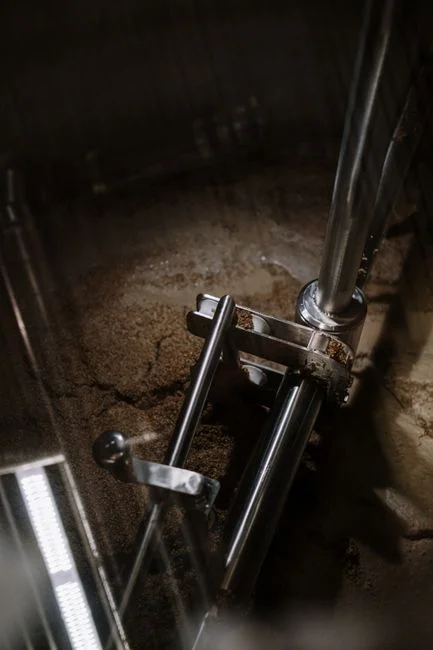
A permit-ready train starts with equalization because variable flow and mass loading make downstream chemical dosing less predictable. The equalization tank should smooth the approved discharge profile before pH adjustment or metals precipitation, not merely serve as storage. EPA’s June 25, 2021 guidance identifies flow data and collection-system concerns as inputs to local-limit development.
Use PLC-controlled dosing to adjust pH and chemical feed from measured wastewater conditions. A PLC-controlled chemical dosing system controls reagent addition; it does not establish the required dose by itself. Jar testing and process chemistry must determine the operating conditions.
Select the removal mechanism against the actual limit. Metals precipitation can convert dissolved contaminants into solids that require a reliable separation step. Ion exchange can provide targeted polishing where its application is supported by water chemistry, but it should not be treated as a substitute for removal of oil, grease, or interfering suspended solids. The US mining pretreatment guide provides a staged reference for this sequence.
Remove precipitated and suspended solids before polishing. HydropureWater’s DAF range covers 4–300 m³/h across 13 models, while its lamella clarifier literature lists surface loading rates of 20–40 m/h and chemical consumption up to 30% below the compared conventional arrangement. These are equipment-selection inputs, not guarantees of site effluent performance.
| Stage | Primary function | Compliance evidence |
|---|---|---|
| Equalization | Moderate flow and load variation | Level, flow, and chemical-use records; controlled discharge profile |
| pH adjustment and precipitation | Convert selected dissolved metals to removable solids | Calibrated pH control, chemical records, and representative metal results |
| DAF or clarifier | Separate generated solids and floatable material | TSS, oil and grease where applicable, and sludge generation records |
| Filtration, membrane, or polishing | Meet residual particulate or dissolved-metal requirements | Permit-specific monitoring at each required compliance point |
| Disinfection | Address a permit requirement where applicable | Written permit condition and validated monitoring |
Place filtration or membrane treatment after solids and oil removal when additional particulate control is required or reuse is part of project scope. Treat disinfection as permit-dependent rather than automatic. Design residuals handling around the generated sludge from the outset.
Match Equipment to the Contaminant and Compliance Risk
Equipment should be selected by treatment function, contaminant behavior, and residual burden—not by a generic claim of treatment performance. Each component has a limited role, and the complete train must demonstrate compliance under the plant’s actual flow and chemistry.
The industrial DAF system is suited to suspended solids, oil and grease, and floatable or colloidal material in industrial pretreatment. The lamella clarifier combines sludge recirculation, flocculation, and inclined-plate gravity separation in a compact package. Its suitability depends on floc properties, hydraulic loading, and feed chemistry.
Automatic chemical dosing controls reagent addition but does not replace jar testing, pH control, flocculation, or solids separation. The ultrafiltration system described in the research uses 0.03-micron PVDF membranes, automatic backwash, and air scour to remove bacteria, colloids, and suspended solids without chemicals. It does not remove dissolved metals. An MBR is a biological and membrane-polishing option for wastewater with an organic or biodegradable load; neither technology should be selected without matching the actual pollutants and local limits.
| Technology | Primary role | Key limitation to verify |
|---|---|---|
| Chemical dosing system | Controlled addition of pH-adjusting and treatment chemicals | Dose must be established from wastewater chemistry and operating response |
| DAF | Removal of suspended solids, oily material, and floatable contaminants | Requires suitable flocculation and manageable recycle and residual streams |
| Lamella clarifier | Gravity separation of flocculated solids | Performance depends on feed chemistry and hydraulic design |
| UF | Removal of suspended solids, colloids, and bacteria | Does not remove dissolved metals; upstream pretreatment remains necessary |
| MBR | Biological treatment with membrane separation | Appropriate only where biodegradable loading and process controls are present |
The mining and metals sewer-limit compliance guide provides a practical equipment-function framework. Supplier comparisons should also price chemical consumption, sludge volume, filtrate return, membrane or media maintenance, monitoring, operator effort, and space requirements. These lifecycle inputs often determine operating reliability more than the initial equipment price.
Decide Between Sewer Discharge, Reuse, and Zero Liquid Discharge
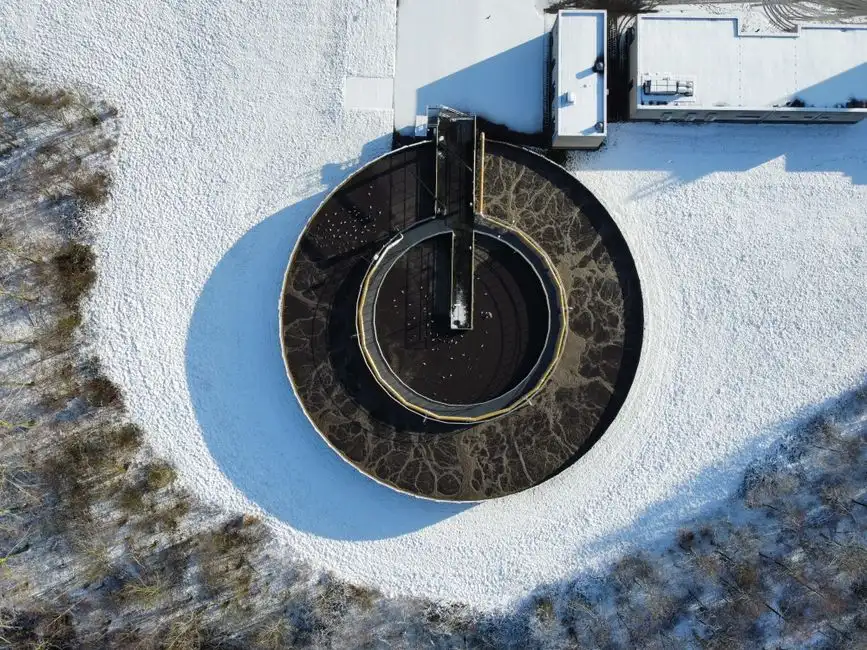
Sewer discharge is the baseline route when the POTW will accept the industrial user and the treatment train can reliably satisfy every permit condition. This is not simply a piping decision. It requires categorical-standard classification, POTW approval, local-limit compliance, BMPs, monitoring, and an authorized route for treatment residuals.
Partial reuse should be evaluated when reliable pretreatment can produce water suitable for a defined process application. Keep reuse polishing distinct from the compliance train: a membrane system may reduce water consumption without replacing equipment needed to meet sewer limits.
Zero liquid discharge becomes relevant when sewer access, permit risk, water scarcity, or site constraints make direct discharge or reuse unsuitable. The comparison must include energy demand, brine or concentrated-solids handling, equipment complexity, and air-permit implications. It should not assume that eliminating a liquid discharge eliminates every environmental authorization.
| Decision | Favorable conditions | Required proof |
|---|---|---|
| Sewer pretreatment | POTW acceptance and reliable compliance with local and categorical requirements | Current permit, local limits, BMPs, residuals pathway, and site-specific treatment performance |
| Partial reuse | A defined process-water demand and a reliable reusable stream | Water-quality specification for the receiving process and treatment train capable of producing it |
| Zero liquid discharge | Sewer or reuse constraints, water scarcity, or site limitations | Mass balance, energy analysis, solids or brine disposal route, and air-permit review |
There is no defensible universal cost threshold. Request current POTW fees, water and disposal costs, expected permit conditions, site-specific energy prices, and chemical consumption before comparing alternatives. For California mines, local hydrology, recycled-water demand, and community acceptance belong in the business case, but regional assumptions should not replace site data. The ZLD sizing guide discusses the engineering inputs that must precede that comparison.
Coordinate Monitoring, Residuals, and POTW Approval
Monitoring and residuals planning are part of permit readiness, not post-installation administration. Before procurement, request the POTW’s current local limits, industrial user permit application, monitoring frequency, analytical methods, reporting format, slug-load provisions, BMPs, and discharge-point requirements. Confirm whether the facility is classified as a significant industrial user and which portions of the permit apply to each waste stream.
Tie every treatment-stage key performance indicator to a compliance need: flow, pH, regulated metals, TSS, and any locally required oil and grease or organic parameters. Establish representative sampling locations, chain-of-custody procedures, and continuous monitoring where the permit requires it. A sampling plan should also define how unusual loads, storm events, and slug discharges are detected and recorded.
Metals precipitation creates metal-bearing sludge that requires characterization, dewatering, and an authorized disposal route. HydropureWater’s plate and frame filter presses span filtration areas of 1–500 m² and support manual, hydraulic, or automatic PLC operation. A plate and frame sludge filter press can be incorporated into the residuals train, subject to actual sludge rheology, solids content, conditioning chemistry, and cake-disposal requirements.
| Approval item | Information to obtain | Design consequence |
|---|---|---|
| Industrial user permit | Classification, limits, BMPs, monitoring, reporting, and discharge point | Defines equipment objectives, controls, and compliance points |
| Local limits | Current effective limits and calculation basis | Sets mass-loading and concentration targets for treatment |
| Monitoring | Parameters, methods, frequency, and continuous-monitoring requirements | Determines sampling, instrumentation, data handling, and laboratory needs |
| Residuals | Waste characterization, acceptance criteria, transport, and disposal site | Adds thickening, dewatering, storage, and contingency requirements |
| Future review | POTW review cycle and potential changes in industrial-user allocation | Reserves treatment and monitoring capacity without treating an assumed future limit as current |
EPA’s June 25, 2021 guidance explains that local limits can undergo reviews and detailed re-evaluations. Preserve hydraulic and treatment flexibility, but do not size equipment to an unsupported forecast. Submit representative operating data, a proposed treatment train, and a monitoring plan to the POTW, then obtain written acceptance before finalizing the procurement package.
Frequently Asked Questions
Do federal categorical limits replace the POTW’s permit or local limits?
No. Categorical pretreatment standards, POTW local limits, and permit conditions operate together. For an indirect discharger, the POTW permit or other applicable control mechanism determines the enforceable obligations, and the more stringent applicable requirement governs compliance. EPA’s June 25, 2021 guidance confirms that its manual is not a substitute for permits or regulations.
Does a POTW at or below 5 mgd avoid California pretreatment requirements?
No. California’s State Water Resources Control Board states that POTWs with design flows of 5 mgd or less may still be required to implement pretreatment when they receive industrial waste and pretreatment is warranted. For a mining or metals discharger, the practical check is the POTW’s industrial-user rules and current permit—not the plant size alone.
What should determine the treatment-system size?
Size the train from the permit, representative flow and mass-loading data, wastewater chemistry, residuals generation, and monitoring conditions. Production throughput alone is insufficient. Equalization, chemical demand, solids separation, polishing, and sludge handling must all be evaluated against worst-case operating conditions.
How should treatment bids be compared without relying on a universal price?
Request itemized current quotations for equipment, installation, utilities, chemical consumption, sludge handling, monitoring, maintenance, operator training, and future permit-related upgrade reserve. Also ask each bidder which performance values are guaranteed, how they were established, and which site inputs are excluded. Without site-specific data, no generic price or efficiency claim supports a defensible budget.
How should a supplier be selected for permit-ready treatment?
Evaluate the supplier’s ability to map equipment functions to the current permit and to support POTW review with site data, process calculations, monitoring provisions, and a residuals plan. Require references for comparable wastewater chemistry and operating conditions. No generic product sheet can guarantee permit acceptance because the Control Authority reviews the facility, wastewater, and proposed controls.