Which ammonia nitrogen removal method fits your wastewater?
The best industrial ammonia nitrogen removal method depends on concentration and the final limit. Biological nitrification-denitrification is the default for high-strength streams, typically using SRT of 10–20 days, aerobic HRT of 6–12 hours, anoxic HRT of 2–4 hours, DO of 1.5–2.5 mg/L and C/N of 10–20. Air stripping can remove 80–95% but requires pH 10.5–11.5 and performs poorly in cold conditions. Breakpoint chlorination can exceed 99% removal but requires an 8–10:1 Cl2:N ratio and dechlorination. Ion exchange can polish below 1 mg/L, while RO can exceed 99% NH4+ rejection at 10–30 bar when the feed is clean and pH is below 7.0.
HydropureWater’s 2026 selection guidance places influent above 200 mg/L NH4+ firmly in biological-treatment territory, with 50–200 mg/L treated as a gray zone and levels below 50 mg/L making breakpoint chlorination or ion exchange more credible. The outlet decision is separate: biological treatment may meet a target below 10 mg/L; a target below 2 mg/L or reuse normally requires polishing; and a target below 0.5 mg/L generally calls for RO plus ion exchange.
Every preliminary selection also needs flow rate, temperature, pH, alkalinity, toxicity, carbon availability and footprint. A permit written as total nitrogen changes the answer: nitrification converts ammonia to nitrate, but it does not remove the resulting nitrate. A total-nitrogen objective therefore requires denitrification or another nitrate-removal step, not merely ammonia oxidation. The landfill leachate treatment guide provides useful context for high-strength streams, while the wastewater automation controls guide addresses the controls needed for reliable operation.
Why ammonia does not remove with ordinary pretreatment
Total ammonia nitrogen is the sum of dissolved NH3 and NH4+, and their proportion is controlled by pH and temperature. At pH 8.5 and 25 °C, approximately 6% of TAN is free NH3; at pH 10.5, the free-NH3 fraction exceeds 80%, according to HydropureWater’s 2026 guide. NH4+ remains dissolved near neutral pH, which is why primary settling, flotation and equalization remove less than 15% of TAN in the same guide.
That chemistry determines which mechanisms can work. Biological nitrification oxidizes NH4+ through nitrite to nitrate under aerobic conditions. Denitrification then reduces nitrate to nitrogen gas under anoxic conditions when a suitable carbon source is available. Air stripping transfers un-ionized NH3 into an off-gas stream, breakpoint chlorination oxidizes ammonia chemically, ion exchange captures NH4+ on exchange media, and RO rejects dissolved NH4+ as a final barrier.
Ordinary pretreatment may still be necessary even though it does not remove ammonia. Suspended solids can impair biological mass transfer or membrane performance, oil can foul membranes and inhibit organisms, and toxic compounds can suppress nitrification. Equipment selection should therefore follow the dissolved-air flotation system review: characterize the solids, oil and toxicity that must be removed before the ammonia-treatment step.
Side-by-side comparison of five ammonia removal methods
The five principal routes solve different problems: biological treatment destroys nitrogen, air stripping transfers it to air, chlorination oxidizes it, ion exchange captures it, and RO rejects it. Their reported removal percentages are not interchangeable because the feed concentration, endpoint, pretreatment and residual-management requirements differ.
| Method | Reported operating envelope or performance | Main constraint | Indicative operating cost in HydropureWater’s 2026 guide |
|---|---|---|---|
| Biological nitrification-denitrification | SRT 10–20 days; aerobic HRT 6–12 hours; anoxic HRT 2–4 hours; DO 1.5–2.5 mg/L; C/N 10–20; pH 7.0–8.5 | Temperature, alkalinity, carbon availability and toxicity | Aeration: 0.3–0.8 kWh/m3 |
| Air stripping | pH 10.5–11.5; 2–4 m structured packing; 3,000–5,000 m3/m3 air-to-water ratio; typically 80–95% removal | Cool water, caustic demand and off-gas treatment | $0.10–$0.25/m3 |
| Breakpoint chlorination | Approximately 8–10:1 Cl2:N mass ratio; removal above 99% at the correct ratio | Chloramine formation, residual chlorine and dechlorination | $0.20–$0.50/m3 |
| Ion exchange or modified zeolite | Clinoptilolite reduced TAN from 20 mg/L to below 1 mg/L in column tests | Competing ions, resin replacement and brine regeneration | 0.15–0.60 per resin treatment |
| Reverse osmosis | More than 99% NH4+ rejection at 10–30 bar | Feed solids, free oil, scaling and concentrate disposal | 0.30–1.00 per treatment |
These figures are screening ranges, not comparable bids. HydropureWater’s 2026 guide lists aeration in kWh/m3, stripping and chlorination in dollars per cubic metre, resin treatment in dollars per treatment, and RO in dollars per treatment. Scope, flow, analytical endpoints and included utilities therefore differ.
For biological systems, an integrated MBR membrane bioreactor can separate solids after biological treatment. Breakpoint chlorination needs controlled chemical feed, for which a PLC-controlled chemical dosing system is relevant, while an industrial reverse osmosis system is principally a polishing barrier. For RO, feed pH should remain below 7.0 so ammonia stays predominantly as NH4+; dissolved NH3 can pass through the membrane.
Biological treatment: strongest default for high-strength streams
Biological nitrification-denitrification reported 94–99% ammonia removal for MBBR, SBR and conventional activated sludge at influent NH4+ concentrations of 50–500 mg/L, according to HydropureWater’s 2026 guide. This is why biological treatment is normally the main process for concentrated industrial streams rather than a downstream polishing accessory.
The two stages must be designed together. Aerobic nitrifiers oxidize NH4+ through nitrite to nitrate. Anoxic heterotrophs then reduce nitrate to nitrogen gas when carbon is available. A carbon shortage or inadequate anoxic residence time can therefore leave nitrate behind even when ammonia oxidation performs well.
The FM5 trial summarized by HydropureWater in 2026 found NH4+ declining from 29.5 to 4.8 mg/L in 72 hours at pH 8.0, 25 °C and C/N 20 with sodium succinate. Peak denitrification occurred at pH 7.0, 35 °C and C/N 10 with sodium acetate. Galaxy Science reported a 94.1% ammonia reduction over 7 days at 60 rpm aeration in a 2020 oxidation-ditch study on tofu and skin-tanning wastewater.
Design verification must cover temperature, SRT, DO, alkalinity, pH, carbon availability and influent toxicity. Flow-weighted testing is needed where the wastewater matrix changes materially by shift or production campaign. An integrated MBR membrane bioreactor can combine biological treatment with solids separation, while the MBR membrane bioreactor module can separate those functions. Neither removes the need for nitrification and denitrification.
Air stripping and breakpoint chlorination: fast chemical alternatives
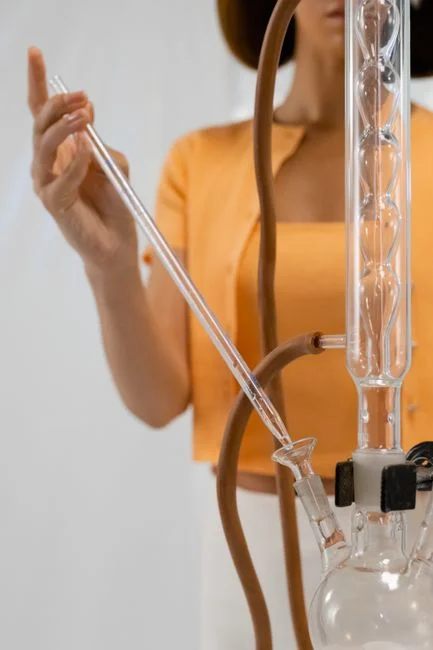
Air stripping is a physical transfer route, while breakpoint chlorination is a chemical oxidation route. Neither should be selected from concentration alone: air stripping depends on temperature and free-NH3 availability, while breakpoint chlorination depends on chlorine dose, pH, alkalinity and residual-chlorine control.
| Decision item | Air stripping | Breakpoint chlorination |
|---|---|---|
| Mechanism | Transfers NH3 from water to off-gas | Oxidizes ammonia to nitrogen and nitrate under breakpoint conditions |
| HydropureWater 2026 operating basis | pH 10.5–11.5; 2–4 m packing; 3,000–5,000 m3/m3 air-to-water ratio | Approximately 8–10:1 Cl2:N mass ratio |
| Reported performance | Typically 80–95% removal | Removal above 99% at the correct ratio |
| Principal limitation | Efficiency falls 5–8 percentage points for every 5 °C below 20 °C, according to HydropureWater’s 2026 guide | Too little chlorine can form chloramines; residual chlorine requires quenching |
| Indicative operating cost | $0.10–$0.25/m3 | $0.20–$0.50/m3 |
Air stripping is most defensible for warm, high-pH side streams, high-strength streams and streams whose toxicity would inhibit biological treatment. The off-gas creates an air-emission issue that must be included in the equipment proposal. Breakpoint chlorination can be faster, and the supplied research gives 10–30 minutes as a benchmark for reaching more than 99% removal while the 8–10:1 ratio is maintained; it is not a universal residence-time guarantee.
Alkalinity and pH alter actual chlorine demand. Automated dosing, ORP-based control and dechlorination are part of the process boundary, not accessories to add after the fact. A PLC-controlled chemical dosing system should therefore be evaluated with the reaction basis and quench requirements.
Ion exchange and reverse osmosis: when low residual ammonia determines the design
Ion exchange captures NH4+ on exchange media, while RO rejects NH4+ through a membrane barrier. Natural or modified clinoptilolite zeolite reduced TAN from 20 mg/L to below 1 mg/L in column tests reported by HydropureWater in 2026. The zeolite exchanges NH4+ for counter-ions and is regenerated with brine; competing ions determine effective loading and regeneration frequency.
RO is a final barrier for reuse or a very low residual-ammonia target, not the default primary process for concentrated wastewater. A thin-film composite membrane rejected more than 99% of NH4+ at 10–30 bar in the supplied research, provided suspended solids and free oil were low. Feed pH should remain below 7.0 so ammonia remains predominantly ionic; at higher pH, dissolved NH3 can pass through.
HydropureWater’s 2026 guide reports industrial RO energy use of 0.5–1.5 kWh/m3 and a 5–10% concentrate stream containing rejected species. The concentrate therefore needs a defined return, treatment or disposal route. Pretreatment can use an ultrafiltration system and appropriate membrane elements, but the complete industrial reverse osmosis system must be evaluated on the tested water matrix.
For a target below 0.5 mg/L, the supplied selection guidance indicates that RO plus ion exchange may be required in series. That arrangement combines selective capture with a membrane rejection barrier; it is not automatically the lowest-cost option.
Build a hybrid train around the required effluent quality
A hybrid train is usually the defensible answer when biological treatment must remove the bulk load and a low final limit still has to be met. The common sequence is pretreatment where needed, biological nitrification-denitrification, solids separation, then ion exchange, RO or breakpoint chlorination only when the permit or reuse specification requires it.
For reuse or stringent limits, an MBR can provide a controlled solids barrier before RO. HydropureWater’s 2026 guide associates MBR treatment with 0.1–1 mg/L suspended solids in the effluent, which helps protect downstream polishing. An integrated MBR membrane bioreactor can therefore combine biological ammonia removal with solids separation, but the biological carbon balance and denitrification still have to be demonstrated.
Breakpoint chlorination can serve as a final chemical barrier after biological treatment, provided the train includes pH adjustment, controlled dosing and dechlorination. It should not be added merely to compensate for an unverified biological outlet.
Reject management belongs in the same mass balance. RO concentrate may be returned toward the biological headworks if hydraulic, nitrogen and salt loads remain within the process envelope. Struvite precipitation may recover ammonia as fertilizer from some livestock and landfill streams, but it is nutrient recovery, not destruction to nitrogen gas. An industrial reverse osmosis system cannot be evaluated independently of the fate of its concentrate.
A decision framework for equipment selection and budgeting
A defensible proposal begins with measured influent variability, not a catalog removal percentage. The required dataset is a 24-hour or campaign composite covering NH4+ or TAN, total nitrogen, COD or BOD, pH, alkalinity, temperature, suspended solids, oil and grease, toxicity indicators and flow variability. Missing any of these inputs prevents a reliable biological, chemical or membrane comparison.
| Step | Engineering or commercial check | Decision output |
|---|---|---|
| 1. Define the objective | Separate an NH4+ or TAN permit from a total-nitrogen permit; record temperature, pH, residual-chlorine and reuse conditions. | Required endpoint and whether denitrification or polishing is mandatory |
| 2. Characterize the wastewater | Obtain composite and variability data for ammonia, total nitrogen, carbon, alkalinity, solids, oil, toxicity and temperature. | Biological eligibility and required pretreatment |
| 3. Compare the whole train | Price blowers, chemicals, membranes, media replacement, energy, labor and reject disposal. | Installed and operating-cost comparison on a common scope |
| 4. Verify the design | Request a site-specific mass balance, hydraulic profile, redundancy plan, control narrative, commissioning criteria and guarantees tied to the tested influent envelope. | Auditable equipment basis and performance obligations |
Use the energy and cost ranges in HydropureWater’s 2026 guide only for screening. They must be recalculated against local utility rates, chemical prices, plant scale, flow profile and the selected treatment boundary. The wastewater automation controls guide provides a useful basis for specifying the controls narrative and identifying which operating parameters require verification.
Frequently Asked Questions
Which ammonia nitrogen removal method has the lowest operating cost?
There is no defensible universal answer because the reported scopes differ. HydropureWater’s 2026 guide lists air stripping at $0.10–$0.25/m3 and breakpoint chlorination at $0.20–$0.50/m3, while ion-exchange and RO figures are expressed per treatment. Request a common flow basis and include chemical make-up, energy, media replacement, labor, dechlorination and reject disposal before comparing routes.
How should equipment be sized for an ammonia removal system?
Size against the tested flow and concentration envelope, the required endpoint, temperature, pH, alkalinity, carbon availability and toxicity. For biological treatment, HydropureWater’s 2026 guide gives SRT 10–20 days, aerobic HRT 6–12 hours and anoxic HRT 2–4 hours. Require the supplier to state which hydraulic, loading and redundancy assumptions support the selected capacity.
Does breakpoint chlorination replace biological denitrification?
No. Biological denitrification reduces nitrate to nitrogen gas under anoxic conditions with suitable carbon. Breakpoint chlorination oxidizes ammonia and can leave nitrate; it does not supply the same total-nitrogen removal pathway. A permit based on total nitrogen therefore requires an explicit nitrate and denitrification assessment.
What compliance risks should be checked before selecting a treatment method?
Check the current permit first: it may specify ammonia, TAN or total nitrogen and may add temperature, pH, residual-chlorine or reuse conditions. Then verify those limits against representative wastewater testing. Chlorination requires residual control, RO requires concentrate management, and air stripping requires an off-gas route; the landfill leachate treatment guide offers context for high-strength matrix variability.