Separate sanitary wastewater from cooling blowdown
A data center in Contagem generally needs two treatment decisions: biological treatment for sanitary wastewater and a separate train for cooling-tower blowdown. The sanitary train can use a packaged A/O plant or MBR, while blowdown normally requires equalization, pH control, solids or oil removal, and contaminant-specific treatment before discharge or reuse. Equipment cannot be sized responsibly without measured makeup, blowdown, sanitary flows, COC, pH, conductivity, hardness, TSS, oil and grease, and residual biocide. A 2026 LCA found that reuse can reduce freshwater demand, but treatment energy and chemicals must be included in the comparison.
Do not size these streams as one blended wastewater system. Sanitary wastewater requires biological treatment, solids separation and disinfection; cooling blowdown is concentrated, chemically conditioned water whose treatment duty depends on its contaminants and intended destination. The data center wastewater and cooling-blowdown treatment methodology provides a useful comparison framework, but its local limits must not be transferred to Contagem.
Blowdown is governed by the cooling-water concentration balance: Blowdown = Makeup / (COC − 1). Campus IT load therefore does not determine blowdown by itself. The Belo Horizonte guide reports 0.3–0.8% of makeup volume for its stated 40 MW campus with PUE 1.4 and an adiabatic/economizer hybrid loop. That result is specific to that configuration and cannot be used for Contagem without measured operating data. A regional comparison is available in the regional data center wastewater treatment guide.
| Design input | Minimum evidence required | Decision affected |
|---|---|---|
| Sanitary wastewater | Hourly and daily peak flow; occupancy; cafeteria and laundry inputs | Packaged plant or MBR capacity, peak equalization |
| Cooling water | Makeup, evaporation and measured blowdown; operating COC | Blowdown balance, storage and treatment flow |
| Water chemistry | pH, conductivity, TDS, hardness, TSS, oil and grease, residual biocide | DAF, softening, RO, UF and disinfection duties |
| Operations | Chemical inventory, cycle-dump practices and operating control | Equalization, chemical demand and residual control |
| External constraints | Current Contagem sewer permit, receiving-body conditions and reuse destination | Discharge limits, reuse specification and concentrate route |
Build the treatment objective from discharge and reuse priorities
The minimum design objective is compliant sanitary-effluent discharge and compliant cooling-blowdown discharge; the preferred objective may reduce potable makeup through onsite reuse. These are different bases of design and should be costed separately. A treatment that meets a sewer discharge specification does not necessarily meet cooling-makeup quality, while advanced reuse adds membrane, chemical, energy, disinfection and concentrate-management obligations.
CONAMA Resolution 430/2011 provides the national framework identified in the supplied Belo Horizonte guide, but Contagem’s current sewer permit, sewer-company requirements and receiving-water conditions must be obtained separately. The Belo Horizonte reference values—including the cited TDS cap of 2,000 mg/L for drought-sensitive sub-basins—are examples tied to that jurisdiction, not Contagem limits. Confirm the applicable discharge point, sampling regime, permitted flow, temperature, pH, solids, oil and grease, metals, residual biocide and dissolved-solids conditions before freezing equipment specifications. The due-diligence framework for data-center wastewater liabilities can help structure that evidence request.
Energy and carbon belong in the treatment comparison. Open Engineering Inc’s 2026 LCA found that its wastewater scenario had about twice the global warming potential of the freshwater case, with treatment energy accounting for roughly 80% of the difference. In the UF+RO scenario, wastewater energy use exceeded five times the freshwater case; the study attributes the trade-off to improved cycles of concentration that reduce blowdown and chemical consumption. These results screen alternatives, but they are not a Contagem energy forecast.
| Objective | Required performance basis | Scope to include in cost |
|---|---|---|
| Sanitary discharge only | Current Contagem sewer permit and measured peak sanitary flow | Biological plant, sludge handling, disinfection, sampling and redundancy |
| Cooling-blowdown discharge only | Current local discharge limits and measured contaminant profile | Equalization, neutralization, targeted pretreatment, residual control and monitoring |
| Non-potable reuse | Reuse specification for each destination, including quality and public-health requirements | Additional treatment, disinfection, storage, operator capability and reuse monitoring |
| Cooling-makeup reuse | Makeup chemistry, scaling risk, biocide compatibility and system water balance | Full membrane train, energy, chemicals, recovery, concentrate disposal and bypass strategy |
Size the sanitary wastewater train from measured flow
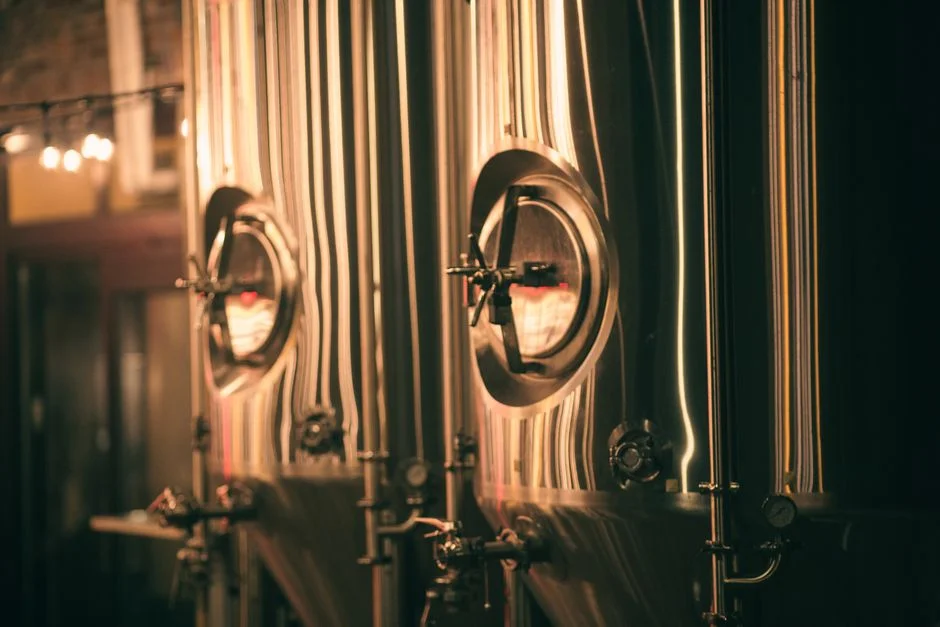
Size the sanitary train from measured peak flow, not office occupancy alone. The basis must include current and planned staffing, meal periods, laundry generation, visitors and any process wastewater that enters the sanitary collection system. The applicable Contagem discharge or reuse specification determines whether packaged biological treatment is sufficient or whether an MBR and additional polishing are justified.
The supplied WSZ series covers 1–80 m³/h and uses anoxic/aerobic biological contact oxidation, sedimentation and disinfection. It is fully automated, can be installed below grade and does not require an on-site operator according to the supplied product information. These features make the underground integrated sewage treatment system relevant to smaller sanitary installations where footprint, burial and routine operation favor packaged equipment.
The supplied MBR alternative covers 10–2,000 m³/day and uses submerged PVDF filtration below 1 μm. Its stated footprint is 60% smaller than conventional systems. An MBR membrane bioreactor for sanitary wastewater becomes more defensible when measured flow, footprint constraints or reuse quality justify membrane separation.
The Belo Horizonte guide lists an MBR effluent target of BOD below 5 mg/L and TSS below 1 mg/L. Treat those as design targets from that guide, not universal Contagement requirements or automatic guarantees. Biological loading, sludge production, redundancy, odor control, hydraulic peak response and final polishing still require site data and a supplier’s process guarantee.
| Selection point | Packaged WSZ basis | MBR basis |
|---|---|---|
| Supplied capacity envelope | 1–80 m³/h | 10–2,000 m³/day |
| Treatment configuration | Anoxic/aerobic contact oxidation, sedimentation and disinfection | Biological treatment with submerged PVDF filtration below 1 μm |
| Installation and operation | Fully automated; below-grade option; no on-site operator stated | More advanced membrane operation and maintenance requirements |
| Best procurement question | Does measured peak flow and specification fit the packaged envelope? | Does reuse quality, footprint or hydraulic control justify MBR complexity? |
Treat cooling blowdown in the order its contaminants require
The blowdown train should remove contaminants in the order that protects downstream equipment and the receiving environment. Start with equalization and neutralization: the supplied Belo Horizonte guide specifies a 24–48-hour basin and pH adjustment to 7.0–8.0 before subsequent unit operations. At Contagem, confirm detention time from measured blowdown, cycle-dump frequency and acceptable operating variation rather than copying the basin size automatically.
Establish the influent envelope through representative testing. For a project operating at 4–6 COC, the Belo Horizonte guide gives screening values of 1,500–2,500 mg/L TDS, 400–800 mg/L hardness as CaCO₃, 5–50 mg/L free chlorine or bromine residual and 5–30 mg/L TSS. Use these as initial test targets, not assumed Contagem results. Measure oil and grease, conductivity, biocide dose and constituents relevant to the cooling chemistry before selecting equipment.
- Equalization and pH control: smooth concentration and cycle-dump discharges, then establish the pH needed by the next process step and the sewer or reuse specification.
- DAF where justified: use DAF pretreatment for cooling blowdown when testing demonstrates oil, grease, colloids, suspended solids or membrane-fouling risk. The supplied catalog covers 4–300 m³/h across 13 models, with micro-bubbles and automatic skimming.
- Hardness reduction where scaling requires it: evaluate lime-soda softening or weak-acid cation exchange after receiving-water and rejection analysis. Do not prescribe the chemistry before knowing hardness, alkalinity, recovery and concentrate destination.
- UF where the design duty requires it: use ultrafiltration as a barrier against bacteria, colloids and suspended solids. The supplied catalog gives 2,000–40,000 L/h flow, 0.03 μm PVDF membranes, automatic backwash and air scour.
- RO for justified blowdown-to-makeup reuse: the supplied industrial RO information reports recovery rates up to 95%, while the Belo Horizonte guide describes 75–95% recovery for its side-stream concept. Membrane fouling, concentrate chemistry and sustained recovery remain design questions.
- Disinfection for the reuse specification: add chlorine dioxide where residual control requires it. The supplied ClO₂ range is 50–20,000 g/h and is listed for industrial cooling loops and process wastewater.
The concentrate route must be included before RO is approved. The supplied Belo Horizonte guide associates softening sludge with plate-and-frame dewatering and identifies RO concentrate as a zero-liquid-discharge decision. That means a discharge solution needs a documented sewer acceptance route; an advanced-reuse solution needs a priced treatment or disposal route.
| Process step | Include when | Do not assume |
|---|---|---|
| Equalization and neutralization | Variable blowdown, cycle dumps or pH correction are confirmed | A fixed detention time without flow data |
| DAF | Oil, grease, colloids or TSS threaten downstream equipment | DAF is required for every blowdown stream |
| Softening | Hardness and recovery create unacceptable scaling risk | One chemistry is universally optimal |
| UF | Colloid, bacteria or solids removal is a defined duty | UF automatically removes dissolved salts |
| RO | Makeup reuse and concentrate disposal are technically and commercially viable | Nominal recovery applies throughout the operating year |
| Disinfection | The reuse destination or cooling residual program requires it | Disinfection corrects heavy metals or dissolved solids |
Choose a treatment train by campus scale and reuse ambition
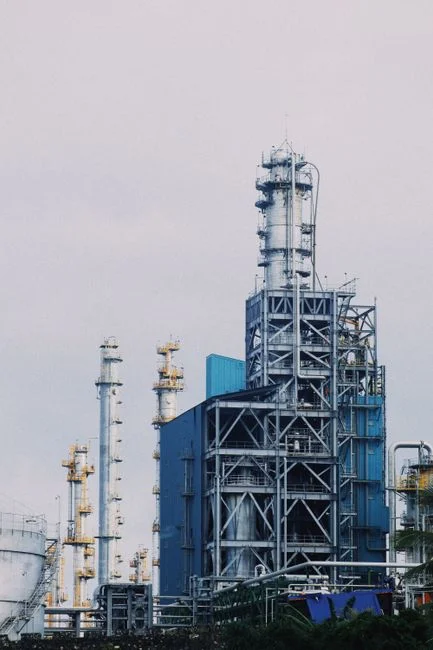
Use three decision tiers, then verify each against measured flows and the site’s reuse ambition. A smaller campus with sanitary discharge only can use packaged treatment, adding DAF to the blowdown train only when measured oil or TSS justifies it. A mid-size campus can combine MBR or packaged sanitation with DAF, hardness reduction and side-stream RO where the analysis supports reuse, plus disinfection where required. An advanced-reuse campus should assess integrated MBR sanitary treatment, full blowdown pretreatment and RO, and a separate concentrate-management option; it should not assume that RO brine can be discharged.
The regional data center wastewater treatment guide illustrates this scale logic, but its campus tiers and payback threshold are not Contagem estimates. Technology selection should follow the design duty: sanitary biological treatment, targeted oil or solids separation, scaling prevention, membrane protection and disinfection are not interchangeable duties.
| Decision tier | Sanitary objective | Blowdown objective | Commercial decision |
|---|---|---|---|
| Smaller site: discharge baseline | Packaged WSZ sized from measured peak flow | Equalization, pH control and targeted DAF only if required | Compare equipment, installation and routine O&M cost |
| Mid-size site: selective reuse | WSZ or MBR based on hydraulic and effluent requirements | DAF, softening, side-stream RO and disinfection where justified | Model recovery, chemical use, energy and sludge |
| Advanced reuse | Integrated MBR and required polishing | Full pretreatment, RO and explicit concentrate management | Compare total cost of ownership, redundancy and operator capability |
Lifecycle evaluation should include energy, chemicals, sludge volume and disposal, membrane replacement, operator skill, redundancy, downtime and bypass arrangements. The Belo Horizonte guide’s RO-payback threshold cannot be used in Contagem without local potable tariffs, sewer charges, site capex and a verified water balance.
Validate performance with a pilot and acceptance plan
Full-scale acceptance should follow at least one representative operating campaign; clean-water capacity claims do not establish field performance. The campaign should include normal cooling operation and representative variability in COC, chemical dosing, blowdown and cycle dumping. For sanitary treatment, include actual occupancy-related load variation. Do not treat this single campaign as a substitute for long-term seasonal monitoring, but make it the basis for resolving design uncertainties before procurement.
Test pH, conductivity, TDS, hardness, TSS, oil and grease, residual chlorine or bromine and biocide dose before and after each unit operation. Add site-specific sewer parameters and any constituent linked to the cooling program’s scaling, corrosion or biological-control risk. Measure flow continuously enough to calculate actual recovery and concentrate production.
| Acceptance item | Minimum agreement | Evidence required |
|---|---|---|
| Design basis | Measured flow and operating COC | Campaign flow and water-quality records |
| Performance | Agreed inlet conditions and effluent limits | Before-and-after laboratory results |
| Recovery | Defined system boundary and calculation method | Feed, permeate and reject metering |
| Reliability | Availability and failure-response requirements | Commissioning and demonstration records |
| Reject management | Documented destination and handling method | Concentrate and sludge characterization |
| Opex | Energy and chemical consumption at agreed loading | Measured campaign consumption data |
Open Engineering Inc’s 2026 LCA reports that UF+RO wastewater energy can exceed five times the freshwater case, while higher COC reduces blowdown and chemical consumption. The study also calculates an approximately 0.93 L/m³ indirect water penalty from higher upstream electricity and chemical inputs in its reuse train, less than 0.1% of the direct displacement benefit. Those are study results, not Contagem guarantees; the site model must reproduce them using local equipment, energy and chemical conditions.
Ask suppliers for a site-specific proposal
A defensible bid should begin with the same design basis as the owner’s basis of design, not a generic package assembled around every available technology. Require each bidder to identify design flow, water-quality basis, process assumptions, duty cycle, recovery rate, reject stream, chemical use, energy demand, sludge generation and routine-maintenance tasks. Ask bidders to demonstrate why DAF, UF, softening, RO, MBR and ClO₂ are required for this site, rather than including them as generic pretreatment.
Request a current P&ID, mass balance, control narrative, battery limits, utilities list, civil loading, commissioning plan, performance guarantees, spare-parts list and O&M assumptions. Require Brazilian electrical and utility compatibility, evidence of available operator skill and local service support, and confirmation that the discharge permission and reuse targets match the actual Contagem site.
| Scoring category | Question for the bidder | Evidence to compare |
|---|---|---|
| Design-basis fit | Does the proposal use measured Contagem flows and chemistry? | Calculation notes and water balance |
| Process necessity | What verified contaminant drives each unit? | Removal duty and pilot or source data |
| Compliance and reuse | Which current permit and reuse specification does each claim satisfy? | Permit references and signed guarantees |
| Concentrate and sludge | Where do reject and sludge physically go? | Mass balance, volume and handling plan |
| Operability | Can site staff maintain the proposed train? | O&M plan, training and service response |
| Lifecycle value | What is the total cost under measured duty? | Energy, chemicals, sludge, media, membranes and downtime |
Compare bids on total cost of ownership, not purchase price or nominal throughput. A screening contractor can provide a reference point for mechanical pretreatment selection, as shown in the DAF-versus-clarifier engineering comparison, but the Contagem contaminant profile must determine the final choice.
Frequently Asked Questions
How much should a Contagem data center budget for wastewater and cooling-blowdown treatment?
No defensible capital or operating budget can be stated without measured sanitary and blowdown flows, water analyses, reuse targets, current Contagem permit limits and a defined scope boundary. Request itemized bids covering equipment, civil works, membranes, chemical systems, sludge and concentrate handling, commissioning, guarantees, energy, chemicals, maintenance and operator labor. Do not adopt the Belo Horizonte or other regional payback threshold as a Contagem estimate.
Should a Contagem data center install MBR or a packaged sewage plant?
Use the packaged WSZ when its supplied 1–80 m³/h envelope covers the measured peak sanitary flow and its effluent satisfies the applicable discharge or reuse specification. Consider the supplied 10–2,000 m³/day MBR where footprint, hydraulic control or higher-quality effluent justifies the added process complexity. Obtain a site-specific loading calculation, footprint, sludge estimate, redundancy proposal and effluent guarantee from both options.
Is cooling-tower blowdown reuse worth the added energy?
It may be, but the decision must include the full water and carbon balance. Open Engineering Inc’s 2026 LCA found approximately twice the GWP for its wastewater scenario and roughly 80% of the difference attributable to treatment energy; its UF+RO scenario exceeded five times the freshwater energy use, while higher COC reduced blowdown and chemical consumption. Compare local utility and treatment costs with measured recovery and freshwater displacement.
Which contaminants most affect cooling-blowdown treatment equipment selection?
TDS, hardness, TSS, oil and grease, residual chlorine or bromine and pH form the core test panel. Add biocide dose, conductivity and constituent-specific scaling or membrane-fouling indicators identified from the cooling chemistry. The tested profile—not IT load alone—should determine whether DAF, softening, UF, RO or disinfection is justified.
What should a supplier guarantee in a Contagement data-center treatment proposal?
Require guarantees tied to the measured design flow, agreed COC, identified contaminants, recovery rate, effluent quality, availability and concentrate disposition. Include commissioning criteria, energy and chemical consumption, routine maintenance, membrane or media replacement assumptions, operator training, spare parts and local service obligations. A generic throughput statement or reuse claim without the operating basis should not be accepted.