What Owensboro-area plants need to prove before sewer discharge
Food and beverage plants near Owensboro generally meet sewer pretreatment limits through a treatment train that starts with source control, screening, and flow equalization; then uses dissolved air flotation (DAF) to remove suspended solids, fats, oils, and grease; and continues with biological treatment for soluble BOD and COD. Pools and pH control prevent production and clean-in-place shocks from upsetting the system. Exact limits are not universal: indirect dischargers must comply with 40 CFR Part 403, applicable food-sector categorical standards, and the receiving POTW’s local limits. Final sizing and performance should be based on plant-specific wastewater characterization and written sewer authority approval.
An indirect industrial discharger sends wastewater to a publicly owned treatment works (POTW), rather than discharging directly to surface waters under an NPDES permit. The POTW’s pretreatment program is the plant’s immediate compliance interface. EPA identifies Section 402(b) of the Clean Water Act as the statutory basis for POTW pretreatment programs, and its local-limits guidance explains that permits issued to POTWs must include programs assuring compliance with pretreatment standards (EPA, 2015).
Do not treat a generic industry threshold as an Owensboro permit limit. Hixson identifies 250 mg/L for both BOD and suspended solids as a commonly cited threshold, not a universal local requirement. The receiving POTW’s written rules control. Before ordering equipment, request the current requirements, permitted discharge point, monitoring frequencies, surcharge schedule, and approved analytical methods in writing. The industrial POTW compliance documentation workflow shows how this evidence should support the design basis.
| Compliance evidence | Why it matters before equipment selection |
|---|---|
| Current POTW local limits and applicable categorical standards | Defines the discharge targets and treatment objectives that the proposed train must meet. |
| Permitted discharge point, monitoring frequency, and analytical methods | Determines sampling access, recordkeeping, laboratory work, and the final compliance point. |
| Surcharge schedule | Links concentration or mass loading to a treatment and operating cost consequence. |
| Waste-stream mass balance | Prevents production, washdown, CIP, laboratory, cooling, and sanitary flows from being combined on an unsupported assumption. |
Build the mass balance around every source: production losses, product changeovers, floor and equipment washing, clean-in-place wastewater, laboratory drains, cooling water, and any sanitary wastewater exclusions. Each stream needs an owner, destination, operating schedule, and estimated flow and pollutant load. That inventory determines whether segregation is practical and which streams should drive pretreatment capacity.
Characterize the wastewater before choosing equipment
Untreated food-processing effluent can be 10 to 100 times stronger than domestic wastewater in BOD and COD terms, so a domestic-sewer profile cannot support plant design (Hixson, 2026). The defensible design basis comes from dedicated sampling of the operations that create variability, followed by a composite characterization that connects concentrations to actual flows and production conditions.
Sample production batches, startup and shutdown periods, product changeovers, CIP discharges, and worst-case cleanup operations separately. Record the time, flow, product, cleaning chemistry, and operating state for every sample. Then establish the composite design basis from representative production, cleaning, and upset conditions rather than blending every event into one average. For more detail on equipment implications, compare DAF and clarifiers for food and beverage wastewater.
The analytical program should cover flow, BOD5, COD, TSS, fats, oils and grease, pH, alkalinity, ammonia, total nitrogen, total phosphorus, dissolved oxygen, and temperature. Also measure or document sulfur-bearing waste contributions: USP Technologies identifies hydrogen sulfide as a common food and beverage wastewater odor issue and a potential safety concern (USP Technologies, 2026). Record the products used in CIP and sanitizing operations so the engineer can identify pH shifts, toxicity, color, and inhibitory constituents before selecting chemical feed, equalization, or biological treatment.
| Characterization element | Design question answered | Evidence to obtain |
|---|---|---|
| Flow and mass loading | What hydraulic and contaminant capacity is required? | Continuous or time-stamped flow records linked to batch and CIP sampling. |
| BOD5, COD, and TSS | How much organic and solids treatment is needed? | Laboratory results for normal, peak, startup, shutdown, and cleanup periods. |
| FOG and settleable material | Is DAF or another solids/FOG process warranted? | FOG, oil content, emulsification observations, and skimmable-solids records. |
| pH, alkalinity, nutrients, and DO | What biological and chemical controls are required? | Time-sensitive field and laboratory measurements under representative loading. |
| CIP chemistry and sulfur-bearing wastes | Could a cleanup event shock or inhibit treatment? | SDS inventories, product-use records, safety procedures, and source-specific sampling. |
The dairy, meat, poultry, brewery, distillery, and produce-processing values reported by Hixson describe cited operations; they are not universal limits or an Owensboro design template. Use those examples to identify variables to investigate, not to assume contaminant concentrations without local measurement.
Build a treatment train that controls shocks before the sewer
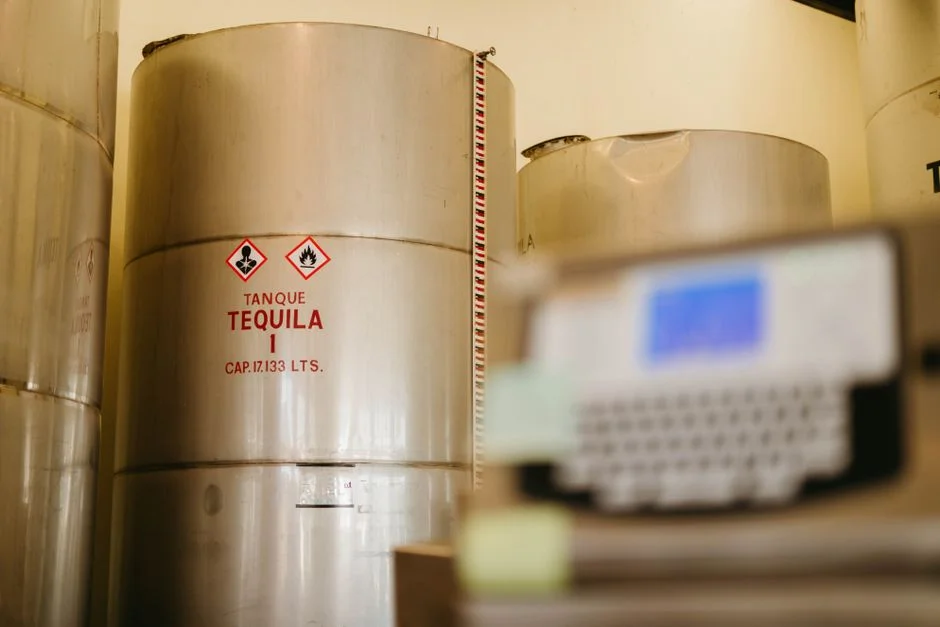
A defensible food-processing treatment train addresses each contaminant function in sequence: source control and screening protect the plant, equalization controls hydraulic and strength shocks, DAF removes solids and FOG, biological treatment removes dissolved organics, and polishing is added only when the permit, reuse objective, or site constraint requires it.
Start with segregation. Prevent concentrated CIP, product-loss, and sanitation streams from entering the balance of the wastewater flow when separate collection and treatment are feasible. Use screening to capture food particles, packaging debris, rags, and fibrous material before pumps, valves, or biological systems; Hixson identifies screening and grit removal as the first defensive barrier (Hixson, 2026).
Flow and strength equalization then buffers batch changes, CIP cycles, seasonal production peaks, and associated pH and temperature changes. This stage must release a controlled flow and load to downstream equipment, not merely store a volume. An mechanical bar screen for plant wastewater protection addresses the solids barrier, while chemical dosing should be designed around measured demand rather than a generic dose rate.
Use DAF or another solids/FOG-removal process before biological treatment where the wastewater profile supports it. In poultry field data cited by Hixson, DAF achieved 74% TSS removal and 99% oil-and-grease removal under optimized conditions. The industrial DAF system for food-processing wastewater should therefore be evaluated on fats, oils, grease, suspended solids, colloids, and load variability.
Biological treatment addresses dissolved organics for which physical separation is insufficient. Aerobic activated sludge or SBR may fit suitable loads; anaerobic digestion can suit high-strength streams and recover biogas. Hixson reports COD removal of 89.8–96.5% in food-processing anaerobic digestion applications. Apply pH and alkalinity control where needed because USP Technologies states that unstable pH can interfere with nitrification, sludge sedimentation, and biological treatment (USP Technologies, 2026).
Reserve membranes or tertiary polishing for a demonstrated need such as very tight limits, water reuse, or limited installation space. In cited beverage MBR pilot data, effluent COD was 16.9 mg/L, TSS was 3.8 mg/L, and COD removal was 92.6% (Hixson, 2026). An MBR membrane bioreactor for advanced biological polishing should not be treated as a default until those objectives are confirmed.
| Treatment stage | Primary function | Failure to control |
|---|---|---|
| Source control and segregation | Reduces concentrated product and CIP inputs. | Shock loads, chemical conflicts, unnecessary treatment load. |
| Screening and grit removal | Removes solids before pumps and biological systems. | Clogging, abrasion, equipment damage. |
| Flow and load equalization | Buffers volume, organic strength, pH, and temperature. | Hydraulic and biological overloads. |
| DAF or solids/FOG removal | Removes floatable and suspended material. | Scum carryover, sludge instability, biological overload. |
| Biological treatment | Reduces soluble BOD and COD. | Poor settling, inhibited microbes, unstable effluent. |
| Tertiary polishing | Provides demonstrated solids or nutrient control. | Unnecessary capital and energy cost. |
Food-sector performance data do not establish permit compliance. The final claim must connect the treatment train to the receiving authority’s limits using the plant’s measured influent and effluent.
Match DAF and biological capacity to worst-case plant conditions
DAF and clarification should be compared by contaminant function and operating envelope, not footprint alone. DAF becomes especially relevant when suspended solids, FOG, oil, colloids, and changing loads require flotation and skimming. The DAF versus clarifier performance review for food plants provides a useful technical comparison framework.
Hixson cites poultry results of up to 99% TSS removal, 85% BOD5 reduction, and 98% phosphate removal with proper coagulant selection and operating parameters. These are performance evidence for design questions, not guarantees for an Owensboro plant. The buyer should request comparable full-scale or pilot evidence under defined influent, loading, chemical, and operating conditions.
Size the complete train against peak flow, peak pollutant mass loading, and the reliable hydraulic and contaminant-removal range of each unit. An average daily flow can conceal batch and CIP overloads. The calculation should show how the system behaves during startup, shutdown, product changeover, cleanup, and the highest documented organic or FOG load.
| Procurement criterion | Required evidence | Decision consequence |
|---|---|---|
| Hydraulic capacity | Peak flow and required operating range by stage. | Prevents transfer-pump or treatment overflow. |
| Pollutant mass loading | BOD5, COD, TSS, FOG, and nutrient load calculations. | Establishes biological and solids-removal demand. |
| Chemical and sludge effects | Coagulant demand, chemical recovery, sludge yield, odor assessment, and handling route. | Defines operating labor and downstream disposal needs. |
| Reliability | Redundancy, alarms, controls, bypass prevention, maintenance access, and outage response. | Prevents compliant design from depending on flawless operation. |
| Energy recovery | Anaerobic applicability and biogas-use evaluation. | Distinguishes treatment necessity from energy-recovery economics. |
For anaerobic digestion, Hixson reports methane yields of 0.27–0.33 liters CH4 per gram of COD removed and notes that biogas can offset plant energy demand (Hixson, 2026). Include redundancy, controls, alarms, bypass prevention, sludge access, and operator response in the equipment scope. A treatment train that works only under ideal chemistry and perfect attendance is not a reliable compliance design.
Build a permit-compliance and operating-control plan
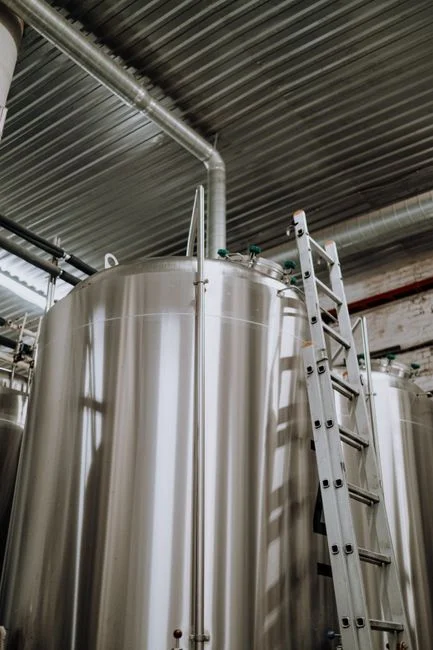
Compliance begins with defined sampling points at raw wastewater, equalization, DAF effluent, biological effluent, and final sewer discharge. Establish operating triggers for flow, pH, nutrients, dissolved oxygen, and FOG so operators can intervene before an exceedance. USP Technologies notes that supplemental dissolved oxygen may help overloaded aeration systems (USP Technologies, 2026), but the response should remain rooted in measured loading and process conditions.
Track mass loads as well as concentrations. A stable concentration can conceal a rising pollutant mass when flow increases. Define how the plant calculates daily and event-based loads, which instrument supplies flow, how samples are composited, and which laboratory methods satisfy the POTW’s written requirements.
Review the wastewater profile after product changes, new CIP chemistry, production expansion, and seasonal shifts. Each review should identify whether sampling, equalization, chemical control, biological loading, or monitoring frequency must change. Maintain records covering equipment performance, chemical use, calibration, laboratory results, corrective actions, and POTW correspondence. The industrial sewer-limit operating and documentation approach offers a transferable recordkeeping framework.
Hixson notes that NPDES permits typically last five years. For an indirect discharger, that observation is not a substitute for the POTW’s requirements. Schedule reviews around POTW permit and local-limit changes, as well as changes in the plant’s production and wastewater characteristics. Equipment order and final acceptance should remain conditional on that review.
Questions Owensboro-area food and beverage buyers should ask
Equipment selection should begin with measured wastewater data and end with an auditable treatment scope—not a generic treatment train. Ask each supplier to show the sizing calculation, selected operating margin, evidence basis, and boundary conditions.
| Buyer question | Required supplier response |
|---|---|
| How was the equipment sized? | Provide the measured flow, pollutant loads, operating envelope, calculation, and selected safety margin. |
| What comparable performance supports the proposal? | Identify TSS, BOD5, COD, FOG, and phosphorus results separately, with influent and operating conditions. |
| How will variable production and CIP be handled? | Describe equalization, chemical controls, odor management, upset response, and bypass prevention. |
| What does the price include? | Provide a written battery limit covering collection, pretreatment, biological treatment, polishing, disinfection where applicable, sludge handling, controls, instrumentation, and utilities. |
| What happens after delivery? | Confirm installation schedule, training, spares, service support, and lead-time assumptions as commercial items. |
Request pilot or full-scale data from comparable food-processing duties. Ask how the supplier will accommodate variable production, CIP chemistry, odor, sludge handling, controls, redundancy, and maintenance access. An automatic chemical dosing system should be evaluated against the measured chemistry and operating triggers, not merely installed because the treatment train includes chemical addition.
No equipment should be ordered until the receiving sewer authority’s current requirements and plant-specific permit conditions are obtained and incorporated into the design basis. That prevents a technically capable treatment system from becoming noncompliant because the design used the wrong threshold, sampling point, or discharge condition.
Frequently Asked Questions
Is 250 mg/L the universal sewer limit for BOD and suspended solids?
No. Hixson identifies 250 mg/L for both BOD and suspended solids as a commonly cited threshold, but it is not a universal Owensboro limit. The receiving POTW’s written local limits, applicable categorical standards, analytical methods, and discharge conditions control. Obtain those documents before designing or demonstrating compliance.
How should a food-processing wastewater treatment system be sized?
Size it from measured peak flow, peak pollutant mass loading, and the reliable operating range of each treatment stage. Include production batches, startup and shutdown, product changeovers, CIP discharges, and worst-case cleanup in the sampling program. Require the supplier to show the sizing calculation and how the train responds to documented extremes.
What drives the cost of food and beverage wastewater pretreatment?
The principal drivers are organic load, flow variability, FOG removal, chemical demand, sludge handling, and the need for advanced polishing. Request a written battery limit and an operating-cost basis tied to measured influent, chemical use, residuals, sludge route, labor, utilities, and monitoring. A defensible quotation requires those plant-specific inputs; a generic price range is not a procurement basis.
How can a buyer select a wastewater supplier without assuming permit noncompliance?
Require comparable performance evidence, clear treatment-train boundaries, measured sizing inputs, controls and redundancy, maintenance access, training, spare parts, and delivery assumptions. More importantly, obtain written POTW acceptance of the design basis. A treatment demonstration shows equipment performance; the sewer authority makes the permit-compliance determination. A final supplier review can also address solids handling, including the role of a plate-and-frame filter press for dewatering treatment residuals.